

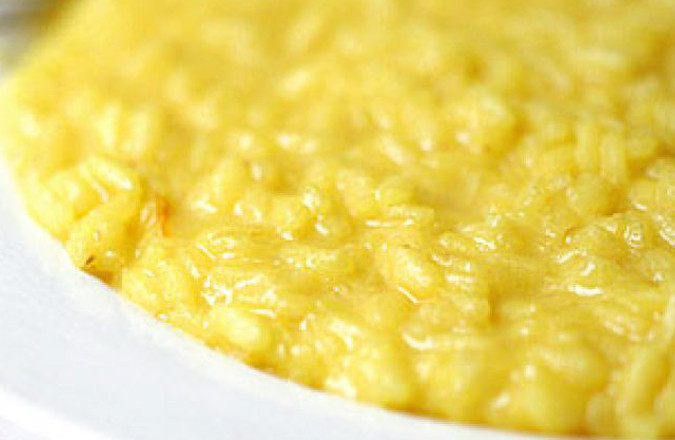
Among the historic cultivars that describe the evolution of Italian rice cultivation, the Roma rice occupies a central position in risotto gastronomy. Its spread is part of the agricultural development of the irrigated plains of Piedmont and Lombardy, territories capable of transforming a subsistence crop into a structured supply chain.
Today this historic variety is at the center of a dual interest: on one hand the market rules that standardize its marketing with other cultivars, on the other hand the application of specific thermal preparation techniques aimed at reducing itsglycemic index through the natural retrogradation of starch.
Genetic selection in the Po Valley in the twentieth century
The Experimental Rice Research Station of Vercelli (now part of the National Rice Authority) was founded in 1908 to study the adaptation of rice genotypes to the Italian climate and in 1925 Giovanni Sampietro introduced the technique of controlled hybridization between different varieties, opening a new era of genetic improvement. Since then, the Po Valley has become the open-air laboratory of European rice breeding:
- The Vialone Nano was born in 1937 from the cross between Vialone and Nano;
- in 1941 Mario Bonvicini, at the Institute of Plant Breeding for Cereal Farming of Bologna, obtained the Razza 77 from the cross between the Piedmontese Greppi and the Californian variety Lady Wright;
- in 1945 Ettore De Vecchi developed it Carnaroli, from the cross between Vialone Nero and Lencino;
- in 1946 Domenico Marchetti selected theArborio, crossing the Vialone with the Lady Wright.
The rice Roma was in turn created at the Experimental Station of Vercelli, in 1962, by crossing Balilla — a historic round soup rice — with Razza 77. Registered in the National Register of Varieties in 1967, it spread quickly at a time when Razza 77 was giving way due to low yield and difficult agronomic management. Then developed and released on the market were the S. Andrea (1968), the Rosa Marchetti (1972) and the Baldo (1977, cross Arborio × Strain 136), which complete the grid of the great historical Italian cultivars codified by legislative decree 131/2017.
The spread of Roma thus fits into the full development of modern rice farming in the irrigated plains of Piedmont and Lombardy, with an epicenter in the provinces of Vercelli, Novara, and Pavia. The same territory that in a few decades had transformed a subsistence crop into one of the most structured agri-food chains in Europe.
The crop cycle and the processing of the pearled grain
Roma belongs to the class Lungo A (superfino), with a large grain and pearled structure due to the presence of micro air inclusions in the endosperm that give the grain an immediately recognizable opaque appearance.
The crop cycle in the Po Valley rice fields includes:
- sowing in water or dry between April and May;
- growth submerged during summer;
- mechanized harvesting between September and October.
After threshing, the paddy rice is dried, hulled to remove the hulls, then subjected to whitening and polishing: these operations guarantee shelf life and the organoleptic qualities expected by the market, though reducing the content of some B-group vitamins and minerals concentrated in the outer layers.
Roma and Baldo: same label, different grains
The d.lgs. 131/2017 – containing regulation of the Italian rice market – recognizes seven traditional varieties: Arborio, Baldo, Carnaroli, Ribe, Roma, S. Andrea and Vialone nano. The denominations ‘Riso Roma’ and ‘Riso Baldo’ can be used interchangeably to designate any cultivar registered in one of the two groups, respecting the following morphological parameters:
- length 6.4 ÷ 7.2 mm;
- width 2.9 ÷ 3.1 mm;
- length/width ratio 2.2 ÷ 2.4;
- consistency 0.60 ÷ 0.80 kg/cm²;
- pearling from slight to very extensive (Legislative Decree 131/2017, annex 2).
I two groups have been included in same product grid because they present strong similarities morphological and functional: large grains, low amylose content and excellent absorption characteristics during cooking, favorable for creaming. However, they present some differences:
| Appearance | Roma | Baldo
|
| Grain appearance | Pearl and opaque | Crystalline and translucent |
| Absorption | Porous pearl promotes intense absorption, enhanced creaminess | Crystalline grain keeps grain more distinct and separated |
| Cooking yield | More creamy | Slightly drier |
| Amylose | Low (like Baldo) | Low |
| Cooking characteristics | Excellent creaming, gradual starch release | Good preservation, grain more separated |
Operators and consumers wishing to purchase Roma rice with guaranteed varietal traceability pursuant to Legislative Decree 131/2017 must orient their choice towards products designated as ‘Roma rice Classic’.
Management of the glycemic index through preparation
Roma and Baldo rices have a low amylose content — typical characteristic of Japonica superfini — which determines a marked aptitude for creaming and creaminess, but is associated with a generally high glycemic index (GI):
- a study conducted by the University of Pavia and the National Rice Authority on 25 cultivars Japonica Italian (ISO 26642 methodology) classified the Baldo (product group of Roma) among the high GI varieties, while cultivars such as Selenio (GI 49) and Argo (GI 50) showed lower values (Rondanelli et al., 2023);
- a more recent study, published in Frontiers in Plant Science, correlated the endosperm structure with the GI of the cultivars Japonica Italian, confirming the determinant role of starch composition in postprandial glycemic response (Haxhari et al., 2024).
Research shows how it is possible to reduce the GI of rice by following a specific procedure — cooking, refrigeration for a few hours and subsequent reheating — which promotes starch retrogradation and the formation of resistant starch (RS3), which escapes enzymatic digestion and acts in the colon as a prebiotic. A randomized clinical study on 32 subjects with type 1 diabetes showed that the consumption of cooked rice cooled at 4 °C for 24 hours and subsequently reheated significantly lowers the maximum postprandial blood glucose compared to rice eaten just cooked (Strozyk et al., 2022).
Gastronomic aptitude in traditional recipes
The qualities that made Roma famous emerge especially in versatility gastronomic. Thanks to the ability to absorb flavors without losing structure, it is used in a wide range of traditional Italian preparations:
- risottos traditional and vegetable;
- soups and broths;
- timballs and casseroles;
- baked rice;
- supplì and arancini;
- rice salads:
- filled dishes and gastronomy.
The gradual release of starch helps create that soft and enveloping texture — the so-called ‘wave’ of the risotto — particularly appreciated in the creaming stage.
Before the commercial success of Carnaroli and Arborio as synonyms for 'quality risotto rice,' Roma was the reference cultivar both in home kitchens and professional catering. Even today, many chefs and small producers choose it for the consistency of results and the authentic connection with the Po Valley territory.
Protection of agricultural identity in rice-growing Europe
In an era where the enhancement of biodiversity takes on growing importance, the recovery and promotion of historical varieties constitute a precious resource. Roma is an integral part of Italian agricultural and gastronomic heritage.
ItalyItaly is the largest rice producer in Europe and a reference point for the development of new varieties thanks to intensive breeding activities; in this context the historic cultivars such as Roma represent a genetic and cultural heritage that deserves to be known and valued.
Bringing it to the table means rediscovering a variety that helped build the history of Italian risotto and continues to deliver excellent performance, marked by authenticity and a connection with the Po Valley landscape.
Dario Dongo
Bibliographic references
Legislative Decree August 4, 2017, no. 131. Provisions concerning the internal rice market, pursuant to Article 31 of Law July 28, 2016, no. 154. Official Gazette General Series no. 209 of 7.9.2017. https://www.normattiva.it/uri-res/N2Ls?urn:nir:stato:decreto.legislativo:2017-08-04;131
Haxhari, F., Savorani, F., Rondanelli, M., Cantaluppi, E., Campanini, L., Magnani, E., Simonelli, C., Gavoci, G., Chiadò, A., Sozzi, M., Cavallini, N., Chiodoni, A., Gasparri, C., Barrile, G. C., Cavioni, A., Mansueto, F., Mazzola, G., Moroni, A., Patelli, Z., Pirola, M., Tartara, A., Guido, D., Perna, S., & Magnaghi, R. (2024). Endosperm structure and Glycemic Index of Japonica Italian rice varieties. Frontiers in Plant Science, 14, 1303771. https://doi.org/10.3389/fpls.2023.1303771
Italian Rice (2024). Rome: variety sheetEnte Nazionale Risi / RisoItaliano.eu. https://www.risoitaliano.eu/roma/
Rondanelli, M., Haxhari, F., Gasparri, C., Barrile, G. C., Cavioni, A., Mansueto, F., Mazzola, G., Patelli, Z., Tartara, A., Cantaluppi, E., Campanini, L., Magnani, E., & Perna, S. (2023). Glycemic Index and Amylose Content of 25 Japonica Rice Italian Cultivar. Starch – Stärke, 75, 2300031. https://doi.org/10.1002/star.202300031
Strozyk, S., Rogowicz-Frontczak, A., Pilacinski, S., LeThanh-Blicharz, J., Koperska, A., & Zozulinska-Ziolkiewicz, D. (2022). Influence of resistant starch resulting from the cooling of rice on postprandial glycemia in type 1 diabetes. Nutrition & Diabetes, 12, 21. https://doi.org/10.1038/s41387-022-00196-1

Dario Dongo, lawyer and journalist, PhD in international food law, founder of WIISE (FARE - GIFT – Food Times) and Égalité.


