

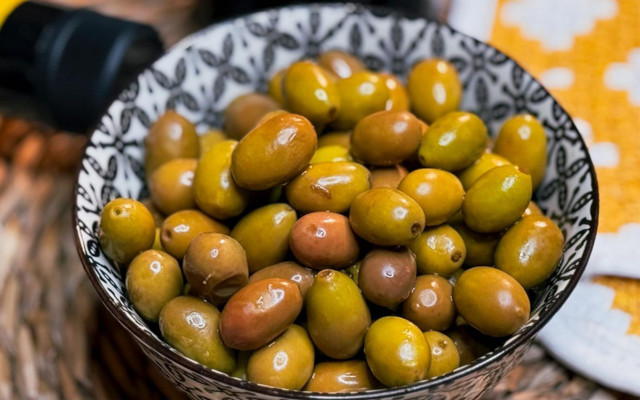
The table olives (or table) Italian olives are one of the distinctive elements of the Mediterranean diet and, at the same time, a chapter of the national agri-food sector that deserves greater enhancement. A fruit rich in history, identity cultivars, and bioactive compounds. From varieties with Geographical Indication to sustainable agronomic practices, each production expresses a deep connection to the territory.
Economy and market flows in the international context
The sector is dynamic and in structural expansion. The International Olive Council estimates the world production of table olives at about 3.32 million tons in the 2024/25 campaign (+19% from the previous year), with a forecast decline of 10% for the 2025/26, to about 2.99 million tons (IOC, 2026). Over the long term, growth is rapid: the consumption global è has increased by almost 194% in the last thirty years, steadily exceeding 3 million tons per year.
In theEuropean Union — main producing area, with about 858,000 tons in the campaign 2024/25 and consumption close to 600 thousand tons (COI, 2026) — Italy is the third producerafter Spain and Greece, despite representing only about 2% of world production (ASSOM, 2024). On May 18, 2026, the European Federation of Olive Industry (EFOI) — promoted by ASSOM for Italy, PEMETE for Greece and Asemesa for Spain — with the aim of representing in Brussels a supply chain whose products are consumed in nearly one hundred countries.
TheItaly stands out in this context for a structural deficitIn the last campaign with consolidated data, 2023/24, Italy produced about 77,000 tons of table olives and consumed 149,000 tons, almost double, with export for about 36,000 tons (ISMEA estimates presented by ASSOM, 2024). Early estimates for the 2025/26 campaign confirm the resilience of the sector: the Italian production of table olives is expected to slightly decline compared to the previous year (−3%), but remains 14% higher than the five-year average (Edagricole, 2026).
Historical roots of cultivation in the peninsula
The story of the olive tree is intertwined with that of the Mediterranean civilization. In Italy the plant was spread by the Greeks and Phoenicians, who found an ideal environment in the climate of the peninsula. The myth consecrates it: it is said that the goddess Athena donated the olive tree to men, winning the dispute with Poseidon for the patronage of Athens.
In ancient Rome olives were daily food and precious goods. The scale of that trade is still visible in the center of Rome at the Monte Testaccio, an artificial hill over thirty meters high made from shards of amphorae used to transport olive oil and its derivatives. A symbol of peace and longevity, the olive tree has shaped the landscape, cuisine, and identity of the country.
Botany and seasonality: why the olive is a drupe
The olive tree (Olea europaea L.) belongs to the family of Oleaceae. Its fruit is botanically one drupe, a fleshy fruit with a single woody seed in the center, like cherries e peaches.
Table cultivars are distinguished, in some varieties, by the larger size and the firmer pulp compared to those for oil.
The seasonality depends on variety and area. Flowering occurs between May and the first half of June. The Green olives are already harvested from September, at full size but before ripening; the Black olives at a more advanced stage, when the skin turns black-violet.
Botanical characteristics and harvest times
Italy preserves an extraordinary olive biodiversity: over 500 native varieties, of which about 50 are destined for table use. Production is concentrated in the South — Apulia, Calabria, Sicily, and Campania — but table olive growing is widespread elsewhere, each area with specific characteristics linked to the terroir. Today two-thirds of national olive growing is based on cultivars with dual aptitude, for oil and table use.
The agronomic practices aim for fruits of adequate size, firm pulp, and absence of defects, through targeted pruning, irrigation management, and phytosanitary protection. And especially, in Italy the 24% of the olive-growing area is cultivated according to the organic, which minimizes synthetic chemicals and protects soil and beneficial insects (ISMEA, 2025).
Geography of olive growing and certified productions
Italy boasts five Geographical Indication recognitions for its table olives:
- Oliva Ascolana del Piceno PDO (Marche): large green olive, tender and delicate, at the base of the famous stuffed Ascolana olives;
- Bella della Daunia PDO (Apulia, Foggia): from the Bella di Cerignola variety, large-sized, green or black, with meaty pulp and fruity and slightly bitter flavor;
- Nocellara del Belice PDO (Sicily): available green and black, firm pulp, sweet and bitter taste, stone that detaches easily;
- Oliva di Gaeta PDO (Lazio): from the Itrana variety, spheroidal shape and color from intense pink to dark violet, with winey and lactic-acetic notes;
- Taggiasca PGI (Liguria): small olive with color changing from green to black-violet; fruity taste with a distinct sweet sensation, spicy hints and aromas of almond and pine nuts.
Transformation biotechnologies and debittering processes
The freshly picked olive cannot be consumed due to oleuropein, a glucoside with an intensely bitter taste. Processing is necessary precisely to debitter the fruit and the chosen method defines its color, texture and aromatic profile (Perpetuini et al., 2020):
- the Spanish method (or Sevillian) treats green olives with alkaline soda solution, followed by washing and fermentation in brine guided by lactic acid bacteria;
- the Greek method (natural) instead works in brine only, with slower fermentation that preserves a more marked bitter taste;
- the type ‘Californian’ black olive combines alkaline treatment and air oxidation, with addition of ferrous gluconate (E579) to fix the dark color;
- the Castelvetrano method, typically Italian, instead uses a rapid and mild debittering that preserves the bright green and much of the phenolic compounds (Ambra et al., 2017; Alfonzo et al., 2024).
The heart of the process remains the lactic fermentation: selected starter cultures, such as Lactobacillus pentosus, accelerate and secure the process, reduce defects and allow strategies of salt reduction, nowadays particularly demanded by consumers (Campus et al., 2018; Bautista-Gallego et al., 2016).
Nutritional labeling and indications allowed in the EU
The food composition tables published by CREA (2019) assign the following nutritional values to different types of table olives.
| Value (per 100 g) | Green olives | Black olives | Preserved table olives | Green olives in brine |
| Energy (kcal) | 148 | 243 | 277 | 113 |
| Proteins (g) | 0,8 | 1,6 | 1,5 | 1,2 |
| Lipids (g) | 15 | 25,1 | 27 | 11 |
| Carbohydrates (g) | 1 | 0,8 | 5 | 1 |
| Dietary fiber (g) | 3 | 3,9 | 4,4 | 2,8 |
Based on data published by CREA and after verifying the actual contents of nutrients and micronutrients, the food sector operators can use, in the European Union, the nutrition claim that follow:
- ‘source of fiber’ (> 3 g per 100 g of product), for green, black and preserved olives (EC Regulation No. 1924/06, Annex);
- ‘source of iron’ for preserved table olives: 3.5 mg per 100 g, equal to 25.0% of the Nutrient Reference Value (NRV) indicated in Annex XIII to regulation (EU) 1169/2011, Annex XIII;
- ‘source of potassium’ for black olives: 432 mg, equal to 21.6% of the NRV).
Biological properties and findings of scientific research
Table olives — although less studied than extra virgin olive oil — have been the subject of scientific studies suggesting several possible health benefits, attributed to the presence of oleic acid and polyphenols such as hydroxytyrosol, tyrosol, and oleuropein (Rocha et al., 2020). EFSA (European Food Safety Authority) has not yet evaluated these studies for the authorization of specific health claim, in the absence of submission of the related applications.
Antioxidant and anti-inflammatory effects. A pilot study on Nocellara del Belice green olives observed a reduction of malondialdehyde (a marker of oxidative stress) and interleukin-6 (an inflammatory mediator) (Accardi et al., 2016). A double-blind randomized trial also showed that 15 mg per day of hydroxytyrosol for 16 weeks improve antioxidant and anti-inflammatory status, reducing oxidized LDL in overweight adults with prediabetes (Moratilla-Rivera et al., 2025).
Cardiovascular health. Hydroxytyrosol contributes to protecting blood lipids from oxidative stress, subject of a specific health claim authorized in EU (EFSA Panel on Dietetic Products, Nutrition and Allergies, 2011). In an animal model, the consumption of Arbequina table olives reduced the blood pressure by about 19 mmHg, lowering malondialdehyde and angiotensin II (Gómez-Contreras et al., 2023).
Intestinal microbiota. Fermentation makes olives a potential probiotic food: they carry live lactic acid bacteria and promote the development of beneficial microorganisms such as Akkermansia, Lactobacillus e Bifidobacterium, with prebiotic effects attributed to polyphenols (Gómez-Contreras et al., 2023; Montagano et al., 2024).
Bones and body weight. Olive phenolic compounds are also studied for the prevention of osteoporosis (Chin & Ima-Nirwana, 2016), while the same trial on Nocellara del Belice found a reduction in fat mass and an increase in muscle mass, suggesting a role in weight management (Accardi et al., 2016).
Sustainability: water, salt and green technologies
The sector's environmental challenge mainly concerns water management of processing, rich in salts and phenolic compounds. Research focuses on technologies of ‘green’ intensification — high-intensity ultrasounds and pulsed electric fields — capable of making deamarization faster and more sustainable, reducing water consumption and effluents (Muneratto & Polachini, 2026).
Adherence to the system organic and the enhancement of by-products (pomace, vegetation waters) as a source of polyphenols close the loop of the circular bioeconomy, transforming waste into functional ingredients (Montagano et al., 2024).
Green technologies and management of environmental impact
Table olives are extremely versatile: leading ingredients in appetizers, including rice salads, first and second courses, and naturally of focaccias and pizzas. They are consumed whole, pitted, stuffed or in pâté; the larger ones, like Ascolana del Piceno DOP and Bella di Cerignola, are ideal for stuffing, the smaller ones enrich sauces and dressings.
In the industry, they nourish preserves, spreads, baked goods, ready meals and snack. The processing techniques — brine, natural curing, fermentation — impart distinctive flavors and textures distinctive. It is no coincidence that quality control today also requires innovative tools for sensory control and varietal classification.
Uses in cooking and industrial processing
- Choose organic: the agricultural system most respectful of the environment and biodiversity, thanks to drastic limits on the use of synthetic pesticides
- Read the label: verify the origin of raw materials and the salt content in the product;
- Taste and experiment: every cultivar has a character, from the sweetness of Nocellara to the winey note of Itrana;
- consider PDO and PGI, where available, to certify origin, quality and connection with the territory, supporting local productions.
International buyers interested in importing certified quality Italian olives can rely on the expertise and network of contacts of our team of GIFT (Great Italian Food Trade).
Evaluation elements for consumers and buyers
The Italian table olive sector expresses a strategic potential high, based on the unique heritage of indigenous cultivars and the rigor of processing methods. The transition toorganic farming and the adoption of efficient debittering technologies respond precisely to the modern demands for quality and transparency expressed by the market. Supporting this supply chain, favoring PDO and PGI productions, means promoting a sustainable agri-food model and recognizing the rightful economic value of a Mediterranean excellence.
Dario Dongo
Credit cover Consortium for the Protection of Taggiasca Olive PGI
References
Institutional sources, statistics and databases
European Commission. (2026). Olive oil and table olives – Market data portal. Agri-food data portal. https://agridata.ec.europa.eu/extensions/DataPortal/olive-oil.html
International Olive Council. (2026). Olive sector statistics – December 2025 and forecasts. https://www.internationaloliveoil.org/olive-sector-statistics-december-2025-and-forecasts/
CREA – Research Center for Food and Nutrition. (2019). Table olives preserved (008800); Black olives (008810); Green olives (008820); Green olives in brine (008830). Food Composition Tables. https://www.alimentinutrizione.it
EFSA Panel on Dietetic Products, Nutrition and Allergies. (2011). Scientific Opinion on the substantiation of a health claim related to olive oil polyphenols and protection of LDL particles from oxidative damage. EFSA Journal, 9(4), 2033. https://doi.org/10.2903/j.efsa.2011.2033
ISMEA. (2025). Sector sheet and Trend Report – Olive oil. https://www.ismeamercati.it/olio-oliva
Ministry of Agriculture, Food Sovereignty and Forests. (n.d.). Table olives – Presentation. https://www.masaf.gov.it/flex/cm/pages/ServeBLOB.php/L/IT/IDPagina/20183
Scientific literature
Accardi, G., Aiello, A., Gargano, V., Gambino, C. M., Caracappa, S., Marineo, S., Vesco, G., Carru, C., Zinellu, A., Zarcone, M., Caruso, C., & Candore, G. (2016). Nutraceutical effects of table green olives: a pilot study with Nocellara del Belice olives. Immunity & Ageing, 13, 11. https://doi.org/10.1186/s12979-016-0067-y
Alfonzo, A., Alongi, D., Prestianni, R., Pirrone, A., Naselli, V., Viola, E., De Pasquale, C., La Croce, F., Gaglio, R., Settanni, L., Francesca, N., & Moschetti, G. (2024). Enhancing the quality and safety of Nocellara del Belice green table olives produced using the Castelvetrano method. Food Microbiology, 120, 104477. https://doi.org/10.1016/j.fm.2024.104477
Ambra, R., Natella, F., Bello, C., Lucchetti, S., Forte, V., & Pastore, G. (2017). Phenolics fate in table olives (Olea europaea L. cv. Nocellara del Belice) debittered using the Spanish and Castelvetrano methods. Food Research International, 100(Pt 1), 369–376. https://doi.org/10.1016/j.foodres.2017.07.027
Bautista-Gallego, J., Arroyo-López, F. N., Rantsiou, K., Jiménez-Díaz, R., Garrido-Fernández, A., & Cocolin, L. (2016). Fermented Aloreña table olives as a source of potential probiotic Lactobacillus pentosus strains. Frontiers in Microbiology, 7, 1606. https://doi.org/10.3389/fmicb.2016.01606
Campus, M., Değirmencioğlu, N., & Comunian, R. (2018). Technologies and trends to improve table olive quality and safety. Frontiers in Microbiology, 9, 617. https://doi.org/10.3389/fmicb.2018.00617
Chin, K. Y., & Ima-Nirwana, S. (2016). Olives and bone: a green osteoporosis prevention option. International Journal of Environmental Research and Public Health, 13(8), 755. https://doi.org/10.3390/ijerph13080755
Gómez-Contreras, A., Franco-Ávila, T., Miró, L., Juan, M. E., Moretó, M., & Planas, J. M. (2023). Dietary intake of table olives exerts antihypertensive effects in association with changes in gut microbiota in spontaneously hypertensive rats. Food & Function, 14(6), 2793–2806. https://doi.org/10.1039/d2fo02928f
Montagano, F., Dell’Orco, F., Prete, R., & Corsetti, A. (2024). Health benefits of fermented olives, olive pomace and their polyphenols: a focus on the role of lactic acid bacteria. Frontiers in Nutrition, 11, 1467724. https://doi.org/10.3389/fnut.2024.1467724
Moratilla-Rivera, I., Pérez-Jiménez, J., Ramos, S., Portillo, M. P., Martín, M. Á., & Mateos, R. (2025). Hydroxytyrosol supplementation improves antioxidant and anti-inflammatory status in individuals with overweight and prediabetes: A randomized, double-blind, placebo-controlled parallel trial. Clinical Nutrition, 52, 17–26. https://doi.org/10.1016/j.clnu.2025.07.006
Muneratto, V. M., & Polachini, T. C. (2026). Making table olives more sustainable: processing methods and green intensifying technologies. Critical Reviews in Food Science and Nutrition. Advance online publication. https://doi.org/10.1080/10408398.2026.2691228
Perpetuini, G., Prete, R., Garcia-Gonzalez, N., Khairul Alam, M., & Corsetti, A. (2020). Table olives more than a fermented food. Foods, 9(2), 178. https://doi.org/10.3390/foods9020178
Rocha, J., Borges, N., & Pinho, O. (2020). Table olives and health: a review. Journal of Nutritional Science, 9, e48. https://doi.org/10.1017/jns.2020.42
Trade press and associations
Assitol. (2025, November 23). Table olives, a heritage to be valued. https://www.assitol.it/olive-da-tavola-un-patrimonio-da-valorizzare/
Edagricole – Olive and Oil. (2026, May 19). EFOI, the European federation of table olives is born. https://olivoeolio.edagricole.it/attualita/efoi-federazione-europea-olive-da-tavola-filiera-mediterranea-ue/

Dario Dongo, lawyer and journalist, PhD in international food law, founder of WIISE (FARE - GIFT – Food Times) and Égalité.


