
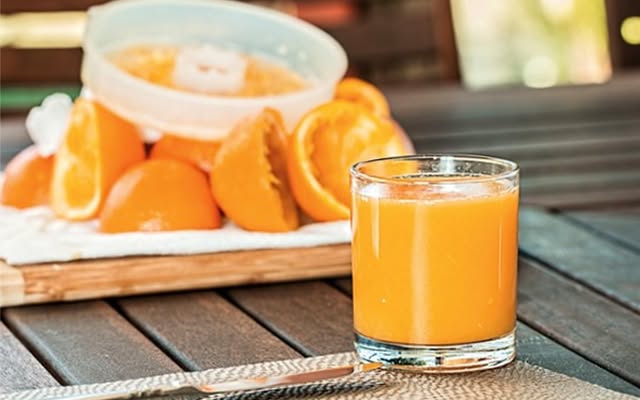
Freshly squeezed juice, juice from concentrate, nectar and orange drink are four distinct products in terms of composition, technology and average shelf price, ranging from about 1.50 to over 4 euro per litre. European rules (Dir. 2001/112/EC and Dir. EU 2024/1438, in force from 14 June 2026) reserve the designation juice for 100% products with no added sugars – where the commercial name ‘spremuta’ indicates not-from-concentrate (NFC) juice – while in Italy soft drinks sold under the name of orange must contain at least 20%of juice (Law 161/2014).
Italy, Europe's second largest orange producer with 1.79 million tonnes, enhances this supply chain through three geographical indications (Arancia Rossa di Sicilia PGI, Arancia di Ribera PDO and Arancia del Gargano PGI) with minimum juice yields set by the product specifications between 30% and 40%.
Below is the full analysis of legal denominations (including the new reduced-sugar categories), extraction and pasteurisation processes, average shelf prices recorded, CREA nutritional values, nutrition and health claims authorised in the European Union, and scientific evidence on potential health benefits.
Juice, nectar, drink: the legal denominations
The denominations of Fruit juices are reserved to products defined by European rules alone, implemented in Italy by legislative decree 151/2004 (dir. 2001/112/EC, Annex I):
- the orange juice is the fermentable but unfermented product obtained from the edible part of sound and ripe fruit, fresh or preserved by chilling. Aromas, pulp and cells separated during processing may be restored to the same juice, while the addition of sugars is excluded. The term ‘spremuta’ does not appear in the list of reserved denominations: in commercial usage it designates citrus juice not obtained from concentrate, referred to by operators as NFC (not from concentrate);
- the orange juice from concentrate is reconstituted with drinking water starting from a concentrated juice and must reach at least 11.2 degrees Brix, the measure of soluble solids (Directive 2001/112/EC, Annex V). The label bears the wording ‘from concentrate’, next to the sales denomination;
- the nectar of orange contains at least 50% juice, to which the producer may add water, sugars or sweeteners within the established limits (Directive 2001/112/EC, Annex IV). Soft drinks based on juice remain outside this regulation. However, those produced in Italy and sold under the name of orange must contain at least 20 grams of juice per 100 millilitres, a higher threshold than the 12% previously provided for (law 161/2014, art. 17). For drinks with juice from concentrate, the wording ‘from concentrate’ is not mandatory, precisely because they are excluded from the scope of the so-called ‘juice directive‘.
Juice with reduced sugar content, the new categories
From 14 June 2026 the changes of the Breakfast Directive, transposed by legislative decree 207/2025, apply. Three categories of juices with at least 30% less naturally occurring sugars are introduced:
- ‘fruit juice with reduced sugar content‘;
- ‘fruit juice from concentrate with reduced sugar content’;
- ‘concentrated fruit juice with reduced sugar content’.
To these is added the option to bear the wording ‘fruit juices contain only naturally occurring sugars’ (Directive (EU) 2024/1438; legislative decree 151/2004, art. 4.6-ter).
Production methods compared
The extraction of orange juice is carried out with different methods, both industrially and otherwise. Industries use two families of machines:
- cup extractors, where the whole fruit is compressed and separated in a single step into juice, peel, central part and essential oil emulsion;
- rotary extractors (reamers), in which the orange halves are pressed against rotating heads, as in a domestic citrus juicer;
- next come refining, to regulate the pulp, and deaeration under vacuum, to protect vitamin C from oxidation (Tetra Pak, n.d.).
The freshly squeezed juice freshly squeezed juice undergoes no treatment and must be consumed immediately: untreated fresh juice keeps refrigerated for no more than eight days. A small share of fresh juices is stabilised with high pressure (High Pressure Processing, HPP) – non-thermal technology reserved for refrigerated products Carlini, 2024) – as an alternative to pasteurization (Tetra Pak, s.d.).
the not-from-concentrate juice, (NFC, Not From Concentrate), like the one sent for concentration, is indeed subject to pasteurization at 95-98 °C for just 10-30 seconds. Just enough to inactivate the microorganisms and pectin methylesterase, the enzyme responsible for the loss of turbidity. The loss of vitamin C in this phase is minimal, equal to 2.3% in the most severe condition experienced. The juice can be stored loose for at least a year, frozen at -18 °C in drums or in aseptic tanks at around 0 °C: a seasonal harvest, concentrated in Italy from December to May, thus supplies the market for twelve months (Tetra Pak, n.d.). Before packaging the juice is pasteurised again, at 80-95 °C for 15-30 seconds, then aseptically filled for ambient-temperature distribution or cooled for chilled-cabinet products (Tetra Pak, n.d.).
the concentrate results from vacuum evaporation at high temperature and short time: the juice, preheated to 95-98 °C, loses water down to 65-66 degrees Brix, while the volatile aromas are recovered separately to be returned upon reconstitution. Stored at temperatures between -10 and -25 °C, frozen concentrated orange juice (Frozen Concentrated Orange Juice, FCOJ) takes up about one sixth of the initial volume, is transported in bulk at around -8 °C and keeps for years (Tetra Pak, n.d.).
I nectars and beverages are obtained by blending juice, almost always from concentrate, water and other ingredients. Nothing is wasted: the peel provides essential oil, equal to about 0.3% of the fruit, while the pressing residue, about half the weight of the oranges, is used as a raw material for feed or other supply chains (Tetra Pak, n.d.).
| Product | Method | Storage | Average price per litre
|
| Freshly squeezed juice | squeezed on the spot, no treatment | refrigerated, up to 8 days | N/A |
| 100% squeezed or not-from-concentrate juice | extraction, pasteurisation at 95-98 °C for 10-30 s or high pressure | chilled cabinet or aseptic at room temperature | about €4 (GIFT, orange); €4.13 for fresh juices (Circana, all flavours) |
| 100% juice from concentrate | evaporation up to 65-66 °Brix, reconstitution with water, restoration of aromas | aseptic at room temperature | €1.82 (GIFT, orange) |
| nectar | at least 50% juice, water, sugars or sweeteners | aseptic at room temperature | €1.62 (Circana, all flavours) |
| Juice-based drink | at least 20% juice if produced in Italy under the name of orange | room temperature | €1.56 (GIFT, orange); €1.48 (Circana, all flavours) |
Shelf price segments
Circana's surveys for the year ending August 2025 measure sales in Italy – in the Italian modern retail channel – of juices, nectars and fruit drinks, of all flavours, for 515 million litres, equal to 864 million euros, at an average price of 1.68 euros per litre:
- chilled fresh juices account for 3.2% of volumes but as much as 10.4% of value, thanks to an average price of 4.13 euros per litre;
- nectars, about a quarter of volumes, stop at 1.62 euros;
- the other fruit drinks, equal to 62.9% of volumes, at 1.48 euros (Beverfood.com, 2025).
The GIFT survey on 50 freshly squeezed juices, juices and orange-based drinks confirms the same scale for the single flavour orange: about 4 euros per litre for freshly squeezed juices, with extremes from 2.52 to 7.96 euros, 4.96 euros for organic freshly squeezed juices, 1.82 euros for juices from concentrate, 1.56 euros for drinks (Strinati, 2024).
the price reflects the method. With a juice yield of 40%, the minimum value required for Arancia di Ribera PDO, about 2.5 kilograms of fruit are needed for one litre of freshly squeezed juice, to which the cold chain and a short shelf life must be added. Concentrate, which can be stored for years in one sixth of the volume, instead allows economies of scale in transport, storage and packaging.
Market and citrus supply chain
In 2025, the Italian oranges reached 1.79 million tonnes on 86,219 hectares in production, 23.7% less than the 2.35 million of 2006. Italy accounts for the 30,5% of the harvest of the European Union, behind Spain with 50.3% (ISTAT, 2026). Sicily concentrates 65% of the surface, Calabria 21% (ISMEA, 2026).
the foreign trade follows the season. In 2024/25 Italy exported 171,579 tonnes of oranges worth 160.3 million euros and imported 121,644 tonnes worth 153 million; from October 2025 to February 2026 the balance turned back positive worth 57.3 million (ISMEA, 2026). Italy mainly sells pigmented varieties and buys blond ones: in 2025 the ‘other sweet oranges’ category, which includes the red ones, generated 79 million euros of exports against 19 million of imports, while Navel and blond oranges totalled 60 million of exports against 132 million of imports (MAECI, 2026). Domestic purchases of fresh oranges fell in 2024 to 344 kt, with packaged produce, 191 kt, ahead of loose produce for the first time (Fellin, 2026).
the juice market has a distant centre of gravity. For the 2025/26 season the United States Department of Agriculture estimates world orange juice production at 1.35 million tonnes at 65 degrees Brix, of which 1.03 million in Brazil. The European Union produces 58 kt of it, consumes 304 kt, imports 360 kt, and sends 750 kt of oranges out of the 5.6 million harvested to processing (USDA, 2026). In Italy most oranges are consumed fresh (USDA, 2025).
Private research firms help to observe trends rather than to measure volumes. Straits Research estimates the global market for not-from-concentrate juices at 2.38 billion dollars in 2025, with a compound annual growth rate (CAGR) of 3.74% up to 3.31 billion in 2034; Europe accounts for more than a third of it, and orange is the leading flavour (Straits Research, 2026).
From the ‘portogallo’ to frozen concentrate, the historical milestones
The bitter orange tree, cultivated in Arabia since the end of the 9th century, is recorded as present in Sicily from the year 1002 (Treccani, n.d.). The sweet orange tree, Citrus sinensis, reached the Mediterranean only in the second half of the 15th century, along the trade routes opened by the Genoese and then by the Portuguese (Langgut, 2017): hence the name ‘portogallo’, recorded in the Italian language as a synonym for sweet orange (Treccani, n.d.).
In the Verdura valley, in the province of Agrigento, documents record from the early nineteenth century shipments of ‘melarance’, the old name for sweet oranges, to Palermo and America. The first Brasiliano plants, a seedless blond navel orange of the Navel group, purchased in Palermo around the 1930s, covered about a hundred hectares in 1940 (Arancia di Ribera PDO specification, article 6).
the twentieth century brought oranges into the industry’s glass. In 1932 Ezio Granelli presented orangeade Sanpellegrino, the forerunner of Italian juice-based drinks (Sanpellegrino, n.d.). In the 1940s, in Florida, Louis G. MacDowell of the Florida Citrus Commission realised that adding a small amount of fresh juice to the vacuum-produced concentrate restored its aroma and flavour: this is how frozen concentrated juice, intended to transform a perishable fruit into a global raw material (USDA Agricultural Research Service, n.d.).
PDO and PGI, the product specifications in brief
The three designations PDO and PGI registered certified about 35 kt of oranges in 2023, equal to only around 2% of Italy’s total orange harvest (Fondazione Qualivita, n.d.-a; n.d.-b; n.d.-c). Their specifications also set the requirements for the juice, benchmark parameters for those who produce freshly squeezed juices.
Arancia Rossa di Sicilia PGI
The Arancia Rossa di Sicilia PGI, registered under Regulation (EC) 1107/96, includes the varieties Tarocco, Moro, Sanguinello, grown in purity in 32 municipalities of the provinces of Catania, Syracuse and Enna. The specification updated in March 2026 allows 36 cultivars, 27 of which are Tarocco, and raises the maximum yield to 45 tonnes per hectare, with no more than 1,111 trees per hectare, degreening being prohibited (specification, articles 2, 3, 5).
The minimum juice yield of the fruit is set at 30% juice by weight, with sugars of not less than 10 degrees Brix for Tarocco, 9 for Moro and Sanguinello, and a soluble solids/acids ratio of at least 8. A further rule applies to juice: the smaller sizes may be sold as ‘juicing’ oranges up to size 10, while from size 11 the fruits are intended solely for industry. The entire production can in any case be sent for processing into juices, with bins and transport documents bearing the designation (product specification, articles 2, 8).
The protection Consortium has over 500 farms, more than 7,200 hectares certified, of which about a thousand organic (14% of the UAA), and over 300 labels authorised to mention the designation in the list of ingredients; in the 2025/26 season it marketed over 24 kt (Consorzio di Tutela Arancia Rossa di Sicilia PGI, 2026).
Arancia di Ribera PDO
Registered under Regulation (EU) 95/11, the Arancia di Ribera PDO brings together the seedless blond navel varieties Brasiliano, Washington Navel and Navelina, grown in thirteen municipalities of the Agrigento area and in Chiusa Sclafani, in the Palermo area (product specification, articles 2-3). The juice must account for at least 40% of the fruit, with soluble solids from 9 to 15 degrees Brix, acidity from 0.75 to 1.50, and a soluble solids/acid ratio of no less than 8 (product specification, article 2).
The orchards have between 400 and 650 trees per hectare, yield does not exceed 40 tonnes, harvesting runs from November to the end of February for Navelina, and from December to the end of May for the other varieties. Degreening, waxes and chemical treatments after harvesting are prohibited: the fruit is only washed with drinking water, a quality appreciated by those who also use the peel (product specification, Article 5). In 2023 certified production reached 8,144 tonnes, with 309 operators (Fondazione Qualivita, n.d.-b).
Arancia del Gargano PGI
The Arancia del Gargano PGI, registered with reg. CE 1017/07, modified with reg. exec. EU 2017/2183, protects the Biondo Municipality of Gargano and the Duretta, known as 'tough orange', in the municipalities of Vico del Gargano, Ischitella, Rodi Garganico in the province of Foggia, Puglia (regulation, articles 2-3). The specification prescribes sugars of no less than 9% for the Biondo, 10% for the Duretta, a minimum juice yield of 35% with hand pressing, maximum yields of 30 and 25 tons per hectare, traditional plantings of 250 to 400 plants per hectare.
Staggered harvesting, from 1 December to 30 April for the Duretta and from 15 April to the end of August for the Biondo, provides Italian juicing oranges right through to the summer (product specification, Articles 2, 5). Certified volumes are small, 5.1 tonnes in 2023 with 16 operators (Fondazione Qualivita, n.d.-c).
| Designation | Registration | Area | Juice requirements | Maximum yield | Certified 2023
|
| Arancia Rossa di Sicilia PGI | Regulation (EC) 1107/96; product specification amended in 2026 | 32 municipalities in the provinces of Catania, Syracuse and Enna | at least 30% juice; 10 °Brix for Tarocco, 9 °Brix for Moro and Sanguinello | 45 t/ha | 26,791 t |
| Arancia di Ribera PDO | Regulation (EU) 95/11 | 13 municipalities in the province of Agrigento, 1 in the province of Palermo | at least 40% juice; 9-15 °Brix | 40 t/ha | 8,144 t |
| Arancia del Gargano PGI | Regulation (EC) 1017/07; Implementing Regulation (EU) 2017/2183 | 3 municipalities in the province of Foggia | at least 35% juice, hand squeezed; sugars 9% for the Biondo, 10% for the Duretta | 30 t/ha for the Biondo, 25 t/ha for the Duretta | 5.1 t |
Nutritional values
The food composition tables published by CREA — Food and Nutrition Research Centre (2019) attribute to fresh blond orange juice and fresh blood orange juice the nutritional values set out below, per 100 g, presented in the order required for the nutrition declaration (Regulation (EU) 1169/11, Article 30) (CREA, 2019a; 2019b).
| Per 100 g | Fresh blond orange juice | Fresh blood orange juice
|
| Energy | 159 kJ / 38 kcal | 163 kJ / 39 kcal |
| Fat | traces | traces |
| of which saturates | N/A | N/A |
| Carbohydrate | 9.6 g | 9.8 g |
| of which sugars | 9.6 g | 9.8 g |
| Fibre | 0 g | 0 g |
| Protein | 0.5 g | 0.5 g |
| Salt | N/A | N/A |
| Vitamin C | 44 mg (55% NRV) | 45 mg (56.3% NRV) |
| Vitamin A | 119 µg (14.9% NRV) | 107 µg (13.4% NRV) |
The values refer to 100 g, and are therefore slightly higher when expressed per 100 ml. Vitamins and minerals are listed only where they exceed, in the case of beverages, 7.5% of the nutrient reference values set out in Annex XIII to Regulation (EU) No 1169/2011 per 100 ml (Regulation (EU) 1169/11, Annex XIII, Part A, point 2). Calcium, phosphorus, iron, thiamine and riboflavin, although present, remain below this threshold.
The values reported by CREA make it possible to consider the possible use, in commercial communication within the European Union, of the nutrition claim ‘high in vitamin C’ and ‘source of vitamin A’ (Regulation (EC) 1924/06, Annex). Where these conditions are met, reference may also be made to the health claim authorised ones, such as ‘Vitamin C contributes to the normal function of the immune system’ and ‘Vitamin C contributes to the protection of cells from oxidative stress’ (Regulation (EU) 432/12, Annex). Actual compliance with the thresholds established for the use of nutrition claims must in any case be verified through analyses on representative samples of the products ready for consumption, within the end of their shelf-life. The tolerances on the minimum values subject to a claim are limited solely to measurement uncertainty (Dongo, 2023).
The team at FARE (Food and Agriculture Requirements) supports operators, protection consortia and their representative bodies in enhancing supply chains and products from these and other perspectives, in compliance with the regulations in force in the various EU and non-EU destination markets.
Possible health benefits
Research suggests potential health benefits associated with the consumption of orange juice, which would deserve further investigation, also with a view to the possible development of authorisation applications for specific health claims:
- a meta-analysis of ten randomised controlled trials associated orange juice consumption with significant reductions in blood glucose (-2.9 mg/dl), in the HOMA-IR insulin resistance index, in total cholesterol (-9.8 mg/dl), in LDL cholesterol (-9.1 mg/dl) and in C-reactive protein, with more robust effects for intakes of at least 500 ml per day (Alhabeeb et al., 2022);
- blood orange juice combines, with the flavanones, like hesperidin, le anthocyanins, in particular cyanidin-3-glucoside. In fifteen overweight adults, 400 ml per day for two weeks improved flow-mediated dilation of the brachial artery, from 8.15% to 10.2% (Li et al., 2020). In twelve overweight women, 500 ml per day of Moro orange juice for four weeks increased the production of short-chain fatty acids by the gut microbiota and improved blood pressure (Corrêa et al., 2023).
In any case, juice can accompany whole fruit, which is rich in fibre, without replacing it. The health claims that can be used on the label remain those authorised in relation to vitamins.
Uses in the kitchen, at the bar, in pastry-making
Freshly squeezed juice accompanies breakfast at the bar, and is used in cocktails and soft drinks. In cooking, the juice adds aroma to fish marinades, reductions for duck, risottos. Sicily finds it again in the blood orange salad with fennel e Olives. In pastry-making it flavours creams, syrups and glazes, while untreated peels become candied peel and marmalades.
What sets Made in Italy orange juices apart
The first distinctive feature is the colour. Tarocco, Moro and Sanguinello offer a naturally red juice, rich in anthocyanins, different from that of the blond varieties on which the large-scale productions in Brazil and Florida (USA) are based.
The second is the scale. Brazil produces over three quarters of global orange juice, while the European Union produces less than a fifth of what it consumes (USDA, 2026). The Italian supply chain processes smaller volumes close to the citrus groves and supplements its offering with juices squeezed from domestic oranges, blood or blond, alongside juices from concentrate.
The third is the origin. More than 300 labels are authorised to mention Arancia Rossa di Sicilia PGI in the list of ingredients. In the GIFT survey, nine out of seventeen juices declared Italian oranges (Strinati, 2024). Adding value is therefore possible, with the sole limitation of citrus production capacity, which is still far from meeting demand. At European level, the Commission will have to submit by 14 June 2027 a report on the feasibility of indicating the origin of fruit in juices (Directive (EU) 2024/1438); the studypreparatory study, published in 2026, analysed its supply chains and scenarios (European Commission et al., 2026).
The fourth is the 20% rule: all orange drinks, in Italy, must contain at least one fifth of it. Less water and other ingredients, in favour of juice.
Conclusions
Orange juice includes different products: freshly squeezed juice or juice, juice from concentrate, nectar and drink correspond to different methods, costs and prices, declared on the label by the sales denomination. Italy takes part in this market with modest volumes compared to the major exporters, but with three registered denominations, characteristic pigmented varieties and a nutritional profile centred on vitamin C. Origin, variety and processing method are the levers to add value to Italian squeezed and other juices on EU and non-EU markets.
Dario Dongo
Frequently asked questions
How do freshly squeezed juice, juice and orange juice from concentrate differ? Freshly squeezed juice or juice is a 100% not-from-concentrate juice, only pasteurised or treated with high pressure. Juice from concentrate is reconstituted with water after evaporation, with the aromas restored, and this is declared on the label.
How much juice must an orange drink produced in Italy contain? At least 20 grams of orange juice per 100 millilitres, if the drink is sold under the name of the orange (law 161/2014, art. 17). Orange nectar, on the other hand, contains at least 50% of it.
How much do squeezed and other orange juices cost? About 4 euros per litre for freshly squeezed juices, 1.82 euros for juices from concentrate, 1.56 euros for drinks, according to the GIFT survey on 50 products. Circana indicates 4.13 euros per litre for fresh juices of all flavours.
Which Italian oranges are PDO or PGI? Arancia Rossa di Sicilia PGI, Arancia di Ribera PDO and Arancia del Gargano PGI. The product specifications require a minimum juice yield of 30%, 40% and 35%.
How much vitamin C does orange juice contain? According to CREA, 44 mg per 100 g for fresh juice from blond oranges and 45 mg for that from blood oranges, more than half of the nutrient reference value.
Does orange juice help control cholesterol? A meta-analysis of ten clinical studies found reductions in total and LDL cholesterol, more robust with at least 500 ml per day. Juice complements whole fruit, without replacing it.
What sets Italian orange juice apart? The pigmented varieties Tarocco, Moro and Sanguinello, the origin certified by PDO and PGI, the processing close to the citrus groves.
References
Scientific studies on orange juice
Alhabeeb, H., Sohouli, M. H., Lari, A., Fatahi, S., Shidfar, F., Alomar, O., Salem, H., Al-Badawi, I. A., & Abu-Zaid, A. (2022). Impact of orange juice consumption on cardiovascular disease risk factors: A systematic review and meta-analysis of randomized-controlled trials. Critical Reviews in Food Science and Nutrition, 62(12), 3389-3402. https://doi.org/10.1080/10408398.2020.1865263
Corrêa, T. A. F., Tobaruela, E. C., Capetini, V. C., Quintanilha, B. J., Cortez, R. V., Taddei, C. R., Hassimotto, N. M. A., Hoffmann, C., Rogero, M. M., & Lajolo, F. M. (2023). Blood orange juice intake changes specific bacteria of gut microbiota associated with cardiometabolic biomarkers. Frontiers in Microbiology, 14, 1199383. https://doi.org/10.3389/fmicb.2023.1199383
Li, L., Lyall, G. K., Martinez-Blazquez, J. A., Vallejo, F., Tomas-Barberan, F. A., Birch, K. M., & Boesch, C. (2020). Blood orange juice consumption increases flow-mediated dilation in adults with overweight and obesity: A randomized controlled trial. The Journal of Nutrition, 150(9), 2287-2294. https://doi.org/10.1093/jn/nxaa158
Food composition
CREA – Research Centre for Food and Nutrition. (2019a). Food composition tables: Blond oranges juice, fresh (code 008011). https://www.alimentinutrizione.it/tabelle-nutrizionali/008011
CREA – Research Centre for Food and Nutrition. (2019b). Food composition tables: Blood oranges juice, fresh (code 008012). https://www.alimentinutrizione.it/tabelle-nutrizionali/008012
Dongo, D. (2023, 29 June). Nutrition and health claims, what tolerances on declared values? Food Times. https://www.foodtimes.eu/it/consumatori-e-salute/nutrition-health-claims-tolleranze-valori-dichiarati/
Official production and trade statistics
ISMEA. (2026, 15 June). Tendenze Agrumi no. 1/2026. https://www.ismeamercati.it/flex/cm/pages/ServeBLOB.php/L/IT/IDPagina/13890
ISTAT. (2026, 4 September). Crop and livestock production. Year 2025. https://www.istat.it/wp-content/uploads/2026/09/Focus_Produzioni-agricole-e-zootecniche_Anno-2025-rev-7-settembre.pdf
Ministry of Foreign Affairs and International Cooperation, Economic Observatory. (2026, April). Italy’s trade in the citrus sector. https://www.infomercatiesteri.it/public/osservatorio/interscambio-commerciale-settoriale/Interscambio_Agrumicolo_%2010_04_2026_1775820144.pdf
USDA Foreign Agricultural Service. (2025). Citrus Annual: European Union (GAIN report E42025-0032). https://apps.fas.usda.gov/newgainapi/api/Report/DownloadReportByFileName?fileName=Citrus+Annual_Madrid_European+Union_E42025-0032.pdf
USDA Foreign Agricultural Service. (2026, January). Citrus: World Markets and Trade. https://apps.fas.usda.gov/psdonline/circulars/citrus.pdf
Market analysis and trade press
Beverfood.com. (2025, 26 November). Fruit juices and drinks in 2025, volumes still falling in modern retail. https://www.beverfood.com/mercato-succhi-bevande-frutta-italia-calo-vendite/
Fellin, V. (2026, 1 January). Squeezing the future: the challenge of value beyond volumes. Fresh Point Magazine. https://www.freshpointmagazine.it/en/spremere-il-futuro-la-sfida-del-valore-oltre-i-volumi/
Straits Research. (2026, 19 October). NFC juices market size, share and forecast to 2034. https://straitsresearch.com/report/nfc-juices-market
Strinati, M. (2024, 30 April). Freshly squeezed juices, juices and orange-based drinks. 50 compared. Great Italian Food Trade. https://www.greatitalianfoodtrade.it/notizie/spremute-succhi-e-bevande-a-base-di-arancia-50-a-confronto/
Processing technologies
Carlini, F. (2024, 8 August). High pressure processing, HPP, applications. Food Times. https://www.foodtimes.eu/it/ricerca/processi-ad-alta-pressione-hpp-applicazioni/
Tetra Pak. (n.d.). The Orange Book. https://orangebook.tetrapak.com/
History of citrus fruits and juices
Istituto della Enciclopedia Italiana. (n.d.). Arancio. Treccani online encyclopaedia. https://www.treccani.it/enciclopedia/arancio/
Langgut, D. (2017). The citrus route revealed: From Southeast Asia into the Mediterranean. HortScience, 52(6), 814-822. https://doi.org/10.21273/HORTSCI11023-16
Sanpellegrino. (n.d.). Tasteful Italian story. https://sanpellegrino.com/node/91
USDA Agricultural Research Service. (n.d.). Image number K7237-8 (frozen concentrated orange juice). https://www.ars.usda.gov/oc/images/photos/k7237-8/
EU legislation on juices, labelling, nutrition and health claims
Council Directive 2001/112/EC of 20 December 2001 relating to fruit juices and certain similar products intended for human consumption. Consolidated text: 14/06/2026. http://data.europa.eu/eli/dir/2001/112/2026-06-14
Directive (EU) 2024/1438 of the European Parliament and of the Council of 14 May 2024 amending Council Directives 2001/110/EC relating to honey, 2001/112/EC relating to fruit juices and certain similar products intended for human consumption, 2001/113/EC relating to fruit jams, jellies and marmalades and sweetened chestnut purée intended for human consumption, and 2001/114/EC relating to certain partly or wholly dehydrated preserved milk for human consumption. OJ L, 2024/1438, 24.5.2024. http://data.europa.eu/eli/dir/2024/1438/oj
Regulation (EU) No 1169/2011 of the European Parliament and of the Council of 25 October 2011 on the provision of food information to consumers. Consolidated text: 01/04/2025. http://data.europa.eu/eli/reg/2011/1169/2025-04-01
Regulation (EC) No 1924/2006 of the European Parliament and of the Council of 20 December 2006 on nutrition and health claims made on foods. Consolidated text: 13/12/2014. http://data.europa.eu/eli/reg/2006/1924/2014-12-13
Commission Regulation (EU) No 432/2012 of 16 May 2012 establishing a list of permitted health claims made on foods, other than those referring to the reduction of disease risk and to children’s development and health. Consolidated text: 20/08/2025. http://data.europa.eu/eli/reg/2012/432/2025-08-20
European Commission, Directorate-General for Agriculture and Rural Development, Areté, S&P Global Energy CERA Consulting, Gentile, M., Loi, A., Piccoli, G., Bradley, D., & Christodoulou, M. (2026). Study assessing the feasibility of country of origin labelling for fruits used to manufacture fruit juices and jams. Publications Office of the European Union. https://op.europa.eu/en/publication-detail/-/publication/7115cd54-b175-11f1-b9e5-01aa75ed71a1/language-en
Italian legislation on juices, nectars and other drinks
Legislative Decree No 151 of 21 May 2004. Implementation of Directive 2001/112/EC relating to fruit juices and certain similar products intended for human consumption. Normattiva. Latest consolidated version: 05/01/2026. https://www.normattiva.it/uri-res/N2Ls?urn:nir:stato:decreto.legislativo:2004;151
Legislative Decree No 207 of 30 December 2025. Implementation of Directive (EU) 2024/1438. Official Gazette, General Series No 3 of 5 January 2026. https://www.gazzettaufficiale.it/eli/id/2026/01/05/26G00001/sg
Law No 161 of 30 October 2014. Provisions for the fulfilment of the obligations arising from Italy’s membership of the European Union – European Law 2013-bis, Article 17. Normattiva. Latest consolidated version: 24/05/2017. https://www.normattiva.it/uri-res/N2Ls?urn:nir:stato:legge:2014-10-30;161
Geographical indications and product specifications
Commission Regulation (EC) No 1107/96 of 12 June 1996 on the registration of geographical indications and designations of origin under the procedure laid down in Article 17 of Council Regulation (EEC) No 2081/92. Consolidated text: 20/11/2008. http://data.europa.eu/eli/reg/1996/1107/2008-11-20
Commission Regulation (EC) No 1017/2007 of 30 August 2007 entering a designation in the register of protected designations of origin and protected geographical indications (Arancia del Gargano (PGI)). OJ L 227, 31.8.2007. http://data.europa.eu/eli/reg/2007/1017/oj
Commission Regulation (EU) No 95/2011 of 3 February 2011 entering a name in the register of protected designations of origin and protected geographical indications [Arancia di Ribera (PDO)]. OJ L 30, 4.2.2011. http://data.europa.eu/eli/reg/2011/95/oj
Commission Implementing Regulation (EU) 2017/2183 of 21 November 2017 approving non-minor amendments to the specification for a name entered in the register of protected designations of origin and protected geographical indications (Arancia del Gargano (PGI)). OJ L 309, 24.11.2017. http://data.europa.eu/eli/reg_impl/2017/2183/oj
Publication of the communication of an approved standard amendment to a product specification of a geographical indication in accordance with Article 5(4) of Commission Delegated Regulation (EU) 2025/27, ‘Arancia Rossa di Sicilia’ (PGI-IT-0317-AM01). OJ C, C/2026/3487, 2.7.2026. http://data.europa.eu/eli/C/2026/3487/oj
Ministry of Agriculture, Food Sovereignty and Forestry. (2026). Decree of 18 March 2026, Standard amendment to the product specification of the Protected Geographical Indication ‘Arancia Rossa di Sicilia’. Gazzetta Ufficiale, General Series No 72 of 27 March 2026. https://www.gazzettaufficiale.it/eli/id/2026/03/27/26A01490/SG
Consorzio di Tutela Arancia Rossa di Sicilia PGI. (2026, 21 July). Arancia Rossa di Sicilia PGI, 2025-2026 harvest. https://www.tutelaaranciarossa.it/arancia-rossa-di-sicilia-igp-raccolto-2025-2026/
Product specification of the Protected Geographical Indication ‘Arancia Rossa di Sicilia’. https://www.tutelaaranciarossa.it/nuovo/wp-content/uploads/2026/06/DISCPLINARE_AranciaRossadiSiciliaIGP.pdf
Product specification of the Protected Designation of Origin ‘Arancia di Ribera’. https://www.italiaatavola.net/images/contenutiarticoli/Disciplinare_Arancia_di_Ribera.pdf
Ministry of Agricultural, Food and Forestry Policies. (2017). Measure of 28 November 2017, Amendment to the product specification of the designation ‘Arancia del Gargano’. Gazzetta Ufficiale, General Series No 288 of 11 December 2017. https://unionalimentari.com/wp-content/uploads/2024/09/Mipaaf-Provv-28.11.2017-Arancia-del-GarganoCOMPL.pdf
Fondazione Qualivita. (n.d.-a). Arancia del Gargano PGI. Qualigeo. https://www.qualigeo.eu/prodotto-qualigeo/arancia-del-gargano-igp/
Fondazione Qualivita. (n.d.-b). Arancia di Ribera PDO. Qualigeo. https://www.qualigeo.eu/prodotto-qualigeo/arancia-di-ribera-dop/
Fondazione Qualivita. (n.d.-c). Arancia Rossa di Sicilia PGI. Qualigeo. https://www.qualigeo.eu/prodotto-qualigeo/arancia-rossa-di-sicilia-igp/

Dario Dongo, lawyer and journalist, PhD in international food law, founder of WIISE (FARE - GIFT – Food Times) and Égalité.


: regole UE 2026, prezzi a scaffale, DOP e IGP, valori CREA e benefici.)