

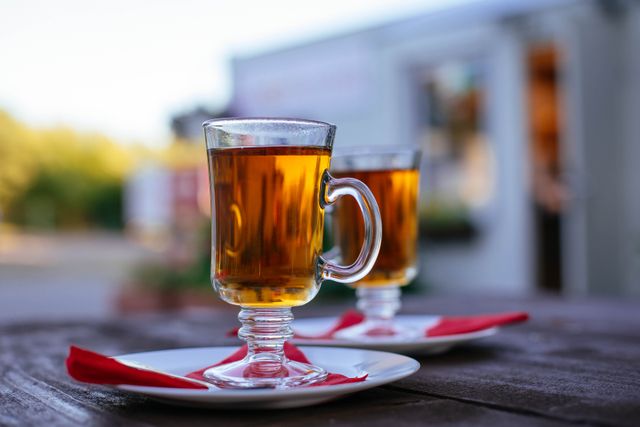
What are the real biological properties of honey validated by science and how they fit into the European labeling legislation? Jean Valnet's grog, father of French phytotherapy, answers this question by exploiting the soothing action of the food and the bioavailability of the spices.
A review of clinical evidence published in high-impact scientific journals (indexed in quartiles Q1 and Q2) analyzes the benefits of honey on multiple fronts: effectiveness against cough, modulation of the immune system, antioxidant and antimicrobial activity.
This solid scientific basis, however, clashes with the strict consumer information restrictions imposed by the Food Information Regulation (EU) No 1169/11 and by Nutrition and Health Claims Regulation (EC) No 1924/06, which prohibit claiming such health statements without specific authorizations.
The grog according to Jean Valnet
Among the many versions circulating, only one is based on the coding by Jean Valnet (1920–1995), military doctor and one of the fathers of modern French phytotherapy and aromatherapy. Studying the properties of honey and plants, Valnet developed a simple recipe for the domestic preparation of grog, designed for the early stages of colds.
It is a different interpretation from the seafaring one. The recipe with rum and lime is instead attributed to Vice Admiral Edward Vernon (1684–1727), devised on board to slow liquid spoilage and ration alcohol: nicknamed ‘Old Grog’ for the grogram cloak (adapted in Italian as grogrè or gros-grain) he wore, he named the drink. Valnet’s herbal grog preserves the gesture but reverses the substance, replacing the spirit with honey and spices.
The original recipe
The original version of grog calls for few ingredients: for one cup, a clove and a piece of cinnamon bark to boil for 3 minutes. It is then infused for 20 minutes with a sprig of thyme, after which lemon juice and a spoonful of honey, preferably lavender, are added. Grog should be drunk hot, 2–4 cups a day for 2–5 days, according to Dr. Jean Valnet's advice (1978).
In this preparation, honey is not only a functional ingredient but acts as a vehicle for the aromas and active compounds of lemon and spices. Traditional Chinese medicine frames honey within the homology between food and medicine, Ayurveda defines it as Yogavahi, the carrier that improves its bioavailability (Sharaf El-Din et al., 2025).
Honey in brief: nutritional values
According to the tables of CREA (food code 210010), 100 grams of honey provide 304 kcal (1270 kJ), with 80.3 g of carbohydrates — entirely sugars — 0.6 g of protein, no lipids and 18% water. The micronutrient profile is relatively modest, being predominantly sugary.
Following are the contents of micronutrients, compared with the Nutrient Reference Values (NRV) indicated in Regulation (EU) No. 1169/2011, Annex XIII. Their presence cannot be displayed on labels and advertisements, as it is below 15% of the respective NRVs, but it is nevertheless notable as a distinguishing factor between honey and sugar.
| Micronutrient | Amount / 100 g | % of NRV |
| Iron | 0.5 mg | 3,6% |
| Riboflavin (vit. B2) | 0.04 mg | 2,9% |
| Potassium | 51 mg | 2,5% |
| Niacin (vit. B3) | 0.30 mg | 1,9% |
| Vitamin C | 1 mg | 1,2% |
| Phosphorus | 6 mg | 0,9% |
| Magnesium | 3 mg | 0,8% |
| Calcium | 5 mg | 0,6% |
The value of honey resides mainly in the minor fraction of phenolic compounds (flavonoids and phenolic acids), to which the literature attributes the various biological activities mentioned below (Rahmani & Babiker, 2025; Stefanis et al., 2023).
Documented benefits: summary of evidence
Cough and upper respiratory tract
The contribution of honey in managing cough and other symptoms of respiratory tract upper, as once suggested by Jean Valnet:
- cannot be claimed in commercial information related to the food, due to the express prohibition of reg. (EU) n. 1169/11, article 7.3;
- is however supported by evidence published in journals scientific most prestigious (indexed in Scopus and ranked in quartiles Q1–Q2 according to SCImago, SJR).
| Evidence | Population | Primary outcome | Source (quartile) |
| Meta-analysis (Oxford) | Adults and children | Honey superior to usual care in symptom score, frequency, and severity of cough | Abuelgasim et al., 2021 (Q1) |
| Cochrane Review, 6 RCTs | 899 children | Reduces cough symptoms more than placebo and salbutamol (up to 3 days) | Oduwole et al., 2018 (Q1) |
| Systematic review, 10 studies | Children | Favorable profile confirmed, with methodological limitations | Kuitunen & Renko, 2023 (Q1/Q2) |
| Rapid review, hive products | Adults and children | Reduction in duration and impact of post-infective cough | Arentz et al., 2021 (Q1/Q2) |
Immune modulation
The most prestigious scientific literature (Q1, Q2) also documents the action of honey on both lines of immune defense, innate and adaptive, through phenolic compounds.
Such benefits cannot however be reported on labels and advertising, due to the currently absent health claim authorized in the European Union pursuant to regulation (EC) No 1924/06.
| Target | Documented effect | Source (quartile) |
| Innate / adaptive immunity | Enhances phagocytosis and cytotoxic activity; modulates T lymphocytes and antibody production; regulates cytokines | Masad et al., 2021 (Q1) |
| Inflammatory pathways | Polyphenols modulate pro-inflammatory mediators (including NF-κB) and reduce oxidative stress | Ranneh et al., 2021 (Q1) |
| Immune support (clinical) | Phase III RCT, 269 patients with tuberculosis: sputum negativization in 65.9% of treated vs 25.2% of controls (p | Batbold et al., 2017 (Q2) |
Antioxidant and antimicrobial activity
The bibliometric analysis by Stefanis and colleagues documents the steady growth of studies on Antioxidant and antimicrobial activity of honey, particularly on darker honeys — chestnut, buckwheat, honeydew (Cortese et al., 2019) — usually richer in antioxidants (Stefanis et al., 2023).
The review of 48 clinical trials and 3,655 subjects confirms predominantly beneficial effects on multiple health parameters, including respiratory and wound healing (Palma-Morales et al., 2023). The variability is still marked, as intensity and spectrum of action depend on floral origin, concentration, and microbial strain.
Functional health claims related to these activities are themselves prohibited on food labels and advertising without specific health claim authorized.
Throat and mucous membranes
Thesoothing action on the mucous membranes — the ‘demulcent’ effect (from Latin demulcere, ‘to soften, calm’) of classical pharmacopeia — is the very reason for grog: the viscous consistency forms a protective film over the irritated oropharynx. The same clinical review reports benefits also in oral mucositis from chemo- and radiotherapy (Palma-Morales et al., 2023). Once again, unfortunately, these are information not allowed to be reported on labels.
Some studies also consider the clinical topical use of medical-grade honey, sterilized and standardized product, to treat wounds (Peters et al., 2025). Such field is beyond the scope of the present analysis, as it concerns a product potentially subject to classification as a device or medicine.
From grog to supplements: uses
The above evidence outlines a consistent profile of honey for three levels of use:
- in the home preparations — grog with lemon, cinnamon, cloves — honey combines the demulcent action on the oral cavity with the role of a vehicle for the other ingredients, with rationale supported by evidence on cough;
- in the herbal applications, the logic of Yogavahi makes honey an ideal base for infusions and phytotherapeutic preparations, where it also helps improve palatability and intake of plant principles (Sharaf El-Din et al., 2025);
- in the dietary supplements — e.g., syrups and sprays, throat lozenges, formulated with propolis and/or botanical extracts — honey contributes both as a matrix and with its own antioxidant and immunomodulatory activities. In this case, the label must include usage instructions, which include the description of the product's functions, in compliance with the requirements established in Italy by Legislative Decree 169/04 (Ministry of Health, 2024).
Essential precaution
It is important to recall an essential precaution: honey should not never administered to children under twelve months, due to the risk of infant botulism related to spores of Clostridium botulinum.
Limits and perspectives
The same literature that highlights the health benefits of honey also points out its limits and recommends interpretative caution. The available scientific studies are heterogeneous, samples sometimes small, and honeys not identified with the necessary foresight, or not standardized.
Honey remains in any case a valid natural adjuvant for the symptomatic relief of mild and self-limiting disorders, as well as for the contribution to some physiological functions, without obviously replacing medical consultation or therapy where indicated. And it would be useful to inform consumers about its virtues.
Our team of FARE (Food and Agriculture Requirements) is available to companies in the sector, associations, and research consortia wishing to design studies in accordance with EFSA requirements (European Food Safety Authority) and to prepare scientific dossiers for the authorization of appropriate health claim.
Dario Dongo
Credit cover Valeria Boltneva
Bibliography
Phytotherapy
Valnet, J., Duraffourd, C., & Lapraz, J.-C. (1981). Phytotherapy and Aromatherapy: A new medicine. How to treat infectious diseases with plants (M. P. Verona, Trans.). Giunti Martello. (Original work published 1978)
Bibliographic references
The reference scientific literature is selected from Scopus-indexed journals in SCImago quartiles Q1–Q2. The only exception (a single source in Q3) exclusively concerns the historical framework of honey as a traditional vector.
Cough and upper respiratory tract
Abuelgasim, H., Albury, C., & Lee, J. (2021). Effectiveness of honey for symptomatic relief in upper respiratory tract infections: A systematic review and meta-analysis. BMJ Evidence-Based Medicine, 26(2), 57–64. https://doi.org/10.1136/bmjebm-2020-111336
Arentz, S., Hunter, J., Khamba, B., Mravunac, M., Lee, Z., Alexander, K., Lauche, R., Goldenberg, J., & Myers, S. P. (2021). Honeybee products for the treatment and recovery from viral respiratory infections including SARS-CoV-2: A rapid systematic review. Integrative Medicine Research, 10, 100779. https://doi.org/10.1016/j.imr.2021.100779
Kuitunen, I., & Renko, M. (2023). Honey for acute cough in children — A systematic review. European Journal of Pediatrics, 182(9), 3949–3956. https://doi.org/10.1007/s00431-023-05066-1
Oduwole, O., Udoh, E. E., Oyo-Ita, A., & Meremikwu, M. M. (2018). Honey for acute cough in children. Cochrane Database of Systematic Reviews, 2018(4), CD007094. https://doi.org/10.1002/14651858.CD007094.pub5
Immune modulation
Batbold, U., Butov, D. O., Kutsyna, G. A., Damdinpurev, N., Grinishina, E. A., Mijiddorj, O., Kovolev, M. E., Baasanjav, K., Butova, T. S., Sandagdorj, M., Batbold, O., Tseveendorj, A., Chunt, E., Zaitzeva, S. I., Stepanenko, H. L., Makeeva, N. I., Mospan, I. V., Pylypchuk, V. S., Rowe, J. L., … Bourinbaiar, A. S. (2017). Double-blind, placebo-controlled, 1:1 randomized Phase III clinical trial of Immunoxel honey lozenges as an adjunct immunotherapy in 269 patients with pulmonary tuberculosis. Immunotherapy, 9(1), 13–24. https://doi.org/10.2217/imt-2016-0079
Masad, R. J., Haneefa, S. M., Mohamed, Y. A., Al-Sbiei, A., Bashir, G., Fernandez-Cabezudo, M. J., & Al-Ramadi, B. K. (2021). The immunomodulatory effects of honey and associated flavonoids in cancer. Nutrients, 13(4), 1269. https://doi.org/10.3390/nu13041269
Ranneh, Y., Akim, A. M., Hamid, H. A., Khazaai, H., Fadel, A., Zakaria, Z. A., Albujja, M., & Bakar, M. F. A. (2021). Honey and its nutritional and anti-inflammatory value. BMC Complementary Medicine and Therapies, 21(1), 30. https://doi.org/10.1186/s12906-020-03170-5
Composition, antioxidant and antimicrobial activities
Palma-Morales, M., Huertas, J. R., & Rodríguez-Pérez, C. (2023). A comprehensive review of the effect of honey on human health. Nutrients, 15(13), 3056. https://doi.org/10.3390/nu15133056
Rahmani, A. H., & Babiker, A. Y. (2025). Review on role of honey in disease prevention and treatment through modulation of biological activities. Open Life Sciences, 20(1), 20251069. https://doi.org/10.1515/biol-2025-1069
Stefanis, C., Stavropoulou, E., Giorgi, E., Voidarou, C., Constantinidis, T. C., Vrioni, G., & Tsakris, A. (2023). Honey’s antioxidant and antimicrobial properties: A bibliometric study. Antioxidants, 12(2), 414. https://doi.org/10.3390/antiox12020414
Traditional framework (honey as a vehicle)
Sharaf El-Din, M. G., Farrag, A. F. S., Wu, L., Huang, Y., & Wang, K. (2025). Health benefits of honey: A critical review on the homology of medicine and food in traditional and modern contexts. Journal of Traditional Chinese Medical Sciences, 12(2), 147–164. https://doi.org/10.1016/j.jtcms.2025.03.015
Note on medical honey
Peters, L. J. F., Majtan, J., Mossialos, D., Szweda, P., Mateescu, C., Ozturk, F., Wagener, F. A. D. T. G., & Cremers, N. A. J. (2025). Medical-grade honey: its definition and refined standards. Journal of Wound Care, 34(6), 412–423. https://doi.org/10.12968/jowc.2024.0206
Nutritional data
CREA — Council for Agricultural Research and Economics (2019). Food composition tables — Honey (food code 210010). https://www.alimentinutrizione.it/tabelle-nutrizionali/210010
EU normative sources
Directive 2002/46/EC of 10 June 2002 on the approximation of the laws of the Member States relating to food supplements. Consolidated text: 26/11/2025. http://data.europa.eu/eli/dir/2002/46/2025-11-26
Regulation (EU) No 1169/2011 of the European Parliament and of the Council of 25 October 2011 on the provision of food information to consumers. Consolidated text: 01/04/2025. http://data.europa.eu/eli/reg/2011/1169/2025-04-01
Regulation (EC) No 1924/2006 of the European Parliament and of the Council of 20 December 2006 on nutrition and health claims made on foods. Consolidated text: 13/12/2014. http://data.europa.eu/eli/reg/2006/1924/2014-12-13
Italian normative sources
Legislative Decree 21 May 2004, No. 169. Implementation of Directive 2002/46/EC on food supplements. Normattiva (Last update to the act published on 06/07/2007). https://www.normattiva.it/uri-res/N2Ls?urn:nir:stato:decreto.legislativo:2004-05-21;169
Ministry of Health. (2024, May 4). Food supplements and ministerial guidelines. https://www.salute.gov.it/new/it/tema/alimenti-fini-medici-speciali-ed-integratori/
Previous articles
Cortese G., Dongo D. (2019, March 9). Honeydew honey, a superfood from the woods. FT (Food Times). https://www.foodtimes.eu/en/consumers-and-health/honeydew-honey-a-superfood-from-the-woods/

Dario Dongo, lawyer and journalist, PhD in international food law, founder of WIISE (FARE - GIFT – Food Times) and Égalité.


