

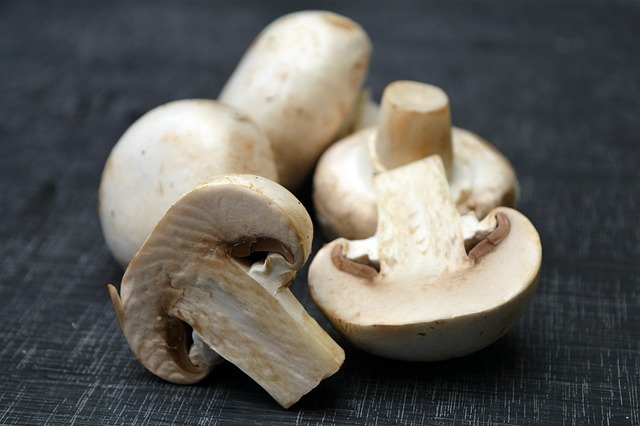
THE cultivated mushrooms they are among the few fresh fruit and vegetables available all year round with constant characteristics, as they grow in climate-controlled environments on prepared substrates. Italy produces just over 60,000 tonnes a year, largely champignons intended for fresh consumption.
Alongside the fresh air opens up the opportunity of mycoproteins, protein ingredients obtained from the biomass of filamentous fungi grown in fermenters. Il Sole 24 Ore recently asked the question whether the Italian supply chain will also be able to cover this segment (Orlandotti, 2026).
Production numbers, nutritional profiles, scientific evidence and European rules on novel foods.
Italian production and European market
According to Eurostat, in 2025 the'Italy he collected 61,640 tons From cultivated mushrooms, 5.5% of the European Union total (1.12 million tonnes). Our country occupies seventh place after Poland (308,300 t), the Netherlands (220,000 t), Spain (159,600 t), France (102,800 t), Germany (78,400 t) and Ireland (68,100 t).
The time series shows a flexion – from 70,860 tonnes in 2019 to 60,550 in 2024 (-14.6%) – with a slight recovery, +1.8%, in 2025 (Eurostat, 2026a). The Italian Mushroom Growers Association, which claims to represent 93% of national production and 95% of the substrate intended for Italian mushroom growers (Orlandotti, 2026), indicated for 2022 54,000 tonnes sent to the fresh market out of a total of 62,000 (Riciputi, 2023).
In comparison with the European institutions, the Italian association reported the challenges linked to labor shortages, rising energy costs not compensated by prices, the rules under discussion on the use of peat and imports of substrates from China for shiitake and pleurotus; the organic mushrooms they are worth on average between 5 and 8% of production in the various countries (Riciputi, 2024).
The champignons (Agaricus bisporus) is worth approximately80% of volumes; the remaining 20% includes mumps, pioppino, cardoncello, shiitake and cornucopia, species with greater added value supported by the demand for plant-based recipes and by consumers flexitarian, which reduce the meat without eliminating it. The average price is between 2.80 and 3.50 euros per kilo and the value of the sector is estimated at around 200 million euros annually (Orladotti, 2026).
Production areas and sustainability practices
Italian mushroom growing has around 200 producers and is concentrated in North-East. The Veneto it expresses approximately half of national production, 90% of which is intended for fresh consumption. Some of the main entities in the sector are based between Treviso and Verona, including the Italian Mushroom Growers Association (Riciputi, 2024). Other notable companies operate in Emilia-Romagna, Lombardy and Trentino.
The only one Treviso Mushroom Consortium, a producers' organization with 13 member companies, two factories and 140 employees, marketed around 18,000 tonnes in 2025, 15,000 of which were produced directly by members, and exceeded 50 million euros in turnover for the first time. Sustainability is among its lines of development: the range ‘Zero Residues‘ it is certified with a pesticide residue limit equal to or lower than 0.01 mg/kg, obtained with dedicated cultivation techniques, and is recognizable on the shelf thanks to a specific label (CSQA, 2026).
In the South the cultivation of cardoncello (Pleurotus eryngii). In Basilicata the 'Fungo Cardoncello Italiano' business network, with a substrate producer and a plant diagnosis centre, has developed a project for the continuous production of organic and integrated agriculture mushrooms, financed by the regional rural development programme. The objectives include new substrates derived from local agricultural waste such as chaff emmer and wheat bran, water saving, reduction of phytosanitary treatments and the selection of native cardoncello strains (Basilicata Region, n.d.).
Imports, the weight of Poland
Customs data must be read with the declared perimeter. For CN heading 0709 51 00, fresh or chilled mushrooms of the kind Agaricus, theItaly ha imported in 2025 21,886 tons for 27.9 million euros, 25.9% more in volume compared to 2024 (17,381 t). Poland alone supplied 16,606 tonnes, 76% of the total. The export of the same item stops at 1,013 tonnes for 3.7 million euros (Eurostat, 2026b).
The unit import value stands at €1.27/kg, against a average price nationally between 2.80 and 3.50 €/kg. The comparison requires caution, since the two quantities measure different phases of the supply chain, but the distance helps to understand the competitive pressure on fresh produce. Applying the 80% quota of champignons Eurostat 2025 production gives an estimate of around 49,000 national tonnes: imports of Agaricus fresh therefore correspond to over 40% of the Italian production of the same species (elaboration based on Eurostat data and the Italian Mushroom Growers Association).
A distinct market is that of mushrooms Agaricus prepared or preserved (NC entry 2003 10), not to be added to fresh as the preserves incorporate the governing liquid. In this category, Italy imported 14,469 tonnes of products for 27.5 million euros in 2025 (2024: 14,832 t; 25.5 million euros) (Eurostat, 2026b).
Allowed species and indication of origin
Mushrooms must be designated with i scientific names of the species (Presidential Decree 376/1995, art. 10.2) and the national legislation in Italy lists the species of fresh, wild and cultivated mushrooms, admitted for sale. Among these are Agaricus bisporus, Pleurotus ostreatus, Pleurotus eryngii (cardoncello), Pleurotus cornucopiae, Lentinus edodes (shiitake) And Agrocybe aegerita (pioppino) (Presidential Decree 376/1995, art. 4.1 and Annex I).
In Italy 'The sale of freshly grown mushrooms remains subject to the legislation in force for fruit and vegetables' (Presidential Decree 376/1995, art. 2.3).
the'origin it must always come declared, on the label and at the counter in case of sale of loose products. Freshly grown mushrooms are in fact subject to the general marketing rules for fruit and vegetables, which require the indication of the country of origin (EU regulation 1308/2013, art. 76.1). Mushrooms not themselves cultivated, even if excluded from the scope of application of the regulation. (EU) 1308/2013, are subject to the obligation to indicate the origin (EU del. reg. 2023/2429, art. 5.1, letter 'b').
Nutritional profiles
The food composition tables indicated by CREA - Food and Nutrition Research Center (2019) refer to cultivated mushrooms field mushrooms raw the nutritional values listed below, for 100 g of edible portion:
| Cultivated field mushrooms, raw | per 100 g | % VNR |
| Energy | 101 kJ / 24 kcal | |
| Fats | 0.2g | |
| of which saturated fatty acids | not reported | |
| Carbohydrates | 0.8g | |
| of which sugars | 0.8g | |
| Fibers | 2.3g | |
| Proteins | 3.7g | |
| Salt | 0.01g | |
| Potassium | 320 mg | 16% |
| Copper | 0.27 mg | 27% |
| Niacin | 4.00 mg | 25% |
Notes: the percentages are calculated on the nutritional reference values set out in Annex XIII to Regulation (EU) no. 1169/2011. The other micronutrients do not reach the threshold of 15% compared to the VNR: phosphorus (100 mg, 14.3%), zinc (1.46 mg, 14.6%) and selenium (7.5 µg, 13.6%) come close. The CREA reference portion is 200 g (CREA, 2019a).
In light of the CREA profiles, the field mushrooms can report the indications 'source of potassium', 'source of copper' And 'source of Niacin (vitamin B3)'. Both species fall within the requirements of 'low calorie', 'fat-free' And 'high in fibre' (EC regulation 1924/2006, Annex).
For i pleurotus (Pleurotus ostreatus) raw, CREA reports 156 kJ / 37 kcal, fat 0.3 g, carbohydrates 5.6 g of which sugars 5.6 g, fiber 2.4 g, proteins 2.2 g and salt 0.02 g per 100 g. No micronutrient exceeds 15% of the reference values; potassium (287 mg) stops at 14.4% (CREA, 2019b).
The same Annex theoretically allows the wording 'to high protein content‘, which provide 62% of the energy in field mushrooms and 24% of that in pleurotus. However, the absolute value remains modest, 3.7 g per 100 g (CREA, 2019a). The strong point is the quality: mushroom proteins usually have a complete profile From essential amino acids, unlike many plant proteins (González et al., 2020).
Vitamin D and UV-treated mushrooms
Mushrooms exposed to light ultraviolet, solar or lamps, synthesize significant quantities of vitamin D2. A literature review estimates that, if consumed within the shelf life, treated mushrooms retain over 10 µg of vitamin D per 100 g of fresh weight, despite losses due to storage and cooking (Cardwell et al., 2018). The authors indicate them as theonly food of non-animal origin and unfortified capable of providing significant quantities of vitamin D in a single serving.
In the European Union, 'UV-treated mushrooms' (Agaricus bisporus) I'm a new food authorized. The treatment takes place after harvesting, the final vitamin D2 content must be between 5 and 20 µg per 100 g at the end of storage, and thelabel must declare that the treatment served to increase the vitamin D content (EU exec. reg. 2018/1011; UE exec. reg. 2017/2470, Annex). With a reference value of 5 µg, a 100 g portion covers between 100% and 400% of an adult's average daily requirement.
The scientific evidence
On the front of mycoproteins, a randomized study on 19 adults with an average age of 66 years compared an omnivorous high-protein diet for three days with a vegan one where mycoprotein covered 57% of the proteins. There muscle protein synthesis it was equivalent in the two groups, both at rest and after resistance exercise (Monteyne et al., 2021). Unicellular fungal proteins amount to 30-45% of the weight and their digestibility it is described as comparable to that of beef and soy (Amara & Abd El-Baky, 2023).
A meta-analysis of 17 observational studies, with over 19,500 cancer patients, found that consuming approximately 18 g of mushrooms per day is associated with a 45% lower risk of cancer compared to non-consumption. The strongest association concerns breast cancer (Ba et al., 2021). The authors recall the contents of ergothioneine, antioxidant of which mushrooms are the richest, most abundant food source shiitake and pleurotus that in the champignons. Furthermore, these are associations from observational studies which do not demonstrate a cause and effect relationship nor have they been evaluated by EFSA for the authorization of specific products. health claim.
Mycoproteins, from Quorn to new foods
Mycoproteins have a history of more than half a century. At the end of the 1960s, the Englishman Rank Hovis McDougall selected the strain Fusarium venenatum A3/5 to obtain proteins from the fermentation of cereal by-products; the brand Quorn it received the green light in the United Kingdom in 1985 and, since it was marketed before 1997, it is considered a traditional food in the European Union (Dongo & Della Penna, 2022). In 2024, the European Commission confirmed the same non-novel food status for mycoproteins of the same strain produced by another operator, with the same process and uses (Dongo & Della Penna, 2024). Marlow Foods has meanwhile extended the supplies Also to other food industries, through Marlow Ingredients (Dongo, 2023).
The global market of mycoproteins, used in alternative products to meat and dairy products, in snacks and in other processed foods, it is estimated to be approx 1.09 billion dollars in 2025, with compound annual growth (CAGR) of the11,27% which could lead it to 2.55 billion by 2033 (Future Market Report, cited in Orlandotti, 2026).
The new species follow the procedure of novel food (EU regulation 2015/2283). The most recent case concerns the mycelium of Rhizomucor pusillus of the Dutch The Protein Brewery. The application was submitted in May 2020, the favorable opinion from EFSA was adopted in September 2025 (Dongo, 2026) and the authorization arrived on 3 July 2026. The ingredient contains between 44 and 68 g of crude protein per 100 g and can be used in breakfast cereals, biscuits, bars, dairy analogues, drinks, baked goods, chocolate and meal substitutes; the company's scientific data are protected until 26 July 2031 (EU executive reg. 2026/1507).
The EFSA opinion describes a biomass with approximately 51% protein, 31% dietary fiber and approximately 9% of both chitin and chitosan, components of the cell wall. There protein quality, expressed by the DIAAS index, is equal to 61%, below the FAO threshold of 75% for leucine deficiency. The risk of clinically relevant allergic reactions is considered low, but not excluded for those who are allergic to shellfish or fish (Dongo, 2026). The issue of allergenicity generally concerns mycoproteins, due to possible cross-reactivity with mold allergens (Dongo & Della Penna, 2025).
Between application and authorization of the mycelium of Rhizomucor six years have passed, while the company has raised a total of 70 million euros and is aiming for a production capacity of over 2,000 tonnes (Buckingham, 2026). The Commission's action plan for the resilience, strategic autonomy and sustainability of the Union's protein system recognizes fermentation-based technologies as a complementary route, noting that the most innovative processes grow mainly outside Europe (European Commission, 2026). The proposed Biotech Act of 16 December 2025 introduces controlled regulatory trials (regulatory sandbox) in the food sector, but unfortunately excludes new foods; food industry associations have therefore asked for its extension (FoodDrinkEurope et al., 2026).
the'Italy has substrate and cultivation expertise, but not yet industrial-scale fermentation plants; The Netherlands, Belgium, Germany and France invest more in mycelium derivatives. Some companies have already developed transformed products starting from fresh: IoBoscoVivo, an agricultural company founded in 2013 to cultivate shiitake, today offers preparations for meatballs and breadsticks; Modena Funghi has created a line of burgers, partly with its own mushrooms (Orlandotti, 2026). On the research level, the project BIO.FUN.PRO., financed by the Ministry of University and Research in the PRIN 2022 call, studies the cultivation of mushrooms on cocoa shells and rice husks - in a circular economy logic - to obtain ingredients rich in proteins and fibres, including a ‘mushburgers‘ whose safety is to be assessed (University of Turin, s.d.).
The authorization process for new foods requires scientific, regulatory and design skills. Our team of DO – Food and Agriculture Requirements supports operators and research consortia in the development of projects for the authorization of novel food, from the regulatory qualification of the product to the preparation of the dossier, with attention to market prospects.
Environmental impact and circular economy
There fungiculture transforms agricultural and agro-industrial residues into food, with low inputs and attractive incomes even for economically depressed rural areas; the exhausted substrate in turn finds use in various sectors (Ferraro et al., 2022).
An evaluation of the life cycle conducted in the United States estimated between 2.13 and 2.95 kg of CO2 equivalent per kg of champignons. The main critical points are electricity and fossil fuels, followed by compost materials and related emissions; the production of renewable energy on the farm represents the most effective lever for improvement (Robinson et al., 2019). Fermentation mycoproteins have a carbon footprint similar to that of meat, with lower use of land and water, and higher energy consumption than plant foods (Dongo & Della Penna, 2022).
Tips for purchasing
The label of freshly grown mushrooms always indicates the country of origin, and this information allows informed choices. Prefer i mushrooms grown in Italy it means supporting a supply chain which in fresh produce is faced with imports at lower unit prices and which needs margins to invest in new species, processed products and, in the future, mycoproteins.
The certified product biological offers a further guarantee, which in mushrooms mainly concerns the substrate. Pesticide residues often do not derive from crop treatments, but from the cereal straw used in the preparation of the substrate. This is the case of chlormequat, a growth regulator lawfully used on cereals, which passes to pleurotus grown on treated straw. Among the risk management options, EFSA has indicated the exclusive use of organic straw (EFSA, 2019). In the latest report on pesticide residues in food, EFSA also reports trimethylsulfonium, linked to the use of glyphosate, especially in cultivated citrus fruits and mushrooms, and recommends verifying the origin of the straw used as a substrate (EFSA, 2026).
The general data confirm i advantages of organic. In the official controls of 2024, 80.4% of the biological samples were found to be free of quantifiable residues, compared to 58.4% of all the samples analyzed; the exceedances of the maximum limits were 0.9% versus 3.3% (EFSA, 2026). A systematic review of 21 studies associates organic food consumption with lower pesticide exposure and, in prospective studies, a more favorable cardiometabolic risk profile. Much of the evidence remains observational in nature (Poulia et al., 2025).
In the kitchen
The champignons they are suitable for raw consumption, thinly sliced in salads and seasoned with extra virgin olive oil, as well as the cooked one. The most widespread preparation remains that of sautéed mushrooms, sautéed in a pan with extra virgin olive oil and/or butter (better if clarified), garlic and parsley, with blends that combine champignons and pleurotus to other species. Cardoncelli and pleurotus, more substantial, hold up well to the grill and oven.
For an overview of the species, collection and safety, please refer to the article Mushrooms, the ABC; for the most popular wild mushrooms, a From the forest to the table, Italian porcini mushrooms.
Conclusions
Italian mushroom growing is an organized and certified supply chain, worth around 200 million euros and produces a light food, rich in proteins with a complete supply of essential amino acids, a source of potassium, copper and niacin, as well as available all year round. In the fresh sector, Polish imports have grown by a quarter in just one year.
The next frontier is fermentation. The expertise on substrates, cultivation and transformation already present in Italy could support the development of mycoproteins provided that investments in plants, applied research and preparation of authorization dossiers are made. The new European protein plan offers the framework in which to do this.
Dario Dongo
References
European Union regulatory sources
Commission Delegated Regulation (EU) 2023/2429 of 17 August 2023 supplementing Regulation (EU) No 1308/2013 of the European Parliament and of the Council as regards marketing standards for the fruit and vegetables sector, certain processed fruit and vegetable products and the bananas sector, and repealing Commission Regulation (EC) No 1666/1999 and Commission Implementing Regulations (EU) No 543/2011 and (EU) No 1333/2011. Consolidated text: 04/10/2025. http://data.europa.eu/eli/reg_del/2023/2429/2025-10-04
Commission Implementing Regulation (EU) 2017/2470 establishing the Union list of novel foods in accordance with Regulation (EU) 2015/2283 of the European Parliament and of the Council on novel foods. Consolidated text: 07/14/2026. http://data.europa.eu/eli/reg_impl/2017/2470/2026-07-14
Commission Implementing Regulation (EU) 2018/1011 authorizing an extension of use levels of UV-treated mushrooms as a novel food under Regulation (EU) 2015/2283 of the European Parliament and of the Council and amending Commission Implementing Regulation (EU) 2017/2470. Official Journal of the European Union, L 181, 18.7.2018. http://data.europa.eu/eli/reg_impl/2018/1011/oj
Commission Implementing Regulation (EU) 2026/1507 authorizing the placing on the market of Rhizomucor pusillus mycelium as a novel food and amending Implementing Regulation (EU) 2017/2470. Official Journal of the European Union, L series, 6.7.2026. http://data.europa.eu/eli/reg_impl/2026/1507/oj
Regulation (EC) No 1924/2006 of the European Parliament and of the Council on nutrition and health claims made on foods. Consolidated text: 12/13/2014. http://data.europa.eu/eli/reg/2006/1924/2014-12-13
Regulation (EU) No 1169/2011 of the European Parliament and of the Council on the provision of food information to consumers. Consolidated text: 04/01/2025. http://data.europa.eu/eli/reg/2011/1169/2025-04-01
Regulation (EU) No 1308/2013 of the European Parliament and of the Council establishing a common organization of the markets in agricultural products. Consolidated text: 08/18/2026. http://data.europa.eu/eli/reg/2013/1308/2026-08-18
Regulation (EU) 2015/2283 of the European Parliament and of the Council on novel foods. Consolidated text: 03/27/2021. http://data.europa.eu/eli/reg/2015/2283/2021-03-27
Italian regulatory sources
Decree of the President of the Republic 14 July 1995, n. 376. Regulation concerning the regulation of the collection and marketing of fresh and preserved epigean mushrooms. Regulatory. Last consolidated version: 11/09/1995. https://www.normattiva.it/uri-res/N2Ls?urn:nir:presidente.repubblica:decreto:1995-07-14;376
Scientific studies
Amara, A. A., & Abd El-Baky, N. (2023). Fungi as a source of edible proteins and animal feed. Journal of Fungi, 9(1), 73. https://doi.org/10.3390/jof9010073
Ba, D. M., Ssentongo, P., Beelman, R. B., Muscat, J., Gao, X., & Richie, J. P., Jr. (2021). Higher mushroom consumption is associated with lower risk of cancer: A systematic review and meta-analysis of observational studies. Advances in Nutrition, 12(5), 1691–1704. https://doi.org/10.1093/advances/nmab015
Cardwell, G., Bornman, J. F., James, A. P., & Black, L. J. (2018). A review of mushrooms as a potential source of dietary vitamin D. Nutrients, 10(10), 1498. https://doi.org/10.3390/nu10101498
Ferraro, V., Venturella, G., Pecoraro, L., Gao, W., & Gargano, M. L. (2022). Cultivated mushrooms: Importance of a multipurpose crop, with special focus on Italian fungiculture. Plant Biosystems, 156(1), 130–142. https://doi.org/10.1080/11263504.2020.1837283
González, A., Cruz, M., Losoya, C., Nobre, C., Loredo, A., Rodríguez, R., Contreras, J., & Belmares, R. (2020). Edible mushrooms as a novel protein source for functional foods. Food & Function, 11(9), 7400–7414. https://doi.org/10.1039/D0FO01746A
Monteyne, A. J., Dunlop, M. V., Machin, D. J., Coelho, M. O. C., Pavis, G. F., Porter, C., Murton, A. J., Abdelrahman, D. R., Dirks, M. L., Stephens, F. B., & Wall, B. T. (2021). A mycoprotein-based high-protein vegan diet supports equivalent daily myofibrillar protein synthesis rates compared with an isonitrogenous omnivorous diet in older adults: A randomized controlled trial. British Journal of Nutrition, 126(5), 674–684. https://doi.org/10.1017/S0007114520004481
Poulia, K.-A., Bakaloudi, D. R., Alevizou, M., Papakonstantinou, E., Zampelas, A., & Chourdakis, M. (2025). Impact of organic foods on chronic diseases and health perception: A systematic review of the evidence. European Journal of Clinical Nutrition, 79(2), 90–103. https://doi.org/10.1038/s41430-024-01505-w
Robinson, B., Winans, K., Kendall, A., Dlott, J., & Dlott, F. (2019). A life cycle assessment of Agaricus bisporus mushroom production in the USA. The International Journal of Life Cycle Assessment, 24(3), 456–467. https://doi.org/10.1007/s11367-018-1456-6
Statistical and institutional sources
European Commission. (2026, July 7). Action Plan for resilience, strategic autonomy and sustainability of the EU protein system, COM(2026) 355 final. https://data.consilium.europa.eu/doc/document/ST-11410-2026-INIT/en/pdf
CREA – Food and Nutrition Research Center. (2019a). Food composition tables. Cultivated mushrooms, field mushrooms, raw (code 006000). https://www.alimentinutrizione.it/tabelle-nutrizionali/006000
CREA – Food and Nutrition Research Center. (2019b). Food composition tables. Cultivated mushrooms, pleurotes, raw (code 006010). https://www.alimentinutrizione.it/tabelle-nutrizionali/006010
EFSA – European Food Safety Authority. (2019). Statement on the dietary risk assessment for the proposed temporary maximum residue level for chlormequat in oyster mushrooms. EFSA Journal, 17(5), e05707. https://doi.org/10.2903/j.efsa.2019.5707
EFSA – European Food Safety Authority, Medina Pastor, P., Carrasco Cabrera, L., Di Piazza, G., & González Ciria, C. (2026). The 2024 European Union report on pesticide residues in food. EFSA Journal, 24(5), e10054. https://doi.org/10.2903/j.efsa.2026.10054
Eurostat. (2026a). Crop production in EU standard humidity (apro_cpsh1), cultivated mushrooms, update 9/28/2026. https://doi.org/10.2908/APRO_CPSH1
Eurostat. (2026b). Comext, dataset DS-045409, NC codes 0709 51 00 and 2003 10, Italy, 2024-2025, extraction of 22.10.2026. https://ec.europa.eu/eurostat/comext/newxtweb/
FoodDrinkEurope et al. (2026, March 30). Joint statement on regulatory sandboxes under the Biotech Act I and the exclusion of novel foods. https://www.fooddrinkeurope.eu/wp-content/uploads/2026/03/260327-Joint-Statement-Regulatory-Sandboxes-and-Novel-Foods.pdf
Basilicata Region. (s.d.). The bio-technological evolution of mushroom cultivation in Basilicata: from Cardoncello to native strains and new species with high nutritional value. FunghInSalute operational group, PSR Basilicata, submeasure 16.2. https://europa.regione.basilicata.it/feasr/wp-content/uploads/2023/03/1.-Semi-di-associazione-16.2-FUNGHINSALUTE.pdf
University of Turin. (s.d.). BIO.FUN.PRO. Bio-based valorization of fungi for a sustainable food protein production, PRIN 2022. https://unifind.unito.it/resource/project/LIBE%5FPRIN%5F2022%5F25%5F01
Insights on Food Times
Dongo, D. (2023, May 9). Mycoproteins, health and taste. Quorn ingredients for industry. FoodTimes. https://www.foodtimes.eu/it/sistemi-alimentari/micoproteine-salute-e-gusto-gli-ingredienti-di-quorn-per-lindustria/
Dongo, D. (2026, February 11). EFSA: mycoprotein from Rhizomucor pusillus as novel food. FoodTimes. https://www.foodtimes.eu/it/sistemi-alimentari/efsa-approva-rhizomucor-micoproteine/
Dongo, D., & Della Penna, A. A. (2022, October 12). Proteins from fungi and microfungi, mycoproteins, the ABC. FoodTimes. https://www.foodtimes.eu/it/ricerca/proteine-da-funghi-e-microfunghi-micoproteine-labc/
Dongo, D., & Della Penna, A. A. (2024, August 6). Mycoproteins from Fusarium venenatum, green light in the EU. FoodTimes. https://www.foodtimes.eu/it/ricerca/micoproteine-da-fusarium-venenatum-via-libera-in-ue/
Dongo, D., & Della Penna, A. A. (2025, August 13). Allergenicity of alternative proteins and mitigation. FoodTimes. https://www.foodtimes.eu/it/sicurezza-alimentare/allergenicita-delle-proteine-alternative-e-mitigazione/
Press and industry sources
Buckingham, L. (2026, June 30). EU clearance unlocks €18m boost for novel mycoprotein. FoodNavigator. https://www.foodnavigator.com/Article/2026/06/30/protein-brewery-18m-eu-mycoprotein-approval/
CSQA. (2026, January 27). Treviso Mushroom Consortium: Turnover exceeds €50 million (source: Agenfood.it). https://www.csqa.it/en-us/press/consorzio-funghi-di-treviso,-superati-i-50-milioni-di-euro-di-fatturato
Orlandotti, E. (2026, September 22). Cultivated mushrooms as a source of protein: why Italy risks falling behind. Il Sole 24 Ore. https://www.ilsole24ore.com/art/funghi-coltivati-come-fonte-proteine-perche-l-italia-rischia-rimanere-contro-AJGaZGHB
Riciputi, C. (2023, January 20). The European Union is aware of the problems of mushroom producers. FreshPlaza. https://www.freshplaza.com/europe/article/9496172/the-european-union-is-aware-of-the-problems-of-mushroom-producers/
Riciputi, C. (2024, January 16). The problems of the mushroom sector discussed at European level. FreshPlaza. https://www.freshplaza.com/north-america/article/9592374/the-problems-of-the-mushroom-sector-discussed-at-european-level/

Dario Dongo, lawyer and journalist, PhD in international food law, founder of WIISE (FARE - GIFT – Food Times) and Égalité.


