

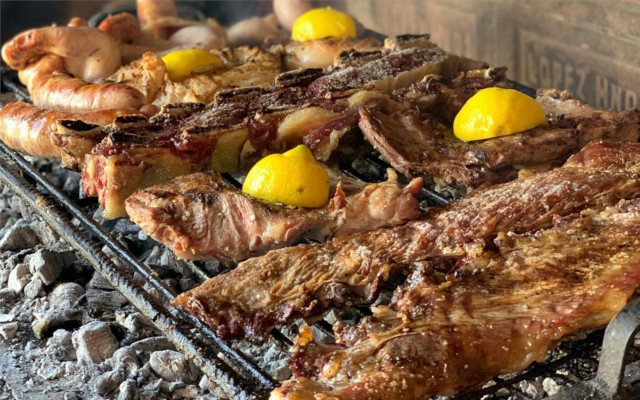
Theasado expresses the social and culinary ritual of meat grilling, deeply rooted in the culture of Argentina, Uruguay, and some regions of Chile and Paraguay. This cooking technique barbecue cooking is characterized by slowness, attention to fire, and respect for the raw material. Thanks to the growing interest in traditional barbecue and to the enhancement of less conventional beef cuts, asado is also conquering Italy, bringing with it a heritage of knowledge and nutritional values related to quality beef quality.
Roots and identity of fire in the pampas
The origins of asado lie in the culture of the wandering herders, the gauchos, in the vast South American grassy plains known as the pampas. The term 'asado' derives from Spanish asar, meaning to roast, and identifies both the cooking technique and the social event created around the fire. Unlike other barbecue traditions, asado favors indirect cooking at low temperature, using wood from native trees that impart delicate aromas without overpowering the natural flavor of the meat.
The figure of theasador, the one who manages the fire and coordinates the cooking, plays a central role. His skill not only lies in cooking the meat but also in knowing how to interpret the embers, regulate the distances, recognize the timings and orchestrate the succession of cuts so that each guest receives their piece at the right moment. This ritual dimension has transformed the asado into national identity symbol Argentine, celebrated in literature, tango and popular traditions.
During the 20th century, with urbanization and the spread of grills (metal grills typical of urban asado), this practice also took root in cities, becoming an unmissable Sunday appointment for millions of families.

The imprint of Italian migrants on Argentine asado
The deep connection between Argentine asado and Italian culture is rooted in one of the largest migratory flows in modern history. Between 1880 and 1930, over 2.9 million Italians emigrated to Argentina, representing almost 50% of the total immigration of the South American country in that period. According to historical data, in 1914 Italians constituted 12% of the total Argentine population, with peaks of 30% in the city of Buenos Aires.
Coming mainly from northern regions such as Piedmont, Liguria e Lombardy in the first waves, and later from southern regions such as Campania, Calabria e Sicily, these migrants brought culinary traditions with them that merged with local practices. The asado, which in its oldest form was an essential preparation of pastoral culture, was enriched by Mediterranean influences: the use ofgarlic, of parsley, oforegano and ofvinegar in accompanying sauces clearly reflects this gastronomic encounter.
The Italo-Argentine community, today estimated at about 25 million people (over 60% of the Argentine population has at least one Italian ancestor), has maintained cultural and family ties with Italy over time. In recent decades, the phenomenon of return has brought thousands of descendants of emigrants to settle in Italy, bringing with them the tradition of asado as an identity heritage. This return flow, intensified after the Argentine economic crisis of 2001-2002, has greatly contributed to the spread of asado culture in Italian regions, particularly in those of origin of the historical emigrants.
It is therefore not a gastronomic trend imported from abroad, but of recovery of a tradition which bears the imprint of the Italian communities that helped shape it. Many Argentine restaurants in Italy are managed by direct descendants of Italian emigrants, who offer asado as a cultural bridge between the two shores of the Atlantic.
Argentine animal husbandry: from criollo breeds to European crosses
From a zootechnical point of view, the tradition of asado has historically been based on cattle criollo, direct descendants of animals brought by Spanish settlers and adapted over the centuries to the conditions of the pampas. These native breeds, rustic and hardy, produced lean but flavorful meats, suitable for prolonged cooking.
Starting from the second half of the 19th century, Argentina initiated a program of genetic improvement importing European breeds, particularly Aberdeen Angus e Hereford from the United Kingdom, and subsequently Shorthorn. Crossbreeding between criollo and European taurine breeds (Bos taurus) gave rise to cattle with greater infiltration of intramuscular fat, better conformation and faster growth. Today Argentina is one of the main world exporters of beef, with production mainly based on extensive systems grazing.
The most common breeds in Argentine farms include Aberdeen Angus, characterized by high marbling and tenderness; Hereford, appreciated for hardiness and adaptability; Braford, a cross between Hereford and Brahman, heat resistant; and Brangus, derived from a cross between Angus and Brahman, which combines meat quality and climate tolerance.
In Europe and Italy, asado is made using local or international breeds such as Chianina, Marchigiana, Romagnola, Charolaise, Simmental, Blonde d’Aquitaine and Black Angus. The growing focus on extensive farming systems, forage feeding e extended aging has encouraged interest in meats intended for slow cooking that enhance texture and aromatic profile.

Valorization of cuts and anti-waste approach
Unlike North American barbecue or European grills, Argentine asado involves the use of multiple beef cuts, each with distinctive characteristics and specific cooking times. The selection and serving order reflect an established gastronomic hierarchy.
Among the main asado cuts are:
- tira de asado (ribs): strips of ribs cut transversely, alternating bone, meat and fat. They represent the symbolic asado cut, slow-cooked until reaching a crispy outer crust and a succulent inner part;
- vacío (flank steak): triangular cut from the abdominal region, rich in connective tissue which during cooking transforms into gelatin, providing particular tenderness. In anatomy, it corresponds to the lower belly of the bovine (flank);
- entraña (diaphragm): muscle of the diaphragm, characterized by long fiber and intense flavor. It is distinguished into entraña fina (true diaphragm) and entraña gruesa (diaphragm pillar). Requires quick cooking at high temperature to preserve tenderness and juiciness;
- bife de chorizo: corresponding to sirloin or striploin, a premium cut with fine texture and variable marbling, often served in generous portions;
- bife de costilla: entrecôte or ribeye, characterized by high intramuscular fat infiltration and the presence of bone, which contributes to aromatic transfer during cooking;
- asado de tira: thinner version of ribs, cut parallel to the bones rather than transversely, especially common in asados urban;
- achuras (offal): chinchulines (small intestine), mollejas (sweetbreads) and riñones (kidneys) represent the traditional asado appetizer, served as soon as ready while other cuts continue cooking.
The peculiarity of the asado lies in simultaneous cooking of different cuts – each placed on the grill depending on thickness, fat content, and desired degree of doneness – and in preventing food waste by valorizing offal.
Cooking methods between parrilla and asado a la cruz
Traditional asado is made through various techniques, each linked to specific contexts and traditions:
- parrilla: adjustable height metal grill, placed above wood embers or charcoal. Cooking occurs by radiation and convection, with fat dripping on the embers producing aromatic smoke that envelops the meat. The distance between grill and embers usually varies between 15 and 30 centimeters, depending on the desired intensity;
- asado a la cruz o al asador: the whole carcass or quarters of the animal are fixed to a metal cross-shaped structure, planted vertically next to the fire. Cooking occurs by lateral radiation and is extremely slow (even 4-6 hours), allowing for even cooking of the meat while maintaining high juiciness. This technique, typical of rural areas and traditional celebrations, represents the most ancestral form of asado;
- asado in a clay oven: brick or raw earth oven, where the meat is cooked using the residual heat accumulated by the walls. A less common method but still practiced in some regions.
In all cases, the preparation of the fire is a fundamental step. Seasoned wood seasoned wood or charcoal, avoiding chemical accelerants that would alter the aromatic profile. The embers should have a uniform whitish color, without live flames, to ensure a constant and controlled cooking.
The meat is seasoned exclusively with coarse salt, applied before or during cooking depending on family traditions. The use of marinades, spices or sauces is generally avoided in the classic tradition, which favors the authentic flavor of the meat and wood smoke.
Contemporary asado in Italy
In recent years, Argentine asado has gained increasing space in the Italian gastronomic scene, supported by various gastronomic and cultural factors.
The opening of specialized restaurants in Argentine cuisine, often run by descendants of returned Italian emigrants or Argentines of Italian origin, has familiarized the Italian public with this culinary tradition. The formula of the parrillada — assortment of mixed cuts served on wooden boards — has achieved particular success, offering a convivial experience that recalls the social dimension of traditional asado.
The spread in Italy of barbecue culture and the interest in slow cooking techniques have also favored the adoption of asado, responding to a new sensibility that values simplicity and the quality of beef, as well as the opportunity for socializing and conviviality.
Mediterranean influences in the aromatic profile of sauces
Although the asado tradition favors meat seasoned only with salt, Argentine gastronomy has developed complementary accompaniments that enhance without overpowering the flavor of the meat.
The chimichurri represents the most emblematic sauce. Prepared with finely chopped parsley, garlic, vinegar, extra virgin olive oil, oregano and chili pepper, it is characterized by freshness and aromaticity. The use of parsley, garlic e oregano clearly testifies the influence of Mediterranean cuisine brought by Italian immigrants.
The criolla sauce combines tomatoes, onions, and julienned peppers, seasoned with oil, vinegar, and salt. Its freshness balances the richness of the meat, offering chromatic and taste contrast.
Among other traditional side dishes are provencal (chopped garlic with parsley and oil) and ají sauce (ají chili peppers, garlic, oil, and lemon).
Regarding pairings, Argentine asado includes simple preparations: mixed salad, baked or roasted potatoes, grilled vegetables (peppers, eggplants, zucchinis), and Russian salad (Russian salad with potatoes, carrots, peas, and mayonnaise). The homemade bread (homemade bread) or the criolla tortilla – which in Italy find excellent alternatives in Tuscan bread DOP and in the Romagna flatbread IGP – accompany the meat absorbing its juices.
The traditional drink remains the red wine: Malbec, Cabernet Sauvignon and Bonarda in Argentina, Lambrusco, Barbera, Sangiovese or Chianti, Aglianico del Vulture DOC and various others in Italy.
Sustainability of extensive pastures and conscious consumption
Asado, as a culinary practice based on beef consumption, raises issues of environmental sustainability, social and economic aspects that deserve critical attention.
The cattle farms contribute to global greenhouse gas emissions, mainly through enteric methane emissions and manure management. However, the extensive systems with grazing, predominant in Argentina and Uruguay, present different environmental impacts compared to intensive farming. Grazing can indeed contribute to carbon sequestration in prairie soils, the conservation of biodiversity, and the maintenance of ecosystems in the pampas, provided it is managed with appropriate animal densities and rotation practices.
The choice of meat from extensive farming, organic or with sustainability certifications – such as SQNZ, in Italy – represents a relevant criterion for the conscious consumer. In Italy, the growing attention towards short supply chains, native breeds and breeding systems respectful of animal welfare offers alternatives compatible with the principles of traditional asado.
From a nutritional point of view, international guidelines recommend a moderate consumption of red meat, generally not exceeding 300-500 grams per week, favoring lean cuts and cooking methods that minimize the formation of potentially harmful compounds. Asado, due to its convivial and ritual nature, naturally lends itself to an occasional and celebratory rather than daily.
The full valorization of the animal, through the use of different cuts and offal, also responds to principles of circular economy and reduction of food waste, central themes in current European agri-food policies.
Conclusions: tradition and contemporaneity
Argentine asado represents a gastronomic heritage that transcends the culinary dimension to embrace values of conviviality, respect for time and celebration of quality beef. Its spread in Italy is not a mere gastronomic fashion but constitutes the recovery of a historical bond that unites the two shores of the Atlantic through the stories of millions of Italian emigrants and their descendants.
Beyond folklore and exoticism, asado proposes a model of conscious consumption that enhances technical skills, knowledge of raw materials, and intergenerational transmission of knowledge. The contemporary challenge is to integrate this tradition with environmental sustainability requirements, traceability of supply chains and nutritional adequacy, without betraying its ritual and identity essence.
For sector operators, butchers, restaurateurs and consumers, asado represents an opportunity to rediscover undervalued beef cuts, experiment with slow cooking techniques and build gastronomic experiences that combine sensory pleasure, cultural awareness, and food responsibility.
GIFT Editorial Staff
Credit cover Diego Moreno
Bibliography
- Cuffia, F., Rojas-Rivas, E., Urbine, A., & Zaragoza-Alonso, J. (2023). Using the free listing technique to study consumers’ representations of traditional gastronomy in Argentina. Journal of Ethnic Foods, 10(2). https://doi.org/10.1186/s42779-023-00166-7
- Güiraldes, R. (1926/2000). Don Segundo Sombra. Miguel de Cervantes Virtual Library. https://www.cervantesvirtual.com/obra-visor/don-segundo-sombra–0/html/ff2a3950-82b1-11df-acc7-002185ce6064_6.html
- Manito, S., & Laborde, G. (2025). Grill Manual. From the Río de la Plata: Argentina and Uruguay. Barcelona, Spain: Neo Person. ISBN 978-8419509256.
- Pite RE (2016). Creole cuisine: A history of food and race in twentieth-century Argentina. In: Alberto P, Elena E, eds. Rethinking Race in Modern Argentina. Cambridge University Press; 2016:99-125.


