

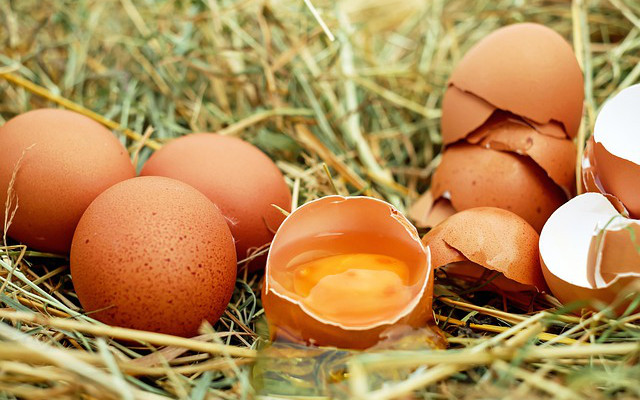
Eggs have returned to the center of the Italian agri-food debate thanks to a surprising result: in 2025 they were the food product with the best performance of the entire modern distribution, both in value and volume. A record reflecting deep dynamics — productive, market, cultural — that the ISMEA report ‘Recent trends and dynamics – Eggs, April 2026’ documents precisely.
The European context
TheEuropean Union remains one of the largest egg-producing areas in the world, with over 392 million laying hens and an annual production estimated between 6.7 and 6.9 million tons. In 2025 production stood at about 6.63 million tons, of which 5.94 million were for direct consumption (+0.4% compared to 2024) and the remaining 9% made up of hatching eggs (+2.6%).
The France led the production ranking in 2025 with about 967,000 tons, followed by Spain (875,000 t) and Germany (862,000 t). TheItaly ranks fifth, with about 789,500 tons. But the real star of the five-year period is Poland, which increased production by 25% between 2020 and 2024, moving to third place by number of laying hens.
On the commercial front, the EU exports eggs and egg products mainly to the United Kingdom, Japan and Switzerland, while imports increased notably from flows coming from Ukraine. The average prices European prices in February 2026 hover around €295/100 kg, up 13.8% year on year. TheItaly is placed above the average: 311.5 €/100 kg, +13.9% year-on-year.
Italian production
TheItaly counts over 43 million laying hens in laying — with an annual average of 43,365 heads in 2025 — and produces about 789,500 tons of eggs, corresponding to over 12.5 billion pieces. Production is substantially stable (+0.4% compared to 2024), but the system shows signs of tension on the domestic supply side.
The self-sufficiency rate fell from 98% in the 2023-2024 biennium to 92% in 2025, a direct effect of increased domestic demand — also fueled by avian influenza outbreaks that affected some farms — and the consequent growth of imported volumes. Consumption in Italy increased from 805,300 to 855,800 tons (+6.3%), with per capita consumption reaching 230 eggs per year (against 217 in 2024), including fresh eggs and processed products.
Regarding the commercial structure of the product, about 60% of production is placed on the market as eggs fresh in shell, while the remaining 40% is destined for industrial processing into egg products: albumen, yolk and whole egg, pasteurized, frozen or dried. The share of egg products, which according to estimates by industry and sector associations falls within the 40-45% range, is clearly above the European average and reflects the centrality of processed egg in the Italian food chain, from egg pasta to the confectionery sector, from sauces to collective catering.
The egg products are gaining increasing importance also in international trade: albumen concentration techniques — with removal of over 70% of water — facilitate packaging, transport and industrial use. The Italian egg products are already exported to at least 90 countries in the world. Even large-scale retail trade has caught on, expanding the segment assortment by 40%, with positive effects on perceived positioning: from mere commodity for industrial use as an added-value product for domestic consumption.
Domestic purchases: the eggs stars of 2025
In 2025 the fresh eggs represented only1% of the food expenditure of Italian families overall, but recorded the highest growth among all food sectors. Spending increased by 15%, while volumes purchased in modern distribution grew by 7.4% compared to the previous year. For comparison, meat (+7.2%), milk and derivatives (+5.8%), and fish (+4.1%) recorded significantly lower increases.
However, the dynamics are strongly differentiated by type of farming:
- the organic eggs, with volumes increasing by 8.9%, have reached a share of 10% of the total;
- the barn eggs (code 2) register an even more marked growth, +10,8% in volume in 2025 (after the already strong +8.0% in 2024), with a market share of 71% of the total;
- enriched cage eggs (code 3), on the other hand, continue to decline, -7.6% in volume and -9.0% in value in 2025, continuing the 2024 decline (-7.6% in volume).
A clear signal of how Italian consumers' preferences are steadily shifting towards more animal welfare-friendly farming systems animal welfare, regardless of the price differential which in this sector is minimal.
Prices growing continuously since 2022
Since 2022, egg prices — at all stages of the supply chain — have never stopped rising. This is one of the most persistent trends in the Italian agri-food sector, clearly documented by ISMEA data.
For barn eggs of size M, the farm gate price went from €16.23/100 pcs in January 2022 to €23.25/100 pcs in November 2025: an increase of 43% in less than four years. In 2025 alone, the growth compared to 2024 was 13%, and 10% compared to 2023.
At distribution, the unit price of barn eggs reached €0.29/pc in January 2026 (from €0.25/pc in January 2024), while organic eggs stand at €0.48/pc (from €0.43/pc).
It should however be noted that the production costs in 2025 remained aligned with those of 2024, at levels lower than the 2023 peak. The terms of trade index — which measures the ratio between finished product prices and the costs of production inputs — reached 129.4 points in January 2026, signaling a clear improvement in profitability of farmers. This figure compares with a minimum of 100.7 in 2024 and the peak of 186.2 recorded in the months immediately following the 2022-2023 energy crisis.
Among the cost factorsfeed accounts for 58% of total production costs, followed by pullets (24%) and energy products (5%). The price of corn for zootechnical use — after the peak of €333/ton in January 2023 — stabilized around €237-264/ton in the 2025-2026 biennium, contributing to the improvement of production margins.
The trade balance
2025 marked a structural shift in the trade balance of Italian shell eggs. Amid a strong expansion of domestic demand and some production contractions due to avian flu outbreaks, the imports of shell eggs for consumption are increased by 80.6% in volume (from 48,000 to 87,600 tons) and by 135% in value (up to 171.5 million euros). The trade balance thus also became negative for this category: -111 million euros (+367% compared to 2024).
The main supplier countries are Romania (26%) and Poland (22%), which together cover almost half of the imported volumes, followed by Ukraine (12%), Spain (11%) and France (10%). This geographical supply profile raises non-trivial questions regarding animal welfare guarantees: Romania and Poland still have very high shares of enriched cage farming (respectively 48.4% and 67.1% of hens), well above the EU average (38.2%) and in stark contrast to the Italian production structure (35.0% in cages, 54.3% on the ground).
In parallel, the exports of shell eggs decreased by 13.7% in volume, while registering a 22.9% increase in value thanks to higher prices. In the segment of shell egg productsthe trend was opposite: both imports (+19% in volume, +50.5% in value) and exports (+16.8% in volume, +31.7% in value) increased, with Poland dominating the incoming flows with 70% of imported volumes.
Preliminary conclusions
The Italian poultry sector shows a dual profile in 2025-2026: productive solidity and improving profitability for farmers, but growing dependence on imports to meet structurally expanding domestic demand. The transition towards systems of animal welfare more advanced is already underway and the market rewards it, with cage-free eggs covering 71% of sales volumes and organic eggs steadily growing. The enriched cage, on the other hand, loses share every year.
The paradox to face is that Italy increasingly imports from countries where the enriched cage is still dominant, partly nullifying the progress of the national production system. This issue involves both European trade policy and the labeling systems of imported eggs and egg products – sectors in which transparency towards the final consumer remains insufficient.
The high price of eggs, on the other hand, is not a temporary anomaly but rather the reflection of structural costs — feed, animal welfare, energy — and a demand that continues to exceed supply.
Editorial staff of GIFT (Great Italian Food Trade)
Credit cover Couleur from Pixabay
References
Chamber of Commerce of Milan Monza Brianza Lodi – CCIAA Milan. (2026). Prices of egg products: whole shelled eggs, yolk and albumen – survey March 18, 2026 [Price list]. CCIAA Milan. https://www.milomb.camcom.it
European Commission, DG AGRI. (2026). EU market situation for eggs and poultry [Periodic market note]. Publications Office of the European Union. https://agriculture.ec.europa.eu/market-situation-eggs-and-poultry_en
Commission Delegated Regulation (EU) 2023/2465 of 17 August 2023 supplementing Regulation (EU) No 1308/2013 of the European Parliament and of the Council as regards marketing standards for eggs, and repealing Commission Regulation (EC) No 589/2008. Consolidated text: 14/10/2024. http://data.europa.eu/eli/reg_del/2023/2465/2024-10-14
Eurostat. (2025). Poultry statistics – laying hens and egg production in the EU. Eurostat. https://ec.europa.eu/eurostat/databrowser/view/APRO_EC_EGGHEN/default/table?lang=en
ISMEA – Institute of Services for the Agricultural Food Market. (April 2026). Recent trends and dynamics: Eggs – April 2026 [Sector report, Poultry series]. ISMEA. https://www.ismeamercati.it/flex/cm/pages/ServeAttachment.php/L/IT/D/1%252F6%252F1%252FD.0f1e46e7c062605493dc/P/BLOB%3AID%3D13862/E/pdf?mode=download
ISMEA. (2025, November). Domestic purchases: Food consumption of families in the first half of 2025 [Report]. National Institute of Agricultural Economics – ISMEA Markets. https://www.ismeamercati.it/flex/cm/pages/ServeAttachment.php/L/IT/D/1%252F7%252F9%252FD.6e5b3c967cddf442a104/P/BLOB:ID=12367/E/pdf
National Institute of Statistics (ISTAT). (2026, March 20). Foreign trade and import prices – January 2026. https://www.istat.it/comunicato-stampa/commercio-con-lestero-e-prezzi-allimport-gennaio-2026/
Regulation (EU) 2018/848 of the European Parliament and of the Council of 30 May 2018 on organic production and labelling of organic products and repealing Council Regulation (EC) No 834/2007. Consolidated text: 25/03/2025 http://data.europa.eu/eli/reg/2018/848/2025-03-25


