

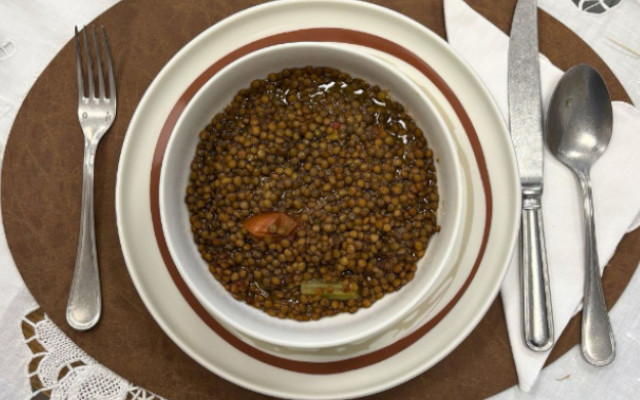
Lentils have accompanied human nutrition for millennia and today prove to be a strategic resource for food innovation in the directions ‘plant based’, ‘high protein’ and ‘gluten-free’. While the global market features production giants such as Canada, Italy expresses a unique model based both on industrial processing Made in Italy, and on Geographical Indications and local ecotypes with high added value. This contribution analyzes the lentil supply chain through historical evidence, international statistical data, nutritional profiles, and new frontiers of food technology from a nutraceutical perspective.
From Neolithic origins to the splendors of the Roman Empire
Genetics places the domestication of the lentil (Lens culinaris Medik.) inSouthwestern Asia, between southern Turkey and Jordan, 8,000-10,000 years ago, starting from the wild subspecies Lens culinaris subspecies orientalis. From the two original groups of southwestern Asia, the cultivation then spread towards the Mediterranean and Central Europe, where it gave rise to a third genetic group (Liber et al., 2021).
Lentils appear in the Old Testament as the dish for which Esau sells the birthright to Jacob (Genesis 25, 29-34). Pliny the Elder notes that the plant prefers poor soils and dry climate, which in Egypt two types are known, and that 'according to authors' there is the idea that those who eat it gain peace of mind, aequanimitas (Pliny, Natural History, XVIII, 123). The same Pliny passes down the most surprising detail: the ship that by order of Caligula brought the obelisk from Egypt to Rome, now at the center of St. Peter's Square, was balasted with 120,000 moggi of lentils, over a thousand tons, and its hull was later sunk to found the lighthouse of Claudius' harbor in Ostia (Natural History, XVI, 201-202). The cookbook attributed to Apicius dedicates to the lentil a chapter of book V, with preparations based on chestnuts, leeks, and coriander.
The richest Italian documentation belongs to Onano, in the Tuscia region of Viterbo. The compendium of Orders, statutes, municipal laws of the community and people of Onano of 1561 provides heavy fines for those who steal or damage plants; in 1616 Duke Sforza must set a limit of 18 kg per person on the purchases of foreign merchants at the weekly market; in 1874 Onano lentils were chosen by the Ministry of Agriculture of the young Kingdom of Italy for the Universal Exposition in Paris and between 1910 and 1911 they won medals in London, Paris and Buenos Aires. In 1964 the 'Lenticchia di Onano' is the only lentil included in the Italo-French convention on the protection of designations of origin,signed in Rome on April 28 of that year (discipline Lenticchia di Onano IGP, article 6).
Global dynamics and Italian production
The global center of gravity is in CanadaArab Emirates (321 thousand), while the European Union imported 256 thousand tons from third countries for 296 million dollars (World Bank, 2026a). Arab Emirates (321 thousand), while the European Union imported 256 thousand tons from third countries for 296 million dollars (World Bank, 2026a). The world production By dry legumes has grown from 56 to over 94 million tons between 2001 and 2023, while the share of the European Union has fallen from 7.1% to 5% (Calabrese, 2026).
TheItaly is a marginal producer, with internal production covering less than one tenth of apparent consumption and a per capita consumption below 1.5 kg per year, below that of beans, peas e broad beans (Calabrese, 2026). ISTAT estimates indicate about 5 thousand hectares and 4,500 tons in 2023, recovering after the 4,200 thousand tons of 2022 (Istat, 2024, table 13.2); in 2024 production grew by a further 22%, with the largest positive contribution among grain legumes (Istat, 2025). About one third compared to the 14,300 tons of 1961: after the near disappearance in the 1980s and 1990s, the recovery of the last twenty years is linked to the PGI and typical productions.
I customs data confirm Italy’s dependence on foreign countries. In 2023, the latest full year available in the UN Comtrade database, theItaly has imported hulled dry lentils (HS code 0713 40) for 59.2 million dollars, over 53 thousand tons summing the declared countries of origin: twelve times the national harvest in the same year. Canada alone supplied 34.5 thousand tons for 34.8 million dollars, 64% of volumes and 59% of value; followed by Turkey (8 thousand tons), United States (6.3 thousand), France and China, just above 500 tons each. The exports Italian exports of the same HS heading stop at 5.3 thousand tons for 10 million dollars, with a value average unit price of 1.87 dollars per kilo against 1.10 on import: it is the selected and packaged lentil, which leaves the country at a price well above that of the raw material entering (World Bank, 2026b).
The numbers of PGIs
The segment with a geographical indication is small in volume – although sharply growing, in the Altamura area – and high in value. In 2023 the Castelluccio di Norcia Lentil PGI certified 493 t for a turnover of 2.64 million euros (5.35 euros/kg, wholesale prices) with 33 operators; the Altamura Lentil PGI 457 t for 594 thousand euros (1.30 euros/kg) with 201 operators (Qualigeo, 2026a; 2026b). In 2020, the two denominations together accounted for 95% of the certified quantities of all Italian DOP and PGI legumes (Ismea, 2023).
According to the latest data reported by the president of the cooperative Castelluccio di Norcia IGP Lentil, Nello Perla, the production 2026 has remained stable with a slight increase in the average wholesale price (€5.50/kg). The Umbrian lentil thus maintains its position in a segment super-premium, with a total area (according to the production specification) of 500 hectares, half of which is allocated each year to another crop, due to the requirement of annual rotation.
The president of the Consortium for the Protection and Enhancement of Altamura lentil PGI in turn reports that the 2026 production has exceeded 1,200 tons of certified product, at the price of €1.30/kg of raw product (to be selected and cleaned), almost triple compared to the commodity which settled instead in the first nine months of 2026 around €0.52/kg (at the current indicative exchange rate of $0.60/kg) for selected and cleaned product.
The production potential of the Altamura IGP Lentil is even more significant, as it involves 280 farms over a very large area (thousands of hectares in 19 municipalities, across 2 regions and 4 provinces). The associated farmers can thus achieve fair income and consumers can purchase a high-quality product at an affordable price, albeit higher than the foreign product.
The three Italian PGIs
The geographical indications registered in the European Union for the Italian lentil are three, with very different specifications:
- Castelluccio di Norcia IGP lentil. Registered with regulation (EC) no. 1065/97, it is reserved for the group of local ecotypes cultivated in Umbria on the Castelluccio plateau, about 20 km² at 1,400 meters altitude between Pian Grande and Pian Piccolo (Norcia, PG) and Pian Perduto (Castelsantangelo sul Nera, MC), inside the Sibillini Mountains National Park. Seeds are small, with very thin skin, no soaking needed and cooking within 30 minutes. Sowing takes place from mid-March to mid-May, at snowmelt; mowing, ‘carpitura’, and threshing by August.(disciplinary, articles 2-5; Qualigeo, 2026a);
- Altamura lentil PGIRegistered with Implementing Regulation (EU) 2017/2362, it concerns the Laird and Eston varieties grown in 19 municipalities between Apulia (Bari and Barletta-Andria-Trani) and Basilicata (Potenza and Matera), on the Murgia plateau between 300 and 600 meters, partly in the Alta Murgia National Park. It is the ‘giant lentilCaliber of 5-7 mm for Laird, 3-4.9 mm for Eston, harvested before full maturity to maintain green color and herbaceous aromas; it cannot follow other legumes in rotation and disinfestation against Bruchus must be carried out within 24 hours of harvesting (regulation, articles 2-6; Qualigeo, 2026b);
- Onano lentil PGI. Registered with implementing regulation (EU) 2022/897, it covers six municipalities in Lazio in the province of Viterbo northwest of Lake Bolsena (Acquapendente, Gradoli, Grotte di Castro, Latera, Onano, San Lorenzo Nuovo), on volcanic soils of the Vulsino complex. It allows the local ecotype and the Eston variety, prohibits any fertilization, limits the yield to 2.5 t/ha, and sets two chemical requirements: total sugars below 1.5% and iron not less than 6.5 mg/100 g. The seed, 3-8 mm, does not require soaking and offers a 'velvety, fine and creamy' pasta(disciplinary, articles 2-5).
Next to the PGI remain a constellation of ecotypes of mountain and island that rarely go beyond local markets. Slow Food Protection as Presidium the Lentil of Ustica, small and brown, without soaking, cooked in soup with the island vegetables or broken spaghetti; the Lentil of Villalba, with large seeds, and the black lentil of the Enna hills in Sicily; the Lentil of Mormanno, in the Calabrian Pollino, tiny and variegated from pink to green, which was once eaten in soup using an onion shell as a spoon; the Lentil of Santo Stefano di Sessanio, brown-violet, grown above one thousand meters on the Gran Sasso; the Lentilof the Rascino plateau in the Rieti area. Others, such as Colfiorito in Umbria, Ventotene in Lazio and Valle Agricola in Caserta, are listed in the regional lists of Traditional Agri-food Products (Slow Food Foundation, 2025a; 2025b; Slow Food, 2016).
Nutritional profile
The food composition tables indicated by CREA – Research Center for Food and Nutrition (2019) refer to dry lentils (code 004500, 50 g portion) and cooked dry lentils, boiled in distilled water without salt and drained (code 004505, 150 g portion) with the following nutritional values, per 100 g of edible portion.
| Nutrient | Dry lentils | Cooked lentils |
| Energy | 1,335 kJ / 319 kcal | 456 kJ / 109 kcal |
| Fats | 1.0 g | 0.4 g |
| of which saturated fatty acids | 0.2 g | n.d. |
| Carbohydrates | 51.1 g | 16.3 g |
| of which sugars | 1.8 g | 0.7 g |
| Fiber | 13.8 g | 8.3 g |
| Proteins | 22.7 g | 6.9 g |
| Salt | 0.02 g | 0.005 g |
The comparison between CREA data on cooked lentils, the reference nutritional values in Annex XIII of Regulation (EU) No 1169/2011 and the conditions established in Regulation (EC) No 1924/06 for the use of nutritional and health claims, suggests the possibility for operators to report on labels and advertising of products the following nutrition claim:
- ‘high content of Proteins(25% of energy);
- ‘high content of Fiber(8.3 g);
- ‘rich in copper(0.30 mg, 30% NRV);
- ‘source of phosphorus(146 mg, 21%);
- ‘source of iron(3 mg, 21%).
Lentil proteins are rich in lysine (7.1% of proteins) and poor in sulfur amino acids, methionine and cystine, which represent the limiting amino acid (CREA, 2019). This profile is complementary to that of cereals, which are rich in sulfur compounds and poor in lysine. The combination of cereals and legumes - in pasta and lentils or rice and beans, to cite some of the most famous combinations – thus has the precise meaning of integrating the intake of essential amino acids.
The enhancement of the nutritional properties of foods, and the related health benefits, in any case require the analytical verification of the conditions for their use and faithful compliance with the information methods prescribed by regulations, also taking into account the interpretations of the Court of Justice and competent authorities. Our team of TO DO (Food and Agriculture Requirements) It is available to operators and consortia interested in exploring such opportunities.
Glycemic impact and innovations in fermentation
Clinical studies on lentils – still lacking validation by EFSA, in the absence of authorization requests for specific health claim – mainly concern the glycemic response:
- in a randomized study crossover in healthy adults, the replacement of half of the available carbohydrates from white rice or mashed potatoes with cooked lentils, large green, small green, or red decorticated, significantly reduced postprandial blood glucose, with a similar effect for all varieties despite different fiber content (Moravek et al., 2018);
- the same Canadian group then verified the effect on formulated foods: substituting 25 g of available carbohydrates with lentils in muffin, chili and soups, the relative glycemic response dropped to 84-88% for muffin and to 48-61% for chili and soups, with a lower insulin response (Chamoun et al., 2024). Processing also affects it, for example the glycemic index of cooked whole lentils, equal to 25, can rise to 66 if the product is spray-dried (spray-driedRamdath et al., 2018).
On the technological front, the fermentation in solid state with Rhizopus oligosporus, the process of tempeh, improves the functional properties and microstructure of legume flours (Toor et al., 2022). The tempeh of lentils reaches 46.2% protein on dry matter, even higher than tempeh of soy (44.9%), with a much lower fat content; fermentation also significantly reduces so-called antinutrients (-64-67% trypsin inhibitors, up to -65% phytates. Erkan et al., 2020; Górska et al., 2025).
Versatility of use between traditional cuisine and industrial innovation
The lentil in Italian cuisine follows the geography of its ecotypes:
- in Castelluccio, lentils are cooked without soaking with celery and garlic and accompany Umbrian cured meats, in addition to Cotechino Modena IGP and Zampone Modena IGP on New Year's Eve;
- on Alta Murgia the Altamura IGP Lentil soup with sausage and croutons of Altamura Bread PDO;
- in Onano as in Rome and throughout Italy New Year's lentils are shared as a wish for wealth among diners;
- the peeled red lentils, imported, instead constitute the base of veloutés, dahl e hummus.
The food industry has launched in the last ten years a promising area of innovation and market, where lentils are not the dish but the characteristic ingredient. Some development lines:
- gluten-free pasta obtained from 100% lentil flour, which offers a protein content about double that of semolina pasta;
- flours and protein concentrates for bread, baked goods, snack extruded (e.g. crackers), where the abundance of lysine in lentils compensates for its deficiency in cereals and completes the amino acid profile of the mixture;
- tempeh and other lentil ferments, an alternative to soy with equivalent proteins, with less fat and reduced antinutrients thanks to fermentation;
- soups, chili and ready meals reformulated by replacing part of the high glycemic index carbohydrates with lentils, as in Canadian clinical trials.
For these applications, the raw material is almost always imported, mostly North American red and green lentils. This is where the game is played for Italian producers: cultivation contracts with processors and varieties suitable for dehulling and milling, beyond the protection of the IGP segment and local ecotypes.
Guidelines for buyers and consumers
Some practical criteria to navigate between shelves and regulations:
- lentils with small seed (Castelluccio IGP, Onano IGP and mountain ecotypes) do not require soaking, cook in 30 minutes and maintain a good consistency even after cooking. They are suitable for side dishes and soups;
- the Lentil of Altamura IGP, larger and meatier, cooks in about 20 minutes and does not require soaking. It is suitable for soups, salads, and main dishes;
- red lentils hulled cook in a few minutes and quickly lose their structure. Suitable for creams and velvety soups;
- The organic is very suitable for this crop, which is no coincidence given that in the Onano and Castelluccio regulations it already renounces mineral fertilization;
- for products with geographical indication, the IGP logo and control body on the label apply.
Conclusions
The lentil sector in Italy demonstrates a dual and fertile vitality. On one hand, productions protected by geographical indication, within the context of Italian cuisine celebrated by UNESCO, preserve biodiversity and centuries-old traditions rewarded by excellent commercial positioning. On the other hand, the food industry identifies the legume as a strategic protein source to meet the needs for innovation in plant-based and gluten-free foods. The recent production recovery confirms the existence of broad development margins for a national supply chain capable of combining historical roots with modern market demands.
Dario Dongo
Credit cover Maria Desiante, President of the Consortium for the Protection and Valorization of the Altamura Lentil PGI
References
European Union regulatory sources
Commission Regulation (EC) No 1065/97 of 12 June 1997 supplementing the Annex to Regulation (EC) No 1107/96 on the registration of geographical indications and designations of origin (‘Lenticchia di Castelluccio di Norcia’). Official Journal L 156, 13.6.1997. http://data.europa.eu/eli/reg/1997/1065/oj
Commission Implementing Regulation (EU) No 828/2014 of 30 July 2014 on the requirements for the provision of information to consumers on the absence or reduced presence of gluten in food. Official Journal L 228, 31.7.2014. http://data.europa.eu/eli/reg_impl/2014/828/oj
Commission Implementing Regulation (EU) 2017/2362 of 5 December 2017 entering a name in the register of protected designations of origin and protected geographical indications (‘Lenticchia di Altamura’ (PGI)). Official Journal L 337, 19.12.2017. http://data.europa.eu/eli/reg_impl/2017/2362/oj
Commission Implementing Regulation (EU) 2022/897 of 2 June 2022 entering a name in the register of protected designations of origin and protected geographical indications (‘Lenticchia di Onano’ (PGI)). Official Journal L 156, 9.6.2022. http://data.europa.eu/eli/reg_impl/2022/897/oj
Regulation (EC) No 1924/2006 of the European Parliament and of the Council of 20 December 2006 on nutrition and health claims made on foods. Consolidated text: 13/12/2014. http://data.europa.eu/eli/reg/2006/1924/2014-12-13
Regulation (EU) No 1169/2011 of the European Parliament and of the Council of 25 October 2011 on the provision of food information to consumers. Consolidated text: 01/04/2025. http://data.europa.eu/eli/reg/2011/1169/2025-04-01
Regulation (EU) 2024/1143 of the European Parliament and of the Council of 11 April 2024 on geographical indications for wine, spirit drinks and agricultural products. Consolidated text: 18/03/2026. http://data.europa.eu/eli/reg/2024/1143/2026-03-18
Italian regulatory and institutional sources
Ministry of Agricultural, Food and Forestry Policies. (2022, June 9). Provision. Registration of the name "Lenticchia di Onano" (PGI) in the register of protected designations of origin and protected geographical indications, with attached production regulations (22A03587). Official Gazette, General Series No. 141 of June 18, 2022.
Ministry of Agriculture, Food Sovereignty and Forestry. (2026, August 4). Ordinary amendment to the production regulations of the protected geographical indication "Lenticchia di Altamura" (26A03814). Official Gazette, General Series No. 179.
Statistical and institutional sources
Calabrese, R. (2026, March 16). 60 years of legumes in Italy: from production collapse to the sustainability challenge. The Agricultural Informer. https://www.informatoreagrario.it/filiere-produttive/seminativi/60-anni-di-legumi-in-italia-dal-crollo-produttivo-alla-sfida-della-sostenibilita/
CREA – Food and Nutrition Research Center. (2019). Food composition tables. Lentils, dry (code 004500); Lentils, dry, cooked, boiled (code 004505). https://www.alimentinutrizione.it/tabelle-nutrizionali/004500 ; https://www.alimentinutrizione.it/tabelle-nutrizionali/004505
Slow Food Foundation. (2025a). Lentil of Santo Stefano di Sessanio. Slow Food Presidium. https://www.fondazioneslowfood.com/it/presidi-slow-food/lenticchia-di-santo-stefano-di-sessanio/
Slow Food Foundation. (2025b). Lentil of Ustica. Slow Food Presidium. https://www.fondazioneslowfood.com/it/presidi-slow-food/lenticchia-di-ustica/
Ismea. (2023, February 3). Vegetables, legumes and potatoes. Sector sheet. Geographical indications – Legumes: certified PDO and PGI quantities 2016-2020. https://www.ismeamercati.it/flex/files/1/a/3/D.afb42554aa415c3cfa04/2023_02_03_SchedaOrtaggi.pdf
Istat. (2024). Italian Statistical Yearbook 2024. Chapter 13, Agriculture, table 13.2. https://www.istat.it/storage/ASI/2024/capitoli/C13.pdf
Istat. (2025). Italian Statistical Yearbook 2025. Chapter 13, Agriculture. https://www.istat.it/storage/ASI/2025/capitoli/C13.pdf
Qualigeo – Qualivita Foundation. (2026a). Castelluccio di Norcia IGP lentil. https://www.qualigeo.eu/prodotto-qualigeo/lenticchia-di-castelluccio-di-norcia-igp/
Qualigeo – Qualivita Foundation. (2026b). Altamura lentil PGI. https://www.qualigeo.eu/prodotto-qualigeo/lenticchia-di-altamura-igp/
Slow Food. (2016, December 21). Lentils, here are those that escaped the rules of the global market. https://www.slowfood.it/lenticchie-quelle-sfuggite-alle-regole-del-mercato-globale/
Statistics Canada. (2024, March 19). Lentil you find a better one, here’s a good story. https://www.statcan.gc.ca/o1/en/plus/5878-lentil-you-find-better-one-heres-good-story
World Bank. (2026a). WITS – World Integrated Trade Solution, based on UN Comtrade data. Dried lentils, shelled (HS 071340): exports and imports by country, 2023. https://wits.worldbank.org/trade/comtrade/en/country/ALL/year/2023/tradeflow/Exports/partner/WLD/product/071340 ; https://wits.worldbank.org/trade/comtrade/en/country/ALL/year/2023/tradeflow/Imports/partner/WLD/product/071340
World Bank. (2026b). WITS – World Integrated Trade Solution, based on UN Comtrade data. Italy, Dried lentils, shelled (HS 071340): imports by partner country, 2023. https://wits.worldbank.org/trade/comtrade/en/country/ITA/year/2023/tradeflow/Imports/partner/ALL/product/071340
Scientific studies
Chamoun, D., Duncan, A. M., Lukus, P. K., Loreto, M. D., Pals-Horne, F., Hawke, A., & Ramdath, D. D. (2024). Postprandial blood glucose and insulin response in healthy adults when lentils replace high-glycemic index food ingredients in muffins, chilies and soups. Nutrients, 16(16), 2669. https://doi.org/10.3390/nu16162669
Erkan, S. B., Gürler, H. N., Bilgin, D. G., Germec, M., & Turhan, I. (2020). Production and characterization of tempehs from different sources of legume by Rhizopus oligosporus. LWT, 119, 108880. https://doi.org/10.1016/j.lwt.2019.108880
Górska, K., Pejcz, E., & Harasym, J. (2025). Tempeh and fermentation—Innovative substrates in a classical microbial process. Applied Sciences, 15(16), 8888. https://doi.org/10.3390/app15168888
Liber, M., Duarte, I., Maia, A. T., & Oliveira, H. R. (2021). The history of lentil (Lens culinaris subspecies culinaris) domestication and spread as revealed by genotyping-by-sequencing of wild and landrace accessions. Frontiers in Plant Science, 12, 628439. https://doi.org/10.3389/fpls.2021.628439
Moravek, D., Duncan, A. M., VanderSluis, L. B., Turkstra, S. J., Rogers, E. J., Wilson, J. M., Hawke, A., & Ramdath, D. D. (2018). Carbohydrate replacement of rice or potato with lentils reduces the postprandial glycemic response in healthy adults in an acute, randomized, crossover trial. The Journal of Nutrition, 148(4), 535-541. https://doi.org/10.1093/jn/nxy018
Ramdath, D. D., Wolever, T. M. S., Siow, Y. C., Ryland, D., Hawke, A., Taylor, C., Zahradka, P., & Aliani, M. (2018). Effect of processing on postprandial glycemic response and consumer acceptability of lentil-containing food items. Foods, 7(5), 76. https://doi.org/10.3390/foods7050076
Toor, B. S., Kaur, A., & Kaur, J. (2022). Fermentation of legumes with Rhizopus oligosporus: Effect on physicochemical, functional and microstructural properties. International Journal of Food Science & Technology, 57(3), 1763-1772. https://doi.org/10.1111/ijfs.15552
Historical and literary sources
Genesis, 25, 29-34.
Pliny the Elder. Natural History, XVI, 201-202; XVIII, 123. Latin text: https://la.wikisource.org/wiki/Naturalis_Historia/Liber_XVIII
Apicius. On Cooking, V, 2 (lentil).
Websites of protection consortia and producer groups
Consortium for the Protection and Valorization of the Altamura IGP Lentil. Altamura IGP Lentil. https://www.lenticchiaaltamura.it/
Consortium for the protection of Castelluccio di Norcia IGP Lentil. Castelluccio di Norcia IGP Lentil. https://www.lenticchiaigpcastelluccio.it/
Onano IGP Lentil. Pearls of Tuscia. https://perledellatuscia.it/

Dario Dongo, lawyer and journalist, PhD in international food law, founder of WIISE (FARE - GIFT – Food Times) and Égalité.


