

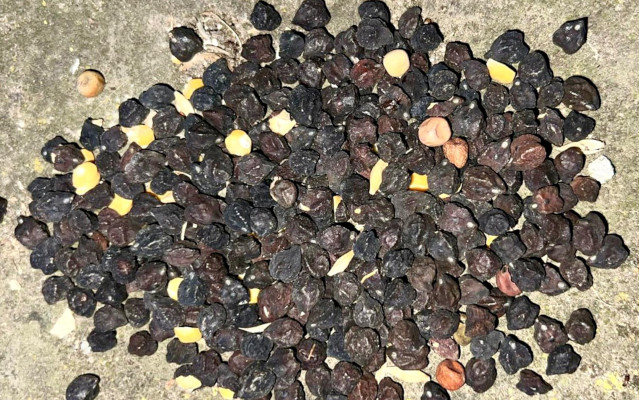
Immersed in the sunny landscapes of Puglia, in Southern Italy, there is a culinary treasure often overlooked in the global gastronomic scene: the black chickpeas of Murgia. This distinctive legume, with its extraordinary dark hue and the robust flavor, is much more than a simple legume: it is a testament to ancient agricultural traditions, a powerhouse of nutrition and a rising star in the world of sustainable gastronomy. Understanding the unique qualities of the black chickpeas of Murgia – both for the most passionate food explorers and for professional buyers – provides access to agrobiodiversity and traditional regional Italian cuisine.
History and cultural relevance
The history of the black chickpea dates back to antiquity, with mentions found in the 'Treatise on the Properties of Food' by Greek physician Galen, who praised their multiple virtues, including their presumed aphrodisiac qualities (Totelin, 2016). For centuries, these small dark legumes have been a fundamental element of the Puglian diet, particularly in the Murgia region, where they have been an integral part of Mediterranean food culture.
By the mid-20th century, however, the cultivation of black chickpeas had significantly decreased. The lower yields and longer soaking and cooking times, compared to common white chickpeas, led to their decline while more commercially viable crops and faster cooking legumes gained popularity. For more than half a century, the black chickpeas of Murgia have teetered on the brink of extinction, becoming a 'forgotten food‘ (Nabhan, 2018).
Only in the last 15-20 years has there been a renewed appreciation of traditional and bio-diversified has triggered a revival of their cultivation. Thanks to dedicated farmers and organizations like Slow Food, this ancient variety is now regaining ground, safeguarding a piece of the culinary heritage Italian and enriching agricultural biodiversity (Slow Food Foundation, 2022).
Botanical characterization and seasonality
The black chickpeas of Murgia (Cicer arietinum) are a unique ecotype of chickpea. Visually, they differ from their common white counterparts due to their small and irregular shape, similar to a corn kernel, and a thick dark, rough, and wrinkled outer skin, with a hook-shaped apex, which contributes to their robust texture and to the intense, earthy and herbaceous.
While common chickpeas are harvested in early summer, black chickpeas are typically harvested in August. Once harvested, they are dried to allow consumption throughout the year. The natural hardness of these chickpeas allows them to maintain structural integrity even after prolonged cooking, with a ‘al dente‘ texture that distinguishes them from softer varieties.
Place of production, agronomic practices and sustainable production
The main production area of black chickpeas is the Murgia Karst, a karst plateau in central Apulia, specifically in the areas southeast of Bari, including the municipalities of Acquaviva delle Fonti, Cassano delle Murge, and Santeramo in Colle (Department of Soil, Plant and Food Sciences, 2020). This unique terroir, with its soil rocky, often arid and calcareous, plays a crucial role in shaping the distinctive characteristics of black chickpeas. The challenging growing conditions result in a more concentrated flavor and a robust texture.
The agronomic practices for the black chickpeas of Murgia largely lean towards traditional and sustainable methods. The revival of this legume has been strongly supported by the Slow Food Presidium, which promotes the cultivation of the native black chickpea using techniques of organic farmingFarmers involved in the Slow Food Presidium commit to respecting the principles of organic farming, ensuring that production methods are ecological and support the local ecosystem (Slow Food Foundation, 2022).
These practices often include:
- minimal interventionthanks to the natural resilience of the plant to adapt to the local environment;
- crop rotation, to maintain soil fertility and naturally reduce pest and disease pressure (Lago-Olveira, 2023);
- absence of pesticides and synthetic fertilizers, to protect soil health and biodiversity;
- sun drying, a natural preservation method with high energy efficiency that helps maintain the healthy properties and authentic flavor of chickpeas.
The commitment to regenerative and organic not only safeguards the environment but also contributes to the purity and quality of the black chickpeas of Murgia, confirming the goodness of the agroecological choice for those seeking ethically and responsibly produced foods.
Nutritional and health properties
The black chickpeas of Murgia have a peculiar and distinctive nutritional profile compared to other chickpea varieties. Per 100 grams, they typically contain:
- water, about 10%;
- proteins, around 19%;
- dietary fiber, a remarkable 17%, up to three times the amount present in white chickpeas (Grela et al., 2017). This high fiber content is excellent for promoting healthy digestion, regulating blood sugar levels, and contributing to a feeling of fullness, possibly useful for weight management;
- fats, about 5%;
- complex carbohydrates, which, thanks to slow digestibility, provide steady and lasting energy, without sudden spikes and drops in blood sugar;
- minerals, including primarily iron, as well as magnesium, phosphorus, potassium, and calcium (Jukanti et al., 2012). The high iron content makes these legumes particularly valuable to combat fatigue and support overall energy levels, especially during periods of physical or mental stress, and in pregnancy;
- vitamins. The black chickpeas of Murgia contain a good range of vitamins, including B group vitamins (especially thiamine/B1 and niacin/B3), vitamin C, vitamin E, and vitamin K. The thiamine is crucial for glucose conversion into energy and positively influences mental attitude, memory, and concentration. The niacin is in turn fundamental for cellular respiration processes (Wood & Grusak, 2007);
- bioactive compoundsThe dark pigmentation of black chickpeas is attributed to the presence of anthocyaninspotent antioxidants that help protect the body from free radical damage, contributing to improved cardiovascular health and overall cellular wellbeing (Oomah et al., 2011).
Their overall nutritional profile makes them an ideal food to increase energy, support heart health, and aid digestion.
Gastronomic declinations
The intense earthy flavor and firm texture make the black chickpeas of Murgia a versatile ingredient in the kitchen, , adding depth and character to a wide range of dishesAlthough they require a longer soaking time (up to 48 hours) and a longer cooking time (about 2 hours in a traditional pot, or 30-40 minutes in a pressure cooker), the wait is worth it for their unique taste and texture.
The traditional Apulian cuisine often features black chickpeas in:
- soups and stewsTheir ability to maintain shape during long cooking makes them perfect for hearty winter soups, especially paired with seasonal vegetables, pork sausages, or cardoncelli mushrooms;
- pasta dishesThey pair excellently with short pasta shapes like cavatellioften combined with seafood like clams or robust meat sauces;
- purees and creamsWhen blended, these legumes create a rich and velvety puree that can be served as a vegan side dish or accompany red meats, depending on taste;
- saladsCooked and cooled, they add substance and flavor to warm or cold legume salads, perhaps with a drizzle of local extra virgin olive oil and fresh aromatic herbs;
- simple side dishesThe most classic preparation is a simple dressing with extra virgin olive oil of high quality, to enjoy their authentic flavor (Sada, 2014).
The unique characteristics of black chickpeas also make them an exciting ingredient for avant-garde cuisine, offering a distinctive twist to dishes where common chickpeas might typically be used, from gourmet hummus to falafel.
Procurement guide for food explorers and professional buyers
Gastronauts and professional buyers should first be careful to procure authentic black chickpeas from Murgia, to experience their true quality. And always give priority to products organic, to have a guarantee that the chickpeas have been grown using truly sustainable methods.
When buying dried black chickpeas, it is useful to check uniform color and integrity. Although their skin is naturally rough, it is best to avoid packages with excessive broken pieces or dust, which could indicate improper handling or storage.
For international buyers seeking to import these exquisite legumes, navigating the Italian food landscape can be complex. This is where the experience of organizations like GIFT (Great Italian Food Trade) becomes invaluable. The GIFT team has in-depth knowledge of Italian food production and a well-established network of reliable and certified suppliers, including those adhering to organic and sustainable practices for black chickpeas from Murgia.
GIFT can provide comprehensive support, from identifying reliable producers to facilitating logistics and ensuring compliance with international trade standards. Leveraging their expertise minimizes risks, streamlines the sourcing process, and ensures connection to authentic, high-quality Italian food products, including the prized black chickpeas from Murgia.
Conclusion
The black chickpeas of Murgia represent much more than a simple legume; they are a symbol of resilience, biodiversity and of the rich culinary heritage of Apulia. Their distinctive flavor, robust texture, and impressive nutritional profile make them a desirable ingredient in any diet.
The organic choice and the support of reliable partners like GIFT can allow professional buyers to bring this ancient ‘black gold’ of Murgia to tables around the world, enriching culinary experiences and supporting responsible agriculture and conservation at the same time biodiversity food for future generations.
Dario Dongo
References
- Department of Soil, Plant, and Food Sciences. (2020). Characterization and enhancement of traditional Apulian legumes. University of Bari Aldo Moro.
- Slow Food Foundation. (2022). Black chickpea of Murgia Carsica – Slow Food Presidiums. https://www.fondazioneslowfood.com/it/presidi-slow-food/cece-nero-della-murgia-carsica/
- Grela, E. R., Kiczorowska, B., Samolińska, W., Matras, J., Kiczorowski, P., Rybiński, W., & Hanczakowska, E. (2017). Chemical composition of leguminous seeds: Part I—Content of basic nutrients, amino acids, phytochemical compounds, and antioxidant activity. European Food Research and Technology, 243(8), 1385-1395. https://doi.org/10.1007/s00217-017-2849-7
- Jukanti, A. K., Gaur, P. M., Gowda, C. L., & Chibbar, R. N. (2012). Nutritional quality and health benefits of chickpea (Cicer arietinum L.): A review. British Journal of Nutrition, 108(S1), S11-S26. https://doi.org/10.1017/S0007114512000797
- Lago-Olveira, S., Rebolledo-Leiva, R., Garofalo, P., Moreira, M. T., & González-García, S. (2023). Environmental and economic benefits of wheat and chickpea crop rotation in the Mediterranean region of Apulia (Italy). The Science of the Total Environment, 896, 165124. https://doi.org/10.1016/j.scitotenv.2023.165124
- Oomah, B. D., Caspar, F., Malcolmson, L. J., & Bellido, A. S. (2011). Phenolics and antioxidant activity of lentil and pea hulls. Food Research International, 44(1), 436-441. https://doi.org/10.1016/j.foodres.2010.09.027
- Sada, L. (2014). The Apulian cuisine in over 400 recipes (12th ed.). Newton Compton Editori. ISBN 978-88-541-6478-9
- Totelin, L. (2016). Galen’s use of multiple synonym lists: A pharmacological approach. In L. Lehmhaus & M. Martelli (Eds.), Collecting recipes: Byzantine and Jewish pharmacology in dialogue (pp. 151-174). De Gruyter. ISBN 978-1-5015-1077-9.
- Wood, J. A., & Grusak, M. A. (2007). Nutritional value of chickpea. In S. S. Yadav, R. J. Redden, W. Chen, & B. Sharma (Eds.), Chickpea breeding and management (pp. 101-142). CABI. ISBN 978-1-84593-213-8

Dario Dongo, lawyer and journalist, PhD in international food law, founder of WIISE (FARE - GIFT – Food Times) and Égalité.


