

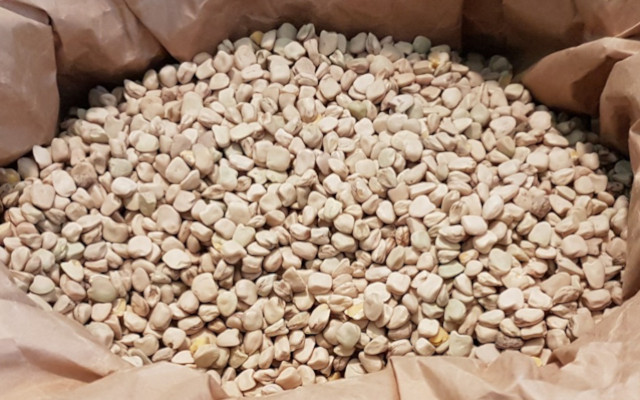
A ancient legume with the characteristic earthy flavor, the grass pea (grass pea) is re-emerging from its historical roots as a staple food of rural Italy. While its fascinating history and nutritional value are well documented, this article by Great Italian Food Trade (GIFT) provides a comprehensive narrative centered on the production and culture of grass pea in Italy.
We delve deeply into the history of this legume, presenting a detailed summary of the regional cultivation and the specifics varieties, showing its contemporary appeal through modern uses such as artisan gluten-free pasta. To conclude with a practical guide aimed at those who wish to purchase this sustainable and versatile legume.
A taste of history: the origins of the grass pea
The domestication of Lathyrus sativus, the botanical name of grass pea, is believed to have taken place in the Balkans around 6000-7000 BC, in parallel with the cultivation of ancient grains (einkorn, emmer). Its presence has been recorded inancient Greece and in Rome, where the Romans called it cicercula. In Italy, grass pea has had significant importance, particularly in the rural areas of the south, serving as a fundamental food source, especially during times of scarcity and famine. The resilience of the plant, capable of thriving in drought conditions, it made it a reliable crop when others failed.
However – with industrial advances and the shift towards more profitable crops after the Second World War – the cultivation and consumption of grass pea in Italy drastically decreased. This change reflected broader socio-economic shifts and the evolution of dietary habits.
The historical dependence on ‘grass pea’ during famines is dramatically illustrated in Francisco de Goya’s ‘Disasters of War’ series, which includes a print titled Gracias á la almorta (‘Thanks to the grass pea’), which depicts the debilitating effects of its excessive consumption. Despite this decline, recent decades have seen a renewed interest in grass pea, driven by young Italian organic farmers and supported by the Slow Food movement. This revival recognizes the rich heritage and nutritional value of the legume, leading to its recognition as Traditional Agri-food Product (PAT) in various Italian regions.
The science of grass pea: botanical characterization and seasonality
Scientifically classified as Lathyrus sativus L., grass pea belongs to the Leguminosae family, also known as Fabaceae. The seeds of grass pea are characterized by their irregular, angular, and flattened shape, with a color range varying from gray to light brown or even white.
The plant itself is a annual herbaceous vine with thin stems that can reach heights from 0.6 to 0.9 meters. Its leaves are pinnate, with leaflets and tendrils, and the plant produces solitary flowers in shades of white, pink, blue, or purplish-red.
In Italy, the grass pea is typically cultivated as microthermal crop, sown in autumn or winter, or in spring, with the harvest which takes place during the summer months, generally between June and August. In particular, the grass pea shows remarkable tolerance to frost, drought, and can also thrive in poor soil conditions, contributing to its historical reliability as a food source in difficult environments.
Terroir and varieties
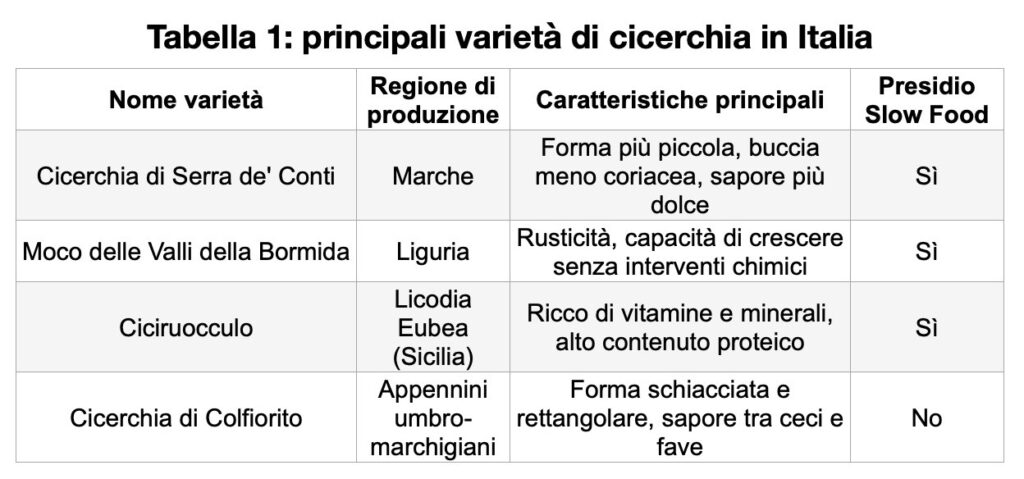
The grass pea has a strong historical connection with the terroir of central and southern Italy, with cultivation concentrated in regions such as Marche, particularly the area around Serra de’ Conti, theUmbria, including Colfiorito, the Lazio, the Puglia, the Sardinia, theEmilia Romagna, and the Molise.
Some areas, such as Serra de’ Conti in the Marche region and Colfiorito, nestled in the Umbrian-Marche Apennines, are particularly renowned for their grass pea production, with microclimates unique and soil compositions that contribute to the distinctive characteristics of the legume.
Other terroir specific, such as Licodia Eubea in Sicily, cultivate different varieties of grass pea using traditional methods.
Agronomic practices and sustainability
Traditionally, grass pea was sown in spring, often intercropped with corn, beans, and chickpeas, and then harvested in August. The agronomic practices contemporary ones involve direct sowing at the beginning of the season, although autumn sowing works in regions with mild winters. The plant blooms in full sun and adapts to various soil types from sandy to clayey, preferring well-drained conditions with pH between 6.0 and 7.5, generally avoiding acidity.
This crop has modest soil fertility requirements and thrives with minimal interventions. Its ability to fix atmospheric nitrogen makes it valuable in crop rotation systems, improving the soil health. Harvesting typically involves leaving the pods to dry naturally before threshing for seed extraction.
From the point of view of sustainability, the grass pea stands out for requiring few productive inputs including water, fertilizers, and pesticides. Its adaptability to marginal soils combined with nitrogen-fixing abilities strengthens its environmental credentials, offering a climate resilient option. In certain areas, low-impact methods of cultivation persist. The renewed interest in grass pea among organic farmers reflects the growing focus on genuinely sustainable agricultural approaches.
Nutritional and health properties
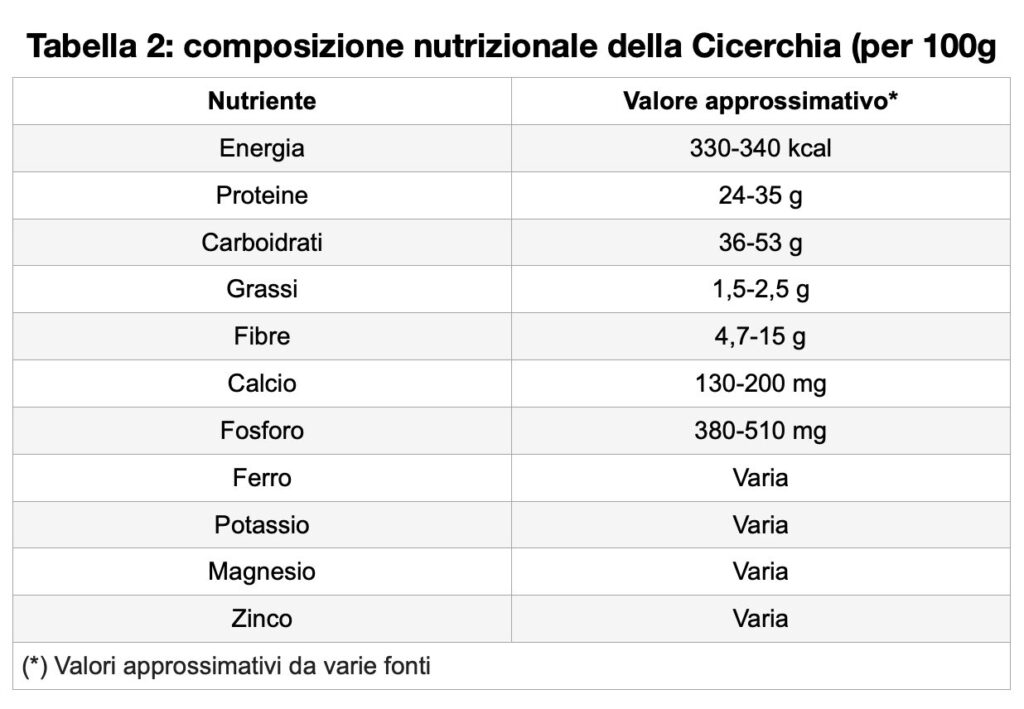
The grass pea boasts a respectable nutritional profile, with a high protein contentthat can reach up to 35%. It also provides significant amounts of carbohydrates, ranging from 48% to 52.3%, and is relatively low in fat. Additionally, grass pea is a good source of dietary fiber and essential nutrients, including B vitamins (B1, B2 and PP), vitamin A, pro-vitamin β-carotene, and various minerals such as potassium, phosphorus, magnesium, iron, calcium, and zinc.
In particular, grass pea is the only food source known of the amino acid L-omoarginine, which may offer potential benefits for cardiovascular health, hypoxia, Alzheimer’s disease and memory-related issues. It also contains antioxidants, such as glutathione and ascorbic acid (vitamin C), contributing to overall health.
It is important to highlight the presence of β-N-oxalyl-L-α,β-diaminopropionic acid (β-ODAP) in grass pea, a neurotoxin that can cause a condition known as lathyrism, characterized by muscle weakness and paralysis, if consumed as the primary protein source for prolonged periods, especially in individuals with malnutrition. However, the moderate consumption of grass pea as part of a balanced diet is generally considered safe. Furthermore, soaking the beans for a prolonged period (12-24 hours) and cooking them thoroughly can significantly reduce β-ODAP levels. There are ongoing breeding programs focused on the development of varieties of Lathyrus sativus with lower or negligible levels of this neurotoxin.
Uses
In the Italian cuisine, grass pea has traditionally been used in various ways:
- it is a common ingredient in hearty soups and broths and can be transformed into a creamy puree, similar to broad bean puree known as macco;
- the legume can be ground into flour, which is used to prepare forms of Pasta traditional like maltagliati and pappardelle, as well as a dish similar to polenta called fracchiata in the Abruzzo region;
- grass pea is also present in regional specialties Italian such as farinata and panissa. In Umbria, it is frequently used as a key ingredient in soups and served as a topping on bruschetta;
- in recent years, the legume has gained significant importance in thegluten-free artisanal pasta industry throughout Italy. Naturally gluten-free, grass pea flour is an excellent alternative for people affected by celiac disease or gluten sensitivity.
Grass pea pasta
I artisanal pasta producers, particularly in regions like Umbria, Marche, and Sicily, have started to incorporate grass pea flour into their production, creating distinctive pastas with a unique 'earthy' flavor profile and a higher protein content compared to traditional wheat-based options.
These special pastas often fall into the premium segment in both national and international markets, attracting health-conscious consumers and food enthusiasts looking for authentic Italian products with nutritional benefits.
Some producers have developed innovative pasta formulations that mix grass pea flour with other gluten-free alternatives such as rice, corn, or buckwheat to create products with optimal cooking properties and textures similar to traditional wheat pasta.
Other uses
In modern cuisine, grass pea is gaining popularity for its use in a wide range of dishes, including soups, stews, salads, and purees, often found in contemporary Italian restaurants. It can even be used as a base forhummus, offering a regional alternative to chickpeas. The growing interest in ancient grains e alternative flours has further strengthened the position of grass pea in this growing market segment.
Outside of Italy, grass pea flour grass pea, known as almorta in Spanish, is the main component of gachas manchegas, a traditional dish from the La Mancha region in Spain. Immature grass pea seeds can be eaten like green peas. In India and in Ethiopia, grass pea is a versatile ingredient used in the preparation of dahl, flatbread such as roti and kitta, and various sauces.
Tips for buyers
For food lovers
When purchasing grass pea, whether for personal culinary exploration or to add an interesting ingredient to your pantry, look for dried legumes that have a uniform color, from gray to light brown or white, and possess their characteristic irregular, angular, and flattened shape.
It is recommended to prioritize organic options, to support truly sustainable agricultural practices where the use of pesticides and other toxic chemicals is prohibited.
Try to source grass pea from reputable Italian producers or organic stores that focus on authentic high-quality ingredients. Remember that dried grass pea requires soaking for at least 12-24 hours and a complete cooking before consumption, to reduce potential toxins and improve digestibility.
For professional buyers
For professional buyers looking to procure grass peas for their activities, it is advisable to target regions in Italy with a long tradition of its cultivation, such as Marche, Umbria, and Sicily. Learn about specific variety offer, since different varieties, such as that of Serra de’ Conti, have unique characteristics like smaller size and a sweeter flavor.
When selecting suppliers, prioritize those who are certified organic, aligning with the growing consumer demand for environmentally responsible products. Consider intended use of the grass pea – whether you need whole beans for soups and stews or flour for pasta production – as this can influence your choice of supplier and variety.
Our team of Great Italian Food Trade (GIFT) has extensive knowledge of the Italian agricultural landscape and has established a network of reliable producers across the country. The international buyers seeking to source high-quality organic grass pea can benefit from GIFT’s experience in identifying and connecting with reputable suppliers in Italy.
Conclusions
Grass pea represents a testament to the rich agricultural heritage of Italy, offering a unique combination of ancient origins, nutritional richness e culinary versatility. Its resilience as a crop and its adaptability to various conditions underline its historical importance, while its organic cultivation practices align with modern environmental concerns.
While the presence of β-ODAP requires careful preparation and consumption, ongoing efforts to develop low-toxicity varieties promise a brighter future for this remarkable legume.
Grass pea, with its distinctive flavor and texture – which some describe as a crossroads between lentils and chickpeas – is an original and valuable ingredient. It therefore deserves to be rediscovered and appreciated by a global audience, for a dive into the authentic gastronomic archaeology of Italy and support for the organic farmers who preserve it.
Dario Dongo
Credit photo: © GIFT
Bibliography
- Campbell, C. G. (1997). Grass pea (Lathyrus sativus L.). In Promoting the conservation and use of underutilized and neglected crops (Vol. 18). International Plant Genetic Resources Institute, Rome, Italy. ISBN 92-9043-341-8. https://tinyurl.com/4h3z7t3m
- Cristiani, E., Radini, A., Edinborough, M., & Borić, D. (2016). Dental calculus reveals Mesolithic foragers in the Balkans consumed domesticated plant foods. Proceedings of the National Academy of Sciences, 113(37), 10298-10303. https://doi.org/10.1073/pnas.1603477113
- Grela, E. R., Kiczorowska, B., Samolińska, W., Matras, J., Kiczorowski, P., Rybiński, W., & Hanczakowska, E. (2017). Chemical composition of leguminous seeds: part I—content of basic nutrients, amino acids, phytochemical compounds, and antioxidant activity. European Food Research and Technology, 243(8), 1385-1395. https://doi.org/10.1007/s00217-017-2849-7
- Lambein, F., Travella, S., Kuo, Y.-H., Van Montagu, M., & Heijde, M. (2019). Grass pea (Lathyrus sativus L.): Orphan crop, nutraceutical or just plain food? Planta, 250(3), 821–838. https://doi.org/10.1007/s00425-018-03084-0
- Tavoletti, S., & Iommarini, L. (2007). Molecular marker analysis of genetic variation characterizing a grasspea (Lathyrus sativus L.) collection from central Italy. FAO AGRIS. https://agris.fao.org/search/en/providers/122535/records/65de45684c5aef494fdb5237
- Piergiovanni, A. R., Lupo, F., & Zaccardelli, M. (2011). Environmental effect on yield, composition and technological seed traits of some Italian ecotypes of grass pea (Lathyrus sativus L.). Journal of the Science of Food and Agriculture, 91(1), 122-129. https://doi.org/10.1002/jsfa.4161
- Slow Food Foundation. (n.d.). Cicerchia di Serra de’ Conti – Slow Food Presidium. https://www.fondazioneslowfood.com/it/presidi-slow-food/cicerchia-di-serra-de-conti/
- Tamburino, R., Guida, V., Pacifico, S., Rocco, M., Zarrelli, A., Parente, A., & Di Maro, A. (2012). Nutritional values and radical scavenging capacities of grass pea (Lathyrus sativus L.) seeds in Valle Agricola district, Italy. Australian Journal of Crop Science, 6(1), 149–156. https://www.iris.unina.it/handle/11588/461043
- Vaz Patto, M. C., & Rubiales, D. (2014). Lathyrus diversity: available resources with relevance to crop improvement – L. sativus and L. cicera as case studies. Annals of Botany, 113(6), 895-908. https://doi.org/10.1093/aob/mcu024

Dario Dongo, lawyer and journalist, PhD in international food law, founder of WIISE (FARE - GIFT – Food Times) and Égalité.


