

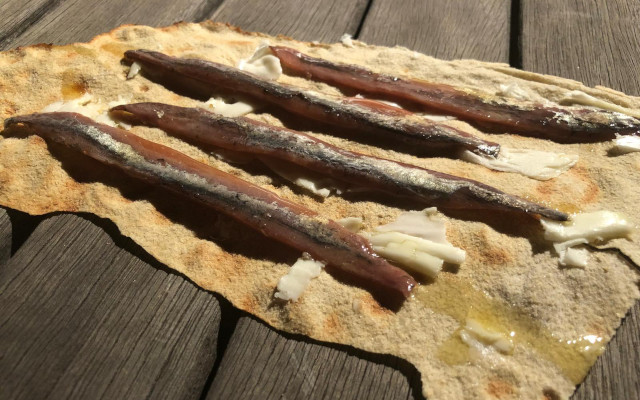
Small size, great gastronomic value. The anchovies Italian, or anchovies, belong to the species Engraulis encrasicolus, a small pelagic fish that lives in schools and constitutes one of the historical resources of Mediterranean fishing. Fresh, salted and in oil they have occupied a central place in the world for centuries Italian cuisine and feed a supply chain in which fishing, artisanal processing and canning industry meet.
Production, market and export
The most recent framework comes from the European Commission's European Market Observatory for Fisheries and Aquaculture Products (EUMOFA). In 2025 the intra-EU trade of anchovy-based products have achieved 38,341 tons, for a value of 171 million euros. Preparations and preserves represent 47% of the value, followed by fresh or refrigerated products (35%) and frozen products (12%). Spain is the first intra-EU exporter with 38% of the value, followed byItaly with the 20% (EUMOFA, 2026b).
Italy is at the same time a fishing country, a major processor and importer. In 2023 theoverall offer of anchovy on Italian market was of 44,311 tons in live weight equivalent, 44% from national catches and 56% from imports. In 2024, imports reached 23,072 tonnes and 143 million euros, with a growth of 61% in volume and 72% in value compared to 2020. The first supplier is Morocco (8,520 tonnes), followed by Spain, Albania, Croatia and Tunisia. The national production of prepared and preserved anchovies reached 5,369 tonnes in 2023 according to Istat data, and the in oil represents the 75% in volume of consumption of anchovies in Italy. The main canning industries, three or four in total, are located in the North (EUMOFA, 2025). The place of transformation therefore does not necessarily coincide with the origin of the raw material.
On the front of fishing, in 2025 the first sales of all fish products in the Italian sales points surveyed by EUMOFA amounted to 52,166 tonnes and 266 million euros. The first market by value is Porto Tolle (Rovigo), with 4,178 tonnes and 32 million euros, where anchovy leads the three main species by value, together with sardine and mantis shrimp (EUMOFA, 2026a).
For 2026 the reference is Adriatic Sea. In geographical subareas 17 and 18 (Geographical Sub-Areas, GSA) defined by the General Fisheries Commission for the Mediterranean, Regulation (EU) 2026/266 sets for Italy a maximum catch limit of anchovy equal to 14,154.5 tonnes, compared to 15,733.7 tonnes in 2025: a reduction of approximately 10% (Council of the European Union, 2025, 2026).
History
The preservation of fish through salt and fermentation precedes the modern canning industry by many centuries. At the time ofancient Rome the Mediterranean developed a vibrant economy of salted fish and fermented sauces. The analysis of the residues coming from the so-called 'shop of garum' Of Pompeii it allowed us to study amino acids and minerals of ancient fish seasonings, a rare chemical testimony of Roman food techniques (Smriga et al., 2010).
There Sicily offers another significant historical testimony. The cetariae of Portopalo, studied with archaeometric techniques in a research published in 2025, include tanks for the processing and salting of fish referable to Greek, Hellenistic and Roman phases. The facilities document the antiquity of fish processing in the far south of the peninsula, even if it is not possible to attribute each tank to the processing of anchovies (Girimonte et al., 2025).
Between the nineteenth and twentieth centuries, the anchovy now belonged to the national culinary heritage. Pellegrino Artusi he dedicates two consecutive recipes to her, 'Anchovies marinara' and 'Fried anchovies', numbered 481 and 482 in the definitive edition of Science in cooking and the art of eating well, the manual first published in 1891 (Artusi, 1922).
Production areas. The terroir marine of Italian anchovies
Talk about terroir for anchovies requires clarification. Engraulis encrasicolus it is a pelagic and gregarious species, capable of seasonal movements, and is therefore not linked to a marine parcel as an agricultural product is linked to a soil. Territorial identity arises from the interaction between area and fishing season, characteristics of the raw material, tools used, speed of processing and conservation knowledge.
Central-northern Adriatic
The Adriatic Sea represents one of the most important areas for Italian fishing small pelagics. Subareas 17 and 18 are subject to specific European limits for anchovy and sardine and constraints on fleet capacity. For Italy, in 2026 as in 2025, the fleet authorized for active fishing of small pelagics in the two sub-areas cannot exceed 187 units including trawlers, pelagic trawls and purse seines (Council of the European Union, 2026).
Ligurian Sea
The Salted anchovies from the Ligurian Sea PGI (Protected Geographical Indication, registered in 2008) represent the most structured Italian case of connection between species, fishing area and conservation method. The specification reserves the denomination to anchovies fished in the waters off the Ligurian coast between 1 April and 15 October with the traditional method of lampara. Processing must begin within 12 hours of capture and the product is packaged in traditional ways arbanelle of glass (Ministry of Agricultural, Food and Forestry Policies, 2017).
Cilento, menaica anchovies
A different technique survives in Marina di Pisciotta. The menaica anchovies they take their name from the homonym traditional network, which holds the specimens of larger dimensions. According to the Campania Region sheet, the fishermen 'they delicately extract the anchovies one at a time from the mesh, removing the head and entrails'. The anchovies are then washed in brine and placed in terracotta jars, covered, pressed with stones and left to mature for at least six months. The same source reports that the ritual 'it dates back to the classical era and has remained unchanged over the centuries' (Campania Region, 2019).
Cetara and the culture of salting
Another emblematic territory is Cetara, on the Amalfi Coast. There Colatura di Alici di Cetara DOP (Protected Designation of Origin, registered in 2020) is not a preserved fillet, but the liquid obtained from the maturation of anchovies in salt. The specification requires anchovies Engraulis encrasicolus fished in the sea in front of the province of Salerno, within 12 miles of the coast, and sea salt. Processing, maturation and pouring must take place in the municipalities of the province of Salerno (Ministry of Agricultural, Food and Forestry Policies, 2018). The PDO thus documents the continuity and specialization of the local culture of salted anchovy.
Sicily
There Sicily presents another long history of fishing and processing of blue fish. Rather than attributing a single one to the whole island terroir of the anchovy, it is worth recognizing a plurality of coastal cultures. You already remembered them cetariae of Portopalo offer a solid archaeological basis for the historical depth of salting in the south-eastern area of the largest island in the Mediterranean Sea (Girimonte et al., 2025).
Ingredients and processing methods
Salted anchovies
The transformation comes from two essential ingredients: anchovies and sea salt. The methods vary according to specifications, territories and production dimensions, but the sequence normally includes selection of the raw material, decapitation and evisceration, layering with salt, pressing and maturation.
Salt takes away available water, changes the consistency and selects themicrobial and enzymatic ecosystem that accompanies maturation. Time, quantity and grain size of the salt, temperature, size of the fish and pressure exerted contribute to the final result. There is therefore not just one model of salted anchovy: the Ligurian PGI, the Menaica anchovies and the Cetara colatura follow different rules and times.
Anchovies in oil
THE'anchovy in oil of quality is the result of multi-stage processing. In the description of the supply chain curated by EUMOFA the sequence includes 'salting, maturing in salt for two or three months, filleting and preservation in oil'. Since the anchovy is a very delicate fish, filleting, salting and arranging the fillets in the jar are carried out entirely by hand and the cost of labor significantly affects the final price. The reference is olive oil, while some productions, such as the Croatian one analyzed in the same study, use sunflower oil (EUMOFA, 2025).
There sensorial quality it therefore depends both on the anchovy and its maturation, and on the oil used. A neutral oil such as sunflower allows the profile of the fish to emerge, while an extra virgin olive oil clearly participates in the final flavour.
Nutritional properties. The data CREATES
The food composition tables indicated by CREA - Food and Nutrition Research Center (2019) refer to fresh anchovy, anchovy in oil and anchovy in salt the following nutritional values, expressed per 100 g. The table below shows the micronutrients which, in at least one of the three types, reach 15% of the nutritional reference values set out in Annex XIII to Regulation (EU) no. 1169/2011. Starting from this threshold, the quantity of a vitamin or mineral is considered significant (CREA, 2019a, 2019b, 2019c).
| Values per 100 g | Fresh anchovy | anchovy in oil | Salted anchovy |
| Energy | 403 kJ / 96 kcal | 862 kJ / 206 kcal | 571 kJ / 137 kcal |
| Fats | 2.6g | 11.3g | 3.1g |
| of which saturated fatty acids | n.d. | n.d. | n.d. |
| Carbohydrates | 1.5g | 0.2g | 2.3g |
| of which sugars | 1.5g | 0.2g | 2.3g |
| Fibers | 0g | 0g | 0g |
| Proteins | 16.8g | 25.9g | 25.0g |
| Salt | 0.28g | 1.20 g | n.d. |
| Riboflavin (vitamin B2) | 0.26 mg (18.6% NRV) | 0.20 mg (14.3% NRV) | n.d. |
| Niacin (vitamin B3, or vitamin PP) | 14.00 mg (87.5% NRV) | 6.50 mg (40.6% NRV) | n.d. |
| Potassium | 278 mg (13.9% NRV) | 700 mg (35.0% NRV) | n.d. |
| Soccer | 148 mg (18.5% NRV) | 44 mg (5.5% NRV) | n.d. |
| Phosphorus | 196 mg (28.0% NRV) | 351 mg (50.1% NRV) | n.d. |
| Iron | 2.8 mg (20.0% NRV) | 1.3 mg (9.3% NRV) | n.d. |
| Zinc | 4.2 mg (42.0% NRV) | n.d. | n.d. |
| Copper | 1.0 mg (100% NRV) | n.d. | n.d. |
Note: 'n.d.' indicates data not available in the CREATE tab, not a value of zero. The salt is calculated from the sodium reported by CREA (110 mg in fresh, 480 mg in oil) multiplied by 2.5 (EU regulation 1169/2011, Annex I, point 11). The percentages are calculated on the nutritional reference values set out in Annex XIII to Regulation (EU) no. 1169/2011.
The CREA indicates portions 150 g for fresh anchovies and 50 g for preserves; the table is standardized to 100 g to allow comparison. The Proteins they provide 70% of the energy in fresh, 73% in salt and half in oil, where the governing oil increases the fat content. For fresh anchovies, CREA expresses the fatty acid composition as a share of total fatty acids, not in grams. The saturated ones represent 51.02%, the polyunsaturated ones 33.36%. Among these, long-chain omega-3s stand out, eicosapentaenoic acid (EPA) And docosahexaenoic acid (DHA), respectively at 10.6% and 20.41%, almost a third of the total fatty acids. They are percentages referring to a fat content of 2.6 g, and should not be read as grams of EPA and DHA per 100 g of food (CREA, 2019a).
In light of these values, fresh anchovy meets the conditions for nutritional information 'low fat', 'low sodium' And 'high in protein'. It is also 'high content' of niacin, zinc and copper e 'source' of riboflavin, calcium, phosphorus and iron. The pickled in oil is in turn 'high in protein' And 'high content' of niacin, potassium and phosphorus (EC reg. 1924/2006, Annex). Operators who intend to enhance their products in these aspects must in any case carry out analyzes on their representative samples to verify compliance with the minimum thresholds established for the use of the various claims. Our team of DO (Food and Agriculture Requirements) supports operators, their representatives and consortia, including research ones, to develop these and other indications, in the name of transparency and compliance with current legislation.
Anchovies and health, the benefits of blue fish
The most solid epidemiological studies concern the consumption of fish as a whole and, in particular, of the fish rich in omega-3. A umbrella review of 34 meta-analyses of prospective studies found, with moderate quality evidence, that every additional 100 g of fish per day is associated with a lower risk of mortality for all causes (-8%) and for cardiovascular causes (-25%). The risk is also lower for coronary heart disease, heart attack, stroke, heart failure, depression and liver cancer (Jayedi & Shab-Bidar, 2020).
The benefit appears to be linked above all to fatty fish, richer in omega-3. A meta-analysis of 19 studies compared the highest consumption with the lowest. For oily fish, he observed an 8% lower risk of coronary heart disease, 17% lower risk of coronary heart disease, and 3% lower risk of all-cause mortality; for lean fish, no significant associations emerged (Giosuè et al., 2022).
Anchovy specifically falls into this category. An analysis of four large international cohorts, with 191,558 participants in 58 countries, classified anchovies among the fish with a high omega-3 content, the consumption of which is associated with a lower cardiovascular risk, while the other fish were neutral. In people with vascular disease, a consumption of at least 175 g of fish per week, approximately two servings, was associated with a 16% lower risk of major cardiovascular events and an 18% lower risk of total mortality. In the general population the association was not significant (Mohan et al., 2021).
An advantage of small pelagics concerns contaminants. Out of 1,345 specimens of 58 fish species from the western Mediterranean, the anchovy was among the only 13 species in which no sample exceeded 0.5 µg/g of mercury on wet weight (Capodiferro et al., 2022).
These are observational associations, referring to fish categories and not to anchovies as a single food. Taken together, however, they indicate that blue fish is a choice consistent with a balanced diet.
Anchovies in Italian cuisine
Fresh
The use of fresh anchovies it has deep roots. Artusi proposed both fried is 'marinara style', a sign that already in post-unification bourgeois cuisine the small blue fish was considered an independent raw material and not just a seasoning ingredient (Artusi, 1922).
Contemporary cuisine maintains this simplicity. The Silver Spoon, in pasta with fresh anchovies, combines linguine, peeled tomatoes, garlic, parsley and stale bread toasted in oil (Carnevali, n.d.).
Raw or marinated preparations require attention to safety. Operators must subject fish products intended to be consumed raw, marinated or salted, when the treatment is not sufficient to kill viable parasites, to freezing at at least -20 °C for 24 hours or at -35 °C for 15 hours (EC regulation 853/2004, Annex III, section VIII, chapter III, letter 'D'). On risk Anisakis see also the in-depth analysis by Food Times 'Blasted or frozen fish?’.
Under salt
THE'Salted anchovy it works in Italian cuisine as a concentrate of flavor and umami. After cleaning and desalination it can be used whole or dissolved in the seasoning, from bread with butter and anchovies to pasta with garlic and oil, up to Piedmontese bagna cauda, pizzas and vegetable-based preparations.
There expressive power of salted anchovy lies in the ability to go from a recognizable food to an invisible but structuring ingredient: fat, heat and humidity disperse the fillet in the cooking bottom and distribute its savory and aromatic component.
in oil
The fillet in oil it is the most immediate form for appetizers, salads, bruschettas and condiments. When the governing oil is of good quality, this too can be included in the preparation, emulsified with vinegar or citrus fruits and aromatic herbs, rather than being discarded as a simple means of preservation.
Advice for buyers
Gourmets and consumers
For them fresh anchovies, quality is evaluated first and foremost through freshness and integrity: bright eyes, shiny skin and firm flesh. They are also useful mandatory information for fishery products, which include commercial name and scientific name, production method, capture area and category of fishing gear (EU regulation 1379/2013, art. 35.1). On this point, see the question DO 'Scientific names of fish on labels?'.
For them Salted anchovies, territory and method can have a decisive weight. A certified denomination such as the PGI of the Ligurian Sea offers a verifiable specification, while other products, such as menaica anchovies, have characteristics linked to the fishing and maturation method. It is advisable to observe the integrity of the fish, consistency, color and absence of anomalous odors, as well as checking the ingredients, declared origin and storage conditions.
When in oil, in addition to the origin of the anchovy, the type of oil, the integrity of the fillets, the ratio between fish and preserving liquid and the drained weight also count. On the indication of the allergen on the label, see the question DO 'Anchovies, do we need to specify 'fish'?'.
Professional buyers
For catering, distribution and the food industry, the price per kilogram is just one of the indicators. The purchasing specifications should consider species, capture area, tool, origin of the raw material, actual place of transformation, caliber, maturation time and method, type of salt and oil, drained weight, usable yield and sensorial consistency between batches.
Two risks characteristic of the species and the processing must also be monitored. The first is the parasitological one, which requires the freezing of raw, marinated or salted products when the process does not guarantee the destruction of the parasites (EC regulation 853/2004, Annex III, section VIII, chapter III, letter 'D').
The second is thehistamine. The Engraulidae they are among the fish families associated with a high histidine content. For fish products subjected to enzymatic maturation in brine, such as salted anchovies, the sampling plan includes 9 units, of which a maximum of 2 between 200 and 400 mg/kg and none over 400 mg/kg (EC regulation 2073/2005, Annex I, point 1.27). For fish sauces obtained by fermentation, such as casting, the limit is 400 mg/kg on a single sample (EC regulation 2073/2005, Annex I, point 1.27a). Compliance cannot therefore be entrusted to organoleptic control alone: it requires temperature management, process hygiene, supplier qualification and analytical checks consistent with the HACCP self-control plan.
Conclusions
Italian anchovies concentrate a significant part of the national maritime and food culture in just a few centimeters. The Adriatic supports an important share of fishing, Liguria has built a PGI around salting, Cilento preserves fishing with menaica and Cetara has transformed maturation in salt into a PDO as unique as colatura. Added to these territorial expressions is a processing industry inserted in a highly interconnected European and Mediterranean supply chain, in which Italy is the second largest intra-EU exporter and processes national and imported raw materials.
For 2026 the reference data is regulatory: the Italian anchovy catch limit in subzones 17 and 18 of the Adriatic drops to 14,154.5 tonnes, approximately 10% less than in 2025.
On a nutritional level, CREA data describe a food rich in proteins. Fresh anchovies are low in fat and sodium and contain significant quantities of niacin, zinc, copper, phosphorus, iron, calcium and riboflavin; the pickled in oil in turn provides potassium, phosphorus and niacin. Scientific literature associates the regular consumption of fish rich in omega-3, including anchovies, with a lower cardiovascular risk, especially with non-fried preparations.
For consumers and buyers, the value can be seen in the transparency of the supply chain: where and how the fish was caught, who processed it, how much and how it matured, what salt and oil were used. It is this combination of sea, technique, time and traceability that distinguishes a simply preserved anchovy from a great product of Italian food culture.
Dario Dongo
References
European Union regulatory sources
Commission Implementing Regulation (EU) 2017/1577 of 5 September 2017 approving non-minor amendments to the specification for a name entered in the register of protected designations of origin and protected geographical indications [Anchovies in salt from the Ligurian Sea (PGI)]. http://data.europa.eu/eli/reg_impl/2017/1577/oj
Commission Implementing Regulation (EU) 2020/1529 of 14 October 2020 entering a name in the register of protected designations of origin and protected geographical indications [‘Colatura di alici di Cetara’ (PDO)]. OJ L 349, 21.10.2020, p. 3. http://data.europa.eu/eli/reg_impl/2020/1529/oj
Commission Regulation (EC) No 776/2008 of 4 August 2008 entering certain names in the Register of protected designations of origin and protected geographical indications. OJ L 207, 5.8.2008. http://data.europa.eu/eli/reg/2008/776/oj
Commission Regulation (EC) No 2073/2005 of 15 November 2005 on microbiological criteria for foodstuffs. Consolidated text: 01/07/2026. http://data.europa.eu/eli/reg/2005/2073/2026-07-01
Council Regulation (EU) 2025/219 of 30 January 2025 fixing for 2025 the fishing opportunities for certain fish stocks and groups of fish stocks applicable in the Mediterranean and Black Seas. Consolidated text: 02/04/2025. http://data.europa.eu/eli/reg/2025/219/2025-02-04
Council Regulation (EU) 2026/266 of 26 January 2026 fixing for 2026 the fishing opportunities for certain fish stocks and groups of fish stocks applicable in the Mediterranean and Black Seas. OJ L, 30.1.2026. http://data.europa.eu/eli/reg/2026/266/oj
Regulation (EC) No 853/2004 of the European Parliament and of the Council of 29 April 2004 laying down specific hygiene rules for food of animal origin. Consolidated text: 05/07/2026. http://data.europa.eu/eli/reg/2004/853/2026-05-07
Regulation (EC) No 1924/2006 of the European Parliament and of the Council of 20 December 2006 on nutrition and health claims made on foods. Consolidated text: 12/13/2014. http://data.europa.eu/eli/reg/2006/1924/2014-12-13
Regulation (EU) No 1169/2011 of the European Parliament and of the Council of 25 October 2011 on the provision of food information to consumers. Consolidated text: 04/01/2025. http://data.europa.eu/eli/reg/2011/1169/2025-04-01
Regulation (EU) No 1379/2013 of the European Parliament and of the Council of 11 December 2013 on the common organization of the markets in fishery and aquaculture products. Consolidated text: 11/27/2024. http://data.europa.eu/eli/reg/2013/1379/2024-11-27
Production regulations
Ministry of Agricultural, Food and Forestry Policies. (2017, September 22). Production specifications for the Protected Geographical Indication 'Salted anchovies from the Ligurian Sea'. https://www.ge.camcom.gov.it/it/promuovi/prodotti-tipici/prodotti-dop-e-igp/acciughe/disciplinare_acciughe-sotto-sale-del-mar_ligure_22-09-2017.pdf
Ministry of Agricultural, Food and Forestry Policies. (2018). Production specifications for the Protected Designation of Origin 'Colatura di alici di Cetara'. Official Journal of the Italian Republic, n. 181 of 6 August 2018.
Food composition and market data
CREA — Food and Nutrition Research Center. (2019a). Anchovy or anchovy. Food code 120010. Food composition tables. https://www.alimentinutrizione.it/tabelle-nutrizionali/120010
CREA — Food and Nutrition Research Center. (2019b). Anchovy or anchovy, in oil. Food code 120020. Food composition tables. https://www.alimentinutrizione.it/tabelle-nutrizionali/120020
CREA — Food and Nutrition Research Center. (2019c). Anchovy or anchovy, salted. Food code 120030. Food composition tables. https://www.alimentinutrizione.it/tabelle-nutrizionali/120030
European Market Observatory for Fisheries and Aquaculture Products — EUMOFA. (2025). Anchovy preserved in the EU. The price structure in the supply chain. Focus on Italy, Spain and Croatia. Publications Office of the European Union. https://doi.org/10.2771/0944815
European Market Observatory for Fisheries and Aquaculture Products — EUMOFA. (2026a). Italy — Country profile. European Commission, Directorate-General for Maritime Affairs and Fisheries. https://fishery-aquaculture-market-observatory.ec.europa.eu/en/country-and-species-profiles/country-profiles/italy
European Market Observatory for Fisheries and Aquaculture Products — EUMOFA. (2026b). Monthly Highlights No. 4/2026. Case study: European anchovy in the EU — focus on the Atlantic seaboard. European Commission, Directorate-General for Maritime Affairs and Fisheries. https://fishery-aquaculture-market-observatory.ec.europa.eu/en/publications/monthly-highlights/eumofa-monthly-highlights-no-4-2026
Campania region. (2019, August 29). Menaica anchovies. Traditional agri-food products from Campania. https://agricoltura.regione.campania.it/tipici/tradizionali/alici-menaica.htm
Scientific studies on nutrition and health
Capodiferro, M., Marco, E., & Grimalt, J. O. (2022). Wild fish and seafood species in the western Mediterranean Sea with low safe mercury concentrations. Environmental Pollution, 314, 120274. https://doi.org/10.1016/j.envpol.2022.120274
Giosuè, A., Calabrese, I., Lupoli, R., Riccardi, G., Vaccaro, O., & Vitale, M. (2022). Relations between the consumption of fatty or lean fish and risk of cardiovascular disease and all-cause mortality: A systematic review and meta-analysis. Advances in Nutrition, 13(5), 1554-1565. https://doi.org/10.1093/advances/nmac006
Jayedi, A., & Shab-Bidar, S. (2020). Fish consumption and the risk of chronic disease: An umbrella review of meta-analyses of prospective cohort studies. Advances in Nutrition, 11(5), 1123-1133. https://doi.org/10.1093/advances/nmaa029
Mohan, D., Mente, A., Dehghan, M., Rangarajan, S., O'Donnell, M., Hu, W., Dagenais, G., Wielgosz, A., Lear, S., Wei, L., Diaz, R., Avezum, A., Lopez-Jaramillo, P., Lanas, F., Swaminathan, S., Kaur, M., Vijayakumar, K., Mohan, V., Gupta, R., … Yusuf, S. (2021). Associations of fish consumption with risk of cardiovascular disease and mortality among individuals with or without vascular disease from 58 countries. JAMA Internal Medicine, 181(5), 631-649. https://doi.org/10.1001/jamainternmed.2021.0036
Food history and archaeology
Girimonte, G., Pecci, A., Bernal-Casasola, D., Malfitana, D., Díaz, J. J., Mazzaglia, A., & Miriello, D. (2025). A multi-analytical approach to unveiling raw materials and plaster recipes of Greek, Hellenistic and Roman fish-salting vats: The cetariae of Portopalo (Sicily, Italy). Journal of Archaeological Science: Reports, 66, 105244. https://doi.org/10.1016/j.jasrep.2025.105244
Smriga, M., Mizukoshi, T., Iwahata, D., Eto, S., Miyano, H., Kimura, T., & Curtis, R. I. (2010). Amino acids and minerals in ancient remnants of fish sauce (garum) sampled in the 'Garum Shop' of Pompeii, Italy. Journal of Food Composition and Analysis, 23(5), 442-446. https://doi.org/10.1016/j.jfca.2010.03.005
Gastronomic sources
Artusi, P. (1922). Science in the kitchen and the art of eating well (25th ed.). R. Bemporad & Son. Recipes no. 481 'Anchovies marinara' and n. 482 'Fried anchovies'. https://www.gutenberg.org/ebooks/59047
Carnevali, R. (s.d.). Pasta with fresh anchovies. The Silver Spoon. https://www.cucchiaio.it/ricetta/pasta-con-alici-fresche/

Dario Dongo, lawyer and journalist, PhD in international food law, founder of WIISE (FARE - GIFT – Food Times) and Égalité.


