

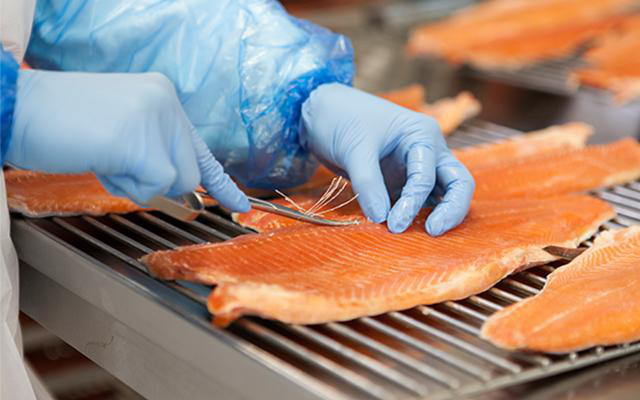
The sector of trout in Italy it is changing: the national production of portioned fish maintains its European records, while the offer shifts towards smoked, marinated fillets and ready-made preparations (ready to eat), with greater added value. The article exposes the market data, the breeding and smoking methods, the geographical indications and the specifications of quality productions - Trentino (IGP), Friuli Venezia Giulia (AQuA and PAT) and Reatino (PAT) - the rules on animal welfare, nutritional values and omega-3, with the permitted nutritional and health indications.
Production, Italy among the first in Europe
There rainbow trout it is one of the most widespread farmed species in the world. World production grew by 38% in the decade 2014-2023 and the main producers are Türkiye, Iran and the European Union (EUMOFA, n.d.).
THE'aquaculture of theEuropean Union produced in 2024 one million tons, for 4.6 billion euros. Trout is the second species by weight (17.2%), after mussels (32.8%), and the first by value (17.9%). THE'Italy, with 98,051 tonnes of aquaculture products, is the fourth largest producer in the Union (9.7%) after Spain, France and Greece (Eurostat, 2026a).
On rainbow trout alone theItaly, first in 2023 among countries with published data, drops to second place in 2024 after France. The German data is also confidential (Eurostat, 2026b):
| Village | 2023 (tons) | 2024 (tons) |
| France | 27.409 | 35.366 |
| Italy | 34.143 | 30.523 |
| Denmark | 21.960 | 23.995 |
| Poland | 18.281 | 18.642 |
| Spain | 17.515 | 17.005 |
The French series presents a methodological break between the two years (Eurostat, 2026b).
The European federation of producers, which distinguishes the portion trout from the large trout, place theItaly in first place in the Union for portion trout, with 27,550 tonnes in 2024 (29,200 in 2023), ahead of Denmark (23,742) and France (14,108); the large Italian trout stops at 1,150 tons. Outside the Union, Turkey produced 150,000 tonnes of serving trout (FEAP, 2026).
Italian rainbow trout production fell in 2024 to 30,523 tonnes, from 34,143 in 2023 (-10.6%). The production value went from 201.3 to 116.3 million euros and the unit value from 5.90 to 3.81 euros/kg. 93% of the volume comes from tanks and channels (raceway), the rest from ponds (Eurostat, 2026b). In 2023 the Italian farm-gate price, 5.90 euro/kg, exceeded those of France (5.04) and Denmark (4.24) (EUMOFA, s.d.).
THE'Italian Fish Farmers Association indicates for 2024 28,700 tonnes of trout for 115 million euros and 900 tonnes of source char, out of a total of 51,000 tonnes of fish farmed in over 700 production sites and a turnover exceeding 287 million euros. The supply chain also includes 280 million embryonated rainbow trout eggs (2023) and 50 tons of trout eggs intended for consumption (API, 2025). The two series, Eurostat and API, differ in the survey method but agree on volumes and unit value for 2024.
Foreign trade, imports of fresh trout are growing
The customs perimeter considered here includes fresh and frozen whole trout, fresh and frozen fillets and smoked trout; marinated, cooked and other preparations fall into entries that do not isolate the species and remain out of the count.
In 2025 theItaly imported 3,405 tonnes of fresh or chilled trout (NC item 0302 11) for 25.5 million euros, more than double the 1,256 tonnes and 9.8 million in 2024. The main shipping countries are Bulgaria (1,631 tonnes) and Sweden (775); in flows within the Union, the partner indicated is the country of origin, not necessarily the country of origin of the fish. The exports of the same item fell from 5,660 to 4,847 tonnes (21.9 million euros), mainly directed to Poland (2,191 tonnes) and Germany (1,297). Smoked trout (CN entry 0305 43) weighs little in trade: 64.5 tonnes imported and 27.3 exported in 2025 (Eurostat, 2026c). Italian smoked specialties are therefore sold almost entirely on the domestic market.
THE'European Union as a whole it imported 31,354 tonnes of trout from third countries in 2024: Türkiye (15,423 tons, 49%) and Norway (11,573, 37%) cover 86% of the total. Fresh and frozen whole fish represent 76% of imports, smoked trout 11% (EUMOFA, n.d.). On smoked products, Turkey supplied the Union with 3,243 tonnes for 36.5 million euros in 2025, 92.5% of extra-EU imports (Eurostat, 2026c).
Consumption, salmon trout recovers
In 2025 i consumption of fresh salmon trout in Italy they increased by 15.5% in volume and 9.8% in value compared to 2024, in parallel with a decrease in the average price from 15.11 to 14.36 euros/kg (-4.9%). For the complex of fresh fish There growth it was 1.6% in volume and 7.4% in value. The data - processed by BMTI based on surveys of YouGov Shopper household panels - concern fresh fish and not smoked, marinated or cooked trout (BMTI, 2026). In the Union, the apparent consumption of trout is 0.45 kg per capita in live weight equivalent (EUMOFA, s.d.).
The series do not cover the same years: Italian production is available until 2024, foreign trade and household purchases until 2025. Read sequentially, the data show a year of declining national production, in volume and even more so in value, followed by a year of growing domestic purchases and imports of fresh trout almost tripling. However, none of the series isolates smoked, marinated or ready-to-eat products, whose growth remains to be measured.
The history of trout in Italy
There rainbow trout (Oncorhynchus mykiss) is native to the basins of Pacific North American, from Alaska to Mexico, and since 1874 it has been introduced to all continents, except Antarctica, for sport fishing and aquaculture (FAO, 2009). The first eggs arrived in Europe In the 1879, sent by the United States Federal Fisheries Commission to the Trocadéro aquarium in Paris; in 1882 the species entered German breeding (Spairani et al., 2025).
The Trout regulations of Trentino IGP refers precisely to that date, where 'The practice of tank farming dates back to the 19th century with construction in 1879 of the artificial fish farming establishment in Torbole, which had the aim of spreading the practice of fish farming and repopulating public waters with trout fry. The first private fish farms followed in Predazzo (1891), Giustino (1902) and Tione (1926), numerous others after the Second World War and, in 1975, the Association of Trentino Trout Farmers (Trote del Trentino PGI regulations, article 6).
Even in the Rieti area the wide availability of spring water has left ancient traces. The regional product sheet reminds you that in 1407 they operated at Rieti seven official fish retailers and that Paolo Giovio, in De Romanis Piscibus of 1524, praised the qualities of Rieti trout; modern farming has developed around the springs, including those of Santa Susanna in Rivodutri (ARSIAL, 2025).
How trout are raised
Trout grow and reproduce between 9 and 14 °C and the optimal temperature of farm remains below 21 °C. Typical systems are continuous flow channels (raceway) 2-3 meters wide, 12-30 meters long and 1-1.2 meters deep, fed by spring or river waters that pass through the tanks only once. The portion fish, weighing 280-400 grams, is harvested after 12-18 months; sizes of 1-2 kilos are also produced in Europe. Before slaughter, the fish are fasted for three days; whole fish can be stored on ice for 10-14 days (FAO, 2009).
There salmon trout belongs to the same species, and the pink color of the meat derives from the carotenoids (astaxanthin and canthaxanthin) added to the feed (FAO, 2009). In label the commercial name and the scientific name remain 'rainbow trout (Oncorhynchus mykiss)'; 'salmonata' it is additional information, admitted as it is truthful (Dongo, 2019). Trentino regulations require salmoning to take place 'using predominantly the carotenoid pigment astaxanthin and/or carotenoids of natural origin‘ (Trentino PGI Trout regulations, article 5).
The fatty acid profile of the fillet in turn reflects the trout's diet. The replacement of fish oil with vegetable oils significantly reduces the contents of EPA and DHA, which are largely restored by alternating feeds based on fish oil and vegetable oils (Korkmaz & Arslan, 2025); the genetic strain also contributes to the retention of omega-3s (Gladyshev et al., 2022).
The stocking density vary according to the water exchange and the guarantee system. The following table compares the limits set by the different rules:
• biological: 25 kg/m³ for rainbow trout, brown trout and Arctic char, in open systems with oxygen saturation never lower than 60% (EU regulation 2020/464, Annex II, Part I);
• Trout from Trentino PGI: 25, 30, 35 or 40 kg/m³ depending on the number of daily water changes (from 2-6 to over 10), with oxygen not less than 7 mg/l (disciplinary, article 5);
• regional brand AQuA of Friuli Venezia Giulia: less than 35 kg/m³, exchange greater than 3 liters per second per tonne, oxygen above 5 mg/l (ERSA, 2012);
• Reatina Trout, Traditional Agri-food Product of Lazio: 40 kg/m³ in the fattening phase, water between 8 and 13 °C (ARSIAL, 2025).
Geographical indications and territories
In the European register the Italian trout counts two PGIs, both thirty. The framework of the European, national and regional awards is as follows:
• Trout from Trentino PGI: fresh rainbow trout, whole, gutted, filleted or sliced (EU Implementing Reg. 910/2013, amended by EU Implementing Reg. 2022/319);
• Trentino PGI char: arctic char, in the same forms (EU implementing regulation 474/2013);
• Reatina Trout: PGI proposal published in 2006, never registered, today Traditional Agri-food Product of Lazio (ARSIAL, 2025);
• Smoked San Daniele trout: Traditional agri-food product of Friuli Venezia Giulia, cold smoked fillets after dry salting (ERSA, 2017);
• AQuA: collective brand of Friuli Venezia Giulia for trout and char raised in the region (ERSA, 2012).
No Italian geographical indication covers smoked trout: the two Trentino PGIs concern only the fresh product. In this sense, we highlight the positive example of the Schwarzwaldforelle PGI, brown or rainbow trout from the Black Forest, in Germany, whose registration dossier also includes filleting and smoking (European Commission, 1997).
Trentino and Bagolino
The Trout from Trentino PGI they are rainbow trout bred in the entire territory of the autonomous province of Trento and in the municipality of Bagolino in the province of Brescia (regulation, article 3). European recognition dates back to Implementing Regulation (EU) No. 910/2013; a no less minor modification to the specification was approved with implementing regulation (EU) 2022/319 (MIPAAF, 2022).
The disciplinary updated sets the following requirements:
• meat white or salmon, total fat not exceeding 6%, geosmin below 0.9 µg/kg, body index within 1.25 up to 500 grams and 1.35 above (disciplinary, article 2);
• waters springs, wells, rivers and streams in the area, with an average temperature from November to March not exceeding 12 °C, a threshold increased from 10 to 12 °C with the 2022 modification; tanks made of concrete, earth and cement, fibreglass, steel or ceramic (regulation, article 5);
• feed free from GMO raw materials, without crude corn oil, corn gluten, peanuts, mustard and sesame; pre-killing fasting from 3 to 6 days depending on the water temperature; breeding and slaughter within the demarcated area (regulation, article 5);
• cut minimum pre-slaughter of 200 grams for the whole or gutted product, 90 grams for fillets and sliced meats; sale of the packaged product, in trays, boxes with ice, vacuum-packed or modified atmosphere (regulation, article 5);
• label with the mention 'Protected Geographical Indication' or 'PGI', the logo of the denomination and the symbol of the Union (disciplinary, article 8).
The types allowed they are whole, gutted, filleted and sliced: processed products, including smoked, are not included in the denomination. In 2024 the Trentino fishing sector, with 40 companies and 70 plants, developed a gross production worth 36.2 million euros. The PGI marked trout, 331 tonnes out of 552 tonnes of fresh product sold, grew by 12.74% compared to 2023 (Giornale Trentino, 2025).
The Trentino PGI char (Salvelinus alpinus) was registered with Implementing Regulation (EU) No. 474/2013, in the same geographical area; the specification provides for a minimum size of 170 grams for whole and gutted meat, 80 grams for fillets and sliced meats, fat not exceeding 6%, average winter temperature not exceeding 10 °C and the same densities linked to water changes (Salmerino del Trentino PGI specifications, articles 2 and 5). After the minor amendment in 2015, the producer organization ASTRO presented a new request for an ordinary amendment, published on 8 July 2026 (Lombardy Region, 2026).
Collective organization is an example of local development: the voluntary association of Trentino trout growers was established on 29 April 1975 and in 1988 the ASTRO cooperative for processing was born in Lavis, with a self-discipline protocol in force since 1990 (ASTRO, s.d.a). The line of smoked includes cold-smoked salmon trout fillets, whole and pre-sliced, hot-smoked fillets natural or with spices and cold-smoked char fillets, declared without added preservatives (ASTRO, s.d.b). In the same area, Armanini, founded in 1963 in Storo, offers trout speck, marinated, bottarga and trout and char roe, in oil and lake ragù, in addition to the line to be cooked with nuggets, burgers and stuffed pasta (Armanini, n.d.). They are examples of models and formats, not a ranking of national manufacturers.
Friuli Venezia Giulia and Tagliamento
In Friuli Venezia Giulia trout farming is intertwined with resurgence waters and food processing. The region produces around 10,000 tonnes of trout per year, a third about of national production (API, 2022), and reported a 7.7% growth in trout farmed in 2023 (Autonomous Region of Friuli Venezia Giulia, 2024). Trout and char raised in the region can boast the regional collective brand AQuA, whose technical specifications establish density, water exchange and feed composition (ERSA, 2012).
The story of Friultrota is emblematic: over forty years ago the founder Giuseppe Pighin started a trout farm as a hobby in a small lake on the banks of the Tagliamento; the processing soon moved towards ready-made specialties, which the regional atlas indicates as the first example of a product obtained with entrepreneurial criteria in the Friulian tradition of smoked trout (ERSA, 2017). The 'Queen of San Daniele' is cold smoked, below 27 °C, the 'Thread of Smoke' hot, at 70-80 °C; in both cases the salting is done by hand with dry salt and the smoke comes from woods, berries and aromatic herbs (Friultrota, s.d.).
Reatino and Apennine springs
In the province of Rieti, trout farming is supported by generous springs and calcareous waters. There Reatina Trout includes rainbow trout, with white or salmon meat, and brown trout (Salmo trutta), reared in waters between 8 and 13 °C with a maximum density of 40 kg/m³ in the fattening, minimum weight of 300 grams and age between 12 and 26 months (ARSIAL, 2025). In 2006 the ministry published in the Official Journal the proposal for recognition of the 'Reatina Trout' PGI, with a specification extended to the municipalities of the province of Rieti (MIPAAF, 2006). However, the procedure was not followed up in Brussels: the European eAmbrosia register does not contain any dossier, either registered or under examination, with that name (European Commission, 2026). The Reatina Trout thus remains a traditional agri-food product of Lazio.
Aquaculture and well-being, the primacy of organic
Regulation (EU) 2018/848 on biological system dedicates Part III of Annex II to aquaculture animals; Implementing Regulation (EU) 2020/464 adds, in Annex II, the rules by species. For freshwater salmonids, including rainbow trout and char, the fattening systems must be fed by open systems and the flow rate must guarantee at least 60% oxygen saturation; the maximum density is 25 kg/m³ (EU regulation 2020/464, Annex II, Part I).
The rules on animal welfare develop throughout the life cycle:
• animals must have access to space sufficient, Waterfall of good quality with adequate flow rate and replacement, oxygen sufficient and low levels of metabolites; for freshwater fish the bottom of the tanks must come as close as possible to natural conditions (EU regulation 2018/848, Annex II, Part III, point 3.1.5.3);
• The facilities closed recirculation are prohibited, except for hatcheries and hatcheries; artificial heating and cooling of the water are permitted only in those phases (points 3.1.5.1 and 3.1.5.2);
• hormones and their derivatives are prohibited, such as the artificial production of single-sex strains, induced polyploidy and artificial hybridization (point 3.1.2.2);
• the handling of animals must be kept to a minimum and carried out with the utmost care; the'lighting artificial that extends the day cannot exceed 14 hours, except for reproductive needs, and the changes in intensity must be graduated (points 3.1.6.2 and 3.1.6.3);
• theoxygen it can only be used for health and well-being needs and in critical periods, with registration of uses; aeration is permitted, with preference for renewable energy (points 3.1.6.4 and 3.1.6.5);
• i veterinary treatments synthetic allopathic drugs, including antibiotics, are allowed when necessary but limited to two cycles per year, one if the production cycle lasts less than a year, with doubled suspension time (point 3.1.4.2);
• the duration of transport must be reduced to a minimum and any suffering must be reduced to a minimum during the entire life of the animal, including the killing phase (points 3.1.6.6 and 3.1.6.7);
• it stunning of fish must be immediate, with preventive handling that avoids injuries and minimizes stress and suffering, taking into account sizes, species and production sites (point 3.1.6.9).
The feed of carnivores follows an order of priority: organic feed of aquaculture origin, flours and oils from organic aquaculture waste, then from certified sustainable fishing waste, then from whole fish from sustainable fishing not intended for human consumption, finally organic plant or animal raw materials, with the vegetable fraction not exceeding 60% (point 3.1.3.3). Growth promoters and synthetic amino acids are excluded (point 3.1.3.1).
Conventional aquaculture and animal welfare
Outside of the organic regime and the rules defined in the specifications mentioned above, the regulation of animal welfare in aquaculture it has no detailed rules. Regulation (EC) no. 1099/2009 on the protection of animals during killing applies to fish the only general principle according to which 'animals are spared avoidable pain, anxiety or suffering during slaughter and related operations' (EC reg. 1099/2009, articles 1.1 and 3.1).
In Italy Legislative Decree 146/2001 on the protection of farmed animals expressly includes fish in the definition of farmed animal and imposes adequate measures to avoid unnecessary pain, suffering or injury (Legislative Decree 146/2001, article 1.2, letter 'a', and article 2.1, letter 'a').
From fillet to ready-made products
There first transformation it lightens the work in the kitchen: gutting, filleting, portioning and removing bones. A fresh fillet, even if vacuum-packed or in a protective atmosphere, remains intended for rapid cooking before consumption, where so indicated on the label (ASTRO, s.d.b; Armanini, s.d.). However, the indication on the label does not exempt the operator from the microbiological contamination limits applicable to foods to be cooked (Dongo & Biglia, 2024).
In the ready to eat (RTE) on the other hand, preparations are included - smoked, marinated or already cooked fillets, trout eggs - which the producer intends for consumption without the need for further treatment. These preparations are usually vacuum packaged, to extend the shelf life shelf life and preserve the organoleptic characteristics.
In Italy, the growth in demand for fish products with a greater share of service, from barbed fillet to ready-to-eat specialties - the so-called ‘fourth range of the sea‘ – shows the market potential of the Italian RTE trout, in the variety of solutions already available that combine sustainable production and territorial gastronomy.
Cold and hot smoking
The two processes share preliminary salting – dry, in brine or by injection – which lowers the water activity and flavors the fish, but they diverge in their effect on proteins. The Codex Alimentarius provides the following definitions:
- cold smoking: a treatment with smoke 'using a time/temperature combination that will not cause significant coagulation of the proteins in the fish flesh but that will cause some reduction of the water activity', i.e. without significant coagulation of proteins but with a certain reduction in water activity;
- smoking hot: a treatment 'sufficient to cause the complete coagulation of the proteins in the fish flesh' (Codex Alimentarius, 2013). The standard does not set temperatures.
In practice, cold smoking remains around 30 °C, while hot smoking can reach 85 °C at the heart of the product; approximately 90% of proteins denature between 60 and 65 °C (Cheng et al., 2023). Italian producers operate within these ranges: below 27 °C for cold smoking and between 70 and 80 °C for hot smoking, in the case of Friultrota (Friultrota, n.d.).
The Cold smoked fillet it is therefore a raw, salted and flavored fish, with a silky consistency; that hot it is a cooked, tender fish, with a compact but yielding consistency.
Safety of smoked products
Precisely because it is raw, cold smoked meat requires specific controls. Smoking below 30°C is not sufficient to inhibit Listeria monocytogenes (Chen et al., 2022) and product safety depends on process hygiene, salt, cold chain and shelf life. The essential rules are as follows:
• Listeria: from 1 July 2026, for ready-to-eat foods that promote growth, the limit of 100 cfu/g applies for the entire shelf life only if the operator demonstrates that it will not be exceeded; otherwise the bacterium must not be detected in 25 g, throughout the entire commercial life of the product (EC regulation 2073/2005, Annex I, criterion 1.2, as modified by EU regulation 2024/2895);
• salt and packaging: for refrigerated products packaged under vacuum or in an atmosphere with reduced oxygen content, the Codex indicates a minimum salt content in the aqueous phase of 3-3.5%, to protect against Clostridium botulinum (Codex Alimentarius, 2013); with at least 3% salt in the aqueous phase, the shelf life recommended for sous vide cold smoked salmon is three weeks at 5°C (Huang et al., 2023);
• parasites: fish products whose treatment is not sufficient to kill viable parasites, such as cold smoking, must be frozen at -20 °C for at least 24 hours or at -35 °C for at least 15 hours, unless they come from fish reared from embryos, fed exclusively with feed free from viable parasites and reared in free environments or under procedures approved by the competent authority (EC regulation 853/2004, Annex III, Section VIII, Chapter III, letter 'D', points 1, 2 and 3, letter 'd').
Nutritional profiles
The trout brings proteins and omega-3 fatty acids, whose values depend on species, feed, cut and processing. The food composition tables indicated by CREATE — Food and Nutrition Research Center (2019) refer to trout (code 124000, edible part 55%, portion 150 g) and farmed rainbow trout fillets (code 124050, 100% edible part, 150 g portion) i nutritional values of which below, per 100 g of edible part:
| Trout (CREAT 124000) | Farmed rainbow trout, fillets (CREA 124050) | |
| energy | 359 kJ / 86 kcal | 494 kJ / 118 kcal |
| fats | 3 g | 4.1g |
| of which saturated fatty acids | 0.8g * | 1.2g * |
| carbohydrates | 0g | 0g |
| of which sugars | 0g | 0g |
| fibers | 0g | 0g |
| proteins | 14.7g | 20.3 g |
| Salt | 0.1g | 0.15g |
| phosphorus | 220 mg (31% NRV) | 279 mg (40% NRV) |
| potassium | 465 mg (23% NRV) | 319 mg (16% NRV) |
| niacin | 3 mg (19% NRV) | 3 mg (19% NRV) |
(*) Calculation on CREA data: share of saturated fatty acids on the total fatty acids (26.67% and 28.46%) applied to total fats.
Phosphorus, potassium and niacin are the only micronutrients that exceed 15% of the nutritional reference values set out in Annex XIII to Regulation (EU) No. 1169/2011. Card 124000 attributes the entry to the brown trout (Salmo trutta); neither card lists vitamins D and B12. The rainbow trout fillet, free of waste and surface water, is richer in proteins and phosphorus.
CREA does not publish data on smoked trout. Smoked salmon (code 122410) contains 1,880 mg of sodium per 100 g, equal to 4.7 g of salt (CREA, 2019): salting substantially modifies the nutritional profile compared to fresh fish.
Omega-3 and health claims
Annex XIII to Regulation (EU) no. 1169/2011 does not provide nutritional reference values for omega-3. Useful references are the adequate intake of 250 mg per day of EPA and DHA for adults, set by EFSA (EFSA NDA Panel, 2010), and the daily doses of 250 mg of EPA and DHA or DHA that Regulation (EU) No. 432/2012 requires the consumer to indicate the relevant health claim.
CREA expresses EPA and DHA as a percentage of total fatty acids. Conversion to milligrams requires a factor of total lipids to fatty acids, assumed here to be between 0.7 and 0.9, and provides the following estimates, per 100 g of edible portion:
| Trout (CREAT 124000) | Farmed rainbow trout, fillets (CREA 124050) | |
| EPA, % fatty acids | 5,71 | 3,79 |
| DHA, % of fatty acids | 19,05 | 10,84 |
| EPA + DHA, estimate | 520-670 mg | 420-540 mg |
| EPA + DHA, % of 250 mg/day | 208-268% | 168-216% |
| DHA, estimate | 400-510 mg | 310-400 mg |
| DHA, % of 250 mg/day | 160-206% | 124-160% |
A portion of 150 g therefore covers several times the daily reference intake. The research also explored the skin of rainbow trout as a source of long-chain omega-3, with a view to valorising a co-product (Bruni et al., 2021).
Based on these values, the nutritional information permitted by Regulation (EC) no. 1924/2006 would be:
• for both items, 'high in protein' (over 20% of the energy), 'high in phosphorus' (at least 30% of VNR), 'source of potassium', 'source of niacin' And 'rich in omega-3 fatty acids' (at least 80 mg of EPA and DHA per 100 g and per 100 kcal);
• for brown trout only, at the limit of the threshold of 3 g of fat per 100 g, evenlow in fat' (EC regulation 1924/2006, Annex).
The health claim authorized for omega-3 and reachable through the consumption of trout are three:
• 'EPA and DHA contribute to normal heart function', for foods at least 'source of omega-3' (40 mg of EPA and DHA per 100 g and per 100 kcal), with the information that the beneficial effect is obtained with a daily intake of 250 mg of EPA and DHA;
• 'DHA contributes to the maintenance of normal brain function' And
• 'DHA contributes to the maintenance of normal vision', for foods with at least 40 mg of DHA per 100 g and per 100 kcal, with the information that the beneficial effect is obtained with a daily intake of 250 mg of DHA (EU regulation 432/2012, Annex).
The indications on blood pressure and triglycerides instead require a daily intake of 3 g and 2 g of EPA and DHA, which is out of reach for a food consumed in ordinary portions. Proteins, phosphorus, potassium and niacin also allow further health claim (EU regulation 432/2012, Annex).
Using all of these nutrition claim And health claim postulates analytical verification of compliance with their conditions on representative product samples, which for omega-3 depends on feed and strain. Our team of DO (Food and Agriculture Requirements) supports operators, their representatives and research consortia in the valorisation of these and other products also from these aspects.
Useful information
To the consumers it is recommended to check the origin of the fish on the label and any indication 'to be consumed after cooking', favoring - where available - certified organic foods. THE unprocessed products they must report the commercial name and scientific name (Dongo, 2025), the production method with the words 'farmed', the country of breeding and, if applicable, the mention 'defrosted' (EU regulation 1379/2013, article 35.1); for aquaculture, the country is the one where the fish has reached more than half of its final weight or has spent more than half of its cycle (EU regulation 1379/2013, article 38.1, letter 'c'). Cold smoked products should be stored in the refrigerator and consumed by the expiry date.
For the professional buyers it is useful to consider the added value of '100% Made in Italy' trout supply chains, with full traceability and requirements to protect animal welfare which can translate into a distinctive organoleptic quality, as in the 'Queen of San Daniele'. Our GIFT team (Great Italian Food Trade) supports international buyers in identifying reliable suppliers of quality 'Made in Italy' products.
The supply chain perspective
Italian trout starts from solid foundations: European record in portion trout, spring waters, two PGIs and specifications with measurable requirements of density, oxygen and nutrition. The value now shifts to the transformation. Cold and hot smoked, marinated fillets, eggs and ready-made preparations bring to the market a fish rich in proteins and omega-3 in serving formats, provided that microbiological safety, salt and verified communication of the claim.
Dario Dongo
Credit cover Friul Trout
References
European Union regulatory sources
Commission Implementing Regulation (EU) No 474/2013 of 7 May 2013 entering a name in the register of protected designations of origin and protected geographical indications [Salmerino del Trentino (PGI)]. OJ L 138, 24.5.2013. http://data.europa.eu/eli/reg_impl/2013/474/oj
Commission Implementing Regulation (EU) No 910/2013 of 16 September 2013 entering a name in the register of protected designations of origin and protected geographical indications [Trote del Trentino (PGI)]. OJ L 252, 24.9.2013. http://data.europa.eu/eli/reg_impl/2013/910/oj
Commission Implementing Regulation (EU) 2020/464 of 26 March 2020 laying down certain rules for the application of Regulation (EU) 2018/848 of the European Parliament and of the Council as regards the documents needed for the retroactive recognition of periods for the purpose of conversion, the production of organic products and information to be provided by Member States. Consolidated text: 25/11/2021. http://data.europa.eu/eli/reg_impl/2020/464/2021-11-25
Commission Implementing Regulation (EU) 2022/319 of 21 February 2022 approving non-minor amendments to the product specification for a name entered in the register of protected designations of origin and protected geographical indications [‘Trote del Trentino’ (PGI)]. OJ L 55, 28.2.2022. http://data.europa.eu/eli/reg_impl/2022/319/oj
Commission Regulation (EC) No 2073/2005 of 15 November 2005 on microbiological criteria for foodstuffs. Consolidated text: 01/07/2026. http://data.europa.eu/eli/reg/2005/2073/2026-07-01
Commission Regulation (EU) No 432/2012 of 16 May 2012 establishing a list of permitted health claims made on foods, other than those referring to the reduction of disease risk and to children's development and health. Consolidated text: 08/20/2025. http://data.europa.eu/eli/reg/2012/432/2025-08-20
Commission Regulation (EU) 2024/2895 of 20 November 2024 amending Regulation (EC) No 2073/2005 as regards Listeria monocytogenes. OJ L, 2024/2895, 21.11.2024. http://data.europa.eu/eli/reg/2024/2895/oj
Council Regulation (EC) No 1099/2009 of 24 September 2009 on the protection of animals at the time of killing. Consolidated text: 14/12/2019. http://data.europa.eu/eli/reg/2009/1099/2019-12-14
Regulation (EC) No 853/2004 of the European Parliament and of the Council of 29 April 2004 laying down specific hygiene rules for food of animal origin. Consolidated text: 05/07/2026. http://data.europa.eu/eli/reg/2004/853/2026-05-07
Regulation (EC) No 1924/2006 of the European Parliament and of the Council of 20 December 2006 on nutrition and health claims made on foods. Consolidated text: 12/13/2014. http://data.europa.eu/eli/reg/2006/1924/2014-12-13
Regulation (EU) No 1169/2011 of the European Parliament and of the Council of 25 October 2011 on the provision of food information to consumers. Consolidated text: 04/01/2025. http://data.europa.eu/eli/reg/2011/1169/2025-04-01
Regulation (EU) No 1379/2013 of the European Parliament and of the Council of 11 December 2013 on the common organization of the markets in fishery and aquaculture products. Consolidated text: 11/27/2024. http://data.europa.eu/eli/reg/2013/1379/2024-11-27
Regulation (EU) 2018/848 of the European Parliament and of the Council of 30 May 2018 on organic production and labeling of organic products. Consolidated text: 03/25/2025. http://data.europa.eu/eli/reg/2018/848/2025-03-25
Italian regulatory and administrative sources
Legislative decree 26 March 2001, n. 146. Implementation of Directive 98/58/EC on the protection of animals on farms. Regulatory. Latest consolidated version: [date to be inserted]. https://www.normattiva.it/uri-res/N2Ls?urn:nir:stato:decreto.legislativo:2001-03-26;146!vig=
ERSA – Regional agency for rural development of Friuli Venezia Giulia. (2012). Technical specifications pursuant to L.R. 13 August 2002, n. 21 – Rainbow trout and char AQuA, decree of the Director General n. 138 of 27 September 2012. http://www.ersa.fvg.it/cms/aziende/AQUA/Allegati/Disciplinare-tecnico-trota-e-salmerino.pdf
MASAF – Ministry of Agriculture, Food Sovereignty and Forestry. (s.d.a). Production regulations for the protected geographical indication 'Trote del Trentino'. https://www.masaf.gov.it/flex/cm/pages/ServeAttachment.php/L/IT/D/1%252Fd%252Fe%252FD.c9c1d0daf844a531780d/P/BLOB%3AID%3D3344/E/pdf
MASAF – Ministry of Agriculture, Food Sovereignty and Forestry. (s.d.b). Production regulations for the protected geographical indication 'Salmerino del Trentino'. https://www.masaf.gov.it/flex/cm/pages/ServeAttachment.php/L/IT/D/2%252Fd%252F6%252FD.240140c076204f03aa50/P/BLOB%3AID%3D3344/E/pdf
MIPAAF – Ministry of Agricultural and Forestry Policies. (2006). Proposal for recognition of the protected geographical indication 'Trota Reatina'. Official Journal, General series n. 102, 4 May 2006. https://www.gazzetta ufficio.it/eli/gu/2006/05/04/102/sg/pdf
MIPAAF – Ministry of Agricultural, Food and Forestry Policies. (2022). Provision of 4 March 2022. No minor modification to the production specifications of the protected geographical indication 'Trote del Trentino'. Official Journal, General series n. 62, 15 March 2022. https://www.gazzetta ufficio.it/eli/id/2022/03/15/22A01581/sg
Lombardy Region. (2026, July 8). Modification of the PGI specification 'Salmerino del Trentino'. https://www.regione.lombardia.it/agricoltura/modifica-del-disciplinare-igp–salmerino-del-trentino-
Institutional data and sources
API – Italian Fish Farmers Association. (2022, August 19). Friulian trout farming. https://www.acquacoltura.org/troticoltura-friulana/
API – Italian Fish Farmers Association. (2025, November 10). Italian aquaculture 2024 – production data. https://www.acquacoltura.org/dati-productivi-2024/
ARSIAL. (2025). Reatina trout, profile of the agri-food heritage of Lazio. https://www.arsial.it/wp-content/uploads/2025/06/TROTA-REATINA.pdf
BMTI. (2026). Fish Market Yearbook 2025, pp. 19 and 47-49. https://filieraittica.bmti.it/wp-content/uploads/2026/07/Annuario-ittico-2025_DEF2.pdf
Codex Alimentarius. (2013). Standard for smoked fish, smoke-flavored fish and smoke-dried fish (CXS 311-2013). FAO/WHO. https://www.fao.org/input/download/standards/13292/CXS_311e.pdf
European Commission. (1997). eAmbrosia, 'Schwarzwaldforelle' (PGI) file, application for registration dated 26 June 1997. https://webgate.ec.europa.eu/eambrosia-api/api/v1/attachments/62587
European Commission. (2026). eAmbrosia, register of geographical indications of the European Union, question dated 24 September 2026. https://ec.europa.eu/agriculture/eambrosia/geographical-indications-register/
CREA – Food and Nutrition Research Center. (2019). Food composition tables: Trout, code 124000. https://www.alimentinutrizione.it/tabelle-nutrizionali/124000
CREA – Food and Nutrition Research Center. (2019). Food composition tables: Farmed rainbow trout, fillets, code 124050. https://www.alimentinutrizione.it/tabelle-nutrizionali/124050
CREA – Food and Nutrition Research Center. (2019). Food composition tables: Salmon, smoked, code 122410. https://www.alimentinutrizione.it/tabelle-nutrizionali/122410
EFSA NDA Panel – EFSA Panel on Dietetic Products, Nutrition, and Allergies. (2010). Scientific Opinion on Dietary Reference Values for fats, including saturated fatty acids, polyunsaturated fatty acids, monounsaturated fatty acids, trans fatty acids, and cholesterol. EFSA Journal, 8(3), 1461. https://doi.org/10.2903/j.efsa.2010.1461
ERSA – Regional agency for rural development of Friuli Venezia Giulia. (2017). Atlas of Traditional Products. The Cibarium of Friuli Venezia Giulia, pp. 128-131. https://www.regione.fvg.it/rafvg/export/sites/default/RAFVG/economia-imprese/agricoltura-foreste/allegati/CibarioERSAeditore2017-2.pdf
EUMOFA – European Market Observatory for Fisheries and Aquaculture Products. (s.d.). Species profile: Rainbow trout. https://fishery-aquaculture-market-observatory.ec.europa.eu/index.php/en/country-and-species-profiles/species-profiles/rainbow-trout
Eurostat. (2026a, April 23). EU aquaculture: 1 million tonnes produced in 2024. https://ec.europa.eu/eurostat/web/products-eurostat-news/w/ddn-20260423-3
Eurostat. (2026b). Production from aquaculture excluding hatcheries and nurseries (fish_aq2a), Oncorhynchus mykiss species, extraction of 29 September 2026. https://ec.europa.eu/eurostat/databrowser/view/fish_aq2a/default/table
Eurostat. (2026c). Comext, EU trade since 1988 by CN8 (DS-045409), NC entries 0302 11, 0303 14, 0304 42, 0304 82, 0305 43, drawn September 29, 2026. https://ec.europa.eu/eurostat/comext/newxtweb/
FAO. (2009). Oncorhynchus mykiss. In Cultured aquatic species fact sheets (text by I. G. Cowx; edited by V. Crespi and M. New). https://www.fao.org/fishery/docs/CDrom/aquaculture/I1129m/file/en/en_rainbowtrout.htm
FEAP – Federation of European Aquaculture Producers. (2026, March 6). European aquaculture production report 2018-2024. https://feap.info/wp-content/uploads/2026/03/2026-03-06-production-report-2025-v2.pdf
Autonomous region of Friuli Venezia Giulia. (2024, June 17). Agriculture: Zannier, damage from climatic events, self-protection is needed. https://www.regione.fvg.it/rafvg/comunicati/comunicato.act?dir=/rafvg/cms/RAFVG/notiziedallagiunta/&nm=20240617191805011
Scientific studies
Bruni, L., Husein, Y., Secci, G., Tulli, F., & Parisi, G. (2021). Rainbow trout (Oncorhynchus mykiss) skin as potential n-3 fatty acid source. Waste and Biomass Valorization, 12(10), 5665-5673. https://doi.org/10.1007/s12649-021-01384-3
Chen, R., Skeens, J. W., Wiedmann, M., & Guariglia-Oropeza, V. (2022). The efficacy of nisin against Listeria monocytogenes on cold-smoked salmon at natural contamination levels is concentration-dependent and varies by serotype. Frontiers in Microbiology, 13, 930400. https://doi.org/10.3389/fmicb.2022.930400
Cheng, Y.-T., Huang, P.-H., Lu, W.-C., Chu, S.-C., Wang, P.-M., Ko, W.-C., & Li, P.-H. (2023). Creating added-value filet product from rainbow trout (Oncorhynchus mykiss) by salting and smoking method: Physicochemical and textural attributes. Frontiers in Sustainable Food Systems, 7, 1153862. https://doi.org/10.3389/fsufs.2023.1153862
Gladyshev, M. I., Makhrov, A. A., Sushchik, N. N., Makhutova, O. N., Rudchenko, A. E., Balashov, D. A., Vinogradov, E. V., & Artamonova, V. S. (2022). Differences in composition and fatty acid contents of different rainbow trout (Oncorhynchus mykiss) strains in similar and contrasting rearing conditions. Aquaculture, 556, 738265. https://doi.org/10.1016/j.aquaculture.2022.738265
Huang, L., Hwang, C.-A., & Sheen, S. (2023). Shelf-life boundaries of Listeria monocytogenes in cold smoked salmon during refrigerated storage and temperature abuse. Food Research International, 173, 113362. https://doi.org/10.1016/j.foodres.2023.113362
Korkmaz, F., & Arslan, M. (2025). Plant meal/oil-based vs. fishmeal/oil-based diet for fillet quality in rainbow trout (Oncorhynchus mykiss): What about a new strategy as a third option? Journal of Food Composition and Analysis, 142, 107524. https://doi.org/10.1016/j.jfca.2025.107524
Spairani, M., Boz, B., Papatheodoulou, A., Polazzo, A., Tziortzis, I., Dörflinger, G., Oggioni, A., Tremolada, P., Iacovides, A., & Balestrieri, A. (2025). Distribution and population structure of introduced rainbow trout Oncorhynchus mykiss in Cyprus. Aquatic Ecology, 59, 455-465. https://doi.org/10.1007/s10452-025-10173-2
Insights into food law
Dongo, D. (2019, May 17). Salmon trout, what denomination? The lawyer Dario Dongo responds. DO (Food and Agriculture Requirements). https://fareagrifood.com/2019/05/17/trota-salmonata-denominazione/
Dongo, D. (2025, January 10). Scientific names of fish on labels? DO (Food and Agriculture Requirements). https://fareagrifood.com/2025/01/10/nomi-scientifici-pesci-label/
Dongo, D., & Biglia, C. (2024, September 7). Listeria on foods intended for cooking and not, replies lawyer Dario Dongo. DO (Food and Agriculture Requirements). https://www.foodagriculturerequirements.com/notizie/domande-e-risponde/listeria-su-alimenti-destinati-a-cottura-e-non-risponde-lavventura-dario-dongo/
Supply chain and press sources
Armanini. (s.d.). https://www.armanini.it/
STAR. (s.d.a). https://www.troteastro.it/
Friultrota. (s.d.). The method. https://www.friultrota.com/metodo/
Trentino newspaper. (2025, May 1). Trentino fishing sector, 36 million turnover in 2024 and growth of 12.74% for PGI trout. https://www.giornaletrentino.it/cronaca/settore-ittico-trentino-36-milioni-di-fatturato-nel-2024-e-ccareta-del-12-74-per-le-trote-igp-1.4063986

Dario Dongo, lawyer and journalist, PhD in international food law, founder of WIISE (FARE - GIFT – Food Times) and Égalité.


