

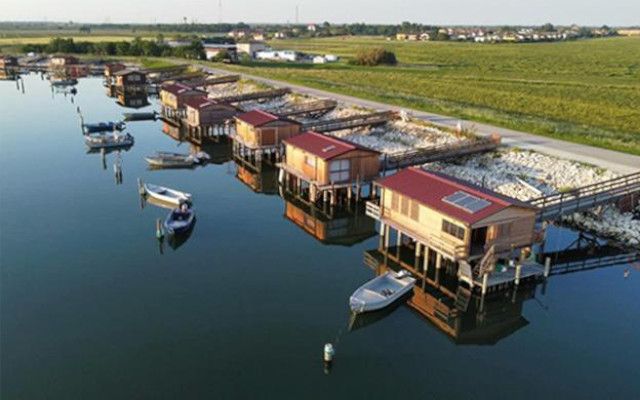
TheItaly is the third European producer of bivalve mollusks farmed. Behind this primacy there is a supply chain that combines centuries-old history and territorial cooperation. However, in the last three years the sector has undergone an unexpected crisis: that of blue crab, which has severely affected clam farming and mussel farming in the Po Delta.
Mussels or mussels, clams and oysters remain high biological value protein sources nevertheless. Only one Italian PDO recognition is dedicated to this sector, the Scardovari Mussel, but the gastronomic tradition that accompanies them spans the entire country, from Taranto to the Po Delta.
History
Italy's oldest mussel farming tradition belongs to Little Sea of TarantoAlready Plinio il Vecchioin the Naturalis Historiacelebrates the fame of Taranto mussels. The 17th-century work Deliciae Tarantinae by Tommaso Niccolò d’Aquino confirms its continuity over the centuries. 1525 marks the first documentary evidence of the so-called 'black mussels,' a local variety of Mytilus galloprovincialis, in the Red Book of Taranto: a text that already established rules for the exploitation of coastal lagoons, to prevent their depletion. Traditional farming used wooden poles from Sila.
In the19th century Taranto mussel farming gained international fame, with presence at exhibitions in Cornwall, Milan and Paris. Then came the military Arsenal and the steel plant, Italsider first and ILVA later: pollution of the Little Sea long depressed production. Only in 2019 was the Slow Food Presidium Black Mussel of Taranto born, which today brings together twenty-one mussel farmers engaged in sustainable practices.
In the Po Delta Veneto, the history of the Sacca degli Scardovari is more recent but equally rich in milestones. In the 1976 is born the Consortium of Fishermen's Cooperatives of the Polesinewhich unifies cooperatives that were until then independent and competing with each other. On July 18, 2000 the Scardovari Mussel and the Polesine Clam together obtain the recognition of Traditional Agri-food Product: a national recognition, distinct and less stringent than the European PDO. In 2002 the area becomes the headquarters of the first Italian company in the mollusk sector certified according to ISO 22005 traceability standard. Only the mussel, however, takes the next step: in the 2013 comes the PDOthe first and to date the only Italian PDO for a mussel.
The clam remains instead a Traditional Agri-food Product, without European registration. In 2016 the Consortium for the Protection of the Scardovari Mussel PDO is established, distinct from the historic consortium of 1976. Between 2015 and 2018 also arrives the organic certificationfirst for the Philippine clam of the Sacca, then for the mussel farmed in open sea. In the last decade, finally, an oyster farming experiment started, the initiative Pink Oyster of Scardovari, today also extended to Caorle and Chioggia.
A Goro and in the Comacchio Valleysin Emilia-Romagna, on November 27, 2020 the Con.Uno is born, the Unitary Novellame Consortium: thirty-two cooperatives, 1,395 members, president Massimo Genari, former head of Copego. The constitution responds to a regional obligation, which requires the management of nursery areas for clam sowing to have cooperative enterprise status by December 31, 2020.
The Philippine clam, Ruditapes philippinarumtoday the dominant species in Italian farming, arrives in March 1983. The Co.S.P.A.V. consortium releases two hundred thousand specimens of just three millimeters into the Venice Lagoonnear Chioggia: it is the first documented introduction in Italy. The following year a second batch, one and a half million specimens, also reaches the Sacca di Caleri. In 1985 three million clams arrive in Sardiniain the Lagoon of Sant’Antioco, and in the Po Delta Veneto. In 1986 it reached Scardovari, Marano Lagunare, Goro and Lake Varano: production in the first year was thirty-one tons. But in the winter between 1986 and 1987 the species already began to reproduce on its own, both in Scardovari and in the Emilian Delta, and in 1988 it also colonized Cervia, Cesenatico, Cattolica, and Fano. The peak came in 1999, with over 64,000 tons, forty of which were in the Venice Lagoon alone. From there the crisis of the early 2000s, the recovery in the mid-decade and, from 2023, il nuovo fronte del blue crab.
Even older are the roots of oyster farming: the breeding of thenative flat oyster dates back to theRoman era, and a 2021 excavation at Lio Piccolo, in the Venice Lagoon, brought to light a ostriarium Roman of the first century AD, a tank to keep live oysters before consumption. A rare artifact, with only one known comparison in the world, in Narbonne, France. Also the Repubblica di Venezia fixed by regulation minimum sizes for theoysterThe historical peak of the sector reached the late nineteenth century, with the gulfs of La Spezia and Trieste as the main hubs, followed by more than a century of substantial disappearance. Only in the last decade has oyster farming regained strength in Liguria, Sardinia, Emilia-Romagna and Veneto: in 2022 the Italian production of Magallana gigas, the concave oyster, slightly exceeds 300 tons, against 75,000 tons per year of bivalve mollusks in the entire European Union. Italy is third, far behind France and its 80,000 tons of oysters alone.
Numbers, market and the blue crab crisis
In 2023, according to ISPRA, the overall Italian aquaculture production reached 129,746 tons, of which about 61% attributable to mollusks:
- mytilids or mussels alone account for the 44% of the entire national aquaculture production, the most important component of the sector;
- the oysters, mostly Magallana gigas, weigh for 28% of the mollusk sector;
- the clams, instead, are described by the same ISPRA as a sector in crisis, with declining production.
Looking at the regions, theEmilia-Romagna is first in volume, with a quarter of the national production, while the Veneto leads in number of plants. Five regions, Emilia-Romagna, Veneto, Friuli-Venezia Giulia, Marche and Tuscany, together cover more than two thirds of the national production.
In the market of clams, BMTI data show two opposite stories:
- The fished lupin clam in the sea has started to grow again, over 16,700 tons in 2023, almost 19% more than in 2014;
- The farm-raised verace clam, on the contrary, has fallen to just over 21,500 tons, more than one third less than in 2014.
Prices show the same tension: farm-raised verace went from 8 euros per kilo at the start of 2023 to almost 20 euros at the end of 2024, then stabilized between 15 and 20 euros in 2025. National clam consumption, in turn, fell from about 16,000 to about 10,000 tons between 2016 and 2024.
What weighs on these numbers is mainly the blue crab, alien species preying on young clam and mussel and which has severely affected the Po Delta since 2023. In the first five months of 2024, according to the Prefecture of Ferrara, the production of clams in Goro and Comacchio is collapsed by 70%, up to 100% in some deeper concessions. The Con.Uno collected ninety-two tons of crabs in those months. In Veneto, in 2024 alone, almost 1,900 tons of blue crab were sold or disposed of, with about 1,500 mussel farming companies reported at risk: in February 2025 the Region declared 2024 natural disaster, opening access to the National Solidarity Fund. Economic damage estimates reported in the sector press, between 100 and 200 million euros for the 2024-2025 biennium, remain journalistic estimates: they are not attributable, in this verification, to a single institutional source with declared methodology. The Ministry of Agriculture allocated 54 million euros between 2025 and 2026 and appointed an extraordinary commissioner, with the aim of removing about 2,600 tons of crabs.
And it is precisely the management of the blue crab offers a concrete example of verified good practice. In 2025 the crustacean capture and enhancement program, coordinated by the extraordinary commissioner and funded by EMFAF in eight regions, led to the commercialization of 1,500 tons of crab, triple the previous year, out of a total of 3,700 tons caught between April and November 2025 in Veneto and Emilia-Romagna. A concrete case of circular economy applied to an alien species.
The three species farmed in Italy
The Mediterranean mussel, Mytilus galloprovincialis, is the mussel commercially available in Italy: a fast-growing filter bivalve, eight to eighteen months to reach commercial size, farmed on suspended structures, long-line, rafts or poles, in lagoons and coastal sea areas. It is by far the most produced species in the country, with main areas in the Mar Piccolo of Taranto, the Po Delta, the Gulf of La Spezia and Sardinia.
The Philippine clam, Ruditapes philippinarumis today the cultivated carpet clam dominant, to the detriment of the native local clam, Ruditapes decussatushas been in strong decline since the 1980s. Introduced in 1983, it has naturalized and reproduces spontaneously in the Venetian and Emilian lagoons, growing buried in sandy or muddy bottoms. It is also the species most exposed to the blue crab crisis, which preys on the newly sown juveniles.
On the front of oysters, in Italy mainly two species are farmed:
- the cupped oyster Magallana gigas, alien and now dominant in new installations;
- the native flat oyster Ostrea edulis, in restoration projects.
The sector remains small but growing, concentrated in Liguria, Sardinia, Emilia-Romagna and Veneto, where the Scardovari Pink Oyster project marks the most recent expansion.
The Scardovari Mussel PDO
The Scardovari Mussel is theonly PDO Italian one dedicated to a mussel. It was registered with Commission Regulation (EU) No 1200/2013, dated 25 November 2013. The production area is restricted to the Sacca di Scardovari, in the municipality of Porto Tolle, in the province of Rovigo (Veneto); purification, processing, and packaging remain limited to the fractions of Scardovari, Ca’ Mello and Santa Giulia. The species è Mytilus galloprovincialis, the method is suspended on racks or poles, collection is manual, minimum size is five centimeters.
The parameter that most characterizes the specification is thecondition indexthe ratio between the edible part and the whole organism of the mollusk, which must be above 25%. It is a value already present in the original 2013 specification and, according to verified sources, never modified thereafter. The controls are entrusted to CSQA Certifications, re-authorized by the Ministry of Agriculture on June 8, 2023.
The specification It underwent an ordinary amendment in 2023, with a ministerial decree of May 18, published in the Official Gazette on May 29, followed by the European approval communication of June 22. The Vongola del Polesine remains a Traditional Agri-food Product of regional importance, unfortunately not yet a European designation.
Nutritional values
The following data come from the CREA food composition tables, updated in December 2019.
| Nutrient (per 100 g, edible portion) | Mussel/mytilus | clam | Oyster |
| Edible portion | 32% | 25% | 12% |
| Energy | 84 kcal / 351 kJ | 65 kcal / 270 kJ | 69 kcal / 289 kJ |
| Water | 82.1 g | 80.6 g | 85.7 g |
| Proteins | 11.7 g | 9.8 g | 10.2 g |
| Lipids | 2.7 g | 1.2 g | 0.9 g |
| Cholesterol | 32 mg | 32 mg | 30 mg |
| Available carbohydrates | 3.4 g | 3.9 g | 5.4 g |
| Sodium | 290 mg | 591 mg | 510 mg |
| Potassium | 320 mg | 206 mg | 260 mg |
| Calcium | 88 mg | 219 mg | 186 mg |
| Phosphorus | 236 mg | 147 mg | 267 mg |
| Iron | 5.8 mg | n.d. | 6 mg |
| Zinc | 2.2 mg | 1.26 mg | n.d. |
| Selenium | 49 µg | 64.6 µg | n.d. |
| Copper | 1.2 mg | n.d. | n.d. |
The three CREA sheets do not cover the same nutrient panel: for the oyster zinc, magnesium, selenium, and vitamin B12 are missing, for the clam iron and B12 are missing.
Applying the reference nutritional values as per Annex XIII to Regulation (EU) No 1169/2011 and the thresholds of Regulation (EC) No 1924/2006, all three species support the claim nutritional ‘high protein content’: the mussel derives 55.7% of its calories from proteins, the clam 60.3%, the oyster 59.1%, well above the required 20% threshold. Additionally:
- The mussel could also report the indications ‘high content of’ phosphorus, iron, copper and selenium, in addition to ‘source of’ zinc and potassium;
- The clam in turn could report ‘high content of selenium’ e ‘source of’ calcium, magnesium and phosphorus;
- TheOyster could indicate ‘high content of’ phosphorus and iron e ‘source of calcium’; riboflavin, just below the 15% threshold, does not support any nutrition claim.
Our team of FARE (Food and Agriculture Requirements) supports operators, their representatives and research consortia in enhancing these and other characteristics of food products, based on transparency grounded in compliance with rules and scientific data.
In the kitchen
The three species have a solid place in the regional Italian cuisine. In Naples, thepeppered mussels is prepared in a pan with plenty of black pepper, garlic, parsley, and lemon. In Taranto, typical are the mussels Tarantina style, with tomato, garlic and parsley, and the stuffed mussels, stuffed with bread, eggs and cheese. In Liguria the ciuppin, fish soup that includes mussels and clams, takes its name from the Ligurian ‘ciù pin’, ‘fuller’, shouted by fishermen when nets returned overloaded beyond necessity: through Ligurian emigration, it gave rise to the famous ‘Cioppino’ of San Francisco.
The spaghetti with clams are a national dish, rooted both in Campania and in the Venetian lagoon tradition, where clam risotto is also common. The oysters Italian oysters, finally, are almost always consumed raw, natural or with lemon.
Buying guide
Thelabel By traceability, with production area, harvest date and recognized purification center, is the first reference for buyers. For the Scardovari Mussel, PDO brand and logo of the Protection Consortium are the only guarantees of certified origin at European level.
Live mussels and clams must have closed shells or that close to the touch; a strong ammonia smell or shells that remain open indicate a no longer fresh product. Italian oysters, due to still limited volumes, are mainly found in direct sales or through specialized channels in production areas.
Conclusions
Italian shellfish farming expresses a history spanning centuries, from Taranto to the Po Delta, to a supply chain today under pressure from the blue crab crisis, but capable of reacting: the capture and enhancement program of the alien crustacean is a concrete example. Mussels, clams and oysters are sources of high biological value proteins and essential minerals, with only one Italian PDO, the Scardovari Mussel, currently guaranteeing a certified link between territory and quality.
Dario Dongo
Credit cover Consortium for the Protection of the Scardovari Mussel PDO
References
Regulatory sources
European Commission. Commission Implementing Regulation (EU) No 1200/2013 of 25 November 2013 entering a name in the register of protected designations of origin and protected geographical indications [Cozza di Scardovari (PDO)]. http://data.europa.eu/eli/reg_impl/2013/1200/oj
Ministry of Agriculture, Food Sovereignty and Forestry. Decree 18 May 2023, amendment of the production specification of the denomination ‘Cozza di Scardovari’ PDO. Official Gazette of the Italian Republic, General Series, no. 124, 29.5.2023, editorial code 23A03087.
European Commission. Communication approving a standard amendment to the product specification for the name ‘Cozza di Scardovari’ (PDO), CELEX 52023XC0622(03). http://data.europa.eu/eli/C/2023/622/oj
Regulation (EU) No 1169/2011 of the European Parliament and of the Council of 25 October 2011 on the provision of food information to consumers, Annex XIII. Consolidated text: 01/04/2025 http://data.europa.eu/eli/reg/2011/1169/2025-04-01
Regulation (EC) No 1924/2006 of the European Parliament and of the Council of 20 December 2006 on nutrition and health claims made on foods. Consolidated text: 13/12/2014. http://data.europa.eu/eli/reg/2006/1924/2014-12-13
Institutional and technical sources
ISPRA. Aquaculture companies and productions. https://indicatoriambientali.isprambiente.it/it/acquacoltura/aziende-acquacoltura-e-produzioni
CREA, Research Center for Food and Nutrition. Food composition tables: mussel/mytilus, https://www.alimentinutrizione.it/tabelle-nutrizionali/127120; clam, https://www.alimentinutrizione.it/tabelle-nutrizionali/127170; oyster, https://www.alimentinutrizione.it/tabelle-nutrizionali/127130
Experimental Zooprophylactic Institute of the Venezie. Italian oyster farming: a rapidly growing sector. https://www.izsvenezie.it/ostricoltura-italiana-settore-rapida-crescita/
Ministry of Agriculture, Food Sovereignty and Forestry. Seafood Expo Global Barcelona, blue crab from emergency to resource, 21 April 2026. https://www.masaf.gov.it/flex/cm/pages/ServeBLOB.php/L/IT/IDPagina/24519
Ministry of Agriculture, Food Sovereignty and Forestry, ICQRF. Authorization of the control body CSQA for Cozza di Scardovari PDO, 8 June 2023. https://www.masaf.gov.it/flex/cm/pages/ServeBLOB.php/L/IT/IDPagina/19786
Veneto Region. Statement on the blue crab emergency and state of natural disaster. https://www.regione.veneto.it/article-detail?articleId=14130629
Dire.it, May 29, 2024. Blue crab, damage to clams in Goro and Comacchio. https://www.dire.it/29-05-2024/1046019-granchio-blu-danni-vongole-goro-comacchio-emilia-romagna/
Il Resto del Carlino. A single consortium to manage nurseries. https://www.ilrestodelcarlino.it/ferrara/cronaca/un-consorzio-unico-per-gestire-le-nursery-x65z8kgl
BMTI. Clams, economic analysis and consumption outlook. https://ittico.bmti.it/CaricaPdfRegolamenti.do?doc=33
Turolla, E. Shellfish farming in Italy. VLIZ. https://www.vliz.be/imisdocs/publications/146883.pdf
Pubblicità Italia, Il Pesce. Shellfish farming in Italy twenty-five years after its debut, 2008. https://www.pubblicitaitalia.com/ilpesce/2008/3/8300.html
Fondazione Slow Food. Black mussel of Taranto. https://www.fondazioneslowfood.com/it/presidi-slow-food/cozza-nera-di-taranto/
Scardovari.org. The Consortium. https://www.scardovari.org/il-consorzio/
Il Nuovo Terraglio. The Venetian oyster lands on the Lido: two thousand years of history. https://ilnuovoterraglio.it/lostrica-veneta-sbarca-al-lido-duemila-anni-di-storia-e-una-nuova-sfida-per-la-pesca/

Dario Dongo, lawyer and journalist, PhD in international food law, founder of WIISE (FARE - GIFT – Food Times) and Égalité.


