

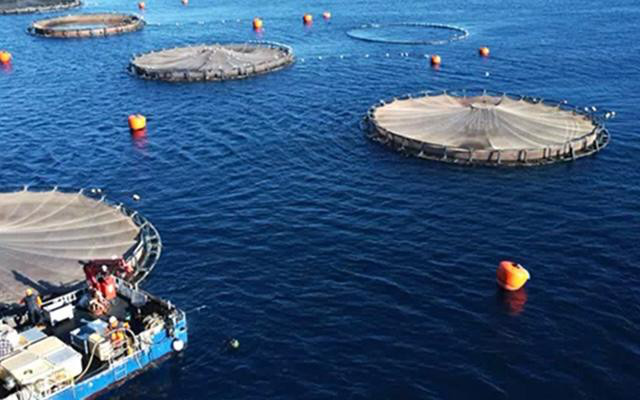
Italian marine aquaculture is based on two species, the seabass, also called branzino, and thegilthead seabream, which account for over 93% of national marine fish farming (ISPRA, 2025a). However, domestic production covers only part of consumption: every year Italy imports from Greece, Turkey, and Croatia more than four times the fish it farms. The article presents production, trade and consumption data, farming methods, quality certifications, organic rules, nutritional values with omega-3, and useful guidelines for consumers and buyers.
History
Marine fish farming in coastal lagoons has ancient roots. Valliculture, extensive farming in the 'fishponds' dyked, is practiced in the area of Veneto since theRoman era (Landoli, 2000). Euryhaline species like sea bass, gilt-head bream, mullets and eel enter the lagoons to feed and are retained by embankments, sluices, and fish traps; gilt-head bream has long been extensively farmed in lagoons and brackish ponds (FAO, n.d.).
The turning point comes with the artificial reproduction and the hatcheries, which make fingerlings available without relying on natural spawning. In Italy, fingerling production remained insufficient to cover domestic demand until 1991. This is followed by the development of floating cages, in protected sites or open sea, computerized feed distribution, water parameter control, and aeration of land-based plants, especially with liquid oxygen (Landoli, 2000).
The the contemporary supply chain connects reproduction, hatchery, pre-fattening, fattening, harvesting, and sales. Alongside this production chain is the documentary one: traceability of food and feed, health records, batch identification.
How they are farmed
The cycles differ between the two species and between intensive and extensive systems, according to FAO data:
- gilthead bream, intensive: under optimal conditions, with water between 18 and 26 °C, juveniles of 5 grams reach the first commercial size, 350-400 grams, in about a year (FAO, n.d.a);
- gilthead bream, extensive: in the lagoon, the size of 350 grams is reached in 20 months (FAO, n.d.a);
- seabass, intensive: juveniles reach 400-450 grams in 18-24 months (FAO, n.d.b);
- seabass, extensive: the commercial size of 400-500 grams requires 37 months, with yields of 50-150 kg per hectare per year (FAO, n.d.b).
In Italy, the sea cages prevail: in 2024, 90% of gilthead bream and 76% of seabass were farmed there, the rest in on-land tanks and enclosures (Eurostat, 2026b). Before harvesting, fish are fasted, for gilthead bream 24 hours at 25 °C and 48-72 hours at lower temperatures, for seabass from 1 to 12 days depending on the season (FAO, n.d.a; FAO, n.d.b).
Theslaughter usually occurs by thermal shock in water and ice. EFSA has found that commercial methods leave fish conscious for several minutes and that only electrical stunning causes immediate loss of consciousness (EFSA AHAW Panel, 2009). A survey of 21 Italian seabass and gilthead bream facilities found ice immersion in 20 cases and no use of electrical stunning (Clemente et al., 2023). Research on electrical stunning of seabass and gilthead bream has yielded promising results (de la Rosa et al., 2021).
Numbers and territories
Production
In 2024 Italy produced 8,207 tons of gilthead bream e 4,738 tons of seabass, for a value of 66.3 and 41.5 million euros. The total, 12,945 tons and 107.8 million euros, exceeds 12,303 tons in 2023 (Eurostat, 2026b). The 2023 figure matches ISPRA's, which attributes over 93% of national marine fish farming to the two species (ISPRA, 2025a). The unit production value is 8.07 euros/kg for gilthead bream and 8.76 for seabass (Eurostat, 2026b).
The Italian Fish Farmers Association estimates higher volumes for 2024: 9,900 tons of gilt-head bream (82.1 million euros), of which 250 from lagoons and brackish water farms, and 5,100 of sea bass (54.2 million), of which 300 from lagoons (API, 2025). The two series differ by survey method.
In theUnione Europea gilthead bream accounts for 10% of aquaculture weight; by value, sea bass and gilt-head bream are the second and third species (14.5% and 13.5%), after trout (Eurostat, 2026a). Among countries with published data, Italy is fourth for both species, after Greece, Spain, and Croatia. The Turkey, outside the Union, produced 155,279 tons of gilt-head bream and 165,055 of sea bass in 2024 (Eurostat, 2026b). Worldwide, gilt-head bream production exceeded 341,000 tons and sea bass 286,968 tons in 2023; the Union provides about 30% of these (EUMOFA, n.d.a; EUMOFA, n.d.b).
Territories
Tuscany is the main marine fish farming hub, followed by Sardinia, Lazio, Campania, and Apulia. Including shellfish farming, the marine and brackish environment accounts for about 71% of Italy's aquaculture production in 2023, amounting to 129,746 tons (based on ISPRA, 2025a).
State concessions for marine fish farming cover 805 hectares, 3.9% of the marine space assigned to aquaculture. The Toscana has 659 in 7 areas, Apulia has Puglia 68 in 19 areas, Lazio has Lazio 10 in 2 areas; Sardinia, Liguria, Campania, and Friuli Venezia Giulia are ranked in the tens of hectares. Eight regions, including Sicily and Veneto, have no concessions for marine fish farming (ISPRA, 2025b).
Foreign trade
TheItaly is a strong net importer. In 2025, it imported 43,088 tons of fresh or refrigerated gilthead seabream for 281.5 million euros and 32,510 tons of seabass for 249.2 million, compared to exports of 9,663 and 4,455 tons (NC codes 0302 85 30 and 0302 84 10). Net imports, about 61,500 tons, exceed national production by more than four times (Eurostat, 2026c).
The main shipping countries in 2025 were the following:
- gilthead seabream: Greece (39.5% of volumes), Turkey (32.3%) and Croatia (11.4%);
- seabass: Greece (56.6%), Turkey (18.8%) and Croatia (17.3%).
In intra-EU flows, the indicated partner is the country of origin, not necessarily the country of farming (Eurostat, 2026c). In 2024 the average price at theimport was 5.95 euros/kg for gilthead seabream and 6.79 for seabass, compared to a value to the Italian production of 8.07 and 8.76 euros/kg (Eurostat, 2026b; Eurostat, 2026c). Italy absorbs 33% of extra-EU imports of gilthead seabream and 28% of seabass (EUMOFA, n.d.a; EUMOFA, n.d.b). The comparison between farmed Greek and Italian gilthead seabream and seabass has been explored on these pages.
Consumption
In 2025, domestic purchases of sea bass grew by 4.8% in volume, while those of gilthead seabream fell by 3.7%. Average retail prices rose from 10.81 to 11.69 euros/kg for gilthead seabream (+8.1%) and from 11.99 to 13.24 euros/kg for sea bass (+10.4%). In the second half of 2025, gilthead seabream and sea bass together represented 35.6% of the volumes of fresh fish purchased by households. These are data from the YouGov Shopper panel processed by BMTI (BMTI, 2026). In the Union, apparent consumption is 0.33 kg per capita for gilthead seabream and 0.23 kg for sea bass.(EUMOFA, n.d.a; EUMOFA, n.d.b).
Species and denominations
The core of Italian marine fish farming consists of sea bass or branzino (Dicentrarchus labrax) and gilthead seabream (Sparus aurata). The commercial names allowed in Italy are ‘Spigola, Branzino’ e ‘Orata’ (MASAF, 2025).
Origin and quality certifications
No Italian PDO or PGI concerns marine aquaculture fish. The Orbetello Lagoon hosts the Slow Food Presidio ‘Traditional fishing of the Orbetello Lagoon,’ which also concerns sea bass and sea bream but refers to fishing lagoon with fixed nets, not to farming (Slow Food Foundation, n.d.). Italian origin, the farming system, and organic certification therefore remain the main criteria to distinguish the product.
Organic rules
Theorganic aquaculture is regulated by Regulation (EU) 2018/848 and Implementing Regulation (EU) 2020/464. The product can be sold as organic only by a notified operator, subject to control system and covered by a valid certificate. Eurostat does not publish data on Italian organic production of sea bream and sea bass (Eurostat, 2026d).
The system is characterized by some requirements essential:
- animals must come from breeders and organic units, with provenance documentation; entry of wild or non-organic specimens is allowed only in justified cases;
- hormones and hormone derivatives, cloning, induction of polyploidy and artificial hybridization are prohibited (Reg. EU 2018/848, Annex II, Part III, point 3.1.2.2); polyploidy can be verified by flow cytometry, developed by IZSVe (IZSVe, 2022);
- The diet favors organic aquatic feed or recovery of suitable waste; growth promoters and synthetic amino acids are prohibited;
- for sea bream and sea bass in cages with adequate currents or in open land-based systems the maximum density is 15 kg/m³ (Reg. EU 2020/464, Annex II, Part III);
- in land ponds of tidal zones e of the coastal lagoons density drops to 4 kg/m³, with water exchange adequate, vegetative cover of at least half of the embankments and basins of purification based on wetlands (EU reg. 2020/464, Annex II, Part IV);
- i veterinary drugs synthetic, including antibiotics, are not absolutely prohibited: they can be used under veterinary responsibility, with limits on treatment cycles and reinforced withdrawal periods.
Nutritional values
The food composition tables indicated by CREA — Food and Nutrition Research Center (2019) refer to the raw fillets of farmed gilt-head bream (code 121730) and of farmed European bass (code 123220), edible portion 100%, 150 g portion, the following nutritional values, per 100 g:
| Farmed gilt-head bream, fillets (CREA 121730) | Farmed European bass, fillets (CREA 123220) | |
| energy | 665 kJ / 159 kcal | 625 kJ / 149 kcal |
| fats | 8.4 g | 6.8 g |
| of which saturated fatty acids | 2.4 g * | 1.6 g * |
| carbohydrates | 1.2 g | 0.8 g |
| of which sugars | 1.2 g | 0.8 g |
| fiber | 0 g | 0 g |
| proteins | 19.7 g | 21.3 g |
| Salt | n.d. | n.d. |
(*) Calculation based on CREA data: share of saturated fatty acids on total fatty acids (28.16% and 23.53%) applied to total fats.
Proteins provide 50% of the energy in gilt-head bream and 57% in European bass. The two CREA sheets do not report sodium, B vitamins, vitamin D, or selenium. They do report phosphorus values, 1,050 and 1,150 mg per 100 g, incompatible with those from the same database for wild bass (202 mg, code 123200) and with French analyses on the same farmed fish (CREA, 2019; Nutraqua, n.d.a; Nutraqua, n.d.b). For micronutrients, reference is therefore made to the French Nutraqua table, per 100 g of raw product:
| farmed gilt-head bream | farmed European bass | |
| phosphorus | 248 mg (35% NRV) | 209 mg (30% NRV) |
| potassium | 461 mg (23% NRV) | 430 mg (22% NRV) |
| niacin | 6.88 mg (43% NRV) | 6.79 mg (42% NRV) |
| vitamin B6 | 0.44 mg (31% NRV) | 0.39 mg (28% NRV) |
| vitamin B12 | 2.93 µg (117% NRV) | 4.33 µg (173% NRV) |
| vitamin D | 0.87 µg (17% NRV) | 2.31 µg (46% NRV) |
These are the micronutrients that exceed 15% of the reference nutritional values referred to in Annex XIII to Regulation (EU) No 1169/2011 (Nutraqua, s.d.a; Nutraqua, s.d.b).
Omega-3 and health indications
Annex XIII to Regulation (EU) No 1169/2011 does not provide reference nutritional values for omega-3. The useful reference is the adequate intake of 250 mg per day of EPA and DHA for adults (EFSA NDA Panel, 2010), the same dose that Regulation (EU) No 432/2012 requires to be indicated to the consumer for the related health claim.
CREA expresses EPA and DHA as a percentage of total fatty acids. Conversion to milligrams requires a factor between total lipids and fatty acids, here assumed between 0.7 and 0.9, and provides the following estimates per 100 g:
| Farmed gilthead seabream (CREA 121730) | Farmed European seabass (CREA 123220) | |
| EPA, % of fatty acids | 6,68 | 7,84 |
| DHA, % of fatty acids | 13,79 | 12,75 |
| EPA + DHA, estimate | 1,200-1,550 mg | 980-1,260 mg |
| EPA + DHA, % of 250 mg/day | 480-620% | 390-500% |
| DHA, estimate | 810-1,040 mg | 610-780 mg |
| DHA, % of 250 mg/day | 320-420% | 240-310% |
French analyses confirm the order of magnitude: 882 mg of EPA and DHA per 100 g in gilthead seabream and 1,017 mg in farmed seabass (Nutraqua, s.d.a; Nutraqua, s.d.b). Values vary with season, feed, and farming stage.
Based on these values, the nutritional claims allowed by Regulation (EC) No 1924/2006 would be the following:
- for both species, 'high protein content' (over 20% of energy), 'rich in omega-3 fatty acids' (at least 80 mg of EPA and DHA per 100 g and per 100 kcal), 'high content of' niacin and vitamin B12 and 'source of potassium';
- for gilthead seabream, also 'high phosphorus content' e 'high vitamin B6 content', as well as 'source of vitamin D';
- for seabass, also 'high vitamin D content' e 'source of' phosphorus and vitamin B6.
The health claim omega-3 claims achievable with the consumption of gilthead seabream and seabass are three:
- 'EPA and DHA contribute to the normal function of the heart', for foods at least ‘source of omega-3’ (40 mg of EPA and DHA per 100 g and per 100 kcal), with the information that the beneficial effect is obtained with a daily intake of 250 mg of EPA and DHA;
- ‘DHA contributes to the maintenance of normal brain function’;
- ‘DHA contributes to the maintenance of normal visual capacity’, for foods with at least 40 mg of DHA per 100 g and per 100 kcal, with the information that the beneficial effect is obtained with a daily intake of 250 mg of DHA (EU reg. 432/2012, Annex).
The indications on blood pressure and triglycerides require instead 3 g and 2 g per day of EPA and DHA, out of reach for a food consumed in ordinary portions. Proteins, vitamin B12, vitamin D, niacin and phosphorus allow further health claim (EU reg. 432/2012, Annex).
The use of all these nutrition claim e health claim requires analytical verification of compliance with their conditions on representative product samples. Our team of FARE (Food and Agriculture Requirements) supports operators, their representatives and research consortia in enhancing these and other products also under such aspects.
Benefits and health considerations
A meta-analysis of 40 prospective cohorts associated higher levels of fish consumption with a lower incidence of coronary heart disease, with a relative risk of 0.91, and lower mortality, with a relative risk of 0.85 (Zhang et al., 2020). A review of 24 observational studies on over 714,000 people associated non-fried fish with lower cardiovascular risk and fried fish with greater risk (Krittanawong et al., 2021).
The farming system and The diet affect the nutritional profile. In a study on 75 Apulian sea basses, fillets from intensive tank farming contained more lipids (3.05%) and proteins (21.39%) than wild and extensively farmed ones (Tarricone et al., 2022). In gilthead seabream, reducing fish oil in feed from 6% to 2% of dry matter lowered EPA and DHA in fillet, more markedly at higher temperatures (Torno et al., 2018).
As with every fish product, the contaminant balance remains valid. EFSA has established a tolerable weekly intake of 1.3 µg/kg body weight for methylmercury (EFSA CONTAM Panel, 2012) and has associated the benefits of fish consumption with 1-4 weekly servings, limiting species with high mercury content (EFSA Scientific Committee, 2015). For gilt-head bream and sea bass the maximum mercury content is 0.50 mg/kg (EU reg. 2023/915, Annex I, point 3.3.1).
As for parasites, EFSA has not found zoonotic infestations in farmed commercial quality gilt-head bream, while it has detected Anisakis in sea bass raised in open sea cages or continuous flow tanks (EFSA BIOHAZ Panel, 2024). Farmed fish intended for raw consumption is exempt from freezing only if born from farmed embryos, fed with parasite-free feed, and raised in a parasite-free environment or under procedures approved by the competent authority (Reg. EC 853/2004, Annex III, Section VIII, Chapter III, letter ‘D’, point 3, letter ‘d’).
In the kitchen
Gilt-head bream and sea bass have lean and firm flesh, suitable for whole cooking that preserves their moisture. Il Cucchiaio d’Argento proposes some classic preparations:
- sea bass baked in salt: a fish of about 1 kg is wrapped in 500 g coarse salt and 400 g fine salt mixed with 150 g lightly whipped egg whites, with garlic, lemon zest and aromatic herbs, and baked in the oven at 180 °C for 35-40 minutes (Il Cucchiaio d’Argento, n.d.a). In this preparation, the fish is cooked whole with the scales on, which form a natural barrier that protects its flesh from excess salt during cooking. The salt crust keeps the fish tender, breaks at the table and is removed with the skin;
- gilt-head bream baked with potatoes, for a fish of about 1 kg, at 200 °C for about 40 minutes (Il Cucchiaio d’Argento, n.d.b). It is interesting, adds the author, to experiment with low temperature cooking for a longer period;
- gilt-head bream in crazy water sauce, in a pan with cherry tomatoes and white wine for 15-20 minutes (Il Cucchiaio d’Argento, n.d.c);
- sea bass in foil, with fish of 500-600 g, at 200 °C for 15-20 minutes (The Silver Spoon, n.d.)
Buying guide
For the consumer, the signs of identity and freshness to look for at the counter are: commercial and scientific name, method 'farmed', Country of production, meaning the place where the fish has spent more than half of the farming period or reached more than half of the final weight (EU regulation 1379/2013, articles 35.1 and 38.1). In whole fish, clear and convex eyes, pink or red gills, adhering scales, and firm body indicate good freshness.
For buyers, Ho.Re.Ca. and GDO, a useful specification distinguishes at least five items:
- identity and origin: trade and scientific name, size, batch, production unit, country of farming;
- cold and logistics: delivery temperature, packaging, shelf life, management of non-conformities;
- organic: valid certificate, body and control code, batch correspondence;
- raw or almost raw: antiparasitic treatment in HACCP procedures, or proof of exemption conditions for farmed fish;
- contaminants: self-monitoring plan and, when the risk requires it, batch analysis.
Traceability along the supply chain, with identification of suppliers and recipients, remains the basic obligation on which safety, quality, and, where present, the additional guarantees of organic are built. Our GIFT team (Great Italian Food Trade) supports international buyers in identifying reliable suppliers of ‘Made in Italy’ fish products.
Dario Dongo
Credit cover AQUA DEMÂ
References
Peer-reviewed scientific studies
Clemente, G. A., Tolini, C., Boscarino, A., Lorenzi, V., Dal Lago, T. L., Benedetti, D., Bellucci, F., Manfrin, A., Trocino, A., & Rota Nodari, S. (2023). Farmed fish welfare during slaughter in Italy: Survey on stunning and killing methods and indicators of unconsciousness. Frontiers in Veterinary Science, 10, 1253151. https://doi.org/10.3389/fvets.2023.1253151
de la Rosa, I., Castro, P. L., & Ginés, R. (2021). Twenty years of research in seabass and seabream welfare during slaughter. Animals, 11(8), 2164. https://doi.org/10.3390/ani11082164
Krittanawong, C., Isath, A., Hahn, J., Wang, Z., Narasimhan, B., Kaplin, S. L., Jneid, H., Virani, S. S., & Tang, W. H. W. (2021). Fish consumption and cardiovascular health: A systematic review. The American Journal of Medicine, 134(6), 713–720. https://doi.org/10.1016/j.amjmed.2020.12.017
Tarricone, S., Caputi Jambrenghi, A., Cagnetta, P., & Ragni, M. (2022). Wild and farmed sea bass (Dicentrarchus labrax): Comparison of biometric traits, chemical and fatty acid composition of fillets. Fishes, 7(1), 45. https://doi.org/10.3390/fishes7010045
Torno, C., Staats, S., Michl, S. C., de Pascual-Teresa, S., Izquierdo, M., Rimbach, G., & Schulz, C. (2018). Fatty acid composition and fatty acid associated gene-expression in gilthead sea bream (Sparus aurata) are affected by low-fish oil diets, dietary resveratrol, and holding temperature. Marine Drugs, 16(10), 379. https://doi.org/10.3390/md16100379
Zhang, B., Xiong, K., Cai, J., & Ma, A. (2020). Fish consumption and coronary heart disease: A meta-analysis. Nutrients, 12(8), 2278. https://doi.org/10.3390/nu12082278
EU regulations
Commission Implementing Regulation (EU) 2020/464 of 26 March 2020 laying down certain rules for the application of Regulation (EU) 2018/848 of the European Parliament and of the Council as regards the documents needed for the retroactive recognition of periods for the purpose of conversion, the production of organic products and information to be provided by Member States. Consolidated text: 25/11/2021. http://data.europa.eu/eli/reg_impl/2020/464/2021-11-25
Commission Regulation (EU) No 432/2012 of 16 May 2012 establishing a list of permitted health claims made on foods, other than those referring to the reduction of disease risk and to children’s development and health. Consolidated text: 20/08/2025. http://data.europa.eu/eli/reg/2012/432/2025-08-20
Commission Regulation (EU) 2023/915 of 25 April 2023 on maximum levels for certain contaminants in food and repealing Regulation (EC) No 1881/2006. Consolidated text: 08/10/2025. http://data.europa.eu/eli/reg/2023/915/2025-10-08
Regulation (EC) No 853/2004 of the European Parliament and of the Council of 29 April 2004 laying down specific hygiene rules for food of animal origin. Consolidated text: 07/05/2026. http://data.europa.eu/eli/reg/2004/853/2026-05-07
Regulation (EC) No 1924/2006 of the European Parliament and of the Council of 20 December 2006 on nutrition and health claims made on foods. Consolidated text: 13/12/2014. Regulation (EU) No 1169/2011 of the European Parliament and of the Council of 25 October 2011 on the provision of food information to consumers. Consolidated text: 01/04/2025.
Regulation (EU) No 1169/2011 of the European Parliament and of the Council of 25 October 2011 on the provision of food information to consumers. Consolidated text: 01/04/2025. Regulation (EU) No 1379/2013 of the European Parliament and of the Council of 11 December 2013 on the common organisation of the markets in fishery and aquaculture products, amending Council Regulations (EC) No 1184/2006 and (EC) No 1224/2009 and repealing Council Regulation (EC) No 104/2000. Consolidated text: 27/11/2024.
Regulation (EU) No 1379/2013 of the European Parliament and of the Council of 11 December 2013 on the common organisation of the markets in fishery and aquaculture products, amending Council Regulations (EC) No 1184/2006 and (EC) No 1224/2009 and repealing Council Regulation (EC) No 104/2000. Consolidated text: 27/11/2024. Regulation (EU) 2018/848 of the European Parliament and of the Council of 30 May 2018 on organic production and labelling of organic products and repealing Council Regulation (EC) No 834/2007. Consolidated text: 25/03/2025.
Regulation (EU) 2018/848 of the European Parliament and of the Council of 30 May 2018 on organic production and labelling of organic products and repealing Council Regulation (EC) No 834/2007. Consolidated text: 25/03/2025. Normative and institutional sources
Normative and institutional sources
API – Italian Fish Farmers Association. (2025, 10 November). Italian aquaculture 2024 – production data. https://www.acquacoltura.org/dati-produttivi-2024/
BMTI. (2026). Yearbook on the fish market 2025, pp. 47-49. https://filieraittica.bmti.it/wp-content/uploads/2026/07/Annuario-ittico-2025_DEF2.pdf
CREA — Research Center for Food and Nutrition. (2019). Food composition tables, farmed gilthead seabream, fillets, code 121730. https://www.alimentinutrizione.it/tabelle-nutrizionali/121730
CREA — Research Center for Food and Nutrition. (2019). Food composition tables, farmed European sea bass, fillets, code 123220. https://www.alimentinutrizione.it/tabelle-nutrizionali/123220
CREA — Research Center for Food and Nutrition. (2019). Food composition tables, European sea bass, code 123200. https://www.alimentinutrizione.it/tabelle-nutrizionali/123200
EFSA AHAW Panel. (2009). Species-specific welfare aspects of the main systems of stunning and killing of farmed seabass and seabream. EFSA Journal, 1010, 1-52. https://doi.org/10.2903/j.efsa.2009.1010
EFSA BIOHAZ Panel. (2024). Re-evaluation of certain aspects of the EFSA Scientific Opinion of April 2010 on risk assessment of parasites in fishery products, based on new scientific data. Part 1: ToRs1–3. EFSA Journal, 22(4), e8719. https://doi.org/10.2903/j.efsa.2024.8719
EFSA CONTAM Panel. (2012). Scientific opinion on the risk for public health related to the presence of mercury and methylmercury in food. EFSA Journal, 10(12), 2985. https://doi.org/10.2903/j.efsa.2012.2985
EFSA NDA Panel. (2010). Scientific opinion on dietary reference values for fats. EFSA Journal, 8(3), 1461. https://doi.org/10.2903/j.efsa.2010.1461
EFSA Scientific Committee. (2015). Statement on the benefits of fish/seafood consumption compared to the risks of methylmercury in fish/seafood. EFSA Journal, 13(1), 3982. https://doi.org/10.2903/j.efsa.2015.3982
EUMOFA. (n.d.a). Species profile: Gilthead seabream. https://fishery-aquaculture-market-observatory.ec.europa.eu/en/country-and-species-profiles/species-profiles/gilthead-seabream
EUMOFA. (n.d.b). Species profile: European seabass. https://fishery-aquaculture-market-observatory.ec.europa.eu/en/country-and-species-profiles/species-profiles/european-seabass
Eurostat. (2026a, 23 April). EU aquaculture: 1 million tonnes produced in 2024. https://ec.europa.eu/eurostat/web/products-eurostat-news/w/ddn-20260423-3
Eurostat. (2026b). Production from aquaculture excluding hatcheries and nurseries (fish_aq2a), species Sparus aurata and Dicentrarchus labrax, extracted on 29 September 2026. https://ec.europa.eu/eurostat/databrowser/view/fish_aq2a/default/table
Eurostat. (2026c). Comext, EU trade since 1988 by CN8 (DS-045409), CN codes 0302 85 30 and 0302 84 10, extracted on 29 September 2026. https://ec.europa.eu/eurostat/comext/newxtweb/
Eurostat. (2026d). Organic aquaculture production by species (org_aqtspec), Italy, extracted on 29 September 2026. https://ec.europa.eu/eurostat/databrowser/view/org_aqtspec/default/table
FAO. (n.d.a). Sparus aurata. In Cultured aquatic species fact sheets (text by F. Colloca and S. Cerasi; edited by V. Crespi and M. New). https://www.fao.org/fishery/docs/CDrom/aquaculture/I1129m/file/en/en_giltheadseabr.htm
FAO. (n.d.b). Dicentrarchus labrax. In Cultured aquatic species fact sheets (text by M. Bagni; edited by V. Crespi and M. New). https://www.fao.org/fishery/docs/CDrom/aquaculture/I1129m/file/en/en_europeanseabass.htm
Slow Food Foundation. (n.d.). Traditional fishing of the Orbetello Lagoon. https://www.fondazioneslowfood.com/en/slow-food-presidia/pesca-tradizionale-della-laguna-di-orbetello/
ISPRA. (2025a). Aquaculture companies and production [2023 data]. https://indicatoriambientali.isprambiente.it/it/acquacoltura/aziende-acquacoltura-e-produzioni
ISPRA. (2025b). Maritime spatial planning: zones and marine sites for aquaculture [2024 data]. https://indicatoriambientali.isprambiente.it/it/acquacoltura/pianificazione-spazio-marittimo-zone-e-siti-marini-acquacoltura
IZSVe – Experimental Zooprophylactic Institute of the Venezie. (2022, 2 May). Diagnosis of polyploidy in fish species: IZSVe develops a more specific and rapid technique. https://www.izsvenezie.it/diagnosi-poliploidia-specie-ittiche/
Landoli, C. (2000). Marine fish farming in Italy. In J. Muir & B. Basurco (Eds.), Mediterranean offshore mariculture (Options Méditerranéennes, Série B, n. 30, pp. 33–44). CIHEAM. https://om.ciheam.org/om/pdf/b30/00600646.pdf
MASAF. (2025). Ministerial Decree No. 686834 of December 19, 2025 – Update of the Italian language denominations of commercial fish species. https://www.masaf.gov.it/flex/cm/pages/ServeBLOB.php/L/IT/IDPagina/23911
MASAF. (n.d.). PDO and PGI products, class 1.7 – Fresh fish, mollusks, crustaceans and derived products. https://www.masaf.gov.it/flex/cm/pages/ServeBLOB.php/L/IT/IDPagina/3344
Nutraqua. (n.d.a). Farmed gilthead sea bream, nutritional composition. https://www.nutraqua.com/fr/compositions/16-dorade-royale-d-elevage.html
Nutraqua. (n.d.b). Farmed European seabass, nutritional composition. https://www.nutraqua.com/fr/compositions/1-bar-commun-d-elevage.html
Recipes
Il Cucchiaio d’Argento. (n.d.a). Salt-crusted sea bass. https://www.cucchiaio.it/ricetta/spigola-sale/
Il Cucchiaio d’Argento. (n.d.b). Baked gilthead sea bream with potatoes. https://www.cucchiaio.it/ricetta/orata-forno-patate/
Il Cucchiaio d’Argento. (n.d.c). Gilthead sea bream in crazy water (poached with tomatoes and herbs). https://www.cucchiaio.it/ricetta/orata-acqua-pazza/
Il Cucchiaio d’Argento. (n.d.d). Sea bass en papillote (wrapped in foil). https://www.cucchiaio.it/ricetta/ricetta-branzino-cartoccio/

Dario Dongo, lawyer and journalist, PhD in international food law, founder of WIISE (FARE - GIFT – Food Times) and Égalité.


