

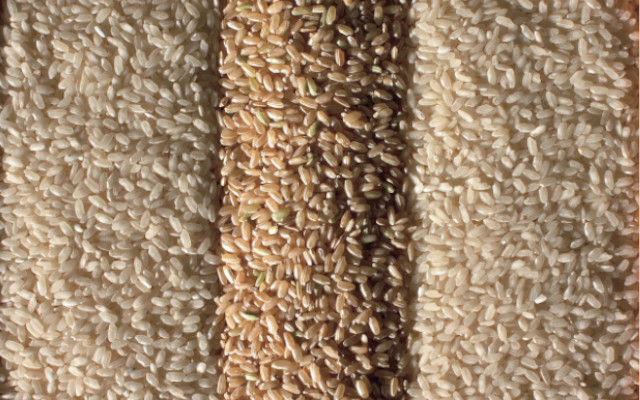
Among the historic varieties of Italian rice farming, the Baldo rice represents one of the most authentic expressions of genetic improvement traditional. Many professional chefs consider it a reference for creamy risotto — thanks to its ability to combine condiment absorption and creaminess in cooking — although it is less famous than Carnaroli e Arborio.
The agronomic history and origins of the cultivar
Baldo was born in the Sixties at the Experimental Rice Research Station of Vercelli — today part of the National Rice Authority — by the Bologna agronomist Antonio Tinarelli (1922–2014), considered one of the fathers of modern Italian rice farming and awarded the title of ‘distinguished rice grower’ by the Famija Varsleisa association.
It is the result of thecross between Arborio and Strain 136, developed during the 1960s and subsequently introduced to the market in 1977. The varieties Roma, Ribe, and Sant’Andrea are also attributed to the same research period (Tinarelli, 1986).
It is therefore a cultivar entirely Italian, developed to meet the production and gastronomic needs of the national supply chain. Mainly cultivated in the provinces of Vercelli, Novara and Pavia, Baldo falls within the category of rice 'Long A', which also includes some of the most common varieties for risotto preparation.
Morphological characteristics and glycemic index management
The Baldo grain is long, semi-elongated and crystalline. The national sector regulation classifies it among traditional Italian varieties, subjecting it to the same morphological requirements established for Roma rice:
- length 6.4 ÷ 7.2 mm;
- width 2.9 ÷ 3.1 mm;
- length/width ratio 2.2 ÷ 2.4;
- consistency 0.60 ÷ 0.80 kg/cm²;
- pearliness from little to very extensive (Legislative Decree 131/2017, annex 2).
The relatively low content of amylose promotes starch release during cooking. The result is a naturally creamy consistency that allows obtaining well-blended risottos without compromising the grain structure.
From a nutritional and metabolic point of view:
- the Baldo – like other varieties Japonica superfine – is one of the varieties with high glycemic index (GI > 70) along with Arborio, Lince and Puma (Rondanelli et al., 2023; Haxhari et al., 2024);
- it is however possible to reduce the GI by storing the rice in the fridge for several hours, after cooking, and reheating it afterwards. This promotes the retrogradation of starch and the formation of resistant starch (Strozyk et al., 2022).
The historical recognitions between Baraggia DOP and Delta del Po IGP
For many years Baldo remained in the shadow compared to more well-known varieties. In recent years it has been experiencing a phase of rediscovery, thanks to the increasing attention towards historic Italian cultivars and the search for raw materials able to enhance regional cuisine.
Several producers and sector operators consider it an ‘emerging rice’, appreciated for its pronounced taste and excellent cooking performance — characteristics that make it increasingly present in the kitchens of professional catering.
The cultivation of Baldo is authorized in both regulations of:
- Baraggia Biellese and Vercellese DOP (among the 7 cultivars of the regulation, alongside Carnaroli, Arborio, Balilla, Loto, Sant’Andrea, and Gladio) and
- Delta del Po IGP (alongside Carnaroli, Volano and Arborio). This dual recognition confirms Baldo's connection to some of Italy’s most suitable rice-growing territories.
The ideal creaming in haute cuisine
The main gastronomic quality of Baldo is the ability to absorb the flavors of seasonings maintaining a pleasant al dente texture. The grain releases starch in sufficient measure to create the typical ‘all’onda’ creaming, particularly sought after in the preparation of risottos.
It is traditionally used for risottos classic and creative, mushroom and vegetable risottos, fish-based preparations, rice salads, arancini, supplì and timbales, casseroles and savory pies. Average cooking times are around 15–17 minutes.
How to distinguish authentic Baldo on the label
The denomination ‘Baldo rice’ can be used together with or alternatively to ‘Roma rice’ to designate either any cultivar from the two groups of rice, or morphologically equivalent varieties (e.g. Cammeo, Galileo):
- the two varieties in fact share shape, size and culinary aptitude;
- however, the appearance of the grain is crystalline in Baldo, pearly in Roma;
- Baldo also stands out for keeping the grains more separate when cooked, whereas Roma offers greater creaminess.
Those wishing to purchase the authentic cultivar must therefore refer to products bearing the label ‘Baldo Classico‘ o to those certified DOP/IGP.
Biodiversity and enhancement of Italian varieties
The history of Baldo testifies to the genetic and cultural heritage preserved by Italian rice cultivation. In a landscape dominated by a few commercially well-known varieties, enhancing historical cultivars like Baldo represents an important tool to preserve biodiversity, agronomic knowledge and territorial identities. Choosing Italian supply chain Baldo rice – even better if organic and DOP or IGP – means contributing to the protection of an agricultural heritage built over decades of varietal research and, at the same time, bringing to the table a product capable of best expressing the potential of Italian risotto.
Dario Dongo
Credit cover Girolomoni
References
Consortium for the Protection of the PDO Rice of Baraggia Biellese and Vercellese. (n.d.). Production specification of Baraggia Biellese and Vercellese DOP Rice [PDF]. https://www.risobaraggia.it/disciplinare_di_produzione_riso_baraggia.pdf
Legislative Decree 4 August 2017, no. 131. Provisions concerning the internal rice market, in implementation of article 31 of law 28 July 2016, no. 154. Official Gazette General Series no. 209 of 7.9.2017. https://www.normattiva.it/uri-res/N2Ls?urn:nir:stato:decreto.legislativo:2017-08-04;131
Haxhari, F., Savorani, F., Rondanelli, M., Cantaluppi, E., Campanini, L., Magnani, E., Simonelli, C., Gavoci, G., Chiadò, A., Sozzi, M., Cavallini, N., Chiodoni, A., Gasparri, C., Barrile, G. C., Cavioni, A., Mansueto, F., Mazzola, G., Moroni, A., Patelli, Z., Pirola, M., Tartara, A., Guido, D., Perna, S., & Magnaghi, R. (2024). Endosperm structure and glycemic index of Japonica Italian rice varieties. Frontiers in Plant Science, 14, 1303771. https://doi.org/10.3389/fpls.2023.1303771
Rondanelli, M., Haxhari, F., Gasparri, C., Barrile, G. C., Cavioni, A., Mansueto, F., Mazzola, G., Moroni, A., Patelli, Z., Pirola, M., Tartara, A., Perna, S., & Magnaghi, R. (2023). Glycemic index and amylose content of twenty-five Japonica rice Italian cultivar. Starch – Stärke, 75(9–10), 2300031. https://doi.org/10.1002/star.202300031
Strozyk, S., Rogowicz-Frontczak, A., Pilacinski, S., LeThanh-Blicharz, J., Koperska, A., & Zozulinska-Ziolkiewicz, D. (2022). Influence of resistant starch resulting from the cooling of rice on postprandial glycemia in type 1 diabetes. Nutrition & Diabetes, 12, 21. https://doi.org/10.1038/s41387-022-00196-1
Tinarelli, A. (1986). Rice cultivation (2nd ed.). Edagricole. ISBN 978-88-206-2531-3.
Tinarelli, A., & Baldi, G. (2017). Inheritance and genetic improvement of rice. Edagricole. ISBN 978-88-206-1061-6.

Dario Dongo, lawyer and journalist, PhD in international food law, founder of WIISE (FARE - GIFT – Food Times) and Égalité.


