

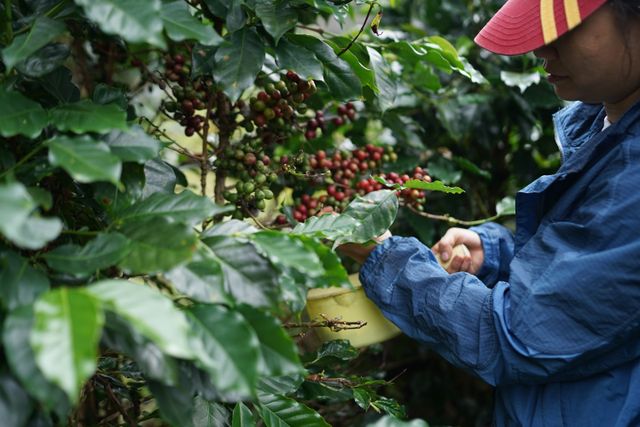
There social sustainability of food supply chains also depends on how the value is distributed. In addition to working conditions, the price paid for the raw material, which must allow those who produce it to invest, face a bad year and support their family.
After the insights on corporate social responsibility and SA8000 certification and on FSSC 24000 certification scheme, GIFT examines Fairtrade, the certification system of fair trade more widespread in large-scale retail trade. The system combines public standards, independent controls, commercial conditions and a premium for producer organisations. There certification regard products and specific supply chains, not companies as a whole.
From Multatuli's novel to the international brand
The name of the first fair trade brand comes from a novel. In 1860 Eduard Douwes Dekker, under the pseudonym Multatuli, published Max Havelaar, indictment against the exploitation of coffee farmers in Dutch colonies (Fairtrade Nederland, 2020).
Over a century later, contacts between the Dutch foundation Solidarity And UCIRI, the union of the indigenous communities of the Isthmus born in 1983 from 17 communities of the Mexican state of Oaxaca (UN DESA, s.d.), lead to the birth of the Max Havelaar foundation in May 1988. The first coffee with the new brand arrives in Dutch supermarkets on 15 November 1988 and it is supplied by UCIRI, whose grower appeared in the first logo (Canon van Nederland, s.d.; Fairtrade Nederland, 2020). Among the promoters are the Dutch missionary Frans van der Hoff, founder of the cooperative, and the Dutch economist Nico Roozen (Daily Coffee News, 2024). In the Dutch historical reconstruction, Mexican producers refused the role of recipients of aid (Canon van Nederland, n.d.).
The model spreads in Europe with national initiatives that in 1997 gather in Bonn in Fairtrade Labeling Organizations International today Fairtrade International. In 2002 the common international brand was introduced (Fairtrade Canada, n.d.). In the 2003 certification is separated from the writing of standards, with the birth of FLOCERT (FLOCERT, s.d.-b) in Bonn. In 2013 the general assembly gave producers half the votes, compared to 3 out of 22 previously (FreshPlaza, 2013); the following year Marike de Peña became the first producer representative to chair the board of Fairtrade International (Fairtrade Canada, n.d.).
In Italy in 1994 the association TransFair Italy was established in Padua (Zornetta, 2022). In 1995, Coop's first certified coffee arrived on the shelves (Fairtrade International, s.d.-b). In 2003 the association became a cooperative and since 2022 it has been a social enterprise, with the name of Fairtrade Italy (Fairtrade Italia, 2026a).
Organizations and system governance
Fairtrade International writes the standards and coordinates the system. The national organizations, like Fairtrade Italia, manage the licenses to use the brand, relations with companies and awareness-raising. Three o'clock regional producer networks, Fairtrade Africa, CLAC for Latin America and the Caribbean and NAPP for Asia and the Pacific, represent almost 2 million farmers and workers in 68 countries and offer support services in their respective areas (Fairtrade International, 2026a).
THE'general assembly, which governs the system with the supervisory board, meets every year and is composed of 50% from manufacturer representatives and 50% by national organizations (Fairtrade International, s.d.-f). The subjects to whom the system intends to transfer value therefore participate in its decisions.
FLOCERT is the main body of certification Fairtrade. It has been accredited according to ISO/IEC 17065 since 2007 and is verified every year by DAkkS, the German national accreditation body (FLOCERT, s.d.-a). THE'accreditation it certifies the competence and impartiality of the body, it does not constitute an 'ISO certification' of the individual food. FLOCERT has its own independent corporate governance; Fairtrade International is its sole member (FLOCERT, s.d.-b).
How certification works
Different standards for different subjects
The system distinguishes the standard for small producer organizations, for businesses with paid workers and for commercial operators (Standard Traders), which also applies to those who pay the minimum price and the premium. They are also expected specific standards for contract production, intended for producers not yet organized in a democratic form, for gold and precious metals and for textiles (Fairtrade International, s.d.-k).
An agricultural cooperative, a plantation and a processing company have different responsibilities. Those who purchase must therefore check which standard, which products and which activities fall within the supplier's certificate.
Inspections and reports
For producer organizations the certification starts from an initial check in the field and continues with a three-year cycle, which includes up to two confirmation checks based on risk and renewal in the third year. The commercial operators they obtain a provisional authorization for up to nine months, then they enter a five-year cycle with up to four confirmation checks. Inspections can also be carried out without notice. Workers, unions, organizations, individuals and certified businesses can submit reports, with protection of anonymity (Fairtrade International, s.d.-g).
The standards prohibit forced labor, discrimination and child labor. To prevent and remedy it, Fairtrade applies a community monitoring program involving young people, with positive results reported in 18 countries and in the cocoa, coffee, sugar, tea, flowers and gold supply chains. The same organization also recognizes that it cannot guarantee the complete solution of every case (Fairtrade International, s.d.-a, s.d.-e). Certification does not make violations impossible, but it increases the likelihood that they will be detected and corrected.
There license to use the trademark is distinct from certification: anyone who sells finished products with the logo must also respect the licensing conditions and the label presentation rules.
Minimum price and premium, 2026 values
The Fairtrade minimum price it is a safety net: when the market price is higher, the latter applies. The Award it is an additional sum, the use of which is decided democratically by the producers according to the priorities of the community (Fairtrade America, n.d.). Between 2025 and 2026 Fairtrade International revised the minimum price and premium for cocoa and the minimum price for coffee, the two most relevant supply chains for the Italian industry.
| Supply chain | Minimum price | Award | Biological differential | Effective date |
| Washed arabica coffee | $1.80/lb; $2.00/lb | $0.20/lb | +$0.40/lb | $2.00 for contracts signed after December 1, 2026 |
| Cocoa, different origins from Ghana and Ivory Coast | $3,500/t | $275/t | +450 $/t | minimum price from 1 October 2025; Premium and differential for contracts from 11 June 2026 |
| Cocoa, Ghana | $3,500/t | $275/t | +450 $/t | September 2026 |
| Cocoa, Ivory Coast | €3,200/t | €250/t | +410 €/t | September 2026 |
Sources: Fairtrade International (2025a, 2025c, 2026b, 2026e). FOB Values (Free on Board) in the port of export. Previous values for cocoa: Ghana $2,400/t minimum price and $240/t premium; Ivory Coast €2,206/t, €221/t premium and €276/t organic differential; other origins $240/t premium and $300/t organic differential.
The new low for Ivorian cocoa has already produced effects. From September 2026 the reference price set by the State is equal to 2,850.61 euros per tonne, below the Fairtrade threshold. The difference, 349.39 euros per tonne, must be paid entirely in cash to cooperative members until the end of February 2027 (Fairtrade Austria, 2026). Furthermore, in Ghana and Ivory Coast, from 1 October 2026, 40% of the premium must be paid in cash to members (Fairtrade International, 2025a).
Decent income, a distinct tool
The minimum price does not coincide with a decent income. The reference prices for a decent income (Living Income Reference Prices) indicate how much a farmer should receive to invest in sustainable practices and achieve a decent income, provided that farm size and yields are adequate. They apply to the farm gate (EXW, Ex Works) and they are volunteers, while the minimum price is mandatory (Fairtrade International, s.d.-h). For cocoa the reference is 2.12 dollars per kilogram in Ghana and 2.20 euros per kilogram in Ivory Coast (Fairtrade International, 2024).
Fairtrade itself recognizes that minimum price and premium they are a solid basis for improving incomes, but they are not enough alone to guarantee a decent income (Fairtrade International, 2023). At the end of 2025, there were 15 trading partners purchasing cocoa at reference prices (Fairtrade International, 2026a). World cocoa prices, meanwhile, have exceeded the reference prices of Ghana and Ivory Coast (Fairtrade International, s.d.-h).
Label and traceability, what the brand guarantees
The system provides two labeling templates, which offer different guarantees:
- The Classic Fairtrade brand, black in colour, refers to the product as a whole. In composite products, all ingredients available under Fairtrade conditions must be purchased as such. The overall Fairtrade content must also reach at least 20% of the product. In a dark chocolate bar with this brand, for example, both the cocoa and the sugar must be Fairtrade (Fairtrade International, n.d.-d);
- the white mark Fairtrade Sourced Ingredient it's about instead just one ingredient, indicated on the brand itself. A biscuit with this brand contains cocoa purchased under Fairtrade conditions, while the sugar and other ingredients may come from conventional supply chains: the brand says nothing about them (Fairtrade International, n.d.-d).
The first brand therefore qualifies the product, the second its individual component. In Italy, the 2,746 references in 2025 are divided between 1,583 with the classic brand and 1,163 with the single ingredient brand (Fairtrade Italia, 2026a).
The second distinction concerns the traceability:
- most Fairtrade products, including all coffee, bananas and flowers, are physically traceable;
- for cocoa, tea, sugar and fruit juices the certification scheme still allows mass balance. In this case the certified raw material can be mixed with the conventional one during processing. However, the company can only sell under the Fairtrade brand the quantities that correspond to those purchased under Fairtrade conditions, with registration and verification of purchases and sales (Fairtrade International, s.d.-j). An arrow next to the brand refers to the information on the back of the package (Fairtrade International, n.d.-d).
The market: Italy, the European Union and the world
The data is made up of three different quantities: the value of the products purchased by consumers, the value of producers' sales and the amount of the premium. The number of references in turn measures the breadth of the offer and not the volumes sold.
Italy, growing supply and impact of cocoa
In the 2024 the value of the products sold in Italy with at least one Fairtrade ingredient exceeded the 550 million euros. The data refers to the finished product, not to the certified ingredient alone nor to the sums received from farmers. In the same year, bananas exceeded 14,000 tonnes (+1.5%) and cocoa 10,000 (+5%), coffee returned above 800 tonnes (over +12.5%), cotton grew by 40% and cut flowers by 28% (ANSA, 2025).
Fairtrade Italia's 2025 social report records 316 partner companies, against 304 in 2024 (+4%), And 2,746 references, against 2,575 (+7%). Of these, 1,583 follow the classic model and 1,163 bear the brand of the single ingredient. There MDD (distributor's brand) has 1,245 references, the 45% of the total (Fairtrade Italia, 2026a). The 2025 consumer sales figure has not been released.
| Main categories of the Italian assortment | References, 2025 |
| Chocolate, biscuits and baked goods | 1.152 |
| Cotton | 632 |
| Coffee, tea and preparations for hot drinks | 425 |
| Sweets and anniversaries | 111 |
| Spreads, honey and jams | 88 |
| Ice creams | 79 |
Source: Fairtrade Italia (2026a). Selected categories, not the entire assortment. The number of references does not indicate market share.
In the 2025 sales in Italy they generated approx 3.6 million euros in prize money for the six main raw materials. Cocoa is worth 56% of it, just over 2 million; followed by bananas (approximately 808,000 euros), coffee (329,000), sugar (234,000), cotton (134,000), flowers and plants (89,000). Bananas exceeded 16.5 million kilograms, +13% on 2024 (Fairtrade Italia, 2026b, s.d.). The concentration on cocoa explains the value ofconfectionery industry: a single raw material crosses dozens of product categories.
European Union, national markets
In Germany Fairtrade sales exceeded for the first time 3 billion euros In the 2025, with growth of 8.8%. The German system has over 500 licensees and more than 9,000 products; the sales generated approximately 42 million euros in premium (Fairtrade Deutschland, 2026).
In France sales of Fairtrade/Max Havelaar branded products have reached 1.509 billion euros in 2025 (+9%). The growth is attributed to cocoa and al French milk, which had a turnover of 14.8 million euros (+151%). The French perimeter therefore also includes local supply chains, not just tropical raw materials (Max Havelaar France, 2026).
| Area | Year | Retail sales | Perimeter |
| Italy | 2024 | over 550 million euros | products with at least one Fairtrade ingredient |
| Germany | 2025 | over 3 billion euros | Fairtrade branded products |
| France | 2025 | 1.509 billion euros | Fairtrade/Max Havelaar brand, including French milk |
| World | 2024 | around 10 billion euros | FLOCERT estimate |
Sources: ANSA (2025), Fairtrade Deutschland (2026), Max Havelaar France (2026), FLOCERT (2025). Nominal values with different years and scopes, not comparable as a series.
The sources consulted do not offer a recent and homogeneous total for the 27 Member States. Adding together some national markets, i.e. including the United Kingdom and Switzerland, would produce an inappropriate figure.
World, producers and supply chains
For 2024 FLOCERT estimates the manufacturer sales in approximately 2.6 billion euros and those retail in approximately 10 billion of euros. In the same year the body carried out 3,353 audits and validated approximately 612,000 transactions (FLOCERT, 2025).
The seventeenth monitoring report, published in April 2026 and updated on 13 October, for 2024 reports 1,824 producer organisations and about 1.87 million farmers and workers, of which 1,677,068 farmers and 194,204 wage workers, with 201.6 million euros in premium (Fairtrade International, 2026d). The women I'm the 23% of farmers; sales have reached 1.5 million tons and the certified areas for the six main products 2.8 million hectares (Fairtrade International, 2026c).
| Supply chain | Fairtrade sales of producers, 2024 | Prize 2024, millions of euros |
| Bananas | 711,201 t | 36,40 |
| Cocoa | 334,529 t | 73,36 |
| Brown sugar | 143,112 t | 8,36 |
| Coffee | 142,413 t | 57,63 |
| Tea | 7,410 t | 3,89 |
| Cotton, fiber | 4,962 t | 0,70 |
| Flowers and plants | 986,169,055 units | 7,88 |
Source: Fairtrade International (2026d). Rounded premium. Flowers and plants in unity. Sales under Fairtrade conditions, not certified production.
Cocoa, coffee and bananas they generate together about83% of the world premium (elaboration in Fairtrade International, 2026d). The 800 tonnes of coffee sold in Italy in 2024 correspond to less than 1% of the Fairtrade coffee sold in the world, while the over 14,000 tonnes of bananas are worth around 2%: large growth margins for the Italian market (Fairtrade International, 2026d).
The impact on producers and communities
Collective resources
Between 2020 and 2024 the Award paid to farmers and workers exceeded overall billion euros (Fairtrade International, 2026a, 2026c). The distinctive feature is that the producers decide how to use it. The availability of funds is a measurable result; the lasting effect on living conditions requires further evaluation, which independent research has conducted in various sectors.
The scientific evidence
Two systematic reviews offer the general picture. Meemken's (2020) meta-analysis of 97 studies finds for farmers certified with various standards, including Fairtrade and organic, higher prices of 20-30% And family income superiors of 16-22%, with a strong variability linked above all to the organization of the supply chains. Oya, Schaefer, and Skalidou's (2018) review of 43 quantitative and 136 qualitative studies confirms higher prices and sales revenues, but finds no clear evidence of effects on overall household income or workers' wages: context matters a lot.
Fairtrade-specific analyzes clarify when the system works best. In Costa Rica, on data from all processing plants of Coffee between 1999 and 2014, Dragusanu, Montero, and Nunn (2022) show that when world prices are low and the minimum price becomes binding, certified plants sell at higher prices, sell more, and close less often. Farm owners earn more, partly at the expense of intermediaries, while there are no effects on unskilled workers.
In Ivory Coast Sellare, Meemken, Kouamé, and Qaim (2020) find positive and significant effects of Fairtrade on yields, prices and living standards of farmers Cocoa, also taking into account the characteristics of cooperatives. Knößlsdorfer, Sellare, and Qaim (2021) estimate an increase in household consumption of 9% on average and 14% for poor households, concentrated on non-food expenditure. Meemken, Sellare, Kouame, and Qaim (2019) observe higher wages and less poverty among workers in cooperatives, not also among workers on individual farms where labor controls are rarer and more expensive.
The social effects they go beyond income. Among the growers of Coffee Fairtrade and UTZ certified in Uganda, Meemken and Qaim (2018) find more wealth in male- and female-headed households and greater joint ownership of assets with wives, along with women's better access to technical assistance. In Ethiopia and Uganda Akoyi, Mitiku and Maertens (2020) associate Fairtrade with a greater probability of children enrolling in secondary school. The results are not uniform: in Ugandan coffee, the double Fairtrade and organic certification has led to higher prices but lower productivity, without an increase in income (Akoyi & Maertens, 2018).
It is also of close interest to businesses value distribution. In the United States, consumers pay about $1.50 more per pound (453.6 g) of Fair Trade coffee; according to Naegele (2020) the largest share of this surcharge remains with roasters, while farmers received around a sixth in the period examined. The mapping of the evidence commissioned by Fairtrade to external researchers, which selected 122 of the 143 studies published between 2021 and 2024 on 19 result areas, identifies positive findings in the economic, environmental, representation and working conditions fields (Jodrell & de Bruin, 2025).
The conditions for a more solid impact
The evidence suggests a practical criterion. Certification works best when accompanied by continuous purchases, predictable contracts, effective participation of workers and ability to correct violations. A professional buyer can ask the supplier which volumes have been purchased under certified conditions, which payments have been made and how reports are handled. Expanding the range of products with the logo without increasing the producers' commercial outlets is not enough, in itself, to improve their income.
Fairtrade and the regulation on deforestation
Regulation (EU) 2023/1115 on zero deforestation products, known as EUDR, primarily concerns cocoa and coffee, with the derivative products listed in Annex I. As detailed by FoodTimes In EUDR, the responsibilities of industry and distribution, the obligations depend on the role assumed by the company in the individual supply chain.
The main obligations apply from December 30, 2026 to large and medium-sized companies and from June 30, 2027 to micro and small businesses, unless they market products already subject to the previous timber regulation (EU reg. 2023/1115, art. 38.2 and 38.3). Delegated Regulation (EU) 2026/2102, in force from 18 September 2026, has revised the list of products: from 30 December 2027 it also includes coffee extracts and concentrates, including instant coffee, some palm oil derivatives and frozen bovine tongues, while among other things bovine skins and hides are produced (EU del. reg. 2026/2102, art. 1).
In the review presented in May 2026, the European Commission ruled out further changes to the basic text, instead announcing new guidelines, updates to the information system and a directory of certification systems by December 2026 (European Commission, 2026a). FoodTimes reconstructed the evolution of the legislation in Deforestation Regulation, reform beyond postponement.
Fairtrade does not replace due diligence. According to the Commission's guidelines, certification systems can provide useful information for risk assessment, but they do not replace the operator's responsibility and do not create a 'green lane'. Mass balance mixing compliant products and products of unknown origin is not permitted: la due diligence must cover the product in its entirety (European Commission, 2025). Fairtrade accounting of equivalent quantities, alone, therefore does not demonstrate the conformity of the cocoa physically placed on the market.
Geolocation and support tools
However, Fairtrade has built useful tools for businesses. Beyond 570,000 plots have been mapped for preparation for European rules (Fairtrade International, 2026a). From 2 November 2026 the platform Fairtrace offers the Geolink Contract Registry for the protected exchange of geolocation data, which can be activated in advance upon request (Fairtrade International, s.d.-i).
The project LIFE FairTHRIVE, co-financed by the European LIFE program with 999,999 euros out of 1,111,110 budget, offers free training on EUDR to small and medium-sized businesses, even those not certified or licensed. Coordinated by Fairtrade International with the participation of Fairtrade Italia, it lasts from 1 June 2025 to 31 May 2028 and aims to train over 1,000 companies (European Commission, n.d.; Fairtrade International, 2025b, n.d.-c).
Fairtrade and the Sustainability Labels Directive
There directive (EU) 2024/825 – so-called ECGT or EMPCO (Empowering Consumers for the Green Transition), implemented with legislative decree 20 February 2026, n. 30 – modified Directive 2005/29/EC on unfair commercial practices (in turn implemented in Italy through the Consumer Code, Legislative Decree 206/2005 and subsequent amendments). The sustainability brand is defined as any brand of trust or quality, public or private, which distinguishes a product for its environmental or social characteristics (dir. 2005/29/EC, art. 2, letter 'q'). Fairtrade therefore falls within the scope of the norm. Member States will apply the new rules from 27 September 2026 (EU directive 2024/825, art. 4.1).
The display of a sustainability mark not based on a certification system or not established by public authorities is always considered misleading (dir. 2005/29/EC, Annex I, point 2 bis). The certification system must comply with four conditions: be open to all operators under transparent, fair and non-discriminatory conditions; have requirements developed with experts and stakeholders; provide procedures for non-compliance, including suspension and withdrawal of the trademark; entrust the control to a competent third party independent of both the system owner and the operator (dir. 2005/29/EC, art. 2, letter 'r').
For Fairtrade, FLOCERT's ISO/IEC 17065 accreditation and its nature as a separate company, albeit controlled by Fairtrade International, are relevant. Food Times analyzed the Commission's Q&As And the FAQs of the Ministry of Enterprise and made in Italy.
However, the compliant mark does not justify every assertion that accompanies it. Correct communication identifies the certified product or ingredient, clarifies any mass balance and limits the demonstrated benefit: the purchase of Fairtrade cocoa does not prove, in itself, that the entire biscuit or the company is 'sustainable'. Furthermore, minimum prices, premiums and reference prices for a decent income do not allow us to promise that every farmer receives an adequate income.
Conclusions
Fairtrade adds the economic dimension of trade and the participation of producers in decisions to the verification of social requirements. For the Italian food industry, the importance is greatest in the cocoa and coffee supply chains, in confectionery products and bananas. The revision of the minimum prices for 2025-2026 and the launch of geolocalization tools strengthen the system just as the new European rules come into application.
Independent research confirms concrete benefits for organized producers, particularly when market prices are low, and indicates where further efforts are needed: workers on individual farms and distribution of the premium along the entire supply chain. Certification offers maximum value with ongoing purchasing, effective controls and precise communication. It can contribute to due diligence on deforestation and the credibility of sustainability brands, without replacing the legal responsibilities of companies.
Dario Dongo
References
Scientific studies
Akoyi, K. T., & Maertens, M. (2018). Walk the talk: Private sustainability standards in the Ugandan coffee sector. The Journal of Development Studies, 54(10), 1792–1818. https://doi.org/10.1080/00220388.2017.1327663
Akoyi, K. T., Mitiku, F., & Maertens, M. (2020). Private sustainability standards and child schooling in the African coffee sector. Journal of Cleaner Production, 264, 121713. https://doi.org/10.1016/j.jclepro.2020.121713
Dragusanu, R., Montero, E., & Nunn, N. (2022). The effects of Fair Trade certification: Evidence from coffee producers in Costa Rica. Journal of the European Economic Association, 20(4), 1743–1790. https://doi.org/10.1093/jeea/jvac026
Knößlsdorfer, I., Sellare, J., & Qaim, M. (2021). Effects of Fairtrade on farm household food security and living standards: Insights from Côte d’Ivoire. Global Food Security, 29, 100535. https://doi.org/10.1016/j.gfs.2021.100535
Meemken, E.-M. (2020). Do smallholder farmers benefit from sustainability standards? A systematic review and meta-analysis. Global Food Security, 26, 100373. https://doi.org/10.1016/j.gfs.2020.100373
Meemken, E.-M., & Qaim, M. (2018). Can private food standards promote gender equality in the small farm sector? Journal of Rural Studies, 58, 39–51. https://doi.org/10.1016/j.jrurstud.2017.12.030
Meemken, E.-M., Sellare, J., Kouame, C. N., & Qaim, M. (2019). Effects of Fairtrade on the livelihoods of poor rural workers. Nature Sustainability, 2(7), 635–642. https://doi.org/10.1038/s41893-019-0311-5
Naegele, H. (2020). Where does the Fair Trade money go? How many consumers pay extra for Fair Trade coffee and how this value is split along the value chain. World Development, 133, 105006. https://doi.org/10.1016/j.worlddev.2020.105006
Oya, C., Schaefer, F., & Skalidou, D. (2018). The effectiveness of agricultural certification in developing countries: A systematic review. World Development, 112, 282–312. https://doi.org/10.1016/j.worlddev.2018.08.001
Sellare, J., Meemken, E.-M., Kouamé, C., & Qaim, M. (2020). Do sustainability standards benefit smallholder farmers also when accounting for cooperative effects? Evidence from Côte d'Ivoire. American Journal of Agricultural Economics, 102(2), 681–695. https://doi.org/10.1002/ajae.12015
Reports, market data and outline documents
HANDLE. (2025, June 6). Sales of Fairtrade certified products are growing in Italy. https://www.ansa.it/lombardia/notizie/2025/06/06/crendosi-in-italia-le-vendite-di-prodotti-certificati-fairtrade_185061fd-0ab2-43c8-b26a-5f7e9fe33264.html
Fairtrade America. (s.d.). How Fairtrade works. https://fairtrade.net/us-en/for-shoppers/how-fairtrade-works.html
Fairtrade Austria. (2026, September 9). FAIRTRADE-Mindestpreis greift und schafft zusätzliche Absicherung für Kakaobauern in Côte d'Ivoire. https://www.fairtrade.net/at-de/newsroom/aktuelles/newstexte/fairtrade-mindestpreis-greift-und-schafft-zusaetzliche-absicherung-fuer-kakaobauern-in-Cote-dIvoire.html
Fairtrade Germany. (2026, May 5). Jahres- und Wirkungsbericht 2025/26 in Zahlen und Fakten. https://www.fairtrade.net/de-de/meta/Newsroom/Presse/zahlen-und-fakten-.html
Fairtrade International. (s.d.-a). Child rights. Fairtrade Risk Map. https://riskmap.fairtrade.net/salient-issues/child-rights
Fairtrade International. (s.d.-b). Coop Italia and Fairtrade: A 30-year partnership. https://www.fairtrade.net/en/for-business/benefits-of-being-certified/business-success-stories/coop-italia-and-fairtrade-a-30-year-partnership.html
Fairtrade International. (s.d.-c). EUDR support for small and medium-sized enterprises. https://www.fairtrade.net/en/for-business/eudr-support-for-smes.html
Fairtrade International. (s.d.-d). Fairtrade sourcing. https://www.fairtrade.net/en/why-fairtrade/how-we-do-it/fairtrade-sourcing.html
Fairtrade International. (s.d.-e). Forced labor. Fairtrade Risk Map. https://riskmap.fairtrade.net/salient-issues/forced-labour
Fairtrade International. (s.d.-f). Governance and boards. https://www.fairtrade.net/en/about/governance-and-board.html
Fairtrade International. (s.d.-g). How Fairtrade certification works. https://www.fairtrade.net/en/why-fairtrade/how-we-do-it/how-does-the-label-work/how-fairtrade-certification-works.html
Fairtrade International. (l.d.-h). Living Income Reference Prices: FAQ. https://reference-prices.fairtrade.net/faq
Fairtrade International. (s.d.-i). Resources for traders on the EU Deforestation Regulation. https://www.fairtrade.net/en/why-fairtrade/why-we-do-it/deforestation/resources-for-traders-on-the-eu-deforestation-regulation.html
Fairtrade International. (s.d.-j). Traceability in Fairtrade supply chains. https://www.fairtrade.net/en/why-fairtrade/how-we-do-it/how-does-the-label-work/traceability-in-fairtrade-supply-chains.html
Fairtrade International. (s.d.-k). Who we have standards for. https://www.fairtrade.net/en/why-fairtrade/how-we-do-it/standards/who-we-have-standards-for.html
Fairtrade International. (2018, January 22). Changes to the Fairtrade Trader Standard for the extension of Fairtrade Sourcing Program (FSP), now Fairtrade Sourced Ingredient (FSI). https://www.fairtrade.net/fileadmin/user_upload/content/2009/standards/documents/2018-01-19_EN_Standard_Announcement_FSI_FSP.pdf
Fairtrade International. (2023). Fairtrade living income progress report 2023. https://www.fairtrade.net/content/dam/fairtrade/fairtrade-international/library/2023/fairtrade-living-income—progress-report-2023/Fairtrade-living-income-progress-report-2023.pdf
Fairtrade International. (2024). Fairtrade Living Income Reference Prices for cocoa [Updated October 2022, differentials updated October 2024]. https://files.fairtrade.net/Fairtrade-Living-Income-Reference-Price-for-Cocoa_Update-2024.pdf
Fairtrade International. (2025a, December 11). Cocoa price announcement from Fairtrade International: December 2025. https://www.fairtrade.net/content/dam/fairtrade/fairtrade-international/standards/standards-and-pricing-work-in-progress/cocoa/2025-12-11_Cocoa-Price-Announcement_EN.pdf
Fairtrade International. (2025b, June 5). Fairtrade awarded grant to help companies succeed under EUDR. https://www.fairtrade.net/en/get-involved/Press-centre/fairtrade-awarded-grant-to-help-companies-succeed-under-eudr.html
Fairtrade International. (2025c, December 11; corrected September 7, 2026). Fairtrade boosts support for cocoa farmers amid continuing market uncertainty. https://www.fairtrade.net/en/get-involved/Press-centre/fairtrade-boosts-support-for-cocoa-farmers-amid-continuing-market-uncertainty.html
Fairtrade International. (2026a, June 11). Fairtrade International annual report 2025. https://www.fairtrade.net/en/get-involved/library/2025-annual-report.html
Fairtrade International. (2026b, July 30). Fairtrade International secures a stronger safety net for coffee farmers while considering market conditions in announcing new minimum prices. https://www.fairtrade.net/en/get-involved/Press-centre/fairtrade-international-secures-a-stronger-safety-net-for-coffee.html
Fairtrade International. (2026c, April 27). Latest Fairtrade monitoring report shows €201.6 million in Fairtrade Premium, and new insights into how producers invest it. https://www.fairtrade.net/en/get-involved/news/latest-fairtrade-monitoring-report-17th-ed.html
Fairtrade International. (2026d). Monitoring the scope and benefits of Fairtrade: Overview report (17th ed., 2024 data; published April 28, 2026, updated October 13, 2026). https://www.fairtrade.net/en/get-involved/library/monitoring-report-overview-17th-ed.html
Fairtrade International. (2026e, July 30). Price announcement for Fairtrade coffee. https://www.fairtrade.net/content/dam/fairtrade/fairtrade-international/standards/standards-and-pricing-work-in-progress/2026-07-30_Coffee%20Price%20Announcement_EN.pdf
Fairtrade Italy. (s.d.). Social balance sheet 2025: The Fairtrade Award [Data Portal]. https://www.bilanciosocialefairtrade.it/
Fairtrade Italy. (2026a). Social balance sheet 2025: Sustainability, assets for businesses. https://www.bilanciosocialefairtrade.it/wp-content/uploads/2026/05/003753-FT-BilancioSociale2025-apr26-v07-WEB.pdf
Fairtrade Italy. (2026b, May 28). Fairtrade Italy: 3.6 million euros of Fairtrade premium generated by sales. https://www.fairtrade.net/it-it/news/fairtrade-italia–3-6-milioni-di-euro-di-premio-fairtrade-genera.html
FLOCERT. (s.d.-a). Accreditation and data governance. https://www.flocert.net/accreditation-and-data-governance/
FLOCERT. (s.d.-b). FLOCERT's history with Fairtrade. https://flocert.net/flocert-history-with-fairtrade
FLOCERT. (2025, May 22). Driving fairness in global trade: FLOCERT releases Annual Report 2024. https://www.flocert.net/driving-fairness-in-global-trade-flocert-releases-annual-report-2024/
Jodrell, D., & de Bruin, W. (2025). Fairtrade International evidence map 2021 to 2024: Highlighting the theory of change. Fairtrade International. Research commissioned by Fairtrade, not peer-reviewed. https://www.fairtrade.net/en/get-involved/library/evidence-map-2021-to-2024.html
Max Havelaar France. (2026, May 5). 16 to 31 May 2026: Quinzaine du Commerce Équitable. https://www.fairtrade.net/maxhavelaarfrance-fr/s-informer/presse/communiques-de-presse/quinzaine-commerce-equitable-2026.html
History and journalistic sources
Canon van Nederland. (s.d.). Establishment Max Havelaar. https://www.canonvannederland.nl/nl/page/165644/establishment-max-havelaar
Daily Coffee News. (2024, February 16). Fairtrade movement co-founder Frans van der Hoff dead at 84. https://dailycoffeenews.com/2024/02/16/fairtrade-movement-co-founder-frans-van-der-hoff-dead-at-84
Fairtrade Canada. (s.d.). About. https://www.fairtrade.net/ca-en/about.html
Fairtrade Nederland. (2020, December 15). Max Havelaar schudt oude veran af. https://www.fairtrade.net/nl-nl/doe-mee/nieuws/Max-Havelaar-schudt-oude-veren-af.html
FreshPlaza. (2013, June 11). Farmers to have equal say in Fairtrade. https://www.freshplaza.com/north-america/article/2110149/farmers-to-have-equal-say-in-fairtrade/
A DESA. (s.d.). Unlimited responsibility of the Union of Indian Communities of the Isthmus Region. https://www.un.org/esa/dsd/dsd_aofw_mg/mg_success_stories/csd8/SARD-8.htm
Zornetta, M. (2022, June 16). Fairtrade's good sowing has borne fruit. Future. https://www.avvenire.it/economiacivile/pagine/la-buona-semina-di-fairtrade-ha-dato-frutti
Insights Food Times
Dongo, D. (2026, September 9). EUDR, the responsibilities of industry and distribution. FoodTimes. https://www.foodtimes.eu/it/sistemi-alimentari/eudr-responsabilita-industria-alimentare-distribuzione/
European Union regulatory sources
Commission Delegated Regulation (EU) 2026/2102 of 13 July 2026 amending Regulation (EU) 2023/1115 of the European Parliament and of the Council as regards the list of relevant commodities and relevant products. OJ L, 2026/2102, 17.9.2026. http://data.europa.eu/eli/reg_del/2026/2102/oj
Directive 2005/29/EC of the European Parliament and of the Council of 11 May 2005 concerning unfair business-to-consumer commercial practices in the internal market (‘Unfair Commercial Practices Directive’). Consolidated text: 09/27/2026. http://data.europa.eu/eli/dir/2005/29/2026-09-27
Directive (EU) 2024/825 of the European Parliament and of the Council of 28 February 2024 amending Directives 2005/29/EC and 2011/83/EU as regards empowering consumers for the green transition through better protection against unfair practices and through better information. OJ L, 2024/825, 6.3.2024. http://data.europa.eu/eli/dir/2024/825/oj
Regulation (EU) 2023/1115 of the European Parliament and of the Council of 31 May 2023 on the making available on the Union market and the export from the Union of certain commodities and products associated with deforestation and forest degradation and repealing Regulation (EU) No 995/2010. Consolidated text: 09/18/2026. http://data.europa.eu/eli/reg/2023/1115/2026-09-18
European Commission documents
European Commission. (s.d.). LIFE FairTHRIVE: Empowering businesses to thrive fairly under the EUDR (LIFE24-PRE-DE-FairTHRIVE/101214235). LIFE Public Database. https://webgate.ec.europa.eu/life/publicWebsite/project/LIFE24-PRE-DE-FairTHRIVE-101214235/life-fairthrive-empowering-businesses-to-thrive-fairly-under-the-eudr
European Commission. (2025, August 12). Commission Notice: Guidance document for Regulation (EU) 2023/1115 on deforestation-free products (C/2025/4524). https://eur-lex.europa.eu/legal-content/EN/TXT/HTML/?uri=OJ:C_202504524
European Commission. (2026a, May 4). COM(2026) 191 final [Review under Article 34.1a of Regulation (EU) 2023/1115], Council document ST 8943/26. https://data.consilium.europa.eu/doc/document/ST-8943-2026-INIT/en/pdf
European Commission, Directorate-General for Justice and Consumers. (2026b, September). Questions & Answers [Directive (EU) 2024/825, preliminary guidelines for services]. https://commission.europa.eu/document/download/3c257883-bb2a-4dd9-a6dc-501d587bb34f_en?filename=faq-empowerting-consumers-gtd.pdf
Italian regulatory sources
Legislative decree 20 February 2026, n. 30. Implementation of Directive (EU) 2024/825 of the European Parliament and of the Council of 28 February 2024 amending Directives 2005/29/EC and 2011/83/EU as regards empowering consumers for the green transition by improving protection from unfair practices and information. Regulatory. Latest consolidated version: 03/24/2026. https://www.normattiva.it/eli/id/2026/03/09/26G00047/CONSOLIDATED

Dario Dongo, lawyer and journalist, PhD in international food law, founder of WIISE (FARE - GIFT – Food Times) and Égalité.


