
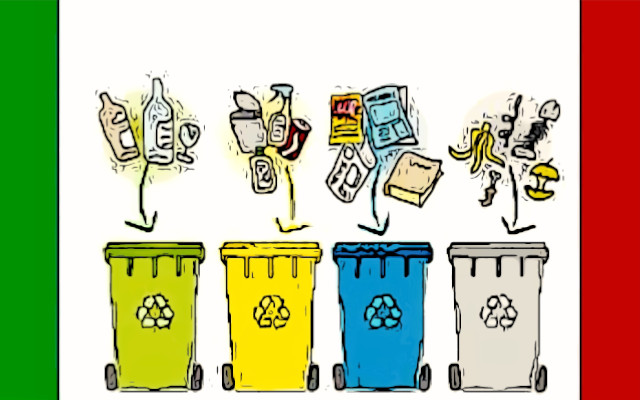
Waste recycling in Italy has withstood the impact of the pandemic. Excellent standards achieved in many cases, but there is still work to be done. Especially in terms of simplification and incentives for recycled products.
The 11th Report ‘Italy of Recycling’, presented on 12/10/20 by FISE UNICIRCULAR and Sustainable Development Foundation, offers an overview on waste recycling, sector by sector, and how the sector resisted the health crisis.
Waste recycling, good Performance in 2019
Individual sectors, in 2019, recorded Performance positive. Packaging recycling slightly increased (+3% compared to 2018), with 9.6 million tons sent for material recovery and an overall recycling rate that reached 70% of the amount placed on the market.
Recovery rates of packaging waste in Italy, in 2019, reached cutting-edge levels in Europe. In virtuous order:
– steel (82%),
– paper (81%),
– glass (77%),
– aluminum (70%),
– wood (63%),
– plastic (46%).
WEEE, batteries and vehicles still struggling
In some sectors collection is still below European targets:
– collection of waste from electrical and electronic equipment (WEEE), now at 38% (+10% compared to 2018), is far from the 65% target set by the EU for 2019,
– reuse and recycling of end-of-life vehicles, below the 85% weight threshold of the vehicle, is itself far from target of the 95% overall recovery expected for 2015,
– battery collection, at 43%, is still 2 points below the target.
Trend in growth
Trend in growth there are increases in the textile waste chains (+10% of separate collection), construction and demolition waste (recovery rate reached 77%), mineral oils (collection at 47%) and waste vegetable oils (recycling +9% compared to 2018).
Increases also the so-called organic fraction (+7.5%), that is the recovery of the organic component, which represents the largest weight share of urban waste. The collection of end-of-life tires in turn reached the national target, channeling 151,000 tons to material recovery and 116,000 tons to energy recovery.
Waste recycling, the effects of the 2020 pandemic
The pandemic from Covid-19 also affected the separate collection of urban and special waste. The survey – conducted between September and October 2020 on a sample composed of companies, supply chain consortia, utility, trade associations and other stakeholders – shows a trend consistent with changes in household restrictions. With a diversified trend for the individual supply chains.
In the first 4 months of 2020 – two of which under lockdown, – the separate collection of domestic packaging waste increased by over 7% compared to 2019 (a consequence of the increase inecommerce). +5-6% for glass and plastic, +10% for paper and steel. Aluminum packaging remained stable.
Drastic slowdown of WEEE and organic waste
Significant reductions (exceeding 10%) affected all supply chains linked to deliveries at eco-islands (WEEE and wooden packaging) and those related to industrial and commercial activities (solvents, used mineral oils, end-of-life tires, waste animal and vegetable oils and fats).
During the lockdown organic waste also decreased by about 15%. The increase in domestic waste was offset by the decrease in waste from collective users (canteens, restaurants, public establishments). The balance was restored from May-June with the resumption of productive, commercial and tourist activities.
Downward demand for recycled raw materials
The heaviest repercussions were caused by the reduction of foreign outlets (closures and customs slowdowns) and national ones due to the blockage/crisis of some production sectors (e.g. automotive and construction). A crisis that caused a collapse in the demand for recycled raw materials and greater competition from virgin raw materials due to the collapse of their prices.
Further negative effect was the slowdown and cuts of planned investments in the waste sector. 65% of the interviewed sector declared expecting a reduction in future investments.
Analysis of companies in the sector
'It is necessary in particular the rapid definition of national decrees for the different End of Waste chains and the simplification of control procedures on End of Waste authorizations, case by case.
The emergency also highlighted some deficiencies in plant equipment (especially for the organic fraction and the residual non-recyclable fraction) and the need for new recycling technologies for some types of waste (mixed plastics and some WEEE).
The Italian recycling system is able to face the new and more ambitious European targets for the circular economy as long as further efforts are made to improve the quality of collections and consequently of recycling materials, promote the use of 'circular' products and recover the delays and plant deficiencies still present in some areas of the country' (Paolo Barberi, President of FISE UNICIRCULAR, the Circular Economy Business Union).
Encourage the use of recycled materials
It is necessary to promote a greater use of materials generated from waste recycling. The use of recycled products and goods in green public procurement must be strengthened (Green Public Procurement) and introduce the obligation to use a minimum content of recycled materials on certain products and works, as provided for in the new EU Circular Economy Package. (1)
In considering prices In the purchase of circular goods, it is also requested to pay particular attention to the real benefits and real costs, including environmental ones. When this does not happen, it will be necessary to intervene with environmental contributions and taxation. That is, with both instruments, to discourage negative impacts on the environment and resources and to recognize the environmental benefits deriving from the use of 'circular' products.
The indications from Edo Ronchi
Further indications to decision-makers come from Edo Ronchi, president of the Foundation for Sustainable Development and 'father' of the legislation on modern waste management (Legislative Decree February 5, 1997, No. 22 or 'Ronchi Decree').
'To develop the circular economy, promoting innovation and new investments it would be very useful to reduce the excessively long times, sometimes years, for authorizations of recycling waste activities that generate products (End of waste) assigned, case by case, to the Regions and today subject to a double regime of sample checks, not provided for by European Directives and not required in any other European country.
In the use of European resources of the Recovery Fund it is also necessary to finance research and innovation in recycling techniques in critical sectors that have important environmental and development potential (for example, recycling of mixed plastics and some WEEE) as well as to finance innovation to improve the recyclability of some products and to increase the use of recycled material to replace virgin raw materials.
The entire Report is downloadable from the website http://www.unicircular.org/ (in the Publications section of the public area) and from the website www.fondazionesvilupposostenibile.org.
Marta Strinati
Notes
(1) Dario Dongo. Legislative Decree 116/20, labeling of food packaging. Inapplicable rules. GIFT (Great Italian Food Trade). 3.10.20, https://www.greatitalianfoodtrade.it/imballaggi/d-lgs-116-20-etichettatura-degli-imballaggi-alimentari-norme-inapplicabili

Professional journalist since January 1995, she has worked for newspapers (Il Messaggero, Paese Sera, La Stampa) and magazines (NumeroUno, Il Salvagente). Author of journalistic investigations on food, she published the book 'Reading labels to know what we eat'.


