

Soy-based drinks are proposed as a valid alternative to cow's milk, useful for people intolerant to lactose and/or allergic to milk, as well as for those following a vegan, high-protein, or low-saturated fat diet. The shelf offering is lively, although soy consumption should be limited because of isoflavones, endocrine disruptors naturally contained in it (Anses, 2025).
The market survey by GIFT (Great Italian Food Trade) considers 47 soy-based drinks marketed in Italy in ‘natural’, calcium and vitamin enriched, cocoa flavored, and ‘high-protein’ versions. Organic wins, as always, amid a jungle of conventional products with problematic food additives.
Soy drinks vs cow's milk
Cow's milk is an excellent natural source of calcium, proteins, and vitamins. For people following a vegan diet, those intolerant to lactose, and those allergic to milk, a soy-based drink could be a valid alternative. Provided that the plant-based food is without added sugars e enriched with calcium and vitamin D (present in milk with greater bioavailability).
However, between milk and soy there remain substantial differences. Milk proteins have a high biological value, as they contain all essential amino acids in optimal proportions. Soy proteins are instead 'almost' complete, where some amino acids (such as methionine) are present in smaller amounts compared to milk (about half).
Isoflavones, the endocrine disruptors contained in soy
Among plant-based drinks, soy-based stands out for better nutritional performance, particularly for protein content. However, ANSES, the French Food Safety Agency, warns that soy contains isoflavones, a family of molecules known for their estrogenic hormonal activity, that is endocrine disruptors. If consumed in excess, it exposes the reproductive system to risks with effects also extending to the fetus.
ANSES has set new safety thresholds for exposure to soy isoflavones:
– 0.02 mg per kg of body weight per day for the general population,
– 0.01 mg/kg of body weight/day for pregnant women, women of childbearing age, and prepubescent children.
These thresholds are systematically exceeded, in France, by a large portion of the population. Therefore, ANSES has recommended not serving soy-based foods in collective catering.
Isoflavones, big differences even within the same categories of foods
The French Food Safety Agency ANSES also highlights that it is possible to reduce the isoflavone content in soy-based products. Currently, there is great variability
– among different soy-based foods. Isoflavones contained in soy-based snack biscuits are 100 times higher than those present in soy sauce
– for the same food made by different producers, as in the case of soy-based desserts available on the French market, where the isoflavone content doubles between one brand and another.
These differences depend on several factors: on one hand, the variety of soy, the growing conditions, and the degree of plant maturity; and on the other, the production processes or the recipe formulation.
‘The information in label on the soy isoflavone content is not currently mandatory, although it has health relevance since consumers should be informed about the contribution of individual food products to reaching the maximum exposure threshold indicated by ANSES. Producers more attentive to these aspects, especially when they have implemented procedures and technologies to reduce its content, could therefore distinguish themselves by voluntarily offering this information', says lawyer Dario Dongo.
Industrial soy drinks, the recipes
The basic recipe of soy drinks – water, dehulled soybeans, salt – is common to almost all organic drinks and a small portion of neutral conventional ones (that is, not flavored). Most conventional drinks (i.e., non-organic) are fortified with calcium and vitamins, in addition to containing sugars, flavors of chemical synthesis (i.e., not 'natural flavors') and food additives. Among these, some are not recommended:
– phosphates (E 338–341, E 343, E 450–452). Excessive consumption is linked to risk of bone demineralization, kidney damage, and higher cardiovascular risk. Also possible correlations with type 2 diabetes and breast cancer. Phosphates are widely added to baked goods, cold cuts, dairy products, and other foods. According to EFSA, their current average intake might exceed the safety level. In 2019, the Authority established a global acceptable daily intake (ADI) of 40 milligrams per kilogram of body weight;
– carrageenan (E 407). Like other emulsifiers and thickeners (carboxymethylcellulose, polysorbate-80, mono- and diglycerides of fatty acids etc.) carrageenan is identified, through studies in vitro and in animals, as a possible promoter of inflammatory bowel diseases. This category of additives is widely used in industrial foods, as emerged in previous market surveys by GIFT (Great Italian Food Trade) on hyper-protein yogurts and desserts and on milk snacks.
Soy drinks, branded industrial products
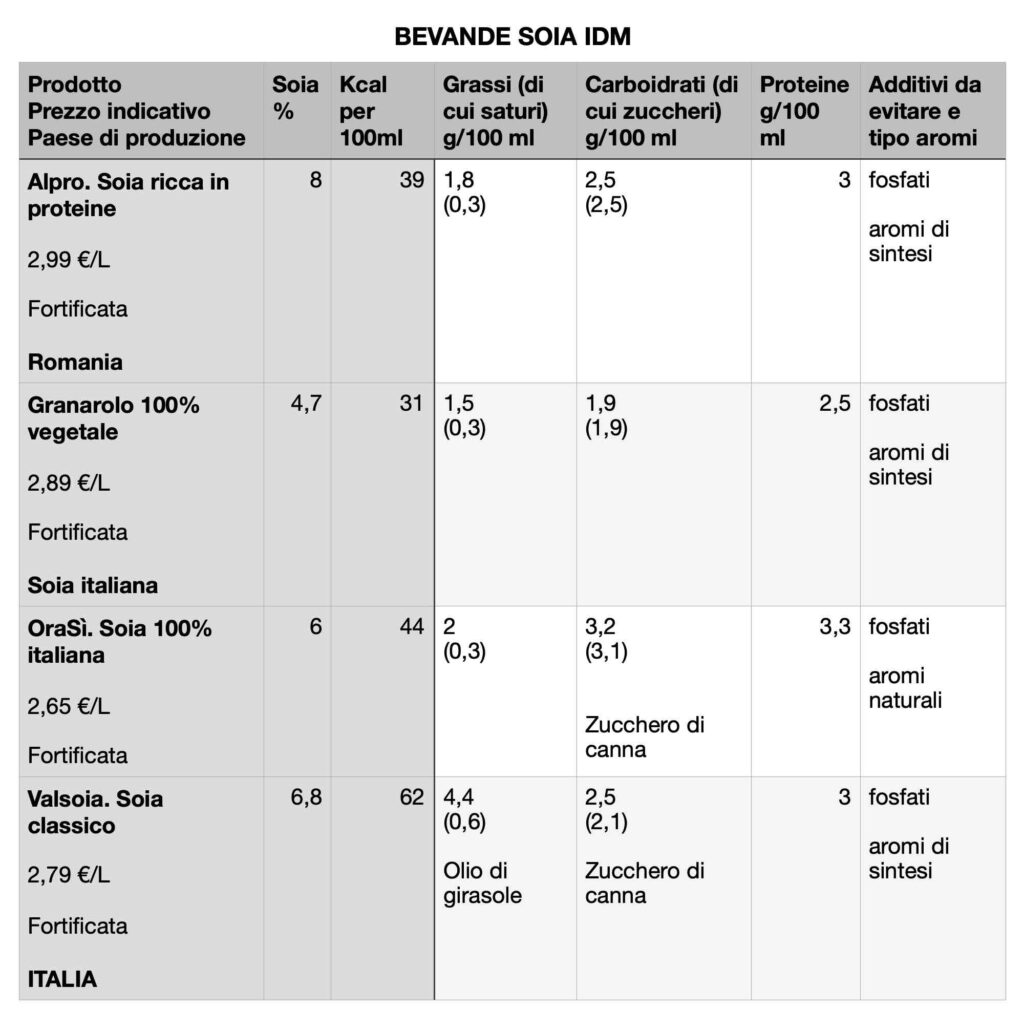
All ‘neutral’ soy drinks of thebranded industry (IDM) examined are fortified and with added sugars, cane sugar in Valsoia and OraSì. Soy is Italian in 2 out of 4 cases.
The Alpro product by Danone is surprising for its promising commercial name and the nutritional claim ‘Soy rich in protein’, whereas the drink has a protein content that corresponds to the average of foods in the same category (3% vs 2.95% average), lower among others than the drinks from Valsoia and OraSì. The latter holds the record in the group with a content of 3.3g of protein in 100mg of drink.
The highest amount of fats is found in the Valsoia drink: 4.4%, compared to an average of 2.4%. This product is also the only one with sunflower oil: an ingredient that increases the energy value (62 Kcal, compared to an average of 44 Kcal), but serves to promote the presence of linoleic acid.
This essential fatty acid ‘helps maintain normal blood cholesterol levels’, as the claim on the package states. For the use of the claim it is necessary that the food provides at least 1.5 grams of linoleic acid per 100 grams and per 100 calories, provided that it is specified that the beneficial effect is obtained with a daily intake of 10 grams (EU reg. 432/12). A dose that Valsoia recommends reaching by consuming 200 ml of its drink and 5 shelled walnuts daily.
phosphates sprinkled and synthetic flavors for three out of four products (except Granarolo).
The 'neutral' private label drinks of supermarkets
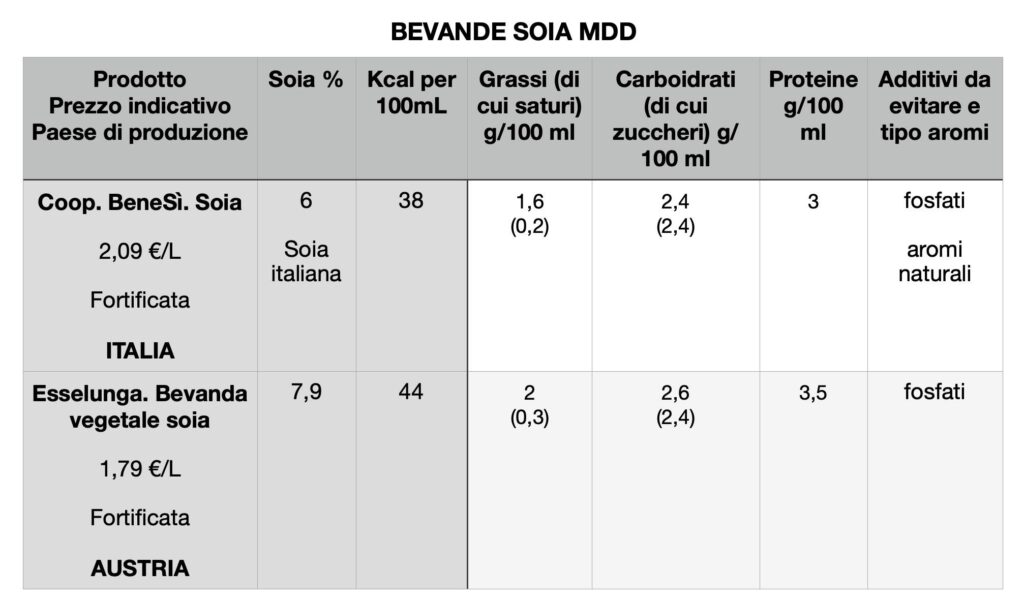
In the channel distributor brand (MDD) only Coop and Esselunga offer a ‘natural’ soy drink, fortified and with added sugars (2.4%).
Soy and establishment are Italian for Coop. Origin Austria instead for Esselunga, which contains more soy and more protein, 3.5% compared to Coop's 3%. Both add phosphates.
Discount drinks
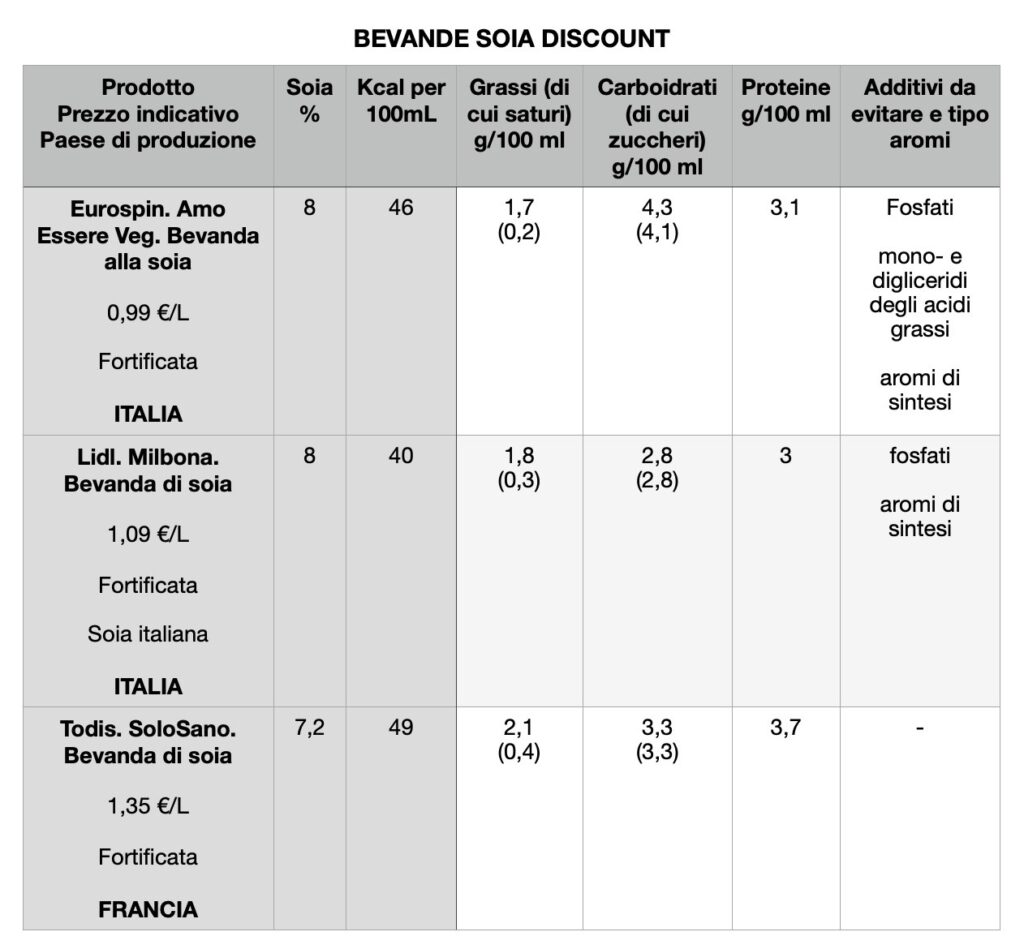
Of the three ‘neutral’ discount beverages examined – all fortified and with added sugars – the cleanest recipe is from the SoloSano brand by Todis (produced in France), which adds only the (harmless) additive gellan gum. The other two use phosphates and synthetic flavors.
Eurospin even uses mono- and diglyceride emulsifiers of fatty acids and adds the highest sugar content in the group: 4%, that is 8 grams of sugar in a single glass (200 ml) of beverage.
The 'sugar free' segment
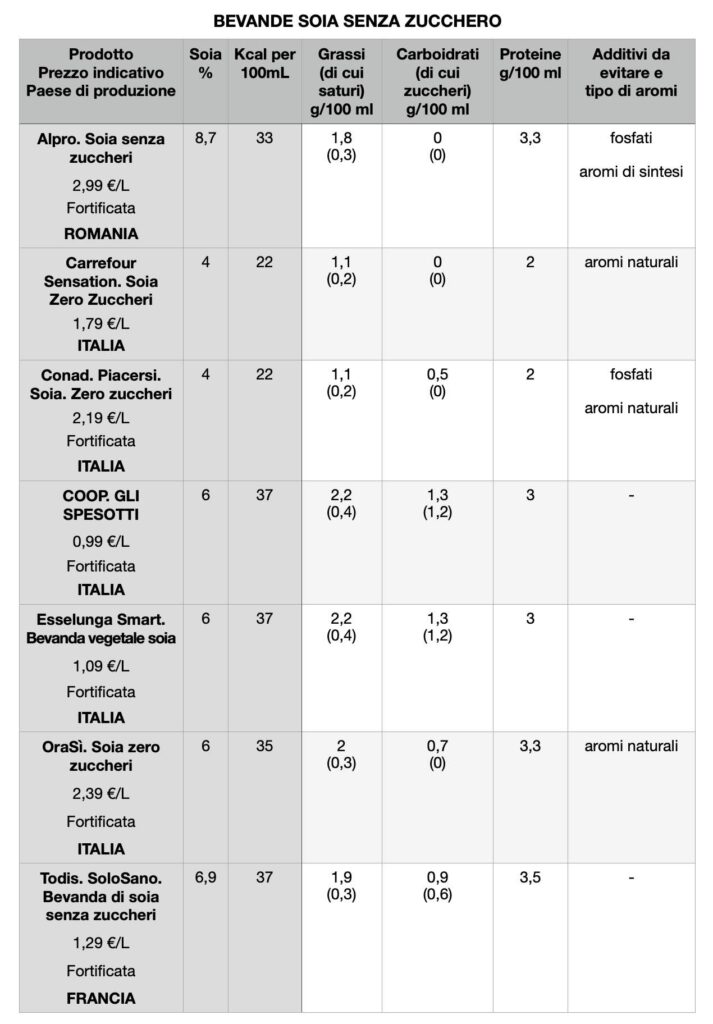
For the ‘sugar free’ type, we grouped the products offered in the various commercial channels (IDM, MDD, and discount).
Among the seven sugar-free beverages examined, only two (Alpro and Conad) add phosphates. The harmless gellan gum is found in beverages from Carrefour, Orasì, and Todis. The cleanest recipes belong to Gli Spesotti from Coop and Esselunga smart: zero additives, except for harmless calcium carbonate.
The soy is Italian only in three products: Esselunga, Coop, and OraSì. The percentage used in the recipes varies greatly, from 4 to 8.7%, for an average of 5.9%.
The highest amount of soy is in the Alpro beverage (8.7%), which however contains less protein (3.3%) compared to the Todis product (3.5%), made with 6.9% soybeans.
The only non-fortified ‘sugar free’ beverage is Carrefour’s. Coop and Esselunga, as mentioned, add only calcium carbonate, but no vitamins.
Cocoa flavored, additives and sugars
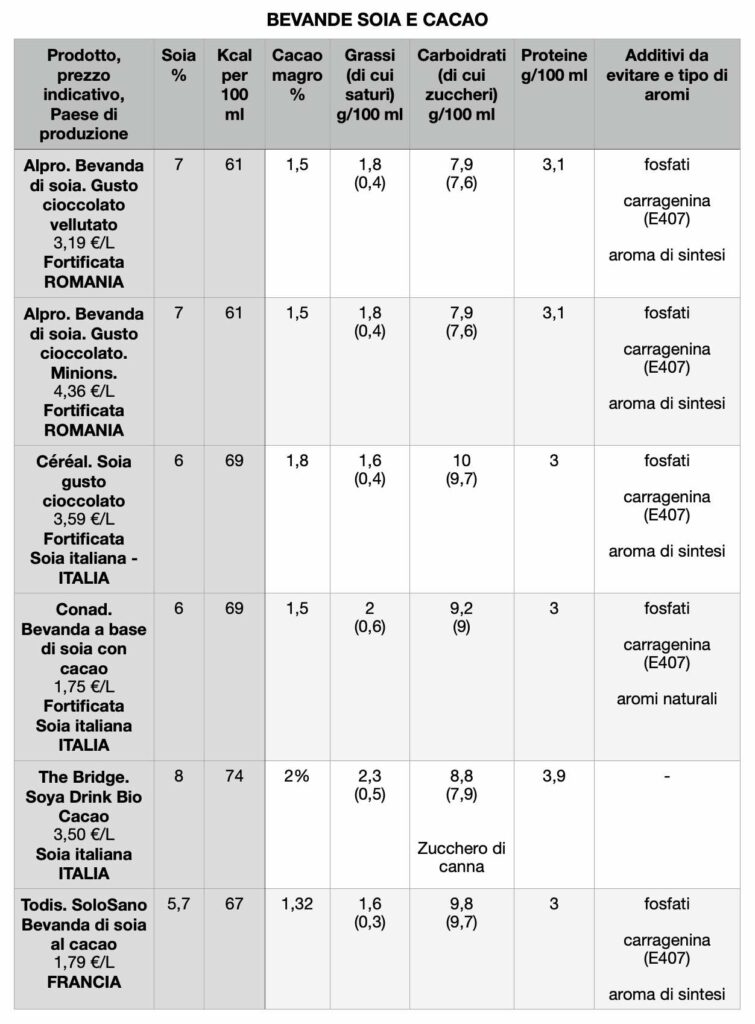
The examination of six cocoa-flavored soy beverages shows widespread use of large amounts of sugars, additives emulsifiers and flavorsalmost always synthetic. This even happens in the Alpro product with Minions characters depicted on the packaging, evidently used to attract children.
Phosphates, carrageenan and synthetic flavors (except Conad which uses only natural flavors) are the mandatory set of 5 of the 6 drinks examined.
The only recipe free of many ‘cosmetic’ additives, i.e. not essential, is that of the organic Soya Drink product under the The Bridge brand.
Half of the sample uses Italian soy. The average percentage is 6.6%, with a range from 5.7 to 8%.
Proteins are always around 3%, except The Bridge which reaches a remarkable protein content of 3.9%.
The added sugars reach the worrying threshold of 9.7% (Todis and Céréal), based on a still high average: 8.6%. A 200 ml glass provides on average more than 17 grams of sugar.
High-protein cocoa
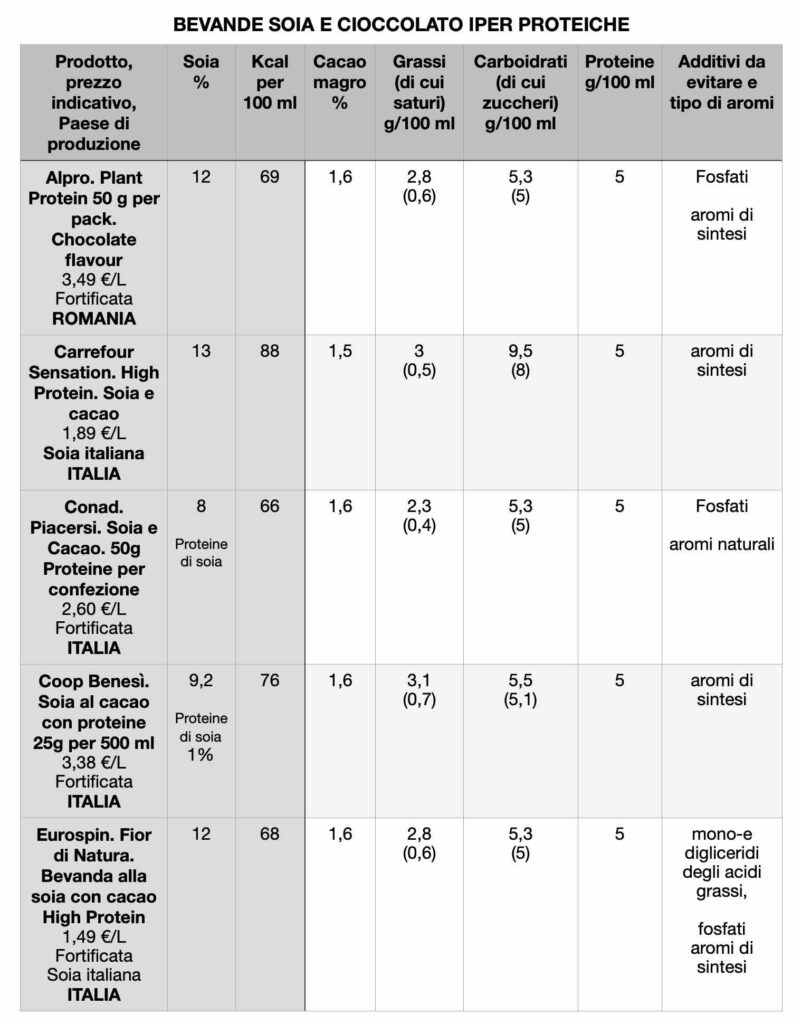
The additives also qualify cocoa drinks presented as hyper-proteic. Phosphates are present in 3 out of 5 products. Eurospin also adds emulsifiers mono- and diglycerides of fatty acids. Carrageenan, present in almost all standard soy and cocoa drinks, is instead missing.
Theenergy supply average is 73.4 kcal per 100 ml, that is almost 150 calories for a single 200 ml glass. The highest energy value is found in the Carrefour drink (88 kcal), which contains the highest sugar content: 8 grams/100 ml, compared to an average of 5.6.
Soy is Italian in two out of five cases. The concentration is higher in this hyper-proteic segment and in two cases it is reinforced with the use of isolated soy proteins. Whatever the total soy quantity, the proteins are always equal to 5 grams per 100 ml of drink.
Classic high-protein
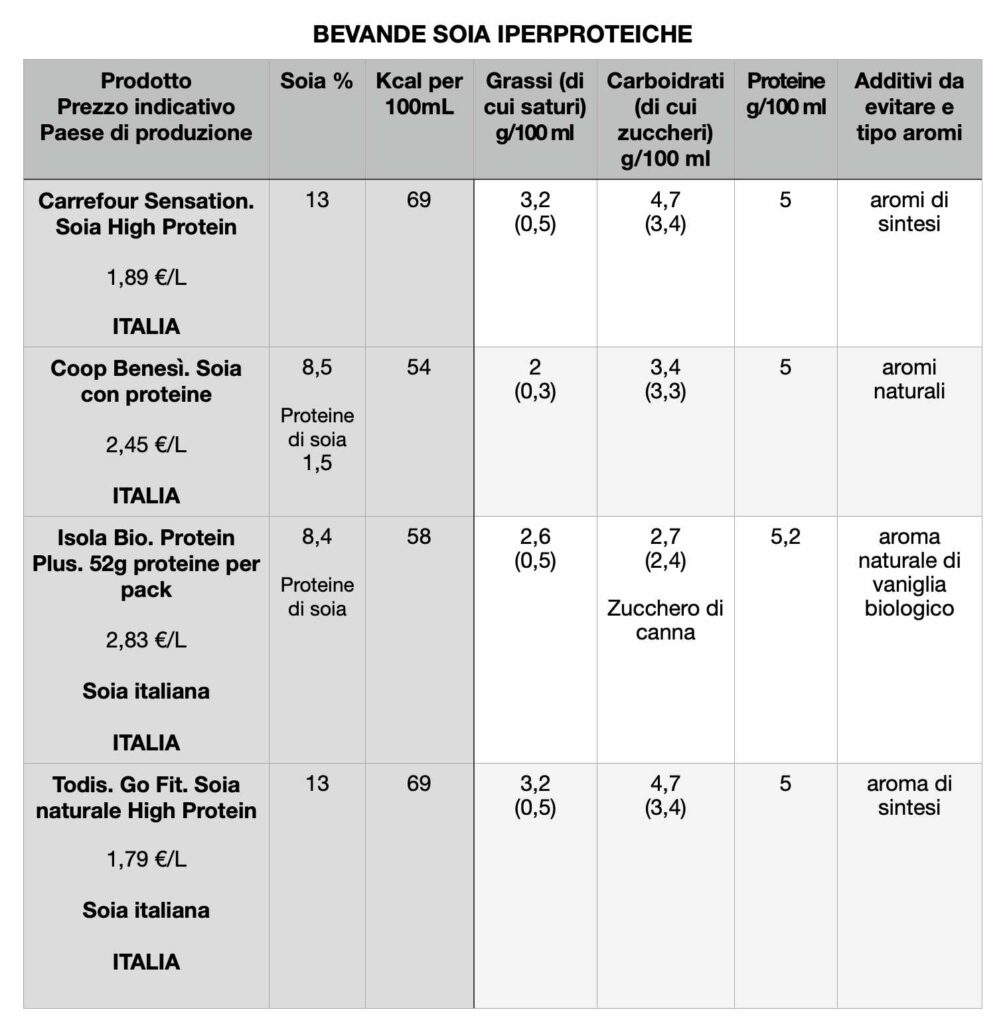
The ‘classic’ hyper-proteic are characterized by a ‘clean’ recipe, without additives. They are all flavored with vanilla, natural organic in the Isola Bio drink.
Compared to the cocoa hyper-proteic, besides the absence of additives, there is a reduced amount of added sugar, whose average content is just over 3 grams per 100 ml (5.6 grams is the average of the cocoa hyper-proteic).
Soy is Italian in half of the sample (Isola Bio and Todis) and is present in almost double the amount compared to standard drinks, reflecting the protein quantity: 5 grams per 100 ml (5.2 for Isola Bio).
Barista, soy cappuccino like in a café
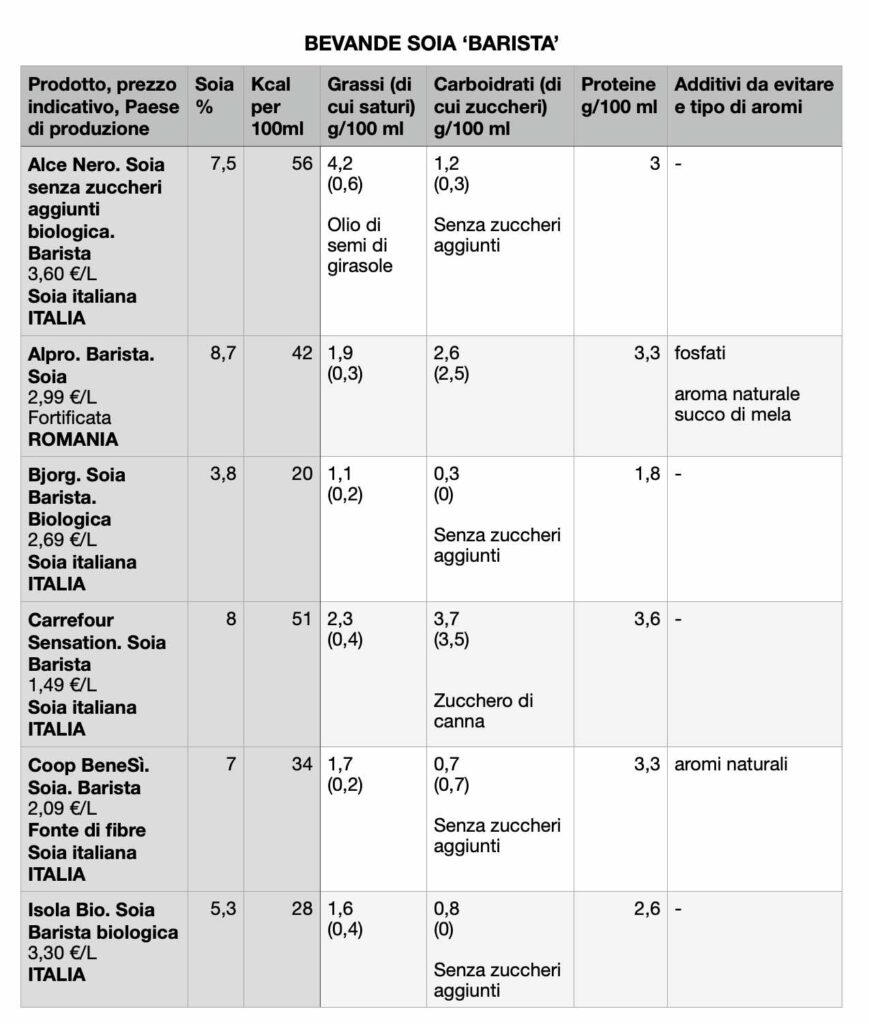
The 'barista' version is proposed as ideal for making a 'cappuccino like in a café'. Among the six beverages examined, only Alpro uses phosphates.
Four of the six barista drinks do not add sugar. And it shows: zero or traces of sugars distinguish them from the two versions with added sugars. Alpro and Carrefour contain, respectively, 2.5 and 3.5 g/100 ml of sugars.
Alce Nero adds sunflower seed oil, a choice that increases total fats (not saturated): 4.2 g/100 ml compared to an average of 2.13.
Of the six beverages examined, three are organic: no additives or flavors.
A certain variability, finally, emerges in the content of proteins: compared to the average of 2.9 g/100 ml, Bjorg marks the minimum level (1.8) and Carrefour the maximum (3.6).
Organic drinks, the happy oasis
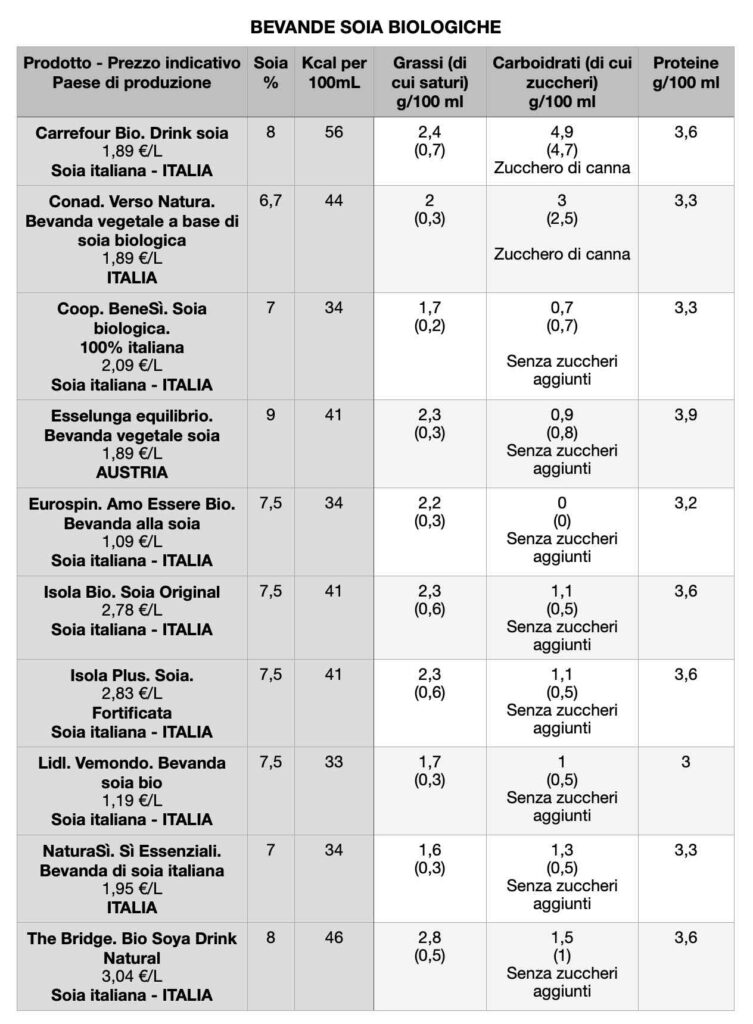
The ingredient list of the organic soy drinks examined holds no unpleasant surprises. Among the advantages of certified organic foods, moreover, theabsence of questionable additives it is one of the advantages that distinguish them from 'conventional' foods (i.e., non-organic). For this reason, in the table of the ten organic soy-based drinks, there is no column dedicated to additives to avoid.
The only data to report is the use of natural vanilla flavor in Carrefour and Conad drinks, the only ones among the 10 organic beverages that add (cane) sugar. Furthermore, in these two products only, the soy is not Italian.
Note that the only beverage fortified is that of Isola Plus, which usesalgae Lithothamnium Calcareum (0.4%). This red coral algae is rich in calcium carbonate (up to 30-40% of its dry weight) and other minerals such as magnesium, silicon, and trace elements.
The percentage of soy varies from 6.7 to 8. Proteins from 3% in Lidl to 3.9% in Esselunga.
Conclusions
The usefulness of soy-based drinks for certain segments of the population is evident. Less evident seems the commitment of part of the industry sector, which stubbornly relies on avoidable additives and adds large quantities of sugars, despite EFSA's warning on the need to minimize consumption.
Fortunately, the breadth of the offer allows choosing the most nutritionally balanced product. Which, as emerged from asurvey on plant-based drinks available on the Swiss market, awaits improvements. Also bearing in mind the recommendations of ANSES.
Marta Strinati
Cover art copyright © 2025 Dario Dongo (AI-assisted creation)
References
– Agence nationale de sécurité sanitaire de l’alimentation, de l’environnement et du travail (ANSES). (2025, January 8). Opinion of Anses concerning the development of long-term oral TDI for isoflavones (Referral No. 2022-SA-0221). ANSES. https://www.anses.fr/sites/default/files/VSR2022SA0221RA.pdf
– EFSA Panel on Dietetic Products, Nutrition and Allergies (NDA). (2011). Scientific opinion on the substantiation of health claims related to linoleic acid and “molecule precursors regulating cell functions (prostaglandins, leucotrienes)” (ID 488, 4670), maintenance of normal blood LDL-cholesterol concentrations (ID 2899) and protection of the skin from UV-induced damage (ID 3659) pursuant to Article 13(1) of Regulation (EC) No 1924/2006. EFSA Journal, 9(6), 2235. https://doi.org/10.2903/j.efsa.2011.2235
– EFSA Panel on Food Additives and Nutrient Sources added to Food (ANS). (2019). Re-evaluation of phosphoric acid–phosphates (E 338–E 341, E 343). EFSA Journal, 17(6), e05674. https://doi.org/10.2903/j.efsa.2019.5674
– Scholz-Ahrens, K. E., Ahrens, F., & Barth, C. A. (2020). Nutritional and health attributes of milk and milk imitations. European Journal of Nutrition, 59(Suppl 1), 19–34. https://doi.org/10.1007/s00394-019-01936-3

Professional journalist since January 1995, she has worked for newspapers (Il Messaggero, Paese Sera, La Stampa) and magazines (NumeroUno, Il Salvagente). Author of journalistic investigations on food, she published the book 'Reading labels to know what we eat'.


