

Il preparato per purè di patate, fatta eccezione per i prodotti bio, contiene sempre additivi poco raccomandabili. Va meglio con il purè pronto al consumo, come dimostra la nostra indagine di mercato su 23 prodotti.
Purè di patate istantaneo con additivi
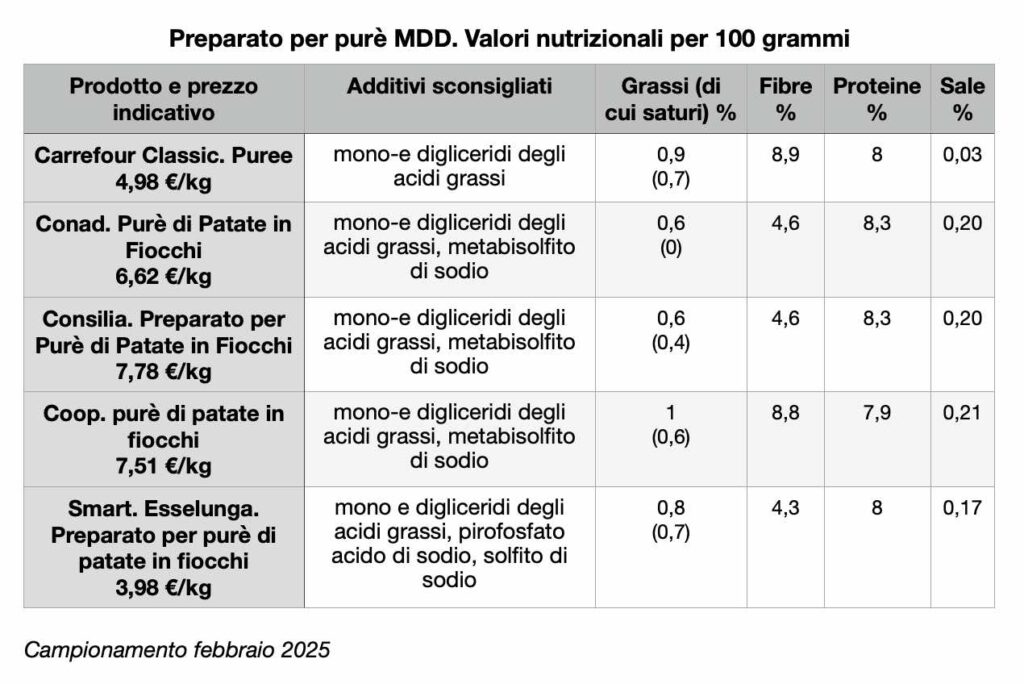
La preparazione per purè di patate in fiocchi nei 10 prodotti ‘convenzionali’ esaminati contiene sempre uno o più dei seguenti additivi critici:
– mono- e digliceridi degli acidi grassi (E471). Diversi studi evidenziano che il consumo di emulsionanti causa alterazione del microbiota, assottigliamento del muco intestinale, peggioramento dell’infiammazione intestinale e aumento di recidiva, favorendo potenzialmente l’insorgenza di alcune forme di cancro;
– solfiti (metabisolfito di sodio, E223; solfito di sodio, E221). Possono causare allergia, gli asmatici e le persone allergiche all’aspirina devono evitarli. La presenza delle avvertenze nelle etichette dei purè esaminati dimostra che questi additivi sono aggiunti in misura superiore a 10 mg/kg;
– fosfati (pirofosfato acido di sodio, difosfato disodico, difosfati). Questa categoria di additivi alimentari è correlata a un aumento del rischio cardiovascolare, soprattutto nelle persone con disfunzione renale.
La palma nera
La palma nera, tra i prodotti dell’industria di marca, va ai due preparati di Unilever (Pfanni e Knorr), con tre additivi e aromi di sintesi. A seguire Flaffy.

Tra i cinque prodotti a marchio del distributore (MDD), invece, il preparato di Esselunga nella linea economica Smart è ultimo in classifica, poiché ripropone tutti i tre tipi di additivi da evitare.
Carrefour Classic preparation adds 'only' emulsifiers, while for Conad, Consilia and Coop there are two additives.
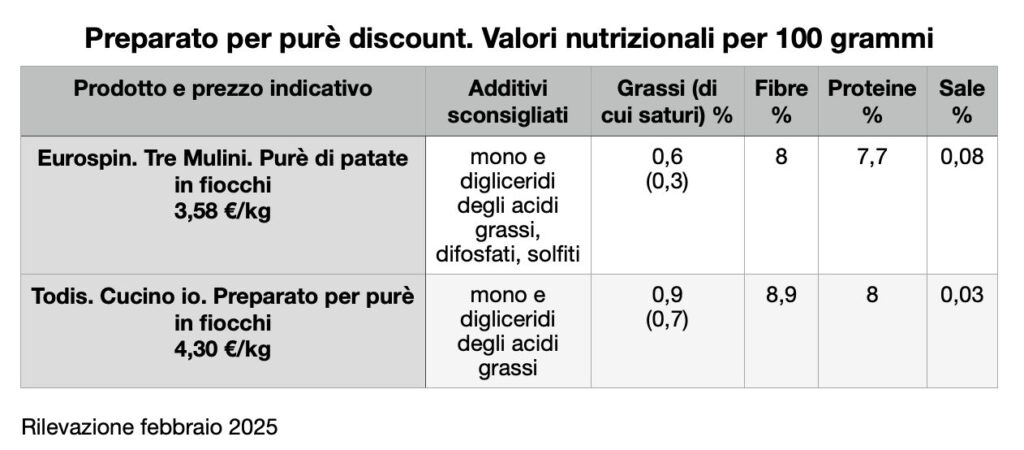
In discount stores, finally, the freeze-dried mashed potatoes from Eurospin perform worse than those from Todis, at least in terms of critical additives added to the recipe.
Clean recipes only in organic mashed potato preparations
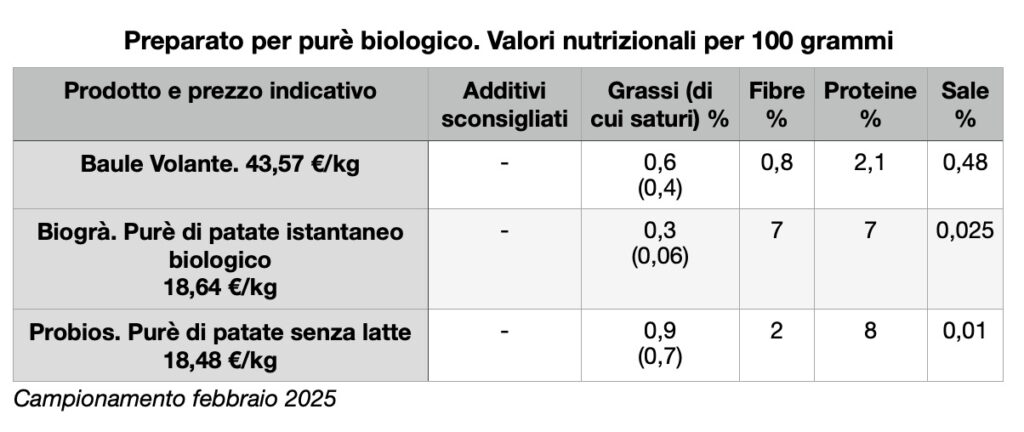
Only organic mashed potato preparations are completely free of these additives. In organic foods, in fact, these and many other questionable substances are banned. The only exception among the substances examined is sodium metabisulfite (E223), allowed in organic only on crustaceans.
The downside of organic remains the cost, in this category of products much higher than 'conventional'. Two of the three products examined cost more than double while the third – branded Baule Volante – reaches the monstrous price of 43 €/kg (3 euros for 70g).
An unjustified price difference, considering that the cost of organic raw materials is only slightly higher than that of conventional raw materials. The democratization of organic – already seen in pasta, baked goods, yogurt, eggs, wine and many other foods, offered at affordable prices – has yet to reach these and other products.
The false richness in protein and fiber
The nutritional profile of mashed potato preparations raises curiosity regarding the percentage of protein and fiber which in all examined products (except the two from Unilever) exceed 8%, while boiled potatoes barely reach 2%.
The explanation for this discrepancy lies in the concentration of nutrients in the potato processing. As explained on Carrefour's label, in fact,
– the proteins, 8% in the nutritional table, drop to 2.5% in the reconstituted product, that is, with the addition of 400 ml of water and as much semi-skimmed milk for a 125 gram sachet of preparation
– the fibers, similarly, from 8.9% in the dry state they drop to 1% in the reconstituted mashed potatoes.
Fresh mashed potatoes, clean recipes
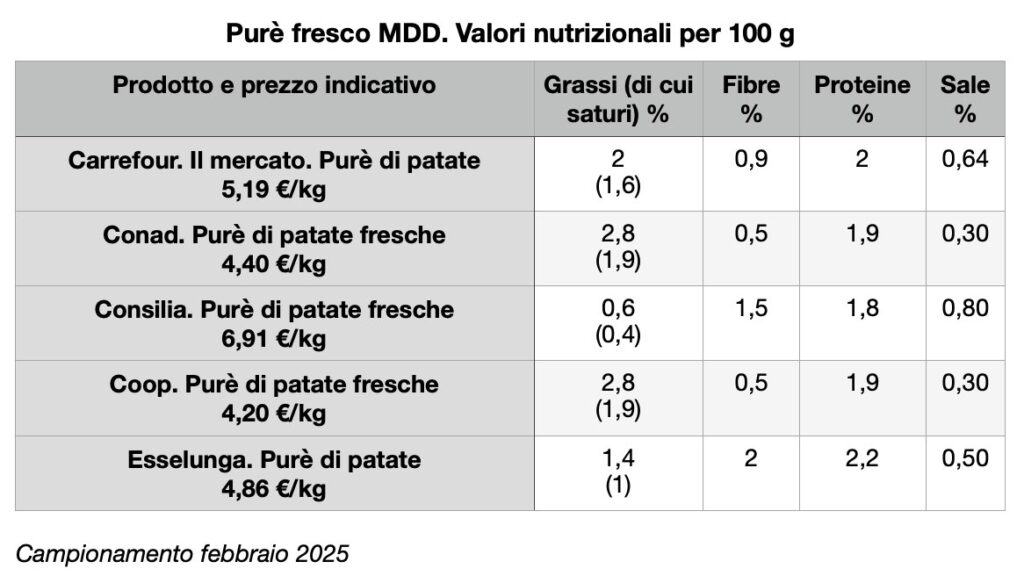
In the category of ready mashed potatoes for consumption, after heating, no problematic additive is added to the recipe. Usually, it includes potatoes, water, milk, cream, cheese, and salt.
The most substantial offer is from the private label.
The benefit of Grana Padano PDO
Branded industry products are the only ones to boast a 'noble' ingredient.
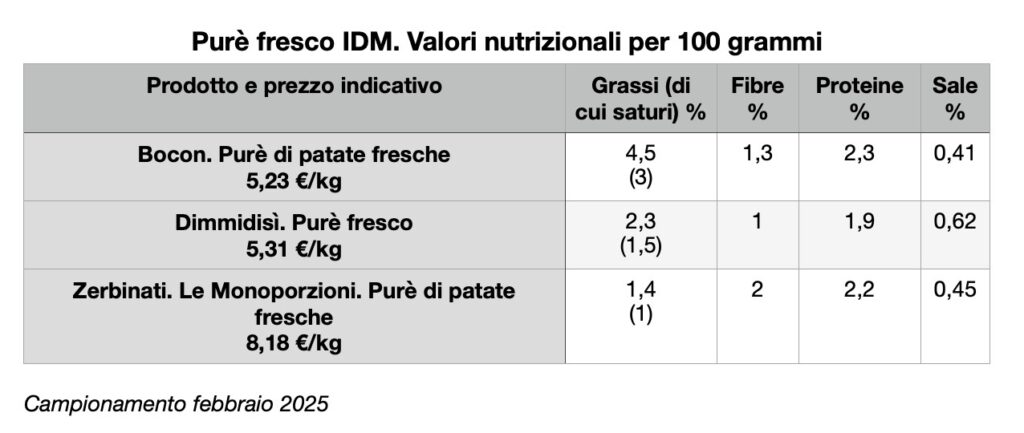
Bocon and Dimmidisì contain Grana Padano PDO. As noted in the table, there is a discrepancy in fat content between the two, attributable to the quantity of various ingredients:
– Bocon makes the puree with potatoes (75.7%), milk, butter, Grana, and salt
– Dimmidisì, instead, adds water as the second ingredient. In this order: potatoes (74%), water, milk, cream, butter, salt.
Zerbinati, finally, highlights the use of only Piedmontese milk.
Discount store purees
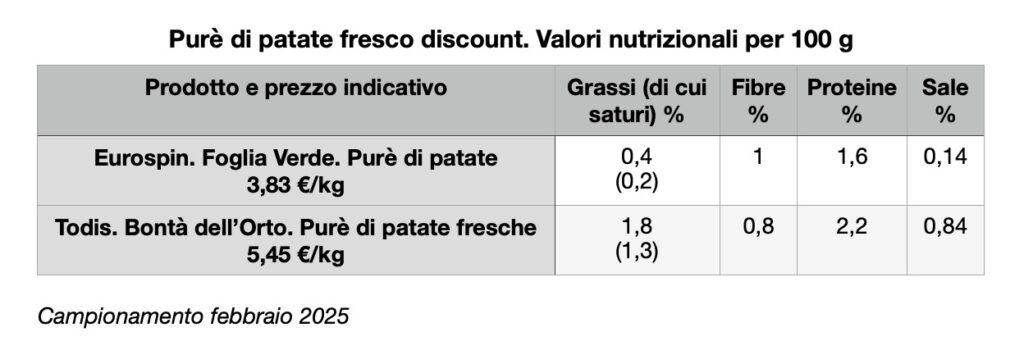
Close the series the two fresh discount products.
Todis offers a puree with more fat (1.8%) and a recipe based on 62% fresh potatoes, water, milk, cream, salt;
Eurospin, instead, contains only 0.4% fat. The recipe is potatoes 72%, water, whole fresh pasteurized milk 6%, salt, nutmeg.
Marta Strinati

Professional journalist since January 1995, she has worked for newspapers (Il Messaggero, Paese Sera, La Stampa) and magazines (NumeroUno, Il Salvagente). Author of investigative journalism on food, she published the book 'Reading labels to know what we eat'.


