

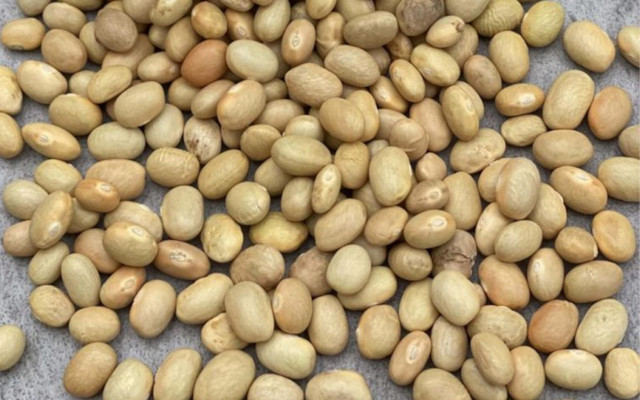
The Zolfino bean (Phaseolus vulgaris L.) is a rare and precious traditional legume, deeply rooted in the culinary and agricultural heritage of Tuscany. Distinguished by its delicate skin, creamy texture and digestibility, it represents one of Italy’s most sought-after niche products. But the value of the Zolfino bean also lies in its unique history and the intrinsic connection with the territory.
GIFT (Great Italian Food Trade) invites you to discover the Zolfino in its entirety: from the historical roots to the sustainable farming practices that preserve it in its habitat specific habitat, to the nutritional properties, up to the uses and pairings in the Tuscan regional cuisine. In a path that connects tradition, ecology, science, and gastronomy, it reveals why the Zolfino bean is a true symbol of sustainability, biodiversity and culinary excellence.
History and legends of the Zolfino bean
The Zolfino bean is a precious traditional legume of Tuscany, deeply intertwined with local agricultural traditions and rural culture. Celebrated for its creamy texture and digestibility, this rare variety has been valued as a nutritious food during times of scarcity. It is locally known as Fagiolo del Cento or ‘hundred-day bean’, referring to its short growing cycle.
Its arrival in Tuscany is traditionally attributed to EmperorEmperor Charles V, who is said to have introduced New World beans to Italy by gifting them to Pope Clement VII (Giulio de’ Medici) in 16th century. While common varieties such as Cannellini and Toscanelli have become widespread, Tuscany has preserved rare gems like Coco Nano and the exceptional Zolfino.
Thanks to dedicated small farmers and local cooperatives, the Zolfino bean has experienced a revival at the end of the 20th century and is now protected as part of the Slow Food Ark of Taste, a global catalog of traditional foods at risk of extinction.
Botanical characterization and seasonality of Zolfino beans
The Zolfino bean (Phaseolus vulgaris L.) is a rare traditional legume with origins in the Americas, now firmly rooted in the Tuscan agricultural heritage. Its name derives from the Italian word zolfo, and reflects the distinctive pale yellow color of the bean. Small, round or oval, with a smooth surface, the Zolfino is appreciated for its ultra-thin skin that softens completely during cooking – perfect for soups, purées, and refined recipes.
Zolfino beans thrive in poor and well-drained soils at medium altitudes. They cannot tolerate waterlogging due to their shallow root system, which makes them unsuitable for low and humid areas. Traditionally sown in April on terraced hills, often under olive groves where dry stone walls ensure natural drainage between the stones, this practice exemplifiesTuscan traditional hill farming protecting the beans from excessive moisture.
The growing season begins in late spring (May-June), aligning with local climatic conditions to avoid frost and maximize summer sun exposure. The beans are harvested in August-September, carefully dried and stored for consumption throughout the year, preserving a seasonal food heritage that supports culinary biodiversity.
Place of production, agronomic practices and sustainability
Zolfino beans are cultivated in the area of Valdarno and on the slopes of the massif of Pratomagnowhich extends in the provinces of Arezzo and Florence in Tuscany. This unique terroir – characterized by soils rich in minerals and well drained at altitudes between 300 and 600 meters – creates ideal conditions for the cultivation of this delicate bean. These heights offer excellent sunlight exposure and low humiditynaturally reducing the incidence of plant diseases.
Cultivation follows sustainable and low-impact farming methodsoften aligned with organic practices. Farmers typically avoid synthetic fertilizers and chemical pesticides, favoring manual weeding, natural crop rotation, and minimal irrigation. The rustic nature of the Zolfino bean makes it well suited to these climate-resilient practices, requiring little intervention while producing high-quality yields.
Since Zolfino beans prefer poor soils and cannot tolerate waterlogged soils, they are often planted on terraced lands – a traditional system that prevents erosion and improves water drainage. This method, combined with the short growing cycle of the bean and the minimum water requirementsexemplifies climate-smart agriculture.
The revival and continued cultivation of Zolfino beans supportagrobiodiversitythe soil regeneration and local food sovereignty. Grown almost exclusively by small-scale artisanal farmers, this legume represents resilient Tuscan agriculture and the preservation of endangered crops.
Nutritional properties
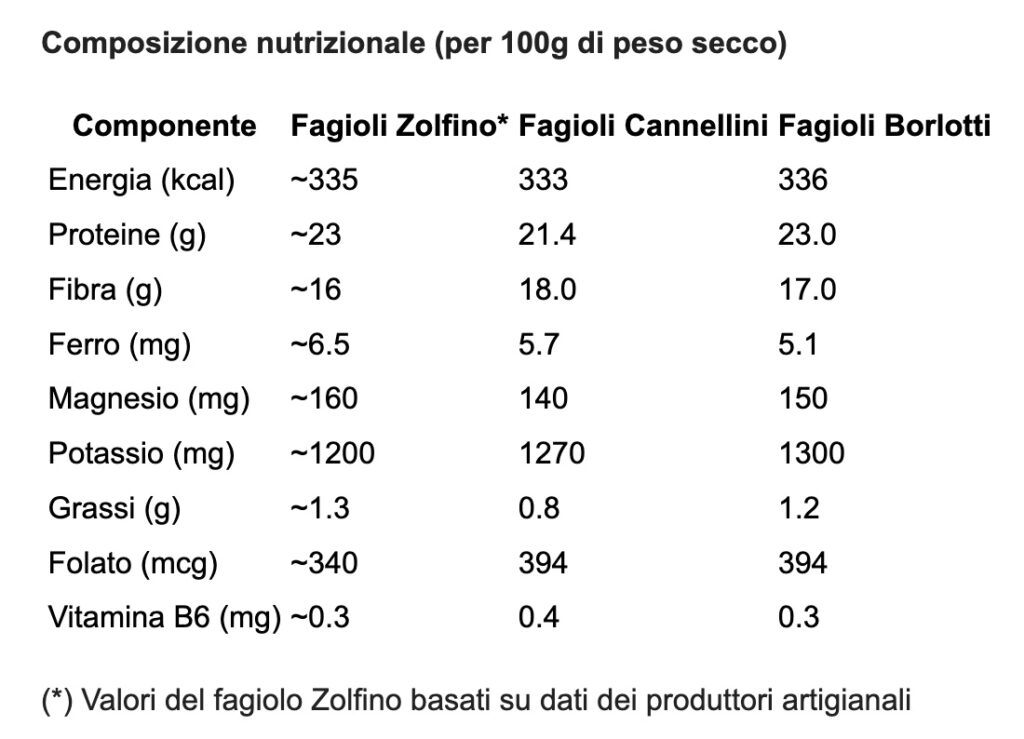
Zolfino beans are highly valued for their nutrient density and superior digestibility. Like other legumes, they provide:
- plant proteins (about 20-23%)
- complex carbohydrates with a low glycemic index (GI)
- dietary fiberbeneficial for intestinal health
- mineralsespecially iron, magnesium, and potassium
- B vitaminsparticularly folate (vitamin B9).
The thin skin of Zolfino beans reduces the amount of resistant oligosaccharides (responsible for gas production in the intestine) and allows faster cooking without preliminary soaking. This makes them easier to digest – compared to other bean species – for sensitive people, including the elderly and children.
Nutritional composition (per 100g of dry weight)
Culinary uses of Zolfino beans
Zolfino beans are a prized ingredient in traditional Tuscan cuisine, celebrated for their buttery texture, delicate skin and refined nutty flavor. Their culinary charm lies in the ability to absorb flavors while maintaining a rich creamy texture – making them a favorite among chefs and gourmet restaurants.
These traditional legumes are typically prepared in simple recipes and rustic ones that highlight their natural qualities:
- gently boiled with garlic and sage, then seasoned with high-quality Tuscan extra virgin olive oil;
- incorporated into hearty soups and stews, like the traditional 'ribollita';
- served as a classic side dish for grilled meats, including the iconic Florentine steak;
- paired with winter dishes such as cotechino or Tuscan sausages.
Thanks to their delicate structure, Zolfino beans typically do not require preliminary soaking. They are slow-cooked for several hours – often three or four – allowing them to develop a creamy texture that melts in the mouth without losing shape. This unique cooking quality, combined with their authentic flavor, ensures their place at the heart of Tuscan culinary heritage.
Tips for buyers
For food enthusiasts, chefs, and international buyers seeking authentic traditional Italian products, Zolfino beans represent a premium quality legume with high gastronomic value. When purchasing, check:
- geographical origin (search for 'Zolfino del Pratomagno' or 'Fagiolo Zolfino della Valdarno');
- production method. To ensure the highest quality and environmental integrity, preference should be given to organic products;
- harvest year (fresh beans maintain better taste and nutritional properties).
Due to their rarity, Zolfino beans can be expensive and are often available only through specialized retailers or directly from producers.
The team GIFT (Great Italian Food Trade) provides support to international buyers in identifying verified and sustainable producers, ensuring a supply chain transparent, ethical and traceable. Our expertise bridges the gap between traditional Italian producers and the global demand for authentic high-quality food products.
Conclusions
The Zolfino bean is much more than a traditional Tuscan crop, it embodies a legacy of sustainability, regional gastronomy and biodiversity. Its delicate taste, nutritional richness and rare cultivation make it an exceptional addition to the global pantry of chefs and discerning consumers.
As interest in traditional foods and regional identity grows, the Zolfino bean exemplifies how ancient crops – appreciated not only for their culinary charm but also for their resilience to local environmental conditions – can play a vital role in modern cuisine and food systems.
Dario Dongo
References
- Accademia dei Georgofili. (2019). The Zolfino Bean of Pratomagno: biodiversity and protection. Florence: Edizioni Accademia dei Georgofili. https://www.georgofili.it
- Food and Agriculture Organization of the United Nations (FAO). (2021). The State of the World’s Biodiversity for Food and Agriculture. Rome: FAO. https://www.fao.org/3/CA3129EN/ca3129en.pdf
- Zolfino Bean of Pratomagno. Slow Food Foundation for Biodiversity. (n.d.). Retrieved May 2, 2025, from https://www.fondazioneslowfood.com/en/slow-food-presidia/pratomagno-zolfino-bean/

Dario Dongo, lawyer and journalist, PhD in international food law, founder of WIISE (FARE - GIFT – Food Times) and Égalité.


