

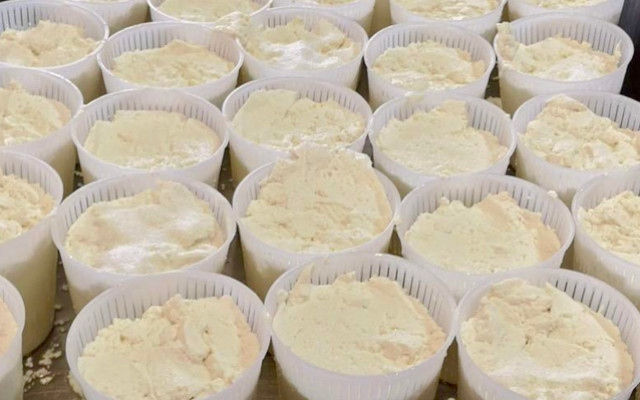
The Sicilian ricotta, a beloved traditional dairy product, is gaining popularity globally, but recent scientific research is revealing previously undocumented dimensions of its quality and potential.
An innovative scientific study published in Journal of Dairy Science (Mangione et al., 2025) offers the first detailed and specific information on how seasonal variations in feeding systems, particularly pasture, drastically influence the qualitative characteristics of cow ricotta produced in semi-extensive Sicilian farms. This research provides the first comprehensive data comparing pasture season (PS) ricotta with dry season (DS) ricotta.
Through an in-depth analysis of fatty acid profiles, of the content of carotenoids and vitamins, of the antioxidant capacity, of the volatile organic compounds (VOC) and color, the study provides concrete evidence. As detailed in this text, the specific results highlight the significant potential of ricotta obtained from pasture-raised animals as a nutrient-rich food with superior nutritional and sensory attributes, critically informing discussions on product quality, consumer health benefits, and unlocking new market opportunities for this regional specialty.
The importance of ricotta
The ricotta represents a pillar of sustainable dairy production: transforming the whey - a by-product of cheese production - into a valuable food, perfectly embodies the principles of the circular economy.
Unlike traditional cheeses made from casein, ricotta is produced through the denaturation and aggregation of whey proteins by heat and acid. This characterizes it nutritionally by:
- higher protein bioavailability e
- lower fat content compared to many other cheeses (Mangione et al., 2025).
The Sicily is one of the largest producers of ricotta in Italy, with an estimated annual average of over 1,300 tons.
Size, trends and opportunities of the global ricotta market
Verified Market Reports (2025) estimates that the global ricotta market was worth 1.85 billion dollars in 2022, with expected growth up to 2.70 billion dollars by 2030, representing a CAGR of 5.3% from 2024 to 2030. This trend is mainly driven by the growing consumer demand for traditional and artisanal foods, with the delicate flavor and versatility of ricotta gaining popularity in various cuisines worldwide. North America and Europe are the main markets, with Italy maintaining its position as a primary producer thanks to its deep culinary tradition.
Consumer preferences are increasingly shifting towards organic and natural options, with significant demand for ricotta variants low-fat and lactose-free that meet dietary restrictions and health-conscious lifestyles. The market presents lucrative opportunities forproduct innovation, including flavored or ready-to-eat ricotta varieties, while e-commerce platforms have emerged as important distribution channels for market expansion.
The main regions in the global ricotta market include North America (USA, Canada and Mexico), Europe (Germany, United Kingdom, France, Italy, Russia, Turkey), Asia-Pacific (China, Japan, Korea, India, Australia, Indonesia, Thailand, Philippines, Malaysia and Vietnam), South America (Brazil, Argentina, Colombia) and Middle East and Africa (Saudi Arabia, United Arab Emirates, Egypt, Nigeria and South Africa). The Asia-Pacific region is expected to be a key growth driver, potentially accounting for more than 35% of total revenue growth by 2030 (Verified Market Reports, 2025).
Research Method
The study by Mangione and colleagues (2025) was conducted by selecting five dairy farms located inRagusa area of southern Sicily. These farms operated with semi-extensive systems, combining grazing with supplementary feeding from autumn to spring. The experiment was conducted in two different seasons:
- dry season (DS) – October 2023: when animals were fed inside the barn;
- grazing season (PS) – February 2024: when animals grazed on green forage.
Each farm was visited three times per season to collect samples of feed, cow milk, whey, and ricotta for subsequent analyses. The research team examined:
- fatty acid composition;
- carotenoids and vitamin content;
- color properties;
- volatile organic compounds;
- antioxidant capacity.
Key results
Fatty acid profile
The study revealed significant improvements in the nutritional quality of ricotta from the grazing season (PS) compared to samples from the dry season (DS), particularly in fatty acid composition.
PS ricotta contained 45% higher concentrations of conjugated linoleic acid (CLA), 17% more of total polyunsaturated fatty acids (PUFA), and increased levels of beneficial monounsaturated fatty acids (MUFA). Additionally, PS samples showed reduced indices of atherogenicity (-10%) e thrombogenicity (-16%), suggesting potential cardiovascular health improvement (Mangione et al., 2025).
The CLA has been widely studied for its health benefits, particularly regarding cholesterol management. Research by Derakhshande-Rishehri et al. (2015) found that CLA supplementation can significantly increase levels of high-density lipoprotein cholesterol (HDL-C) while reducing triglycerides. Similarly, a meta-analysis by Fuke and Nornberg (2017) demonstrated that CLA consumption was associated with better HDL:LDL cholesterol ratios, potentially reducing the risk of cardiovascular diseases.
The improved fatty acid profile of PS ricotta can be attributed to the pasture-based diet of dairy cows. As explained by Alothman et al. (2019), fresh pasture is rich in polyunsaturated fatty acids that undergo biohydrogenation in the rumen, leading to an increase in CLA content and beneficial fatty acids in milk and derived dairy products, even after high-temperature processing during ricotta production.
Carotenoid content and color
Ricotta obtained from pasture-raised animals (PS) showed a more intense yellow color directly related to increased levels of β-carotene compared to the dry season (DS) (5.04 vs. 0.73 mg/g, respectively). This distinctive yellow coloration results from carotenoids present in green forage ingested by ruminants.
The study found that both yellow color and β-carotene content could serve as potential biomarkers for dairy products derived from pasture-based feeding systems. β-carotene in PS ricotta offers numerous beneficial effects on human health, including serving as a precursor to vitamin A and providing antioxidant properties.
Vitamins and antioxidants
Ricotta from the pasture season contained higher levels of fat-soluble vitamins, particularly retinol e α-tocopherol, which are crucial for improving human health:
- The retinol is vital for the development and optimal function of the immune system;
- theα-tocopherol is important to prevent oxidation of lipids and cholesterol.
These fat-soluble vitamins have shown substantial resistance to temperature effects, maintaining their protective properties throughout the cheese production process and storage.
volatile organic compounds
The analysis of volatile organic compounds revealed different profiles between pasture season ricotta samples and dry season samples. PS ricotta presented significantly higher concentrations of esanale, a compound with a characteristic fresh and green aroma reminiscent of freshly cut grass. Furthermore, limonene (a cyclic monoterpene with a fresh citrus aroma) and undecano were exclusive to PS ricotta.
These compounds contribute to the best aromatic profile of ricotta obtained from pasture-raised animals. Previous sensory analyses had already found that pasture-based ricotta has a stronger vegetal odor and aroma compared to DS products.
Nutritional and market implications
The results of this study have substantial practical applications for breeders, cheese producers, and marketing staff. By demonstrating the potential nutritional and sensorial benefits of ricotta obtained from grazing animals, this research provides a scientific basis for the product differentiation in premium markets.
For ricotta, there could be further market opportunities for breeders and producers who make pasture-based dairy products. The extraordinary properties of pasture-based ricotta, if adequately promoted, could become an important marketing strategy for the valorization of this dairy product, providing added value and market opportunities.
From the consumer's point of view, pasture-based cottage cheese offers several benefits:
- improved fatty acid composition with more beneficial fats;
- lower atherogenic and thrombogenic indices;
- increased bioactive compounds including β-carotene and vitamins;
- distinctive flavor and color characteristics.
These attributes position ricotta obtained from grazing animals as a dairy product with improved nutritional characteristics that have potential health benefits, supporting marketing claims for dairy products natural e nutrient-rich.
Buyers' advice
The international buyers seeking authentic high-quality ricotta can count on the support of the team of experts at GIFT (Great Italian Food Trade) to identify reliable suppliers, both from Sicily and other Italian regions.
The GIFT team guarantees the full authenticity, sustainability, fairness, and traceability of the products, with a particular preference for organic production.
Through a consolidated network of contacts with the best artisanal and industrial producers, GIFT assists importers and distributors in the selection of ricottas that meet the highest quality standards facilitating direct and advantageous commercial relationships between producers and international markets.
Conclusion
This comprehensive study shows that seasonal variations associated with different feeding management systems significantly influence the quality of ricotta. Ricotta obtained from grazing animals showed improved nutritional profiles with higher levels of beneficial fatty acids, increased content of carotenoids and vitamins, and distinct profiles of volatile compounds that enhance sensory attributes.
The research highlights the potential of ricotta obtained from grazing animals to be positioned as a premium dairy product, focused on healthFurther research is suggested to examine the long-term effects of storage on the nutritional stability of PS ricotta, as well as consumer sensory preferences and willingness to pay for dairy products obtained from grazing animals.
Dario Dongo
Cover image courtesy of GIFT (Great Italian Food Trade), photo by Paolo Caruso
References
- Alothman, M., Hogan, S. A., Hennessy, D., Dillon, P., Kilcawley, K. N., O’Donovan, M., Tobin, J., Fenelon, M. A., & O’Callaghan, T. F. (2019). The “grass-fed” milk story: Understanding the impact of pasture feeding on the composition and quality of bovine milk. Foods, 8(8), 350. https://doi.org/10.3390/foods8080350
- Derakhshande-Rishehri, S. M., Mansourian, M., Kelishadi, R., & Heidari-Beni, M. (2015). Association of foods enriched in conjugated linoleic acid (CLA) and CLA supplements with lipid profile in human studies: A systematic review and meta-analysis. Public Health Nutrition, 18(11), 2041-2054. https://doi.org/10.1017/S1368980014002262
- Fuke, G., & Nornberg, J. L. (2017). Systematic evaluation on the effectiveness of conjugated linoleic acid in human health. Critical Reviews in Food Science and Nutrition, 57(1), 1-7. https://doi.org/10.1080/10408398.2012.716800
- Mangione, G., Musati, M., Caccamo, M., Bertino, A., Mangano, F., Cannone, M. S., Luciano, G., Priolo, A., & Natalello, A. (2025). Ricotta cheese quality as affected by season. Journal of Dairy Science. https://doi.org/10.3168/jds.2025-26448
- Verified Market Reports. (2025, February). Ricotta whey cheese market size, insights, SWOT & competitive growth 2033. Verified Market Reports. https://tinyurl.com/mr2v4z98

Dario Dongo, lawyer and journalist, PhD in international food law, founder of WIISE (FARE - GIFT – Food Times) and Égalité.


