

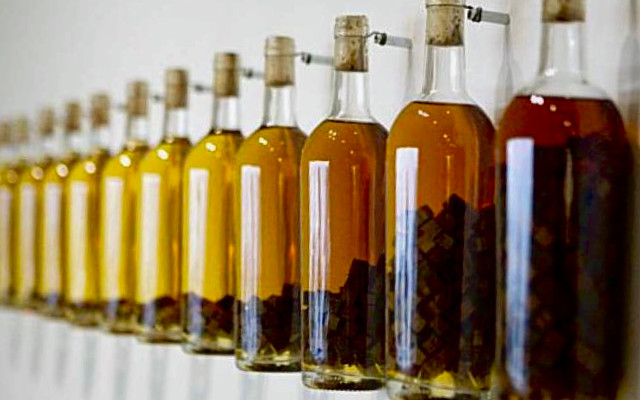
Wood in wine, green light for oak chips for low-cost barrique aroma on IGP wines
Wood in wine? It is not cork stopper fragments but oak chips – ‘oak chips‘ – which are immersed in vats to flavor Bacchus's nectar. This is common worldwide and also in Europe. Now also on Italian IGP wines, in addition to table wines. Only Italian DOP wine productions are exempt.
Wood in wine in Europe
Europe has allowed the long-term use of oak chips in wine production. To satisfy winemakers from beyond the Alps, and more generally to allow European viticulturists to compete with those from other continents. In Chile, Argentina, South Africa, and California, thus reducing the costs of enological practices aimed at providing that 'wood memory' once associated with the far more expensive barrel aging, or in barrel.
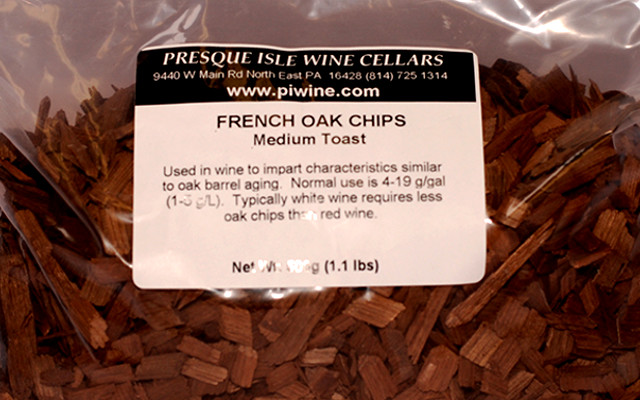
Pieces of oak wood are used for winemaking and wine aging, among other things for the fermentation of fresh grapes and grape musts and to impart to the wine some components derived from oak wood.’ (1)
The wood must come from species of Quercus and must be kept in its natural state. At most it can be heated but without combustion. The particle size must be such that at least 95% by weight is retained by a 2 mm mesh sieve.
Labels, in wine veritas?
The bottle labels, ça va sans dir, do not report the ingredient 'natural oak aroma'. Nor others, as alcoholic beverages are still exempt from the obligation to list ingredients and additives on the label. As well as from nutritional declaration, which is now mandatory on almost all food products. (2)
Wood in Italian wine
Italy had to adapt to European regulations, except that it may use the right to limit or prohibit the use of certain oenological practices. And to provide stricter rules for the precise purpose of preserving the essential characteristics of wines with designation of origin or protected geographical indication. (3)
On August 30, 2017, it was published in the Official Gazette the decree of June 21, 2017, signed by the Minister of Agricultural Policies. Where the 'ban on the use of oak wood pieces in the refining and aging of Italian PDO wines' is established. (4) But not for IGP wines.
'The use of oak wood pieces (...) is prohibited in the processing, preservation and/or refining and aging of Italian PDO wines.' (5)
The Consolidated Wine Act is thus implemented, in the part where the Minister of Agricultural Policies has been delegated to regulate the oenological practice in question by specific decree. (6) Our PDO wines (formerly DOC, DOCG) are protected from competition low-cost that tends to standardize rather than distinguish the unique flavors of each grape blend.
And yet, free use of wood in tanks, not only for Italian table wines but also for IGP wines. (7) So it is, if it seems to you…
Dario Dongo
Notes
(1) Reg. (EC) No. 606/2009, 'laying down certain rules for the application of Council Regulation (EC) No. 479/2008 concerning categories of wine products, oenological practices and related restrictions', Annex I A, point 38 and Appendix 9
(2) Without prejudice to the indispensable duty to indicate the possible presence of allergenic ingredients. Such as sulfites (subject to a tolerance threshold of 10 mg/l), as well as milk and egg derivatives sometimes used as technological aids
(3) EU Reg. No. 1308/2013, articles 80 and 83.2
(4) On http://www.gazzettaufficiale.it/eli/id/2017/08/30/17A06112/sg
(5) See the ministerial decree of 21.6.17, single article. The previous ministerial decree of 2.11.06 already prohibited the use of oak wood in the processing of quality wines produced in certain regions (Q.W.P.R.D.)
(6) See law December 12, 2016, no. 238, ‘Organic regulation of vine cultivation and the production and trade of wine‘, article 4
(7) Subject to cases in which individual IGP regulations prohibit the use of oak chips

Dario Dongo, lawyer and journalist, PhD in international food law, founder of WIISE (FARE - GIFT – Food Times) and Égalité.


