

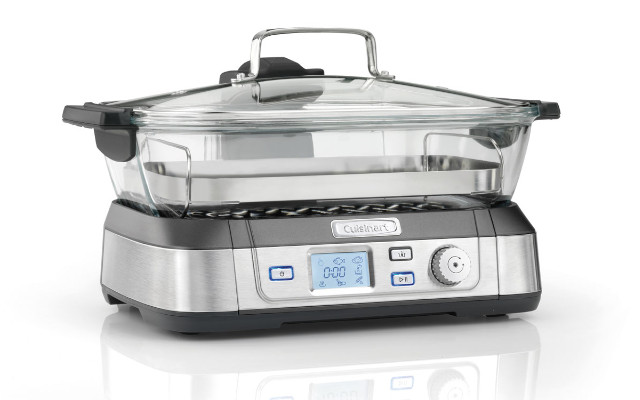
Why is the steaming considered one of the best cooking methods? The nutritional advantages of steaming lie in its unique ability to preserve vitamins, minerals, and water-soluble phytochemicals that traditional boiling tends to lose. By harnessing the latent heat of saturated steam, this ancient technique cooks food evenly without the need to add fats, maintaining the organoleptic properties and food safety intact.
From China to Sardinia: the archaeology of steaming
The steaming is probably the oldest culinary technique still in daily use. The oldest archaeological finds date back to the Yangshao culture (5000–3000 BC) in the Yellow River Valley: the zèng (甑), a ceramic steamer consisting of a lower water container and an upper perforated chamber, is the first documented application of steam in food preparation. The structure — known as yan — was composed of a container zeng with a perforated bottom placed over a tripod-based boiler with lid, and the first specimen found at the Banpo (Shaanxi) site dates to about 5000 BC.
But Asia does not hold the monopoly on this technique. Some of the oldest steam cooking utensils in Europe come fromItaly and from Sardinia, where they were found in contexts of theBronze Age. In parallel, prehistoric populations of the European Paleolithic wrapped meat and roots in wet leaves and cooked them on embers, obtaining a rudimentary steam cooking. In North Africa the couscous — semolina cooked in a perforated container (couscoussier) placed above simmering broth — is already mentioned in the 14th century in the reports of the Moroccan traveler Ibn Battuta.
In Western Europe the technique remained marginal for a long time compared to boiling and spit roasting. It was Jean Anthelme Brillat-Savarin, in his Physiologie du Goût (1825), who admiringly described the steam preparation applied to snapper, noting how this method better preserved the delicacy of fish flesh — intuitively anticipating what research would demonstrate two centuries later. In Italy, steam cooking spread on a common domestic scale only after the 1950s, also thanks to the influence of East Asian cuisines.
How steam works: physics and chemistry of gentle cooking
The physical principle is elegant in its simplicity. TheWater brought to boiling generates steam saturated steam which, in contact with the cooler surface of the foods, condenses releasing latent heat of vaporization — about 2,260 kJ per kilogram of water, a thermal energy considerably higher than that transmitted by boiling water at the same nominal temperature. The transfer takes place uniformly over all exposed surfaces, without the hot spots typical of pan or oven cooking.
Unlike grill and traditional oven, where heat is transmitted by radiation and convection of dry air, steam maintains a relative humidity close to 100% and prevents surface dehydration. This explains why fish, vegetables, and lean meats steamed retain a juiciness that other methods hardly guarantee. The moderate temperatures — close to 95–100 °C at sea level — minimize the formation of compounds derived from Maillard reactions, responsible for browning but also, at excessive temperatures, for undesirable substances such as acrylamide.
The tools for steaming: from bamboo to combination ovens
The variety of available tools reflects the plurality of cultures that have independently developed this technique. Each utensil responds to a constructive logic precise: keep the food separate from boiling water, contain the steam in the cooking chamber, and allow for uniform heat circulation.
The bamboo basket (zhēnglóng, 蒸笼) is the oldest tool still in use and remains the iconic symbol of this technique in Asian kitchens. Composed of one or more stacked levels with a base of woven slats and a dome lid, it is placed on a wok with boiling water at the base. Bamboo — a porous and slightly hygroscopic material — absorbs some of the excess steam, preventing condensation on the food. The lowest level, where the temperature is higher, is intended for foods with longer cooking times; the steam, rising, then cooks the upper layers in sequence. A precaution essential: bamboo should never be washed in the dishwasher nor soaked in water for long, but dried immediately after use to prevent mold formation.
The couscoussiera (taseksut in Berber, kiska:s in Arabic) is the North African and Mediterranean equivalent of the Asian basket: a two-body pot - a rounded lower container for broth or stew, an upper container with a perforated bottom for semolina or vegetables - traditionally made in terracotta or, in more modern versions, in copper, aluminum, or stainless steel. In the preparation of Trapani-style couscous, fish broth is boiled instead of water to impart an unparalleled aromatic profile to the semolina.
The stainless steel basket, foldable or fixed, it is the most common solution in Italian and European domestic kitchens. Versatile, durable, and easily sanitized, it adapts to pots of various sizes thanks to flexible petals and ensures uniform steam circulation through perforations at the bottom and sides. The choice of diameter is crucial: the basket must rest stably on the pot edges keeping the bottom above the water level, with a safety margin of at least 2–3 cm.
The electric steamer multi-level automates time control and, in some models, temperature, adding a digital timer that reduces the risk of overcooking. It allows simultaneous cooking on multiple levels — e.g., cereals at the lower level, vegetables in the middle, fish at the top — with staggered different times. Direct steam emission models guarantee greater thermal uniformity compared to tray types.
The steam oven built-in — available in pure steam version (steam oven) or combined (combi steamer), the latter with modulation of humidity percentage from 0% to 100% and integrated management of convective temperature — represents the most advanced instrument. It allows degree-controlled cooking — from ‘delicate’ pasteurization at 65 °C up to 100 °C for standard cooking — with preset programs for food categories and probe for measuring core temperature. In professional field, the combi oven has for decades been the benchmark tool for large-scale steam preparations, also integrating the function of regenerating already cooked dishes and combined steam-convection cooking to simultaneously obtain internal moisture and surface browning — thus overcoming the main organoleptic limitation of the technique.
Steam vs boiling: comparison on vitamin and mineral retention
The nutritional benefits of steam cooking are today documented by an increasing number of comparative studies. The strongest data concerns the Vitamin C (ascorbic acid), particularly sensitive both to heat and dissolution in water:
- boiling can cause Vitamin C losses ranging from 40% to over 90%, depending on the vegetable and duration;
- steaming significantly reduces these losses, with retention often between 70% and 90% in vegetables such as broccoli, cauliflower, and peppers (Bureau et al., 2015; Coe & Spiro, 2022).
Similar evidence concerns folates (vitamin B9):
- boiling in abundant water causes average losses of 68% on fresh weight, while
- steaming, microwave cooking, and pressure cooking ensure significantly higher retention, ranging from 71% to 103% (Bureau et al., 2015).
Particularly relevant is the case of Brassicaceae — broccoli, cauliflowers, cabbages, Brussels sprouts, turnips — rich in glucosinolates, precursors of isothiocyanates such as sulforaphane, subject of growing scientific interest for their potential role in chronic disease prevention:
- a study on three Brassica species (choy sum, cabbage, and Chinese cabbage) confirmed that steaming of short duration increases the content of total phenolic compounds, flavonoids, vitamin C, and glucosinolates as well as antioxidant activities;
- prolonged steaming can, on the contrary, reduce their content, making the cooking time the critical variable (Suwanwong & Boonpangrak, 2025).
On leafy vegetables, boiling causes losses of polyphenols up to 70.3% total and of flavonoids up to 82.3%, while steaming shows significantly higher retention (Razzak et al., 2023).
Regarding minerals, a recent study conducted by CREA on vegetables widely consumed in Italian cuisine — zucchini, eggplants, and potatoes — found that steaming ensures higher retention of potassium, phosphorus, iron, and zinc compared to microwave cooking for potatoes, highlighting heterogeneous behaviors among different species, with a significant impact of water content variations in calculating the retention factor (Lisciani et al., 2025).
Table 1 – Impact of domestic cooking techniques on retention of micronutrients and phytochemicals
| Nutrient / plant matrix | Steaming (performance) | Traditional boiling (performance) | Critical Factor / Scientific Evidence
|
| Vitamin C (E.g. broccoli, peppers) | High retention: 70% – 90% | Strong loss due to leaching: 40% to >90% | Heat sensitive and highly water soluble (Coe & Spiro, 2022). |
| Folates (vitamin B9) (Leafy vegetables, green vegetables) | Excellent retention: 71% – 100% (including microwave and pressure) | Average loss of 68% on fresh weight | The abundance of water in boiling drains folates from vegetable tissue (Bureau et al., 2015). |
| Total polyphenols and flavonoids (Broad-leaf vegetables) | Significantly higher (Initial increase with short steaming) | Drastic losses: – up to 70.3% (polyphenols); – up to 82.3% (flavonoids) | Boiling breaks membranes and disperses phenolic compounds into cooking water (Razzak et al., 2023). |
| Glucosinolates (Brassicaceae: choy sum, cabbages) | Preserved or increased with short cooking | Progressive reduction due to dilution | Time is the critical variable: prolonged steaming still reduces its content (Suwanwong & Boonpangrak, 2025). |
| Mineral salts (Potassium, phosphorus, iron, zinc on potatoes, zucchini, eggplants) | Higher retention (e.g. in potatoes compared to microwave) | Loss by diffusion into cooking liquid | Heterogeneous behavior among species; the impact of variations in water content affects the retention factor calculation (CREA – Lisciani et al., 2025). |
Bioavailability and digestibility: when heat becomes an ally
Steaming, besides preserving nutrients, in some cases improves bioavailability. Heat softens plant cell walls (pectins and cellulose), facilitating the release of carotenoids and other micronutrients during digestion. β-carotenes, normally trapped in chloroplasts with membranes rich in polar lipids, become more accessible after moderate thermal treatment (Razzak et al., 2023).
In the case of glucosinolates of Brassicaceae the situation is more complex: heat inactivates endogenous myrosinase — the plant enzyme that converts glucosinolates into isothiocyanates — reducing immediate conversion to sulforaphane. The myrosinase of the intestinal microbiota can partially compensate this function, maintaining some bioavailability of isothiocyanates even after cooking (Sivapalan et al., 2018). This suggests an interactive effect between cooking duration, plant variety, and individual microbiota composition — an area of research still open.
On the level organoleptic, steamed products — particularly fish, leafy vegetables, and lean poultry meat — retain juiciness and color superior to those obtained with other techniques, reducing the need to add fats during preparation.
Food safety: temperatures, times and precautions
The cooking by steaming is microbiologically safe provided that the appropriate operating conditions. The temperature of 100 °C produced by saturated steam is sufficient to inactivate most pathogenic microorganisms in vegetative form — Salmonella spp., Listeria monocytogenes, Campylobacter jejuni — provided that this temperature is reached at the core of the product.
Critical parameters vary by product category. Fish and mollusks require attention to the size and shape of the food. The poultry meats require reaching at least 70–75 °C at the center, a temperature achievable with steam but only with times adequate to the volume of the piece. Composite preparations — rolls, stuffed dishes, fish patties — should be checked with a probe thermometer. Steam, unlike frying or grilling, does not generate a surface crust that acts as a physical barrier, making it even more important to verify the internal temperature. The cooked foods steamed must be consumed immediately or quickly refrigerated (< 4 °C within two hours) to prevent the multiplication of any remaining microorganisms.
Advantages and limits: a balanced evaluation
The main benefits documented of steaming are:
- lower loss of water-soluble vitamins (C and folates) compared to boiling;
- better preservation of minerals and phytocompounds in many plant species;
- absence of added fats during cooking;
- reduced formation of Maillard compounds and thermal degradation products at high temperature;
- maintenance of color, texture, and flavor;
- high versatility for vegetables, grains, fish, mollusks, and lean meats.
I limits — that cooking in a combi oven easily exceeds — are equally real:
- the absence of browning prevents the development of complex aromas typical of Maillard reactions, which many consumers associate with the pleasantness of cooked food;
- some vegetables perceived as 'bland' require careful use of aromatic herbs, spices and/or cold dressings to be palatable;
- the times are generally longer than boiling and the technique is not suitable for preparations that require surface crispness.
Conclusions
Steam cooking spans seven thousand years of culinary history with remarkable consistency of principle: using water vapor as a heat vehicle to cook food without immersing it in liquid or exposing it to harsh temperatures. Scientific evidence available today confirms its nutritional advantages, particularly for vegetables rich in water-soluble vitamins and phytocompounds, with the recommendation to prioritize short cooking times to maximize the retention of bioactive compounds. In a food context oriented towards nutritional quality and the reduction of added fats, steam cooking proves to be a practical, accessible choice supported by research.
Dario Dongo
Credit cover Cuisinart
Bibliography
- Brillat-Savarin, J. A. (1826). Physiology of Taste, or Meditations on Transcendental Gastronomy. Sautelet. [Ed. Flammarion 2025, ISBN 9782080484659]
- Bureau, S., Mouhoubi, S., Touloumet, L., Garcia, C., Moreau, F., Bédouet, V., & Renard, C. M. G. C. (2015). Are folates, carotenoids and vitamin C affected by cooking? Four domestic procedures are compared on a large diversity of frozen vegetables. LWT – Food Science and Technology, 64(2), 735–741. https://doi.org/10.1016/j.lwt.2015.06.016
- Coe, S., & Spiro, A. (2022). Cooking at home to retain nutritional quality and minimise nutrient losses: A focus on vegetables, potatoes and pulses. Nutrition Bulletin, 47(4), 538–562. https://doi.org/10.1111/nbu.12584
- Lisciani, S., Aguzzi, A., Gabrielli, P., Camilli, E., Gambelli, L., Marletta, L., & Marconi, S. (2025). Effects of household cooking on mineral composition and retention in widespread Italian vegetables. Nutrients, 17(3), 423. https://doi.org/10.3390/nu17030423
- Razzak, A., Mahjabin, T., Khan, M. R. M., Hossain, M., Sadia, U., & Zzaman, W. (2023). Effect of cooking methods on the nutritional quality of selected vegetables at Sylhet City. Heliyon, 9(11), e21709. https://doi.org/10.1016/j.heliyon.2023.e21709
- Sivapalan, T., Melchini, A., Saha, S., Needs, P. W., Traka, M. H., Tapp, H., Dainty, J. R., & Mithen, R. F. (2018). Bioavailability of glucoraphanin and sulforaphane from high-glucoraphanin broccoli. Molecular Nutrition & Food Research, 62(6), e1700911. https://doi.org/10.1002/mnfr.201700911
- Suwanwong, Y., & Boonpangrak, S. (2025). Impact of steam cooking on the phytochemical content, antioxidant activity and anticancer activity of three commonly consumed Brassica plants. Applied Food Research, 5(2), 101264. https://doi.org/10.1016/j.afres.2025.101264

Dario Dongo, lawyer and journalist, PhD in international food law, founder of WIISE (FARE - GIFT – Food Times) and Égalité.


