

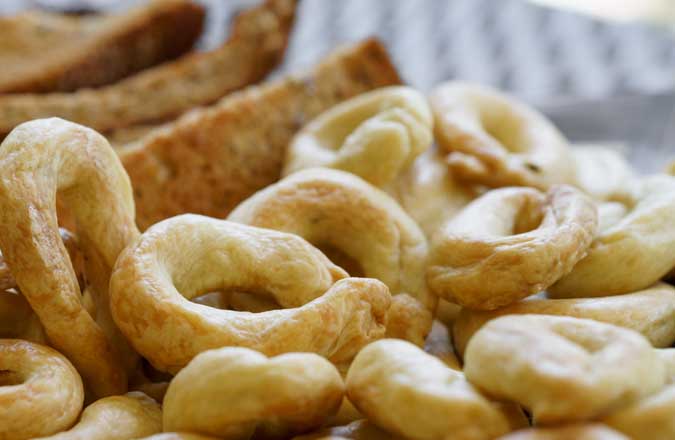
I Apulian taralli They have evolved from an emblem of the peasant diet to protagonists of Italian agri-food export. This dry baked product combines the simplicity of local raw materials – durum wheat, extra virgin olive oil, and white wine – with advanced industrial processes that ensure food safety, extended shelf life, and clean label. In a global market increasingly attentive to authenticity, Puglia responds with traceable supply chains and cooking technologies that preserve the nutritional and organoleptic profile of a symbolic snackof the Mediterranean.
The regional Made in Italy industry of dry baked goods has recorded significant growth in recent years, driven by both domestic demand and foreign markets. According to UnionFood data (2026), the sector of Bakery products in Italy reached a turnover of over 7.9 billion euros in 2024, with an increase of 0.4% in value compared to the previous year. The export front remains particularly dynamic withexport, for a value exceeding 4.3 billion euros (+13.3%).
Historical roots: from rural recovery to the global market
The origins of the Apulian tarallo date back probably between the 14th and 15th centuries, in a context of simple breadmaking typical of the rural communities of Southern Italy. According to popular tradition, the tarallo was born as a recovery product: a simple dough obtained by mixing flour, oil, and wine to avoid domestic waste. Its ring shape allowed it to be threaded onto wooden sticks to facilitate transport and storage.
Another etymological hypothesis links the term ‘tarallo’ to the Greek daratos (kind of bread) or to the Latin torrere (to toast), recalling the process of double cooking which characterizes this product. Some historical sources find mentions of ‘tarallini’ already in the registers of the Neapolitan Bakers' Guilds of the 17th century, evidencing its established diffusion in the Kingdom of the Two Sicilies.
Over time, the tarallo has established itself as an identity food of Apulian gastronomic culture and Made in Italy, taking on sweet and savory variants and becoming a typical element of regional hospitality, traditionally consumed during holidays and family occasions.
The primacy of Puglia: durum wheat, terroir and traceability
Industrial production of taralli is widespread throughout Apulia, with the main hubs in the provinces of Bari, Barletta-Andria-Trani, Foggia and Lecce. The regional terroir, characterized by abundant availability of durum wheat, extra virgin olive oil, and white wine, favors the integration of local supply chains.
Short supply chains and Apulian wheat
Apulia represents the first Italian region for durum wheat production, with over 4.3 million tons harvested in 2025, equal to about 35% of national production (Anacer, 2026). The most widely grown varieties include Aureo, Greco, Mongibello, and Antalis, particularly suitable for milling into re-milled semolina destined for baked goods.
Some industrial operators are developing certified short supply chains, enhancing local and organic grains, with complete traceability from field to finished product. The blockchain traceability system, implemented by some Apulian companies, allows recording every stage of the supply chain, from fields to products, ensuring transparency and authenticity. This enables meeting the growing demand for transparency and sustainability from international consumers.
Safety and environment: certifications and sustainable packaging
More structured companies adopt management systems of certified food safety (FSSC 22000, BRC, IFS) and, in some cases, energy efficiency and packaging reduction practices. The growing supply of organic taralli complies with the European organic farming regulatory framework (EU Regulation 2018/848) and the international demand for clean label.
The adoption of photovoltaic systems and heat recovery systems from baking ovens is becoming increasingly widespread in Apulian industrial settings, with documented reductions of up to 30% of total energy consumption. Packaging is evolving towards solutions compostable or made with post-consumer recycled materials.
Ingredients and industrial production process
Basic ingredients
The traditional recipe of the Apulian tarallo is an emblem of clean label, as it includes:
- soft wheat flour or durum wheat semolina (often combined to optimize texture and shelf life);
- white wine (usually local varieties such as Verdeca or Bianco d’Alessano);
- Salt.
Industrial variants may include fennel seeds, chili pepper, onion, whole grains or functional ingredients. The use of re-milled durum wheat semolina gives the tarallo its characteristic crunchiness and golden color, as well as improving shelf life thanks to the lower residual moisture content.
The integration of hydrophilic reducing compounds through the enrichment of Wine can further improve product quality, minimizing acrylamide formation during baking (Caputi et al., 2025).
The technical secret: chemistry and rheology of double baking
Industrial production generally consists of:
- Kneading – Controlled mixing of ingredients with industrial spiral or hook mixers. Dough hydration, typically between 35% and 42%, is much lower than in leavened baked goods;
- Shaping – Extrusion and ring closure by automatic shaping machines. The standard diameter ranges between 3 and 5 cm, with unit weights between 3 and 8 grams;
- Boiling (scalding) – Distinctive phase of Apulian tarallo: brief immersion (2-3 minutes) in hot water (90-98°C) to superficially gelatinize the starch. This preliminary heat treatment creates a outer film that limits expansion during baking and promotes the formation of the characteristic smooth and compact surface (Pasqualone et al., 2017);
- Drying and baking – Baking in continuous ventilated ovens at temperatures between 180°C and 220°C, for 20-35 minutes, until the typical crispness is achieved. The double cooking (boiling + baking) clearly differentiates the tarallo from other extruded baked goods;
- Cooling and packaging – Gradual cooling to prevent condensation, followed by packaging in protective atmosphere (nitrogen or nitrogen/carbon dioxide mixtures) or in recyclable packaging.
From a technological point of view, preliminary boiling contributes to compact structure and to preservation of the product, promoting extended shelf life (up to 12 months) without the need for preservatives (Cauvain & Young, 2015). The process also induces rheological changes in the starch that can positively influence the nutritional characteristics of the finished product.
Versatility of use: the tarallo in the international Ho.Re.Ca. channel
I Apulian taralli are consumed:
- as savory snack for aperitifs and social occasions;
- paired with wine, craft beer or aperitifs;
- as substitutes for bread in traditional preparations;
- as crumbled ingredients in creative recipes (e.g., breading, crunchy toppings for salads or soups).
In the international catering, taralli are used as a Mediterranean alternative to crackers, with a premium positioning linked to the Mediterranean diet and the storytelling of the Apulian territory (Serra-Majem et al., 2020). Michelin-starred chefs use them as a crunchy element in gourmet compositions, enhancing their versatility and regional identity.
Buyer’s manual: selection criteria and certified quality
Foodies are advised to:
- prioritize certified organic taralli, to contribute to the development of supply chains more respectful of the environment and biodiversity;
- favor products with extra virgin olive oil, preferably as the sole lipid source in the dough;
- consider short supply chain options, with wheat origin preferably Italian or Apulian).
Professional buyers and importers should also evaluate:
- certifications of food safety management (FSSC 22000 and/or IFS, BRC);
- production capacity and continuity of supply (check minimum volumes and lead times);
- availability of lines organic, wholegrain and functional (gluten-free, reduced salt content);
- options private label with flexibility on formats and ingredients;
- packaging sustainability.
The team of GIFT – Great Italian Food Trade offers specific expertise in supporting international buyers in selecting reliable producers, document verification, and building transparent and lasting commercial relationships in the Italian baked goods sector. Contact us for further information and connection with certified suppliers.
Conclusions
The industrial production of taralli in Puglia represents a virtuous example of integration between gastronomic tradition and technological innovation. The growing focus on short supply chains, organic farming, and environmental sustainability strengthens the positioning of Apulian taralli in international markets.
For global buyers, Apulian taralli offer a highly cultural recognizability, with differentiation margins linked to the quality of raw materials, certifications, and territorial storytelling. Enhancing the cereal heritage of Apulia and adopting sustainable technologies positions this sector as strategic for Italian agri-food export.
Editorial staff of GIFT (Great Italian Food Trade)
References
- ANACER (National Association of Cerealists). (2026, January 20). Italian cereal import/export in the first ten months of 2025. https://anacer.it/wp-content/uploads/2026/01/comunicatostampaott25.pdf
- Caputi, A. F., Squeo, G., Silletti, R., & Caponio, F. (2025). Effect on quality and safety of hydrophilic reducing compounds integration into taralli via wine enrichment. NPJ Science of Food, 9(1), 172. https://doi.org/10.1038/s41538-025-00538-0
- Cauvain, S. P., & Young, L. S. (2015). Technology of Breadmaking (2nd ed.). Springer. https://link.springer.com/book/10.1007/978-3-319-14687-4
- Pasqualone, A., Laddomada, B., Centomani, I., Paradiso, V. M., Minervini, D., Caponio, F., & Summo, C. (2017). Bread making aptitude of mixtures of re-milled semolina and selected durum wheat milling by-products. LWT – Food Science and Technology, 78, 151–159. https://doi.org/10.1016/j.lwt.2016.12.032
- Regulation (EU) 2018/848 of the European Parliament and of the Council of 30 May 2018 on organic production and labelling of organic products. Consolidated text: 25/03/2025. http://data.europa.eu/eli/reg/2018/848/2025-03-25
- Rizzello, C. G., Portincasa, P., Montemurro, M., Di Palo, D. M., Lorusso, M. P., De Angelis, M., Bonfrate, L., Genot, B., & Gobbetti, M. (2019). Sourdough fermented breads are more digestible than those started with baker’s yeast alone: An in vivo challenge dissecting distinct gastrointestinal responses. Nutrients, 11(12), 2954. https://doi.org/10.3390/nu11122954
- Serra-Majem, L., Tomaino, L., Dernini, S., Berry, E. M., Lairon, D., Ngo de la Cruz, J., Bach-Faig, A., Donini, L. M., Medina, F. X., Belahsen, R., Piscopo, S., Capone, R., Aranceta-Bartrina, J., La Vecchia, C., & Trichopoulou, A. (2020). Updating the Mediterranean diet pyramid towards sustainability: Focus on environmental concerns. International Journal of Environmental Research and Public Health, 17(23), 8758. https://doi.org/10.3390/ijerph17238758
- UnionFood. (2026). Baked goods – in numbers. Rome: Italian Food Union. https://www.unioneitalianafood.it/prodotti-da-forno/


