
A single DOC for the entire territory of the Sicilian Region, 22 thousand hectares claimed and 76 million bottles in 2025. The rules of the current specification, the first additional geographical unit, the largest organic vineyard in Italy and exports.
The Sicilia DOC it is the denomination of origin that covers the entire administrative territory of the Sicilian Region. Recognized in 2011, it offered the island's wine a unique name and the possibility of indicating the grape variety next to its origin on the label. In a few years it has become by far the most important Sicilian denomination: in 2024 it represented the 84,2% of volumes certified with designation of origin on the island (IRVO, 2025).
Sicily has 96,903 hectares of vineyard and is the second Italian region for vineyard surface area, after Veneto. It is also the first for surface area of organic vineyard, with about a quarter of the national total (IRVO, 2025; Baccaglio, 2026a). The following covers the production specification rules, grape varieties, the relationship with other designations, organic supremacy, the market and food pairings.
A regional PDO for Sicilian wine
Sicilia DOC was recognized in 2011, with a decree which also approved the production specifications. In 2012, winemakers, winemakers and bottlers formed the Consortium for the Protection of DOC Sicilia Wines, now recognized under the wine law (DM 24.7.2025, introduction). In European Union law the PDO corresponds to a PDO, Protected Designation of Origin, registered and protected according to the rules on geographical indications of wines (Regulation (EU) 1308/2013, art. 93; Regulation (EU) 2024/1143).
The production zone 'includes the entire administrative territory of the Sicilian Region' (regulation, article 3). The areas of the other denominations of the island, please note, are not excluded: a vineyard on Etna or Vittoria can also produce Sicilia DOC, if it respects the specifications. Furthermore, the name 'Sicily' can be used as a broader geographical unit by the other Sicilian PDOs, when the respective specifications provide for it (disciplinary, article 7).
The commercial turnaround came in 2017. The amendment to the production rules of Terre Siciliane PGI has excluded the names of the two most representative vines from the labels of wines with a geographical indication, Nero d'Avola e Grillo. Many producers have thus switched from IGT to DOC to keep the grape variety on the label. Since then, the area claimed as PDO has exceeded that claimed as PGI (IRVO, 2025). The Council of State confirmed the legitimacy of this choice in 2020.
Volumes confirm growth. Packaged Sicily PDO wine increased from 3,448 hectolitres in 2012, the first year of production, to 612,805 hectolitres in 2024. In 2017 the denomination was worth approximately 70% of the volumes certified as DOP in Sicily; since 2018 it has steadily exceeded 80% (IRVO, 2025).
Grape varieties and types allowed by the production specification
The production rules provide for white, red, rosé and sparkling wines, with mentions superior, reserve, late harvest and passito for the indicated wine types. It also allows the specification of 31 grape varieties, native and international: among others Inzolia, Grillo, Catarratto, Carricante, Grecanico, Zibibbo, Nero d'Avola, Perricone, Frappato, Nerello mascalese and Nerello cappella, alongside Chardonnay, Syrah, Merlot and Pinot noir (disciplinary, article 1).
The wine with the name of the grape variety must come for at least 85% from the indicated grapes. Wines from two grape varieties with similar berry color are allowed if the wine derives solely from those grapes, if the names appear in descending order and with equal characters, and if the minor variety exceeds 15% (regulations, article 2). For Sicilia Bianco, Inzolia, Catarratto, Grillo, Grecanico, Chardonnay, Viognier and Sauvignon they must represent at least 50% of the grapes; for Sicilia Rosso the same quota goes to Nero d'Avola, Frappato, Nerello mascalese, Perricone, Syrah, Merlot, Cabernet Sauvignon and Nerello cappella (disciplinary, article 2).
The Zibibbo, i.e. Moscato di Alessandria, should only be indicated by this name: its official synonyms are prohibited on the label (disciplinary, article 7). The specification attributes its introduction to Pantelleria to the Arab period and that of Grecanico to Greek colonization (regulation, article 9).
Rules for viticulture
New plantings must have at least 3.2 K plants per hectare, as a small tree or as a counter-espalier. In the provinces of Agrigento and Caltanissetta, Nero d'Avola can also be raised in tents, with at least 1,100 strains. Forcing is prohibited and emergency irrigation is permitted; the vineyards can only produce Sicilia DOC from the third year after planting (regulation, article 4).
The maximum yields of grapes are 13 tons per hectare for the white and 12 for the red and rosé, with a minimum natural alcoholic strength of 11.5% and 12% vol respectively. Grillo and Nero d'Avola reach 14 tons. The mention superior drops to 10 tonnes, late harvest and passito to 8 (regulations, article 4).
The regulations entrust the Region with tools for offer management. At the request of the Consortium, the Region can reduce yields for market reasons or unfavorable years, and in favorable years it can allocate up to 20% more to the harvest reserve (regulation, articles 4 and 5). For the 2026/2027 campaign, the Region has ordered the blocking of a portion of the production of Sicilia DOC Grillo and Nero d'Avola, which can be unblocked solely for bottling purposes (Sicilian Region, 2026).
Rules for winemaking and labelling
Winemaking, ageing and Bottling must take place in Sicily, with individual authorizations for those who traditionally bottled outside the island. The sparkling wine it must be obtained with the Charmat method or with the classic method, the latter only for white and rosé. Late harvest and passito require the drying of the grapes on the vine or after harvesting, excluding hot dehumidification systems. For the reserve, aging begins on November 1st of the year of harvest (regulation, article 5).
THE'vintage on the label is Mandatory for all types, except sparkling wine. Wine must be sold in glass up to 3 litres, or up to 18 litres for Bordeaux, Burgundy and Rhine bottles. Base types may also use alternative containers from 2 to 6 litres, excluding reserve, late harvest, superiore, passito, vineyard and sparkling wine. Crown caps are excluded (disciplinary rules, articles 7 and 8).
The amendment approved in 2025 introduced the additional geographical units, names of municipalities or areas smaller than the denomination to be indicated under the name 'Sicily', in smaller characters (regulation, article 7). The first, and for now only, is Salemi, in the Trapani area, which includes the entire municipal territory (regulation, Annex A). The provision applies from the 2026/2027 wine campaign (DM 24.7.2025, art. 2.3). The birth of the Salemi geographical unit accompanied the cancellation of the Salemi PGI, published in the Official Journal in 2026 (GU no. 121, 2026).
| Parameter | Sicily White | Sicily Red | Grillo and Nero d'Avola | Late harvest and passito |
| Grape varieties | Main white grapes at least 50% | Main red grapes at least 50% | At least 85% of the grape variety | According to the type |
| Maximum grape yield | 13 t/ha (superiore 10) | 12 t/ha | 14 t/ha (Grillo superiore 10) | 8 t/ha |
| Minimum natural title of grapes | 11.5% vol (superiore 12) | 12% vol | 11.5% Cricket; 12% Nero d'Avola | 13-14% vol |
| Minimum total title at consumption | 11.5% vol (reserve 12.5) | 12% vol (reserve 12.5) | 11.5% Cricket; 12% Nero d'Avola (reserve 13) | 13-18% vol |
| Vintage on the label | Mandatory | Mandatory | Mandatory | Mandatory |
| Bottling | In Sicily, with exemptions | In Sicily, with exemptions | In Sicily, with exemptions | In Sicily, with exemptions |
Source: Sicily DOC regulation, articles 2, 4, 5, 6 and 7, consolidated text 2025.
Sicily DOC and the other denominations of the island
Sicily has 24 wines with designation of origin: one DOCG, the Cerasuolo di Vittoria DOCG, and 23 DOCs. Alongside Sicily DOC there are Alcamo DOC, Contea di Sclafani DOC, Contessa Entellina DOC, Delia Nivolelli DOC, Eloro DOC, Erice DOC, Etna DOC, Faro DOC, Malvasia delle Lipari DOC, Mamertino di Milazzo DOC, Marsala DOC, Menfi DOC, Monreale DOC, Noto DOC, Pantelleria DOC, Riesi DOC, Salaparuta DOC, Sambuca di Sicilia DOC, Santa Margherita di Belice DOC, Sciacca DOC, Siracusa DOC and Vittoria DOC. There are seven PGIs, the most important being Terre Siciliane PGI (IRVO, 2025).
I Certified volumes they are concentrated in a few denominations. In 2024 the control body issued certificates of suitability for the designation of origin for 832,475 hectoliters of Sicilian wine. Of these, 701,094 hectoliters (84.2%) were Sicilia DOC, 60,323 (7.2%) Marsala DOC and 36,142 (4.3%) Etna DOC. The other 21 denominations, including Cerasuolo di Vittoria DOCG, shared approximately 35,000 hectoliters, just over 4% of the total (IRVO, 2025). The certified wine is eligible for the denomination but not yet all bottled: for this reason the figure for Sicily DOC exceeds 612,805 hectoliters packaged in the same year.
The regional DOC offers volumes and notoriety of the vine; local denominations guard smaller territories, from the volcano to the smaller islands. The additional geographical unit Salemi indicates a way to describe the territories even within the regional denomination.
The grape varieties of the Sicilian vineyard
The Catarratto, in its glossy and common forms, is the most cultivated vine on the island, with over 28,800 hectares. Followed by Nero d'Avola with 15,387 hectares and Grillo with 8,579; among the other white grape varieties, Inzolia exceeds 4,400 hectares and Grecanico 3,200. Among the reds, after Nero d'Avola come Syrah (5,155 hectares) and Nerello Mascalese (3,343), while Frappato (1,031), Carricante (900) and Perricone (584) occupy smaller surfaces (IRVO, 2025, 2021 data).
The composition explains the profile of the denomination. The specification indicates the end of the Eighties as the beginning of the modern history of Sicilian wine, with the whites of Inzolia, Catarratto and Grillo, and the Nineties for quality reds, with Nero d'Avola as the 'undisputed protagonist' (disciplinary, article 9). Today whites are worth over 64% of regional production (Amadore, 2026).
The supremacy of the Sicilian organic vineyard
Sicily is the first Italian region for organic vineyard surface and has been since organic viticulture was born (IRVO, 2025). According to the latest SINAB data available by region, in 2024 the Sicilian organic vineyard covered 33,823 hectares, approximately a quarter of the 132,441 Italian hectares. Followed by Tuscany with 23,068 hectares and Apulia with 21,320; the three regions together represent approximately 59% of the national surface (Baccaglio, 2026a).
The Sicilian figure rose by 3.2% on 2023, after the decline of that year, and remains below the historical peak of 38,935 hectares of 2016 (IRVO, 2025; Baccaglio, 2026a). In relation to the regional vineyard area, the organic is worth approximately 35% of the Sicilian vineyard, the third incidence in Italy after Marche and Tuscany (elaboration on IRVO, 2025, and Baccaglio, 2026a). Sicily is also first for organic wine production: 426,522 hectolitres in 2023, 21.6% of the national total (IRVO, 2025).
The Organic in figures 2026 report indicates around 130 thousand hectares of organic vines in Italy by 2025, but does not yet report regional details. The dry and windy climate of much of the island favors the defense of the vine with the organic method. The organic certificate concerns both grape cultivation and winemaking, according to European regulations (Regulation (EU) 2018/848). From 2026, organic wines from Italian grapes can also accompany the European logo with the new Italian organic mark.
The Sicilia DOC market
In 2025 Sicily PDO recorded 22,259 hectares claimed, 570,295 hectolitres bottled and 76,039,323 bottles, with 346 bottlers and 7,127 winemakers (Consortium for the Protection of DOC Sicilia Wines, 2026). The claimed surface area corresponds to approximately 23% of the Sicilian vineyard. The bottled volume fell by approximately 7% compared to the 612,805 hectoliters of 2024 (elaboration on IRVO, 2025, and Consorzio di Tutela Vini DOC Sicilia, 2026).
In 2024 Sicily produced 2,774,000 hectolitres of wine and must, 41% PDO and 36% PGI (IRVO, 2025). In 2025 Sicilian wine exports reached €153.3 million, in line with the previous year, while Italian exports lost 3.6%. The United States is the first market with 22% of the total, followed by Germany, the United Kingdom, the Netherlands and Canada (Amadore, 2026).
The growth comes from white PDOs, grew by 2.4% in value and by 8.4% in the United States despite the duties; PDO reds lost 11%, held back by the US market (Amadore, 2026). Based on Istat, Sicilian companies exported 46 million euros of bottled PDO whites and 64 million PDO reds (Baccaglio, 2026b). These values do not distinguish individual denominations, but Sicilia DOC represents the predominant part of Sicilian DOP wine.
Official data underestimates real exports. Istat attributes shipments to the place of departure, and Sicilian wine that leaves from ports in other regions is counted outside the island (IRVO, 2025). On foreign markets the regional denomination works with promotions in the United States, Canada, Japan and China (Consorzio di Tutela Vini DOC Sicilia, 2026). The national export picture is also described in the GIFT analysis on Italian sparkling wine.
Wine characteristics
The regulation describes the Sicily White with a straw yellow colour, a 'fine, elegant' aroma and a dry to sweet flavour; The Red with ruby color and 'pleasant, fine' smell; The Rosé 'from pale pink to more or less intense rosé, sometimes with coppery nuances' (regulation, article 6). The Grillo it has a 'harmonious, full, savory' flavour; The Nero d'Avola 'delicate, characteristic, fruity, sometimes spicy' odor and full-bodied flavour; The Frappato floral aroma; the Nerello Mascalese 'pale ruby red' color and fresh flavor (regulation, article 6).
The classic method sparkling wine it must show the 'proper bouquet of fermentation in the bottle', with dosage from brut nature to extra dry (regulation, article 6). The rosé versions of Nero d'Avola, Frappato and Nerello Mascalese follow the growth of the Italian rosé wine. The woody note is permitted in wines aged in barrel (regulation, article 6).
Food pairings
Grillo and Catarratto accompany fish, shellfish and seafood first courses in Sicilian cuisine; dry Zibibbo lends itself to aromatic and citrus dishes. Rosé also goes well with fried foods and vegetables. The young Nero d'Avola goes with cured meats, pizza and baked pasta, the reserves with grilled meats, lamb and mature cheeses. Frappato and Nerello Mascalese, lighter, are also suitable for tuna and swordfish. Sparkling wines pair well with an aperitif with olives Nocellara del Belice and bread seasoned with Sicilian extra virgin oil; passito and late harvest wines with almond pastries.
Dario Dongo
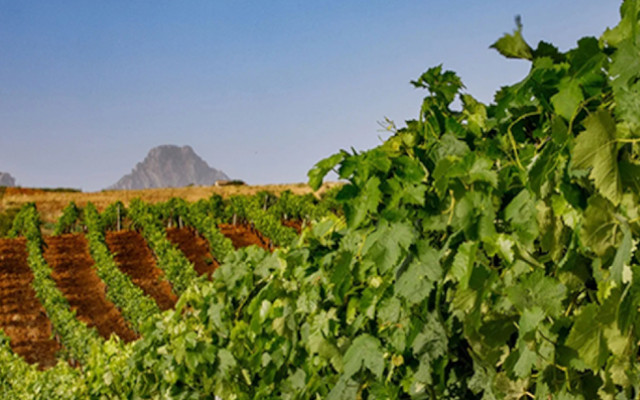
Credit cover: Cento Passi Sicilia, Consorzio Libera Terra Mediterraneo Cooperativa Sociale Onlus, Palermo.
References
European Union regulatory sources
Regulation (EU) No 1308/2013 of the European Parliament and of the Council of 17 December 2013 establishing a common organisation of the markets in agricultural products and repealing Council Regulations (EEC) No 922/72, (EEC) No 234/79, (EC) No 1037/2001 and (EC) No 1234/2007. Consolidated text: 18/08/2026. http://data.europa.eu/eli/reg/2013/1308/2026-08-18
Regulation (EU) 2018/848 of the European Parliament and of the Council of 30 May 2018 on organic production and labelling of organic products and repealing Council Regulation (EC) No 834/2007. Consolidated text: 25/03/2025. http://data.europa.eu/eli/reg/2018/848/2025-03-25
Regulation (EU) 2024/1143 of the European Parliament and of the Council of 11 April 2024 on geographical indications for wine, spirit drinks and agricultural products, as well as traditional specialities guaranteed and optional quality terms for agricultural products. Consolidated text: 18/03/2026. http://data.europa.eu/eli/reg/2024/1143/2026-03-18
Production specifications and Italian acts
MASAF Decree 24 July 2025. Approval of an ordinary amendment to the production specifications of the controlled designation of origin of 'Sicilia' wines. Official Journal, General Series n. 181 of 6.8.2025. https://www.gazzettaufficiale.it/eli/gu/2025/08/06/181/sg/pdf
Official Journal, General Series n. 121 of 27.5.2026. Publication of the Commission Implementing Regulation canceling the registration of the protected geographical indication of 'Salemi' wines (26A02634). https://www.gazzettaufficiale.it/eli/gu/2026/05/27/121/sg/pdf
MASAF. Sicilia DOC, consolidated regulation annexed to the decree of 24 July 2025. https://www.masaf.gov.it/flex/cm/pages/ServeBLOB.php/L/IT/IDPagina/23111
Sicilian Region. (2026). Regional Decree blocking DOC Sicilia, campaign 2026/2027. https://www.regione.sicilia.it/sites/default/files/2026-07/DDG%20bloccaggio%202026-2027_Reg_v3_signed.pdf
Data and statistics
Baccaglio, M. (2026a, 30 August). The figures of organic viticulture in Italy – 2024 update. The figures of wine. https://www.inumeridelvino.it/2026/08/i-numeri-della-viticoltura-biologica-in-italia-aggiornamento-2024.html
Baccaglio, M. (2026b, 5 May). Italian wine exports by region and type – 2025 update. The figures of wine. https://www.inumeridelvino.it/2026/05/esportazioni-italiane-di-vino-per-regione-e-tipologia-aggiornamento-2025.html
Consorzio di Tutela Vini DOC Sicilia. (2026). The strength of DOC Sicilia, 2025 data. https://siciliadoc.wine/
IRVO, Regional Institute of Wine and Oil, Vitivinicultural and Olive Oil Observatory. (2025, April). Sicilian viticulture. https://www.irvos.it/wp-content/uploads/2021/02/Vitivinicoltura-regionale-APRILE-2025.pdf
Sector press
Amadore, N. (2026, 22 April). Sicilian wine, the future goes through targeted export and wine tourism. Il Sole 24 Ore. https://www.ilsole24ore.com/art/vino-siciliano-futuro-passa-export-mirato-ed-enoturismo-AIqAkgdC

Dario Dongo, lawyer and journalist, PhD in international food law, founder of WIISE (FARE - GIFT – Food Times) and Égalité.


