

Every bottle of Italian extra virgin olive oil it contains a history that scientific and genetic research can now measure, preserved in a unique heritage of 631 native cultivars (Marchese et al., 2023). Fossil pollen, charcoal, charred stones and chemical residues in prehistoric vases document a relationship with the olive tree of over six thousand years, as the most recent archaeological synthesis concludes (Dodd, 2026).
Recent studies anticipate by centuries the dates accepted until recently. In Sicily the propagation of the olive tree by man dates back to at least the 18th century BC, about a thousand years before the Greek colonists (Palli et al., 2025). On the same island the oldest oil in Italy, identified in a large vase of Bronze Age, precedes by about seven centuries the previously known evidence (Tanasi et al., 2018).
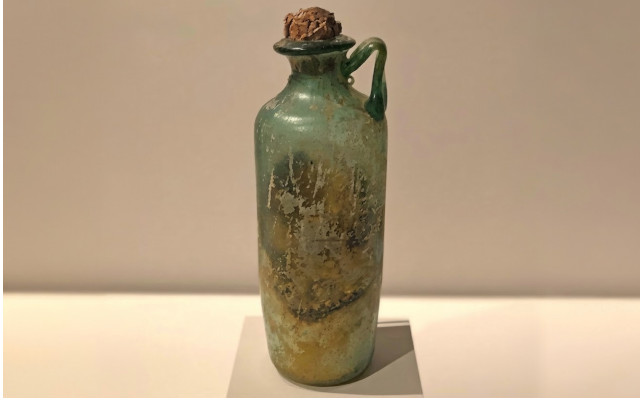
A Herculaneum, a glass bottle preserved at the National Archaeological Museum of Naples contains the oldest olive oil reaching us in substantial quantities, sealed from the eruption of Vesuvius in 79 AD. (Sacchi et al., 2020). Finally, a recent ethnobotanical study documents the continuity of uses, knowledge and rites linked to the olive tree in almost all Italian regions, from the nineteenth century to the present day (Mazzei et al., 2026).
The first traces, from the Mesolithic to the Neolithic
The wild olive tree, or wild olive tree, was growing in Italy already in the Pleistocene, over eleven thousand years ago, as attested by the pollen preserved in the sediments. The first signs of human exploitation are olive wood charcoals found in Mesolithic layers, in the 7th and 6th millennium BC, at the Grotta dell'Uzzo in Sicily, at Terragne in Puglia as well as at the Arene Candide in Liguria (Dodd, 2026).
I pits oldest come from a funeral context of the Middle Neolithic (between 4800 and 4300 B.C.) at Carpignano Salentino, in the province of Lecce (Apulia). At that stage the tree was appreciated above all for its wood, while no solid evidence of oil extraction emerged (Dodd, 2026). In Puglia the domestic form – fruit of selective cultivation of the wild olive tree – appears in the Middle Bronze Age, between 1700 and 1350 B.C., with domestication completed in the first half of the 1st millennium BC. (Caracuta, 2020).
The Bronze Age, the first Italian oil
A Castelluccio di Noto, the site that gives its name to the Sicilian culture of the ancient Bronze Age, the archaeologists reconstructed from about four hundred fragments a large container for foodstuffs. Nuclear magnetic resonance and gas chromatography coupled with mass spectrometry detected in the organic residues oleic and linoleic acid, the chemical signature of olive oil. The find, dating back to end of the 3rd and beginning of the 2nd millennium BC., constitutes the first chemical evidence of olive oil in Italian prehistory (Tanasi et al., 2018).
Until that discovery, the oldest chemical traces were those of large vessels of Broglio di Trebisacce – in the Cosentino area, in Calabria – and of Roca Vecchia, in the Lecce area in Apulia, dated to the XII-XI century BCE (Tanasi et al., 2018). On the Tyrrhenian coast of Calabria, in Punta di Zambrone, the analysis of charcoal from an ancient Bronze Age village revealed a high frequency of olive wood, compatible with local cultivation. The authors describe it as a short-lived episode, supporting the hypothesis of multiple events independent of domestication in the Mediterranean (D'Auria et al., 2017).
The most solid confirmation comes from fossil pollen from Pantano Grande, a brackish lagoon near Messina overlooking the Strait of Sicily, an ancient transit route for sailors heading to the Tyrrhenian Sea from the eastern Mediterranean. The analyzes document the propagation of the olive tree by man as early as XVIII century BCE, coinciding with the cultures of Castelluccio (near Noto) and Thapsos (on the Syracuse coast), when the tree provided fruit, firewood as well as fodder. This is the second oldest evidence of the central Mediterranean, which the authors hypothetically link to exchanges with the Aegean world (Palli et al., 2025). In peninsular Italy, the synthesis of pollen data from the entire basin marks the start of a large-scale olive cultivation around 3,400 years ago (Langgut et al., 2019).
Greeks, Phoenicians and Etruscans, grafting onto a living culture
For a long time, the introduction of olive growing in Italy was attributed to Greek colonists or Phoenician merchants. The evidence collected in recent years suggests a different picture: contacts with the Greeks, Phoenicians and Etruscans have amplified a cultivation already present in the peninsula (Dodd, 2026). In the cities of the Magna Graecia, in Calabria – from Sibari to Crotone, from Locri to Reggio – oil became a central item of commercial exchanges.
At Incoronata, in Basilicata, a fragment of rotary mill of the 7th century BC could be one of the oldest known examples of a trapetum, the rotary mill that became widespread in the peninsula only from the 2nd century BC (Dodd, 2026). In Apulia, exchanges with the Greeks in the Hellenistic period favoured the spread of the cultivation as well as the construction of the first mills for oil extraction (Caracuta, 2020).
In Sardinia, the stones found in the Santa Giusta and Mistras lagoons document between the 7th and 3rd century BC the presence of both wild and cultivated olive trees. A part of those kernels presents morphometric characters similar to a group of modern Sardinian cultivars, a sign of continuity spanning over two millennia (Mureddu et al., 2022).
Rome, oil on an imperial scale
With Rome production changes scale. The villa of Vacone, in the Lazio northern, had at least four presses; in a Puglian site of the 1st century BC an oil storage room it housed up to 47 dolia, for an estimated capacity of between 25,000 and 35,000 litres. Small outdoor rural facilities operated alongside the large villas, such as that of Case Nuove in Tuscany (Dodd, 2026).
According to estimates taken from the same study, at the beginning of the Empire the hinterland of Rome alone could produce almost 9.7 million liters of oil the year. Roman-era production is widespread throughout much of the peninsula, as well as in the South, with plants of all sizes (Dodd, 2026).
Latin agronomists codified its techniques: Lucius Junius Moderatus Columella in the De re rustica – 'The art of agriculture', written in 60–65 AD during the principate of Nero (54–68 AD) – defined the olive tree like the tree 'quae prima omnium arborum est', the first of all trees (Columella, De re rustica, V, 8).
Herculaneum oil, a two thousand year old bottle
The most eloquent finding of this oil civilization is a cylindrical glass bottle 25.5 centimeters high, with a handle and a short neck, similar to those depicted in the frescoes of Pompeii. It comes from the early eighteenth-century excavations of Herculaneum and is preserved in the collections of the MANN, the National Archaeological Museum of Naples.
Noticed in the museum's storage by the popularizer Alberto Angela, the bottle was half full of a solidified yellowish substance. A research group from the University of Naples Federico II, the National Research Council and the University of Campania Luigi Vanvitelli, coordinated by Raffaele Sacchi, subjected it to molecular analyses. Radiocarbon dating places the sample between 51 BC and 176 AD, an interval compatible with the eruption of 79 AD. (Sacchi et al., 2020).
Two millennia of preservation and the heat of the eruption transformed the oil. The triglycerides have almost entirely hydrolysed into free fatty acids, with a free acidity of around 69%, while elaidic acid, absent in fresh oil, testifies to exposure to high temperatures. The sterol profile, dominated by beta-sitosterol with almost absent cholesterol, confirms the plant origin and excludes animal fats. The analyzes also identified estolides, branched esters rare in nature (Sacchi et al., 2020).
The authors describe the sample as probably the oldest olive oil residue in the world preserved in substantial quantities, direct testimony to the role of oil in the daily diet of Campania Felix (Sacchi et al., 2020).
From the Middle Ages to the modern age
After the end of the Empire, economic and political crises reduced the olive groves. In Apulia the recovery arrival came with the Normans in 12th century, while under the Swabians the olive tree became a key crop for the regional economy (Caracuta, 2020). In Sicily the pollen from Pantano Grande records a new expansion in Roman age, then a third cycle in the modern age, at the time of Kingdom of Sicily, when the olive grove took on the characteristics of a structured agricultural system (Palli et al., 2025).
In the seventeenth century the port of Gallipoli was the delivery port for most of the oil contracts stipulated in Naples. There Apulia conserves today over 300K monumental olive trees, protected by a regional law.
Over 600 cultivars, unique biodiversity
THE'Italy preserves an unparalleled varietal heritage. The autochthonous cultivars registered are 631, to which are added numerous synonyms as well as varieties yet to be identified, a number considered underestimated (Marchese et al., 2023).
The first genomic analysis on 94 representative cultivars, selected from a collection of around five hundred Italian varieties, showed a wide genetic variability. The cultivars are grouped based on the weight of the drupe and the geographical area of cultivation, a picture consistent with a local selection that has occurred over the centuries (D'Agostino et al., 2018).
In Sicily, the study of monumental olive trees from historic sites has revealed how a large part of these trees have been grafted at least once in their long life. Some genotypes present unique genetic profiles. They have been identified 'patriarch' trees, the original mother plants of local cultivars, while the suckers of some specimens are closely related to an ancient monumental wild olive (Marchese et al., 2023). The biodiversity of the Sicilian extra virgin oil, a living archive of olive growing history as well as a reserve of genes for varietal improvement.
Rites, remedies and crafts: the ethnobotany of the olive tree
The study by Mazzei et al. (2026), signed by researchers from the National Research Council of Naples as well as from CREA (Council for research in agriculture and the analysis of agricultural economics) of Rende (Cosenza, Calabria) compared approximately K ethnographic sources, from the end of the nineteenth century to the mid-twentieth century, with the field surveys conducted in Italy in the period 2000-2025. The two series cover approximately 90% of the regions.
In the historical period 256 preparations of folk medicine, 87% of which are oil-based. In the recent period there are 316 preparations, with oil (77%) and leaves (20%) as the most used parts, mainly intended for skin care as well as digestive system disorders (Mazzei et al., 2026).
In addition to remedies, the study documents ritual uses: the blessed twigs of Palm Sunday served to protect children from malevolent influences, the fields from hail and storms. The olive tree also provided fuel, raw material for soap, branches for basket weaving, wood for furniture as well as remedies for livestock (Mazzei et al., 2026).
The mark of this culture is visible in the landscape. Twelve of the thirty-four historic rural landscapes registered in the national register, approximately 35%, are olive groves or traditional olive growing systems, concentrated in the Central and Southern regions (Mazzei et al., 2026).
Designations of origin, certified history
The link between oil and territory today finds legal recognition in Protected Designations of Origin and in protected geographical indications (EU regulation 2024/1143). There Terra di Bari PDO is the first Italian denomination for certified volumes, the Olio Toscano PGI guides exports, while the new regulations of Terra d'Otranto DOP relaunches Salento oil. Each specification establishes cultivars, production areas as well as practices inherited from local history, a value also measured by reports on PDO economy.
The last registered denomination is Olio dei Colli di Bologna PGI, registered in the European Union register in September 2026 (EU executive reg. 2026/2078). The area includes 32 municipalities of the metropolitan city of Bologna, 25 in full, 7 for the part south of the Via Emilia, around the 44th parallel, near the northern limit of the crop. The monovarietal oil is obtained for at least 85% from local cultivars, including Correggiolo, Frantoio, Nostrana di Brisighella and Ghiacciolo. Leccino and Maurino are also allowed in the blends.
The collection ends by November 20th. When released for consumption, free acidity must not exceed 0.3%, while polyphenols must reach at least 150 mg/kg. The single document recalls the centuries-old olive trees that survived the frosts on the Bolognese hills, a sign of an ancient presence also in the North (Olio dei Colli di Bologna PGI single document).
Alongside European designations, seventy-five olive oils and products are included in the list of Traditional Agri-food Products (PATs), according to the survey by Mazzei et al. (2026).
The historical and cultural value of a bottle of extra virgin oil
The research cited converges on one point: the Italian olive growing is an indigenous, millennia-old history, enriched by exchanges with Mediterranean peoples. From the great Castelluccio vase to the Herculaneum bottle, from Punic pits in Sardinia to cultivars that preserve their characteristics, each stage finds support in measurable data.
Those who choose a bottle of EVO Made in Italy brings to the table this heritage: hundreds of cultivars selected over centuries, landscapes recognized as rural heritage, knowledge passed down from generation to generation. The information in label on origin and denomination allow it to be recognized. The sector maintains a leading role in production and export world of quality olive oil, while research continues to study the phenolic compounds of extra virgin olive oil, such as hydroxytyrosol.
Dario Dongo
Credit cover: studio Sacchi et al. (2020)
Frequently asked questions
How long has olive trees been cultivated in Italy? The olive tree has been exploited in Italy for over six thousand years. Propagation by man has been documented in Sicily since the 18th century BC. (Dodd, 2026; Palli et al., 2025).
What is the oldest olive oil found in Italy? The oldest chemical traces come from a vase from Castelluccio di Noto, Sicily, dating back to between the end of the 3rd and the beginning of the 2nd millennium BC. (Tanasi et al., 2018).
What does the Herculaneum bottle contain? Olive oil approximately two thousand years old, preserved at the National Archaeological Museum of Naples (MANN). It is the oldest olive oil residue found in significant quantities (Sacchi et al., 2020).
Did the Greeks bring the olive tree to Italy? No. Archaeological evidence shows a culture already present in Italy, amplified by contact with Greeks, Phoenicians and Etruscans (Dodd, 2026).
How many olive cultivars does Italy have? The autochthonous cultivars registered are 631, a number considered underestimated (Marchese et al., 2023).
References
Studies on the origins of olive growing in Italy
Caracuta, V. (2020). Olive growing in Puglia (southeastern Italy): A review of the evidence from the Mesolithic to the Middle Ages. Vegetation History and Archaeobotany, 29(5), 595-620. https://doi.org/10.1007/s00334-019-00765-y
D’Auria, A., Buonincontri, M. P., Allevato, E., Saracino, A., Jung, R., Pacciarelli, M., & Di Pasquale, G. (2017). Evidence of a short-lived episode of olive (Olea europaea L.) cultivation during the Early Bronze Age in western Mediterranean (southern Italy). The Holocene, 27(4), 605-612. https://doi.org/10.1177/0959683616670218
Dodd, E. (2026). The archaeology of olive oil production in Roman and pre-Roman Italy. American Journal of Archaeology, 130(1), 115-151. https://doi.org/10.1086/737823
Langgut, D., Cheddadi, R., Carrión, J. S., Cavanagh, M., Colombaroli, D., Eastwood, W. J., Greenberg, R., Litt, T., Mercuri, A. M., Miebach, A., Roberts, N., Woldring, H., & Woodbridge, J. (2019). The origin and spread of olive cultivation in the Mediterranean Basin: The fossil pollen evidence. The Holocene, 29(5), 902-922. https://doi.org/10.1177/0959683619826654
Mureddu, M., Ucchesu, M., Sarigu, M., Del Vais, C., Piras, F., Sanna, I., & Bacchetta, G. (2022). Studies on archaeological olive fruitstones from the Archaic and Punic periods (7th-3rd century bc) of Sardinia, Italy. Vegetation History and Archaeobotany, 31(5), 511-524. https://doi.org/10.1007/s00334-022-00867-0
Palli, J., Fiolna, S., Bini, M., Cappella, F., Izdebski, A., Masi, A., Mensing, S., Nigro, L., Piovesan, G., Sadori, L., & Zanchetta, G. (2025). The human-driven ecological success of olive trees over the last 3700 years in the Central Mediterranean. Quaternary Science Reviews, 356, 109313. https://doi.org/10.1016/j.quascirev.2025.109313
Chemical studies on ancient olive oils
Sacchi, R., Cutignano, A., Picariello, G., Paduano, A., Genovese, A., Siano, F., Nuzzo, G., Caira, S., Lubritto, C., Ricci, P., D’Auria, A., Di Pasquale, G., Motta, A., & Addeo, F. (2020). Olive oil from the 79 A.D. Vesuvius eruption stored at the Naples National Archaeological Museum (Italy). npj Science of Food, 4, 19. https://doi.org/10.1038/s41538-020-00077-w
Tanasi, D., Greco, E., Noor, R. E., Feola, S., Kumar, V., Crispino, A., & Gelis, I. (2018). 1H NMR, 1H-1H 2D TOCSY and GC-MS analyses for the identification of olive oil in Early Bronze Age pottery from Castelluccio (Noto, Italy). Analytical Methods, 10(23), 2756-2763. https://doi.org/10.1039/C8AY00420J
Studies on the genetics of Italian cultivars
D’Agostino, N., Taranto, F., Camposeo, S., Mangini, G., Fanelli, V., Gadaleta, S., Miazzi, M. M., Pavan, S., di Rienzo, V., Sabetta, W., Lombardo, L., Zelasco, S., Perri, E., Lotti, C., Ciani, E., & Montemurro, C. (2018). GBS-derived SNP catalog revealed wide genetic variability and geographical relationships of Italian olive cultivars. Scientific Reports, 8, 15877. https://doi.org/10.1038/s41598-018-34207-y
Marchese, A., Bonanno, F., Marra, F. P., Trippa, D. A., Zelasco, S., Rizzo, S., Giovino, A., Imperiale, V., Ioppolo, A., Sala, G., Granata, I., & Caruso, T. (2023). Recovery and genotyping ancient Sicilian monumental olive trees. Frontiers in Conservation Science, 4, 1206832. https://doi.org/10.3389/fcosc.2023.1206832
Ethnobotanical studies of the olive tree
Mazzei, R., Lombardo, L., Zelasco, S., Rizzo, M., & Tagarelli, G. (2026). The ethnobotanical heritage of Olea europaea L. in Italy: Continuity of a millenary Mediterranean tradition. Plants, 15(14), 2221. https://doi.org/10.3390/plants15142221
Classical sources
Columella, L. I. M. De re rustica, liber V, 8. The Latin Library. https://www.thelatinlibrary.com/columella/columella.rr5.shtml
Acts of the European Union
Commission Implementing Regulation (EU) 2026/2078 of 9 September 2026 on the registration of the geographical indication 'Olio dei Colli di Bologna' (PGI) in the Union register of geographical indications pursuant to Regulation (EU) 2024/1143 of the European Parliament and of the Council. OJ L, 16.9.2026. http://data.europa.eu/eli/reg_impl/2026/2078/oj
'Olio dei Colli di Bologna' (PGI), single document. OJ C, C/2026/2785, 19.5.2026. http://data.europa.eu/eli/C/2026/2785/oj
Regulation (EU) 2024/1143 of the European Parliament and of the Council of 11 April 2024 on geographical indications for wine, spirit drinks and agricultural products, as well as traditional specialities guaranteed and optional quality terms for agricultural products, amending Regulations (EU) No 1308/2013, (EU) 2019/787 and (EU) 2019/1753 and repealing Regulation (EU) No 1151/2012. Consolidated text: 18/03/2026. http://data.europa.eu/eli/reg/2024/1143/2026-03-18

Dario Dongo, lawyer and journalist, PhD in international food law, founder of WIISE (FARE - GIFT – Food Times) and Égalité.


