

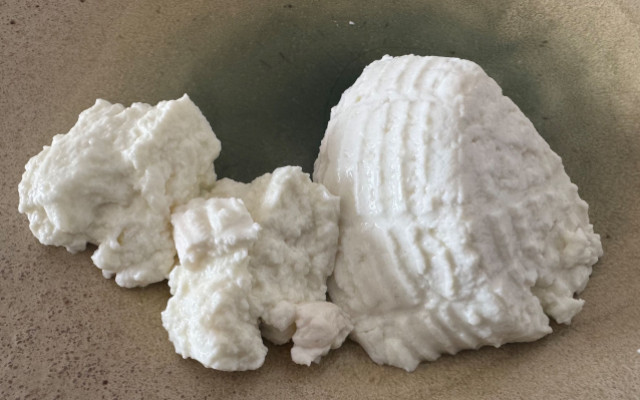
The ricotta, from Latin re-cocta, is appreciated throughout Italy and beyond for its delicate flavor and adaptability in countless recipes, however its cultural and nutritional value goes much deeper. This article provides a comprehensive exploration of ricotta's role in the Italian food heritage and sustainable dairy practices.
As a model of circular economy e dairy upcycling (Dongo, 2024), ricotta exemplifies the transformation of whey – once considered waste – into a valuable food. Rooted in the practice of the ancient Romans and today supported by scientific evidence, its production reflects centuries of ingenuity.
The analysis highlights the legal distinctions that separate ricotta from cheese according to EU, national and international standards, shows the diversity of local varieties, traces its technological evolution from rustic cauldrons to modern innovation, and outlines its documented nutritional and health benefits. Drawing on academic research and a structured view, this in-depth study reveals ricotta as a cornerstone of sustainability and culinary tradition in Italy.
Ricotta: history and legends
The origins of ricotta date back to ancient times, with archaeological evidence suggesting that similar dairy products were already produced in theBronze Age (Mucchetti & Neviani, 2022). The Romans documented techniques to extract additional nourishment from whey – the liquid remaining after cheese production – demonstrating an early understanding of sustainable food practices.
According to historical documents, shepherds of central and southern Italy developed ricotta as a practical way to extract maximum value from their milk (Zannoni & Nanni, 2021). The process allowed farmers to produce an additional food source from whey – an ingredient that would otherwise have been used as animal feed – thus maintaining the natural balance of their subsistence economy after cheese production. This ingenious reuse reflects the resourcefulness that has characterized rural life in Italy for centuries.
Several legends surround the creation of ricotta:
- a popular tale attributes its discovery to a shepherd who kept the whey in a container near the fire. The heat caused the coagulation of residual proteins, creating the first ricotta;
- another legend holds that ricotta was divine inspiration, a gift from the gods to help shepherds sustain themselves during harsh winters when food was scarce;
- perhaps the most touching story concerns a humble shepherd who accidentally left whey in a hot copper cauldron. Upon his return, he discovered that the transformed liquid had become a delicate edible substance – thus ricotta was born to serendipity, embodying the Italian tradition of transforming simple ingredients into culinary treasures (Slow Food Foundation for Biodiversity, n.d.).
The legal classification of ricotta: between dairy product and whey cheese
A crucial distinction separates ricotta from cheese in legal terms: ricotta is not classified as cheese according to European Union regulations. According to the Common Market Organization Regulation (CMO), real cheese must contain rennet, an enzyme complex used to coagulate milk proteins (Regulation (EU) No 1308/2013). Ricotta, however, undergoes a production process completely different.
In Italy the legislation classifies ricotta as a ‘dairy product’, which translates to ‘dairy product’ rather than cheese specifically. The legal definition emphasizes that ricotta results from thermal coagulation of the proteins present in the whey, with or without the addition of milk, cream, or salt. This distinction is not merely semantic but reflects fundamental differences in production methods and in the characteristics of the final product.
It is interesting to note that, at the international level, the Commission of the Codex Alimentarius adopts a different approach, classifying ricotta under its Standards for Whey Cheeses (Codex Stan 284-1971). This standard specifically covers products obtained through ‘coagulation of whey by heat with or without the addition of acid’, which precisely describes the production process of ricotta (World Health Organization & Food and Agriculture Organization, 2022). This creates a curious regulatory dichotomy where ricotta is not considered cheese in Italy and within the EU but is recognized as whey cheese in international food standards.
Italian ricotta and its regional varieties
While ricotta is produced throughout Italy, several regions have developed distinctive varieties that reflect local traditions and available resources (Mangione et al., 2023):
- The Sicily, a leading region in Italy for ricotta production volume, is the homeland of the renowned Sicilian Ricotta, often made with sheep's milk – but also with cow's milk, in the province of Ragusa – and sometimes smoked. The ricotta from the island is essential in iconic dishes like cannoli and cassata (Mangione et al., 2023);
- the Lazio offers the Ricotta Romana PDO (Protected Designation of Origin), a variety of sheep's milk produced according to strict traditional methods. This ricotta is prominently present in local pasta dishes and desserts;
- The Sardinia contributes with the Sardinian Ricotta, which can be fresh or aged and is traditionally made with sheep's milk. The aged version becomes firm enough to be grated over pasta or served as an appetizer;
- The Campania produces the Buffalo Ricotta of Campania PDO, obtained from buffalo milk whey. This luxurious variety offers a particularly rich flavor profile and a creamy texture (Manca et al., 2023);
- The Lombardy – main Italian region producing cow's milk – and Piedmont typically produce ricotta from cow's milk, reflecting the cheese-making traditions of northern Italy, where cattle farming predominates;
- The Basilicata and Calabria Calabria have strong traditions of ricotta production, often characterized by distinctive smoking techniques that extend shelf life and add complexity to the flavor.
Each regional variation brings unique characteristics influenced by local climate, animal breeds, traditional production methods, and culinary applications, creating a mosaic of ricotta expressions across the Italian peninsula (Zannoni & Nanni, 2021).
Production methods: from tradition to innovation
Ricotta production exemplifies the beautiful synthesis between ancient wisdom and modern technology, with methods ranging from artisanal approaches used for centuries to cutting-edge industrial processes (Mucchetti & Neviani, 2022).
Traditional production
the traditional method begins with fresh whey, typically collected after cheese production. This whey is heated to about 80-90 °C, causing the coagulation of residual proteins, mainly albumin and globulin. The heat treatment also ensures microbiological safety. Artisanal producers often add a small amount of salt and sometimes a touch of acidity through lemon juice or vinegar to improve coagulation (Mangione et al., 2023).
In many traditional contexts, ricotta is produced in copper cauldrons over wood fires, imparting subtle flavor notes impossible to replicate through industrial methods. Once the proteins form light floating curds on the surface, they are gently collected in perforated baskets known as ‘fuscelle‘ or ‘fiscelle.’ Traditionally made with woven reeds, these baskets are now often made of plastic and allow the remaining liquid to drain, giving ricotta its characteristic shape (Slow Food Foundation for Biodiversity, n.d.).
Modern innovations
The contemporary industrial production maintains the basic principles while incorporating technological advances for consistency and scale. Modern plants use precise temperature controls, standardized acidification methods, and mechanized separation techniques (Manca et al., 2023).
Some innovations include:
- systems of ultrafiltration that concentrate proteins before heat treatment;
- automated monitoring of acidity levels and protein content;
- continuous production systems that increase efficiency;
- advanced packaging technologies that extend shelf life;
- production of lactose-free milk ricotta, which responds to the growing demand from consumers for lactose-free dairy alternatives while preserving the distinctive characteristics of ricotta (Buccioni et al., 2022).
Many producers now add specific bacterial cultures to improve flavor development or functional properties. Some facilities employ vacuum evaporation to concentrate the whey before heating, increasing yield and texture (Salvatore et al., 2014).
Despite these technological advances, the fundamental process remains true to its ancient origins, demonstrating how traditional wisdom can harmoniously coexist with innovation.
Focus on ricottas from different types of milk
the type of milk used in the original cheese production process significantly influences the characteristics of ricotta, creating distinct varieties each with unique qualities (Mangione et al., 2023), as described below.
Cow's milk ricotta (ricotta vaccina)
the most common type, cow milk ricotta offers a delicate, slightly sweet flavor with a smooth texture. It contains about 10-15% fat and has a bright white color. This versatile ricotta works exceptionally well in both sweet and savory applications, from cannoli fillings to layers of lasagna: it is produced throughout Italy but especially in northern regions where cattle farming predominates (Manca et al., 2023).
Buffalo milk ricotta (ricotta di bufala)
Produced mainly in Campania, the buffalo milk ricotta boasts a higher fat content (14-20%) which creates an extraordinarily creamy texture and a rich flavor profile. The distinctive taste carries subtle spicy notes balanced by natural sweetness. The Buffalo Ricotta of Campania PDO must adhere to strict production guidelines to maintain its protected status. This premium variety pairs beautifully with fresh fruit and honey or enriches pasta fillings with its luxurious texture (Manca et al., 2023).
Sheep's milk ricotta (ricotta di pecora)
Common in central and southern Italy, the sheep's milk ricotta offers a more pronounced flavor with distinctive herbal notes and a slightly grainy texture. It contains about 12-25% fat and works wonderfully in traditional pasta dishes and desserts. The Ricotta Romana PDO exemplifies this variety, with strict production requirements that include the use of milk from specific sheep breeds grazing in designated areas of the Lazio region (Mangione et al., 2023).
Goat's milk ricotta (ricotta di capra)
Less common but increasingly popular, the goat's milk ricotta features a distinctive tangy profile with an exceptionally light texture. With a fat content typically between 8-15%, it offers an excellent option for those seeking alternative dairy sources. This variety pairs exceptionally well with honey, herbs, and aromatic spices. Production is concentrated in mountain regions where goat farming traditions remain strong (Pizzillo et al., 2005). Extraordinary, in every sense.
Mixed milk ricotta (mixed ricotta)
Some producers create mixed ricottas by combining different types of milk, balancing their characteristics to achieve specific flavor profiles and functional properties. These mixed varieties often reflect local traditions where different livestock species are raised together, resulting in distinctive regional specialties that highlight the terroir of specific Italian locations (Zannoni & Nanni, 2021).
Sustainable production
Ricotta stands as a powerful symbol of the principles of circular economy in food production. Unlike conventional dairy products that require dedicated milk supplies, ricotta cleverly transforms a co-product – whey – into a valuable nutritional resource. This practice dates back long before sustainability became a contemporary concern (Manca et al., 2023).
Environmental benefits
Theenvironmental impact of ricotta production deserves recognition for:
- resource maximization. By extracting additional nutrients from whey, ricotta production improves the efficiency of every liter of milk processed by about 10-15% (Manca et al., 2023);
- waste reduction. Turning whey into ricotta prevents this nutrient-rich liquid from becoming an environmental burden. Whey can be problematic if released into waterways due to its high biological oxygen demand;
- energy efficiency. Modern ricotta production often incorporates heat recovery systems, using thermal energy from cheese production to initiate the ricotta production process (Salvatore et al., 2014);
- water conservation. Integrated production systems reuse water across multiple production stages, minimizing the consumption of this precious resource.
Economic sustainability
The transformation of whey into ricotta – like many other circular economy practices (Dongo & Pietrollini, 2023) – creates additional income streams for dairy producers, improving economic sustainability:
- i small farmers and artisanal producers can increase profitability without requiring additional raw materials;
- The local economies benefit from additional food production and value creation within existing production chains;
- The traditional knowledge maintains cultural relevance through economically sustainable practices.
Future directions
Innovative approaches continue to improve the sustainability profile of ricotta:
- advanced filtration technologies now extract even more proteins from whey, further enhancing resource efficiency within closed-loop systems (Salvatore et al., 2014);
- research on optimized production methods aims to reduce energy consumption while maintaining traditional qualitative characteristics (Manca et al., 2023).
Since consumers increasingly prioritize sustainability in food choices, the intrinsic environmental benefits of ricotta perfectly position it as a model of responsible dairy production: a delicious example of how traditional wisdom often embodies modern environmental principles.
Nutritional and health properties
Ricotta offers an impressive nutritional profile that contributes to its reputation as a healthy dairy option. Its composition varies slightly depending on the milk source, but all varieties provide significant nutritional benefits (Mangione et al., 2023).
Macronutrient profile
A standard 100g serving of cow's milk ricotta typically contains:
- calories: 150-200 kcal;
- proteins: 11-14g of high-quality complete proteins containing all essential amino acids,
- fats10-15g, with a balanced ratio of saturated and unsaturated fats;
- carbohydrates3-5g, mainly lactose
The ricottas of buffalo and of sheep generally contain higher levels of both protein and fats, while the varieties of goat often provide slightly less fat with comparable protein content (Pizzillo et al., 2005).
Micronutrients
Ricotta provides an extraordinary array of essential micronutrients:
- calcium. Approximately 200-300mg per 100g, supporting bone health and muscle function;
- phosphorus. Works synergistically with calcium for skeletal development;
- riboflavin (B2). Essential for energy metabolism and cellular function;
- vitamin A. Supports vision, immune function, and skin health;
- zinc. Important for immune response and wound healing;
- selenium. A potent antioxidant that helps protect cells from damage.
Health benefits
Scientific research has identified several evidence-based health benefits associated with ricotta consumption:
- muscle maintenance. The high-quality protein content in ricotta, particularly rich in branched-chain amino acids, supports muscle protein synthesis, beneficial for athletes and the elderly concerned with maintaining muscle mass (Manca et al., 2023);
- support for bone health. The combination of bioavailable calcium, phosphorus, and protein contributes to maintaining optimal bone density. Research by Manca et al. (2023) demonstrated that regular consumption of dairy products like ricotta is associated with better bone mineral density in adults;
- digestive system compatibility. The production process naturally reduces lactose levels compared to milk, making ricotta potentially more digestible for some people with mild lactose sensitivity (Mangione et al., 2023).
For the general population and individuals with specific dietary requirements, ricotta offers advantages over many cheeses, such as a lower sodium content and a variety of options low fat contentAdditionally, the whey proteins in ricotta provide a complete amino acid profilesupporting various physiological functions (Mangione et al., 2023).
Culinary uses
The versatility in the kitchen of ricotta is legendary, spanning sweet to savory applications across numerous culinary traditions. Its delicate flavor provides an ideal canvas for both simple and complex dishes (Zannoni & Nanni, 2021).
Traditional Italian applications
In Italian cuisine, ricotta appears in countless dishes loved:
- stuffed pastaEssential for ravioli, tortellini, and cannelloni fillings, often combined with spinach, herbs, and other cheeses;
- baked pastaKey ingredient in lasagna and baked pasta, contributing a creamy texture between layers;
- SweetsStar component in cannoli, cassata, cheesecake, and Neapolitan pastiera (Mangione et al., 2023);
- breadsPresent in stuffed focaccia and Easter bread traditions in various regions.
Contemporary culinary uses
The innovators of Italian culinary tradition have significantly expanded the applications of ricotta:
- breakfast applicationsSpread on toast with honey and fruit, incorporated into pancakes and waffles, or used in egg dishes;
- saladsAdded in dollops to fresh vegetable compositions for a creamy contrast;
- dips and spreadsMixed with herbs, olive oil, and dressings for appetizers,
- pizzas and focacciasUsed as a spreadable base or finishing touch, particularly popular in white pizzas (Mangione et al., 2023).
Cooking techniques
Ricotta lends itself gracefully to a variety of Cooking techniques:
- The baking which transforms it into baked ricottawith a delicate golden crust and a soft, moist interior;
- the assembly enhances its lightness, creating magnificently airy textures.
Buyer tips
Whether you are a cooking enthusiast or a professional buyer, choosing high-quality ricotta requires careful consideration of several essential factors, outlined below.
For cooking enthusiasts
- Indicators of freshness: a premium ricotta should have a bright white color and a sharp, milky aroma. The texture should be moist but not watery, with visible curds that retain their structure when disturbed (Mucchetti & Neviani, 2022).
- Packaging considerations: look for containers that protect the product from light exposure and provide an adequate moisture balance. Traditional perforated conical baskets indicate artisanal production methods.
- Storage guide: fresh ricotta typically maintains optimal quality for 5-7 days if refrigerated between 2-4°C. Always check the production date rather than relying solely on the expiration date (Mangione et al., 2023).
- Seasonal variations: like many dairy products, ricotta may show subtle seasonal differences reflecting changes in animal diet. Spring and early summer often yield the most aromatic varieties owing to access to fresh pastures (Mangione et al., 2023, Mangione et al., 2023).
For professional buyers
- Considerations on the supply chain: working with specialists who maintain appropriate cold chain management during distribution ensures product integrity.
- Volume and consistency requirements: establish clear specifications with suppliers regarding consistency, moisture content, and acidity levels suitable for your intended applications.
- Quality certifications: beyond mandatory health certifications, look for DOP/IGP designations for protected varieties and organic certifications when prioritizing sustainable production.
- Relationships with suppliers: developing direct relationships with specialized producers or importers provides deeper understanding of production methods and quality control measures.
Selection of organic options
The organic ricotta offers several advantages to consider:
- production requires organic feed free from synthetic pesticides and GMOs;
- prohibits the routine use of antibiotics in livestock;
- often corresponds to higher animal welfare standards (Dongo, 2025);
- generally involves more traditional production methods (Manca et al., 2023).
The team GIFT (Great Italian Food Trade) provides valuable expertise for international buyers seeking reliable ricotta suppliers. Their specialized knowledge helps navigate the complex Italian producers landscape, ensuring authentic products that meet specific quality requirements while supporting sustainable production practices. Their network extends across various Italian regions, connecting buyers with producers who maintain traditional methods while meeting modern commercial standards.
Conclusions
Ricotta exemplifies how traditional wisdom perfectly aligns with contemporary values. This remarkable dairy product embodies sustainability through its ingenious reuse of whey, transforming what could be waste into a nutritious and versatile food that has supported Italian culinary traditions for centuries (Manca et al., 2023).
From its humble origins from shepherds to its current global popularity, ricotta demonstrates the enduring appeal of simple and healthy foods created through thoughtful processes. Its production represents a perfect cycle of resource use, where nothing is wasted and maximum value is extracted from precious raw materials (Manca et al., 2023).
The diversity of ricotta varieties expressed in regions in Italy shows how local adaptations create unique expressions of common principles: each type reflects specific geographic conditions, animal breeds, and cultural preferences that have evolved over generations. This regional diversity creates a rich tapestry of options for culinary applications ranging from sweet to savory, rustic to refined (Mangione et al., 2023).
As consumers increasingly seek foods that align with environmental awareness, ricotta stands as an inspiring example of intrinsic sustainability. Its production process embodies circular economy principles that modern food systems strive to achieve.
the growing interest in healthy foods has favorably positioned ricotta in contemporary diets due to its high protein content, bioavailable calcium, and relatively low fat content compared to many cheeses. Consumer awareness of ricotta's nutritional benefits has contributed to its growing popularity beyond traditional Italian cuisine (Buccioni et al., 2022).
Whether enjoyed in Italy in classic traditional preparations, such as cannoli and lasagna, or incorporated into contemporary culinary innovations, ricotta continues to delight palates carrying forward ancient wisdom on ingenious food production. In this modest dairy product, we find a perfect blend of sustainability, nutrition, and pleasure, a truly timeless contribution to world cuisine (Zannoni & Nanni, 2021).
Dario Dongo
Cover image courtesy of GIFT (Great Italian Food Trade). Organic sheep ricotta, Giacomo Ficco farm, Scandriglia (Rieti). Photo by Dario Dongo
Bibliography
- Buccioni, A., Mannelli, F., Daghio, M., Rapaccini, S., & Scicutella, F. (2022). Influence of milk quality and cheese-making procedure on functional fatty acid transfer in three Italian dairy products: Mozzarella, Raveggiolo and Ricotta. LWT, 163, 113476. https://doi.org/10.1016/j.lwt.2022.113476
- Dongo, D. (2024, August 1). Upcycling: the high road of research and innovation. FoodTimes.
- Dongo, D., & Pietrollini, G. (2023, May 4). Circular economy in agrifood systems, an economic imperative. FoodTimes.
- Dongo, D. (2025, April 20). The benefits of organic farming: Systematic review. Food Times.
- Manca, G., Franco, M. A., & Pirisi, F. M. (2023). History, technologies of production, and characteristics of ricotta cheese. Journal of Dairy Science, 106(6), 4197–4211. https://doi.org/10.3168/jds.2022-22623
- Mangione, G., Licitra, G., Caccamo, M., & Natalello, A. (2023). Graduate Student Literature Review: History, technologies of production, and characteristics of ricotta cheese. Journal of Dairy Science, 106(6), 3807-3826. https://doi.org/10.3168/jds.2022-22460
- Mucchetti, G., & Neviani, E. (2022). Microbiology and dairy technology: Quality and safety (3rd ed.). Tecniche Nuove. ISBN 978-88-481-4295-4
- Pizzillo, M., Claps, S., Cifuni, G. F., Fedele, V., & Rubino, R. (2005). Effect of goat breed on the sensory, chemical and nutritional characteristics of ricotta cheese. Livestock Production Science, 94(1–2), 33–40. https://doi.org/10.1016/j.livprodsci.2004.11.024
- Regulation (EU) No 1308/2013 of the European Parliament and of the Council establishing a common organisation of the markets in agricultural products. Latest consolidated version: 08/11/24 https://tinyurl.com/ucdnt9vp
- Salvatore, E., Pes, M., Falchi, G., Pagnozzi, D., Furesi, S., Fiori, M., Roggio, T., Addis, M. F., & Pirisi, A. (2014). Effect of whey concentration on protein recovery in fresh ovine ricotta cheese. Journal of Dairy Science, 97(8), 4686–4694. https://doi.org/10.3168/jds.2013-7762
- Slow Food Foundation for Biodiversity. Ricotta – Ark of Taste. Slow Slow Food Foundation. (n.d.). Ricotta infornata. Ark of Taste. Retrieved May 9, 2025, from https://www.fondazioneslowfood.com/en/?s=Ricotta
- World Health Organization & Food and Agriculture Organization. (2022). Codex Alimentarius: Standard for whey cheeses. Codex Stan 284-1971. https://tinyurl.com/6cee8rdb
- Zannoni, M., & Nanni, M. (2021). Sensory Atlas of Food Products: Focus on Italian Cheeses (2nd ed.). Environment Editions. ISBN 978-88-97511-47-2

Dario Dongo, lawyer and journalist, PhD in international food law, founder of WIISE (FARE - GIFT – Food Times) and Égalité.


