

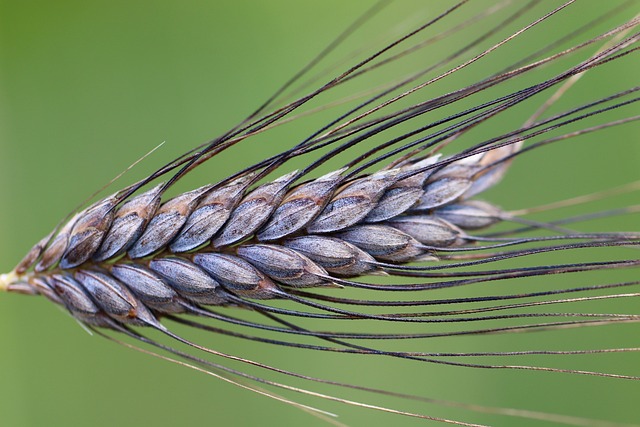
The environmental sustainability of pasta is the subject of a recent scientific study, published in ‘Resources’. Researchers from the Universities of Florence and Rome examined two production chains, comparing ancient and modern grains. What horizons?
A world of Italian pasta
Pasta consumption worldwide has almost doubled, from 9 to 15 million tons per year in the last decade. And Italy – where this food is regularly consumed by 9 out of 10 people, and daily by 1 out of 3 – is a global protagonist. Not only for per capita consumption (23 kg/year, followed by 16 in Tunisia, 12 in Venezuela, and 11.2 in Greece), but also for manufacturing and export. So much so that almost a quarter of the pasta consumed on the planet today is Made in Italy.
Italian production of pasta actually reached 3.4 million tons in 2018, with a remarkable export share (58%, almost 2 million tons). Italy is also the leading durum wheat producer in the European Union, with 1.28 million hectares cultivated.
Agricultural production nationally, however, is not yet able to guarantee supply chain self-sufficiency. Given an industrial need of 5.6 million tons per year of durum wheat and an average production over the last 5 years of about 4 million tons (data from Italmopa, Italian Millers Industrial Association).
100% Italian pasta, a world in progress
The demand for food products from 100% supply chains Made in Italy is moreover growing strongly, as shown by theImagino Observatory 2018 (GS1-Italy) and the Coop Italy report 2019.
100% Italian pasta is also set to attract growing interest internationally. Especially in Europe, thanks to regulation (EU) 2018/775 which – effective from 1.4.20 – requires indicating on the label the origin or source of the primary ingredient, if it differs from the country of production indicated. (2)
Sustainable production and consumption, the case of pasta
#WorldPastaDay, at its 21st edition on 25.10.19, was dedicated to cooking #aldente. A topic good for every age and circumstance, but at the same time futile and outdated. Especially now, in the presence of 'hot topics' such as:
- sensational growth of global pasta consumption,
- surge in demand for short supply chain products,
- new EU rules on labeling the primary ingredient,
- mistrust towards wheat from Canada because of glyphosate admitted there in pre-harvest phase,
- growing attention towards the Sustainable Development Goals, SDGs, in the UN 2030 Agenda.
How to achieve Sustainable Development Goal No. 12, Sustainable Production and Consumption? How can the pasta supply chain contribute to the achievement of other SDGs? How can this supply chain thus be transformed to become 'part of the solution' rather than remain 'part of the problem' of climate change?
Environmental sustainability is the real issue to address, considering energy and water consumption, waste production, CO2 emissions generated by production and transport, the maintenance of biodiversity and soil quality. More generally, sustainability can be understood as the ability to preserve favorable environmental, social, and economic conditions in the long term.
Environmental footprint of pasta, local ‘ancient’ grains vs. international ‘modern’ grains compared. The scientific study
The scientific study published on Resources, work by a research group from the Universities of Rome and Florence, is dedicated precisely to the ‘Environmental Sustainability of Pasta Production Chains: An Integrated Approach for Comparing Local and Global Chains’. (3) The researchers measured the environmental footprint of two production chains. The first uses durum wheat semolina from 'ancient' grains (Senatore Cappelli variety) and traditional techniques, the second uses 'modern' grains, both national and foreign, as well as industrial processes.
The research was conducted using an integrated analysis method, based on EIAN (Environmental Impacts ANalysis) and LCA (Life Cycle Assessment). To measure the environmental footprint of the chains – from sowing to consumption, without overlooking intermediate stages (storage and logistics) – on soil, water, air, natural resources, and climate change. Ancient grains are confirmed to be more ecological, thanks to lower fertilizer consumption and reduced mechanization.
A previous research had already shown how the cultivation of ancient grains with an organic system even has a negative carbon footprint. This work in turn shows how the production of 1 kg of dry pasta, depending on the case, requires:
– 1.706 kg of CO2e, 13.7 MJ of fossil energy, 0.206 kg of non-renewable resources, for pasta made from ancient grains and traditional techniques,
– 1.765 kg of CO2eq, 14.3 MJ of fossil energy, 0.152 kg of non-renewable energy for pasta made from modern wheats of various origins.
Ancient grains stand out above all for reducing the risk of soil degradation and maintaining agrobiodiversity that their cultivation ensures, researchers confirm. Even if their yield is lower and this requires larger areas and more water – compared with modern cultivars – to obtain the same quantities of pasta.
Sustainable pasta, what horizons?
15 years ago The Italian food industry – effectively led by the Barilla group, the main contributor of the then UNIPI (Italian Pasta Industrialists Union, now Italian Food Union) – opposed the requests for labeling the origin of raw materials stating that Italian agricultural production was insufficient in quantity and quality. To compensate for this declared deficit, Italy has always imported wheat from Canada, USA, Australia, France, Mexico and Eastern Europe. However, over the course of a decade, this false rhetoric was replaced byenhancement of Italian wheat pasta (by the same Barilla group, with the brand Voiello).
The imports of durum wheat from Canada have collapsed. Because even large pasta industries, with rare exceptions, have finally understood the trend that the GDO (Large Organized Distribution) had timely intercepted. That is, the interest of consumers towards 100% Italian pasta, strictly without glyphosate. And without those mycotoxins, mutagenic and carcinogenic, which find an ideal environment for proliferation in the holds of ships used for grain transport.
The new horizon of pasta in Italy is a return to origins, with the guarantees offered by innovation. Ancient grains genetically characterized, grown with organic methods – which continues to grow – and traced with a system of blockchain public (e.g. Wiise Chain).
Fair and sustainable supply chains, biodiversity and respect for ecosystems and their inhabitants. At accessible prices, without giving up on recognizing the efforts of those committed to a ‘good and fair’ supply chain. A matter of common sense and efficiency.
Dario Dongo and Paolo Caruso
Notes
(1) Lucia Recchia, Alessio Cappelli, Enrico Cini, Francesco Pegna, Paolo Boncinelli. (2019). Environmental Sustainability of Pasta Production Chains: An Integrated Approach for Comparing Local and Global Chains. Resources. 8. 56. 10.3390/resources8010056
(2) The author has renamed ‘Origin Planet Earth’ Regulation EU 2018/775, due to the generic nature of the allowed indications (up to ‘EU/non-EU’, Origin Planet Earth indeed) and of unjustified exemptions. In favor of geographical indications contained in brands, PGI, organic products. In any case, its application allows to easily distinguish foreign wheat pasta from that 1 easily distinguishable
(3) See note 1

Dario Dongo, lawyer and journalist, PhD in international food law, founder of WIISE (FARE - GIFT – Food Times) and Égalité.

Paolo Caruso, agronomist, collaborates with the Department of Agriculture, Food and Environment of the University of Catania, section of Agronomy and Herbaceous Crops. Researcher on ancient Sicilian wheat.


