

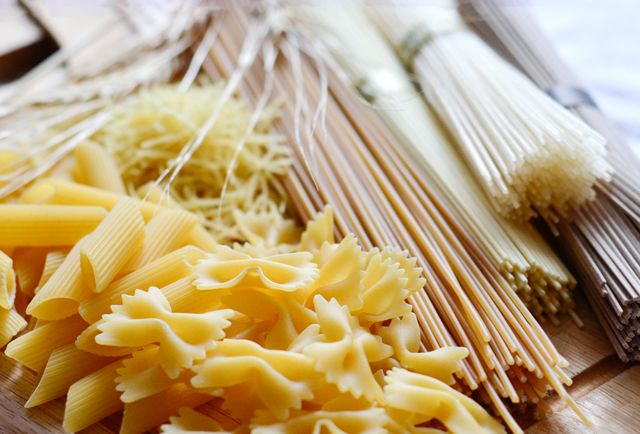
The World Pasta Day was celebrated Sunday, October 25, 2026, at the 28th edition, on the initiative of Italian Food Union and of the International Pasta Organisation. For the first time the day became a World Pasta Week, with the international debate on the future of the supply chain hosted in Parma, inside Cibus Tec, on October 27 and 28. On the same date the Ministry of Foreign Affairs launched a Italian Pasta Day in the World, entrusted to initiatives of embassies and consulates (Avvenire, 2026).
The Italian pasta industry accompanied the event with three documents: the study by TEHA Group on the economic value of the supply chain, presented in Milan on September 28, 2026; the survey by AstraRicerche on how Italians experience pasta, carried out in early October; the statement of the Italian Food Union on alternative pastas, published in July. Below a detailed analysis of the three works, with some own elaborations.
The pasta supply chain, 13.5 billion turnover
TEHA has reconstructed the pasta supply chain on three rings: cultivation of durum wheat, milling into durum wheat semolina and production of pasta products (excluding fresh pasta). In 2025, based on estimates, the turnover total reaches 13.5 billion euros, equal to 4.7% of the agri-food chain, with 3 billion of added value, 128 thousand farming and processing companies and 32 thousand employees. The national production reaches 4.2 million tons, 60% of which is destined abroad, and the chain's exports are worth 4 billion euros, 5.4% of agri-food exports (TEHA Group, 2026).
In the decade 2015-2025, turnover increased from 7.8 to 13.5 billion euros, with an average annual growth indicated by TEHA at 5,4%, against 3.2% nominal GDP and 3.9% of the overall agri-food chain. The growth is almost entirely driven by the pasta industry, which rose from 4.4 to 8.9 billion (+7.3% per year), and by milling (from 1.4 to 2.7 billion). Durum wheat cultivation instead remains stable around 2 billion, with a slight decline (-1% per year).
The value chain At the national level, it is structured accordingly. Between 2015 and 2024, the share of pasta production in the sector's revenue rises from 56% to 66%, milling from 18% to 20%, while agriculture decreases from 26% to 15%. The added value follows the same path: from 1.7 to 3 billion euros in ten years, of which 2 billion are generated by pasta factories, 0.4 by mills, and 0.6 by fields (TEHA Group, 2026). The agricultural data also reflects the trend of durum wheat prices and the weight of imports, which the TEHA model places upstreamof the milling industry.
The extended supply chain and the multiplier effect
The TEHA study then expands the scope to extended supply chain, which includes ready-made pasta dishes, wholesale and retail trade, catering, machines for the food industry, refrigerated storage and packaging. A proportional share is applied to each ATECO code to isolate only the component related to pasta.
In 2024 this group counts 143 thousand companies (-7% compared to 2015), 78 thousand employees (+41%), 24.6 billion turnover (+64%), 1.6 billion investments (+25%) and 5.2 billion added value (+73%). The added value exceeds that of the wine supply chain (4.7 billion) and footwear manufacturing (4.1 billion), remaining lower than that of furniture manufacturing (7.8 billion) (TEHA Group, 2026).
Through the Istat sectoral interdependence tables, TEHA finally estimates an indirect effect of 7.2 billion and an induced effect of 1.9 billion, for a total of 14.3 billion added value, about 0.6% of GDP and 3.6% of the extended agri-food supply chain. The multiplier of 2.8 should be read as the ratio between total and direct added value (14.3 to 5.2): for every euro generated by the extended supply chain, about 1.75 euros are activated in the rest of the economy, for a total of 2.75 euros.
What pasta represents for Italians
The AstraRicerche survey for Unione Italiana Food is based on 1,005 online interviews a sample of people aged 18 to 70, collected in early October 2026. When asked what pasta represents in daily life (up to five answers), 41.5% respond a good and satisfying food, 39.6% a product with a good quality/price ratio, 39.1% a versatile food. The dimension of pleasure collects 76.2%, that of practicality 70.1%, and that of family ties 47.3%; one third of the sample (33.6%) considers pasta an indispensable food (AstraRicerche, 2026).
The symbolic value is broad. 85.2% see pasta as a symbol of Made in Italy, 82.5% as a sign ofcultural identity Italian – whose cuisine is also celebrated by UNESCO – and how the country is perceived in the world, 74.7% a key market for the national economy and 72.3% a fundamental food of the Mediterranean diet. Sunday family lunch is the occasion when a plate of pasta takes on the deepest meaning (54.4%), followed by an impromptu dinner with friends (40.6%) and comfort after a tiring day (35.4%).
The data collected by Unione Italiana Food and re-elaborated by TEHA confirm the picture: 67.6% of Italians indicate pasta as the most representative food of the Mediterranean diet, ahead of extra virgin olive oil (56.3%) and 54% consume on average one plate a day, 80% at lunch. The Italian per capita consumption, the highest in the world, is 23.1 kg per year, followed by Tunisia (17 kg) and Venezuela (15 kg), according to data from the International Pasta Organisation elaborated by TEHA.
Pasta and the cost of living
In a phase of high prices, pasta maintains its role as an accessible food. 43.4% of respondents indicate price as a feature that makes it important for families, 41.6% that everyone at home likes it, 39.1% the ability to satisfy hunger and 38.9% the possibility to prepare a complete meal with few ingredients. More than a quarter associate it with waste reduction (27.7%), thanks to easily calculated portions, and to recovery recipes (26.7%) (AstraRicerche, 2026).
The most provocative question of the survey asks what the reaction would be if pasta disappeared overnight. 51.1% respond with disbelief, 43.8% with disorientation, 32.9% with nostalgia. 15.2% admit a sense of relief, as the effort to limit quantities would end, and only 2.8% say they are indifferent. More than nine Italians out of ten (93.5%) describe a life without pasta as an identity and cultural loss.
The breakdown by generation adds an interesting element. The loss on the practical and wellbeing level weighs for 63% of Generation Z, with a peak of 71.5% among boys, and 42.2% of baby boomers. For the youngest, pasta is, above all, the complete and economical meal of every day.
The bond with pasta, an attachment index
AstraRicerche has built a attachment index to pasta. The ‘devotees’ are 13%, the ‘very attached’ 23.3%, the ‘affectionate’ 39.1%, the ‘lukewarm’ 21.4% and the ‘detached’ only 3.2%. Looking at the nature of the relationship, the practical dominate (38.1%), followed by the emotional (31.4%) and the identity-related (27.3%). Territorial differences are marked: in the North-East the practical reach 45.8%, in the South the emotional rise to 36%. Among Generation Z women the emotional profile reaches 39.5%, the highest value among all segments (AstraRicerche, 2026).
The TEHA study in turn calls attention to the social dimension of consumption. According to data from Censis and Unione Italiana Food, 83.4% of Italians consider the presence of meeting places important for their well-being, a figure that rises to 86.6% among 18-34 year olds, and 68.6% of young people experienced eating pasta 'out of schedule' over the past year, especially at night, after an evening out. An experiment by Unione Italiana Food with IULM University, based on tracking brain activity, heartbeat, and micro-sweating, detected in the shared consumption of pasta an activation of emotionspositive superior to that of other group activities (TEHA Group, 2026).
The appeal also applies abroad. In the survey conducted in Austria, France, Germany, United Kingdom, Switzerland and United States for the report on food and wine tourism by TasteAtlas and Touring Club Italiano, agri-food productions and cuisine are the main attraction factor of Italy (45%), ahead of monuments (40%). Seven out of ten restaurateurs notice that foreign customers increasingly ask for the origin of the ingredients and the story of the dishes, especially pasta (TEHA Group, 2026).
The new pastas, a 247 million market
The alternative pastas occupy a growing space on shelves. According to analyses by Unione Italiana Food on NielsenIQ data, in 2025 the ‘other pastas’ sector reached 247 million euros in retail sales. Semolina pasta whole wheat, of spelt, of khorasan (or kamut) and of Legumes weighs 51,432 tons for 122 million euros, semolina pasta from other grains 7,266 tons for 27 million, the gluten-free pasta 18,041 tons for 98 million, with the fastest growth (+5.6% in volume, +7.7% in value) (Unione Italiana Food, 2026).
Comparing values and volumes yields the implicit average consumer price, our analysis: about 2.4 euros per kilo for whole wheat, spelt, kamut and legumes, 3.7 euros for other grain pastas, 5.4 euros for gluten-free. The gap between growth in value and volume indicates, for this last segment, an average price increase of around 2% in one year. Overall, alternative pastas are worth about 77 thousand tons, a niche compared to national production, but with unit values well above those of semolina pasta.
According to Unione Italiana Food, pasta factories invest on average 10% of turnover in research and development, about 500 million euros per year for the entire sector. Margherita Mastromauro, president of the pasta makers of Unione Italiana Food, notes that the versatility of pasta allows it to 'intercept food, cultural and social trends' (Italian Food Union, 2026).
The expectations of consumers move in the same direction. For the coming years, 70.4% of respondents ask that pasta maintain an affordable price, 70.1% that it retain its role as symbol of Italian food, 65.6% that it meets new needs dietary, such as gluten-free or a higher content of protein and fiber. 48.6% expect new formats and recipes with alternative grains, 48.4% a stronger focus on sustainability of production and packaging (AstraRicerche, 2026).
The nutritional profiles of alternative pastas
The variety of raw materials results in different nutritional profiles. Luca Piretta, gastroenterologist and nutritionist at the Campus Bio-Medico University of Rome, recalls that legume pasta provides 'a higher amount of protein, fiber, and bioactive substances', whose composition depends on the legume used, while pastas made with oat or barley flour are distinguished by their content of beta-glucans (Italian Food Union, 2026).
On this point, European Union law provides a precise reference. The contribution of beta-glucans from oats and barley to the maintenance of normal blood cholesterol levels is an authorized health claim, usable only for foods that provide at least 1 g per quantified serving, informing the consumer that the effect is obtained with a daily intake of 3 g (EU regulation 432/2012, Annex).
The selling denominations of pasta
In Italy, dried pasta is regulated by Presidential Decree 187/2001, which reorganized the regulation of flours and food pastas already contained in the law of July 4, 1967, no. 580. The denominations 'durum wheat semolina pasta' and 'durum wheat semolarded pasta' are reserved for products obtained by extrusion, rolling, and drying of doughs prepared exclusively with semolina, or semolard, of durum wheat and water. The whole durum wheat semolina pasta is in turn obtained exclusively from whole durum wheat semolina and water (Presidential Decree 187/2001, article 6).
The special pastas contain food ingredients other than soft wheat flours and are sold under the designation of basic pasta, completed by the mention of the characterizing ingredient (d.P.R. 187/2001, article 7). Included are pastas fortified with vitamins or minerals, whose use must comply with European regulations on the addition of micronutrients to foods (Reg. EC 1925/2006). Legume-, rice-, corn- or other cereal-based products without durum wheat are not included in the reserved designations of the decree.
The prospects for the supply chain
Respondents look to the future with confidence: 59.6% believe that pasta will retain the same emotional and identity value for future generations, 34.9% think it will retain it only partially, as habits change rapidly, and only 5.5% foresee that it will lose it. Among the factors likely to have the greatest impact, the first is climate change and its effects on agriculture (38%), followed by the evolution of eating habits (35.8%) and new nutritional requirements (31.2%); energy and raw material costs (26.1%), counterfeiting (24.6%) and tariffs (20.5%) come next (AstraRicerche, 2026).
The two studies converge in their outlooks. TEHA describes a supply chain that in ten years has nearly doubled its turnover thanks to industrial transformation and exports, while AstraRicerche shows consumers expecting pasta to always be affordable, good, and Italian, while opening up to new raw materials. The alternative pasta segment, still limited in volume but with higher average prices, is where these two expectations meet.
Dario Dongo
References
Documents presented for World Pasta Day 2026
AstraRicerche (2026). Italians and pasta: between daily life, new consumption and global challenges. Quantitative research for Italian Food Union, October 2026, 1,005 online interviews, sample 18-70 years
TEHA Group (2026). Pasta Value. What contribution the pasta industry supply chain makes to Made in ItalyPresentation by Benedetta Brioschi for Italian Food Union, Milan, September 28, 2026
Italian Food Union (2026, July 22). Pasta innovation, the charge of new pastas: whole wheat, spelt, kamut, and legumesPress release, We Love Pasta Press Office
Press
Avvenire (2026, October 21). Tajani launches Italian Pasta Day worldwide, on the 25th simultaneously with World Day. https://www.avvenire.it/economia/tajani-lancia-la-giornata-della-pasta-italiana-nel-mondo-il-25-in-simultanea-al-world-day_114663
European Union regulatory sources
Commission Regulation (EU) No 432/2012 of 16 May 2012 establishing a list of permitted health claims made on foods, other than those referring to the reduction of disease risk and to children’s development and health. Consolidated text: 20/08/2025. http://data.europa.eu/eli/reg/2012/432/2025-08-20
Regulation (EC) No 1925/2006 of the European Parliament and of the Council of 20 December 2006 on the addition of vitamins and minerals and of certain other substances to foods. Consolidated text: 26/11/2025. http://data.europa.eu/eli/reg/2006/1925/2025-11-26
Italian regulatory sources
Decree of the President of the Republic February 9, 2001, No. 187. Regulation for the revision of legislation on the production and marketing of flours and pasta, pursuant to Article 50 of Law February 22, 1994, No. 146. NormattivaLatest consolidated version: 12/14/2018. https://www.normattiva.it/uri-res/N2Ls?urn:nir:presidente.repubblica:decreto:2001-02-09;187
GIFT insights
Dongo, D. (2025, December 1). Italian pasta: culture, health, and marketGIFT. https://www.greatitalianfoodtrade.it/pasta/pasta-italiana-cultura-salute-mercato/
Dongo, D. (2026a, January 3). Gluten-free pasta, the Italian model between culture and innovationGIFT. https://www.greatitalianfoodtrade.it/pasta/pasta-senza-glutine-gusto/
Dongo, D. (2026b, 13 January). Pasta and the glycemic index: the secret is in the matrixGIFT. https://www.greatitalianfoodtrade.it/pasta/la-pasta-e-lindice-glicemico-il-segreto-e-nella-matrice/
Dongo, D., Della Penna, A. A. (2026, 30 March). Whole durum wheat pasta: nutrients, microbiota and healthGIFT. https://www.greatitalianfoodtrade.it/pasta/pasta-integrale-di-grano-duro-nutrienti-microbiota-e-salute/

Dario Dongo, lawyer and journalist, PhD in international food law, founder of WIISE (FARE - GIFT – Food Times) and Égalité.


