

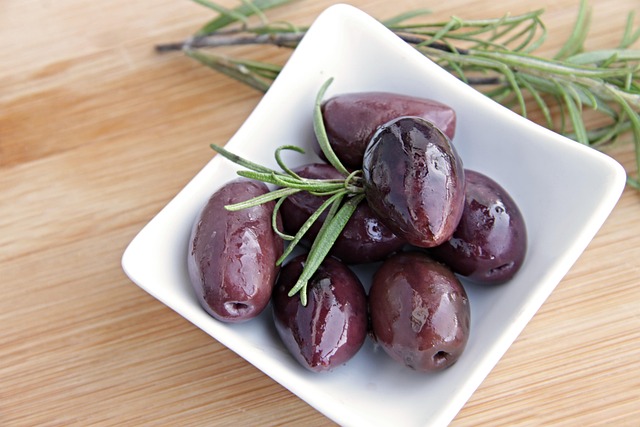
TheOliva di Gaeta DOP is established among the benchmarks of Italian table agri-food, offering buyers and distributors a product with a defined and recognizable organoleptic profile. This specialty, protected at the European level, owes its positioning premium to the synergy between the Itrana cultivar and a method of natural fermentation which excludes the use of synthetic acidifiers at the startup phase. The analysis of the regulations and its biochemical characteristics highlights the potential of a supply chain ready to expand its presence on international markets.
Historical roots and Mediterranean exchanges
The history of the Oliva di Gaeta is rooted in a past millenary, intertwining documented facts and popular traditions.
The origins in the Duchy of Gaeta
From numerous traces present in historical documents dating back to the Duchy of Gaeta it emerges that the territory governed by this entity was the cradle of origin of the homonymous olive. The denomination 'Oliva di Gaeta' can historically be traced back to the name of the territory of origin, due to membership of the homonymous Duchy, as well as that of the port of departure of ships destined for the major markets for black table olives. Already in the Middle Ages, black table olives represented one of the main exchange goods of the Duchy, embarked towards the ports of the Mediterranean and the markets of Northern Europe.
The Itrana cultivar gained wide diffusion in maritime trade of the Mediterranean basin. At the end of the 19th century, following the crisis of French wine, many olive groves in the Gaeta area were replaced with more profitable vineyards and much of the production moved to Itri, where the olive took the name Itrana, maintaining its peculiar characteristics unchanged.
The patronage of Ercole I d’Este
A significant page concerns the relationship between the Olive of Gaeta and Ercole I d’Este, Duke of Ferrara and Renaissance patron. In the second half of the fifteenth century, Ercole I used to consume this olive and was so fond of it that he sent several embassies specifically to purchase it, a product as tasty as it was rare. The episode illustrates the prestige already gained at the courts of northern Italy, a reputation consolidated up to the European recognition in 2016.
Rules of the disciplinary and certified quality requirements
the disciplinary regulation of production of the Gaeta Olive PDO, in the consolidated version published by the Ministry of Agriculture, Food Sovereignty and Forests, defines the strict rules for the use of the denomination (CREA, 2024).
Denomination
The denomination ‘Oliva di Gaeta’, untranslatable, is reserved exclusively for the table olives derived from the ‘Itrana’ variety (also called Gaetana), black type, responding to the conditions of the disciplinary (disciplinary, article 1 – Denomination).
The use of genetically modified ‘Itrana’ plants is prohibited, as well as the allocation for production of batches presenting immature, soft drupes, with red-colored epicarp and/or absence of ‘bleeding’ of the pulp (disciplinary, article 5.1 – Raw material).
Product description
At the time of placing on the market, the Gaeta Olive must meet strict quality parameters:
- spheroidal shape;
- minimum size 12 mm;
- number of fruits/kg not greater than 410; color from intense pink to violet;
- pulp/to-pit ratio not less than 3;
- total polyphenols not less than 12 mg/kg;
- total tocopherols not less than 42 mg/kg.
The pulp must present a clear and complete separation from the pit, soft consistency, typical slightly bitter, acetic and/or lactic taste. Any defects of the drupes are tolerated up to a maximum of 6% of finished product (disciplinary rules, article 2 – Product description).
Geographical delimitation
The cultivation and production area is limited to the territories of 44 municipalities distributed in the provinces of Latina, Frosinone and Rome in Lazio, and in the province of Caserta in Campania (regulation, article 3 – Geographical delimitation).
The supply chain is historically fragmented, as it is composed of small-sized companies, coordinated by the Consortium for the protection and enhancement of the Gaeta DOP Olive, based in Itri (LT) (Consorzio Oliva di Gaeta DOP, n.d.).
Proof of origin
Each phase of the production process is monitored documenting input and output. Traceability and tracking are ensured by registration in special lists managed by the control body, which records growers, cadastral parcels, processors, and packers. All registered operators are subject to periodic inspections (regulation, article 4 – Proof of origin).
The natural fermentation of the Itrana system
The method is based on the traditional practices of the territory and consists of several phases:
- Raw material: exclusively fruits of the ‘Itrana’ variety. The use of ripening and/or dropping agents and synthetic or plant-derived hormones is prohibited;
- cultivation techniques: the traditional training form is the ‘policonic vase’, although alternative forms are also allowed for newly planted olive groves. The quantity of olives to be processed for Gaeta Olive cannot exceed 7 tons per hectare of olive grove. The harvest is done by hand (brushing) or with suitable mechanical means, at full ripeness, when the epicarp is black, shiny, and sometimes covered by a frosty coating locally called ‘panno’, while the pulp turns from white to dark wine red (‘bleeding’). After harvesting, the drupes must be stored and transported in aerated containers, with a layer no thicker than 25 cm; the use of sealed bags or closed containers is prohibited. During the sizing drupes smaller than 13 mm in caliber are removed;
- processing method — the ‘Itrana system’: within 24 hours from harvest the olives must be put into processing, with natural start of fermentation lactic excluding the immediate addition of salt and/or synthetic acidifiers. The drupes are immersed in potable water until fully submerged and kept in this state until pH ≤ 4.5; followed by the addition of table salt in an amount not exceeding 7.0 kg per 100 kg of fresh drupes. The brine has a bright wine-red color, lactic odor with slight acetic note and pH ≤ 4.5. The minimum duration before packaging is 5 months. At the time of packaging the use of L-ascorbic acid and citric acid is allowed. Pasteurization of the brine is permitted, but the pasteurization of the olives is strictly prohibited, to preserve intact polyphenols and tocopherols (specification, article 5 – Method of obtaining).
Connection with the environment
The peculiar characteristics of the Gaeta Olive are linked to environmental factors of the territory. The Mediterranean climate — hot and dry summers, mild and rainy winters, average annual temperatures between 10 °C and 17 °C, rainfall from 700-800 mm in the coastal belt to 1200-1500 mm in the inland areas — creates optimal conditions for the Itrana cultivar. The soils calcareous, leaning against the Tiburtini, Prenestini, Lepini, Ausoni and Aurunci mountains, often mixed with volcanic material, of medium texture and rich in organic matter, give the product its uniqueness (specification, article 6 – Connection with the environment).
Controls
Compliance verification with the specification is carried out by the control body 3-A Agro-food Technological Park of Umbria Soc. cons. a r.l., headquartered in Todi (PG), Pantalla hamlet, in accordance with article 39.3.b of regulation (EU) 2024/1143 (specification, article 7 – Controls).
Labeling
The product can be packaged in food-grade containers up to 25 liters, in transparent glass containers up to 4 liters or in single-use plastic containers up to 4 liters. Thelabel must mandatorily include:
- ‘Oliva di Gaeta’ followed by the acronym PDO;
- name, company name, and address of the producing company;
- product logo, consisting of the outline of the itrana olive with a purple stem, surrounded by a white border, with the denomination ‘OLIVA di GAETA – PDO’ and two leaves on a branch (disciplinary regulations, article 8 – Labeling).
Traditional uses
The Oliva di Gaeta PDO is an ingredient versatile of the tradition of Lazio and Campania, also appreciated in national and international cuisine.
The escarole and cod casserole
The tiella with escarole and cod is perhaps the signature dish linked to the Oliva di Gaeta. This rustic pie from the Lazio coast includes bread dough, tender escarole, desalinated cod fillet, Oliva di Gaeta PDO olives, garlic, parsley, chili pepper, and extra virgin olive oil. The traditional Gaetan version adds salted anchovies, which, together with the olives, give the dish its characteristic marine flavor.
Other traditional preparations
Besides tiella, the olive is used in numerous recipes:
- olives in brine (‘water olives’), the most common preparation;
- soft olives, slightly crushed to facilitate absorption of the brine;
- broken olives, with local variations in the breaking technique;
- sauces and condiments for pasta, white meat, and game;
- bread and focaccia, in the dough or as a topping;
- vegetable side dishes paired with escarole, broccoli, and other Mediterranean vegetables; seafood recipes from the Lazio coast.
Guide to choosing for consumers and professional operators
For gourmets
Choosing Oliva di Gaeta PDO requires attention to some elements: certification verification, ensuring the presence of the European Union PDO mark and the logo with the silhouette of the itrana olive; label check of thelabel, with the denomination ‘Oliva di Gaeta PDO’ and indication of the producer; evaluation of theappearance (color from intense pink to violet, soft pulp, clear detachment from the pit); preference for organic, which offers additional guarantees of sustainability and absence of synthetic pesticide residues.
For professional buyers
Professional buyers should consider:
- The traceabilitychecking supply chain documentation and certificates from the control body;
- the packaging (containers up to 25 liters for catering, containers up to 4 liters for retail);
- The seasonality, with harvesting from March and product ready at least 5 months after salting;
- The storage, refrigerate once opened.
Our team of GIFT (Great Italian Food Trade) supports international buyers in identifying qualified producers to guarantee reliable supplies of authentic quality products.
The added value of organic
The choice to favor olives organic DOP is based on solid scientific grounds. A large-scale meta-analysis shows that organic farming reduces nitrogen emissions by 28%, increases earthworm abundance by 78% and their biomass by 94%, boosts the variety of flower species by 95%, field birdlife by 35%, and pollinating insects by 23%, with higher humus content (+26%) and soil aggregate stability (+15%) (Sanders et al., 2025).
Organic farming also contributes to mitigation climate change, reduces water pollution, and consumes less energy than conventional systems (FederBio, 2025; European Commission, 2026). In the context of olive growing, olive cultivation plays a significant role in carbon sequestrationwith estimates indicating CO₂ absorption per hectare per year (Brilli et al., 2019; International Olive Council, 2023). Olive processing by-products are increasingly used from a perspective of circular economyalso in the livestock sector (Katsafadou et al., 2025).
Conclusions
The enhancement of the Gaeta DOP Olive represents a strategic opportunity for positioning Made in Italy in the high value-added market segments. The strict regulations and the uniqueness of the natural fermentation process guarantee an authentic product, capable of meeting the growing global demand for certified territorial specialties. Consolidating presence in foreign markets and supporting local producers in the conversion to organic farming is the way to ensure developmentcommercial of this Mediterranean excellence, offering transparency to consumers and reliable supplies to international partners.
Dario Dongo
Credit cover Manfred Richter from Pixabay
References
Brilli, L., Lugato, E., Moriondo, M., Gioli, B., Toscano, P., Zaldei, A., et al. (2019). Carbon sequestration capacity and productivity responses of Mediterranean olive groves under future climates and management options. Mitigation and Adaptation Strategies for Global Change, 24(3), 467–491. https://doi.org/10.1007/s11027-018-9824-x
European Commission. (2026). Sustainable practices and methods for agriculture. https://agriculture.ec.europa.eu/cap-my-country/sustainability/environmental-sustainability/sustainable-agricultural-practices-and-methods_it
Consortium for the Protection and Enhancement of the Gaeta Olive PDO. (n.d.). The protection consortium. http://www.olivagaetadop.it/il-consorzio-di-tutela/
CREA — Council for agricultural research and agricultural economics analysis. (2024). Gaeta Olive — Production specification. https://oleario.crea.gov.it/wp-content/uploads/2024/05/Oliva_di_Gaeta._Disciplinare_di_produzione-3.pdf
FederBio. (2025). Organic agriculture: an ally for the environment and biodiversity. https://feder.bio/agricoltura-biologica-un-alleato-lambiente-la-biodiversita/
Great Italian Food Trade. (2026). Italian table olives, a supply chain to enhance. https://www.greatitalianfoodtrade.it/olive/olive-da-tavola-italiane-proprieta-nutrizionali-benefici/
Ismea — Institute of Services for the Agricultural Food Market, & Qualivita. (2025). 23rd Ismea-Qualivita Report 2025. https://www.ismea.it/flex/cm/pages/ServeBLOB.php/L/IT/IDPagina/13512
Katsafadou, A. I., Prodromou, S. I., Aalizadeh, R., White, J. C., Thomaidis, N. S., Vizirianakis, I. S., Anastas, P. T., Kyriakides, T. C., Pastides, H., Piscitelli, P., Colao, A., Thompson, D. C., & Vasiliou, V. (2025). Olive tree at the intersection of environment, public health, and One Health: a sustainable path to global wellbeing. Frontiers in Public Health, 13, 1658525. https://doi.org/10.3389/fpubh.2025.1658525
Commission Delegated Regulation (EU) 2016/2252 of 1 December 2016 establishing the registration of a name in the register of protected designations of origin and protected geographical indications [‘Oliva di Gaeta’ (PDO)]. http://data.europa.eu/eli/reg_impl/2016/2252/oj
Regulation (EU) 2024/1143 of the European Parliament and of the Council of 11 April 2024 on the geographical indications of wines, spirit drinks and agricultural products. Consolidated text: 18/03/2026. http://data.europa.eu/eli/reg/2024/1143/2026-03-18
Sanders, J., Brinkmann, J., Chmelikova, L., Ebertseder, F., Freibauer, A., Gottwald, F., et al. (2025). Benefits of organic agriculture for environment and animal welfare in temperate climates. Organic Agriculture. https://doi.org/10.1007/s13165-025-00493-w

Dario Dongo, lawyer and journalist, PhD in international food law, founder of WIISE (FARE - GIFT – Food Times) and Égalité.


