
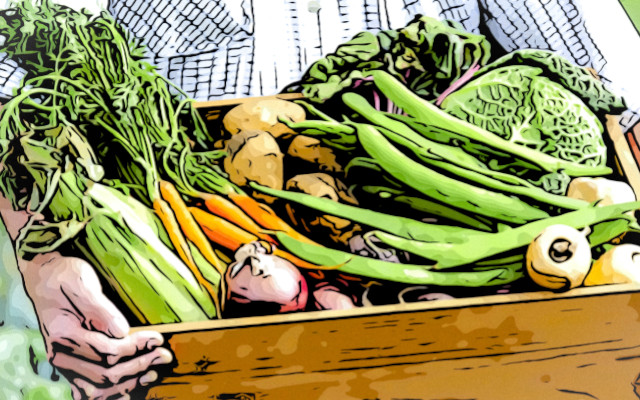
One in two consumers, more often women, carefully choose what to put in their grocery cart with increasing attention. They look at the origin of raw materials, the environmental impact of production, and nutritional profiles. Seeking a balance, for sustainable shopping and healthy eating. So it is hoped, based on the Metrica Ricerche survey for ‘Consumatori’, Coop Italia's monthly magazine.
The information still missing
Information on food and nutrition is considered ‘very adequate’ only by 13% of the sample. ‘Partially adequate’ or ‘inadequate’ for almost all interviewed consumers (45% and 42%, respectively).
Sources of information preferred by consumers place TV first (33%), followed by web e social network (27%), family and friends (25.5%). Newspapers and magazines inform 14% of the sample. Doctors and experts, unfortunately, have a residual role (11%) in providing information on nutrition.
These data – even if collected from a relatively small sample of consumers, nationwide (1,007 people) – among other things, lead to reflection on the need to develop food education programs and scientifically based nutritional recommendations. To counter viral deceptions, fake news and advice instead based on commercial or partisan interests.
The function of labels
Labels are always consulted before purchasing food by 54% of consumers. More scrupulously by female consumers (63%). The remaining 40% of the sample declare reading them only sometimes.
The elements the most sought after on the label are the expiry date or minimum shelf life (76%) and the origin of the ingredients (49%). No mention, curiously, for the ingredients list. The nutritional table is considered by only 19% of the sample.
Fears related to food
Fears on the plate of Italians are in line with those recorded by Eurobarometer, in the EU as in the Balkans and Turkey. Attention is greater, once again, among consumers. The ranking of food-related concerns, on a scale of 1 to 10:
– pesticides in fruit and vegetables (8.13),
– antibiotics in meat (8,12),
– contaminants in fish (8.01),
– additives and colorants (7.94),
– GMOs (7.59),
– packaging materials (7.15).
I drivers of spending
Purchasing choices they are driven by provenance and price. In fact, on the scale from 1 to 10, the Made in Italy (8.29), the offers (8.16) and the convenient price (8.05).
Consumers they declare themselves attentive to the seasonality of fresh foods (7.86) and typical products (7.82). 72% of those interviewed declared that they appreciated the offer of products from their territory and those from the short supply chain, considered
– more genuine (44.4%),
– useful for protecting the Italian economy and production (29%),
– with reduced environmental impact (19.5%).
The research of local products and popular prices penalizes fair trade products, purchased by only 33.6% of those interviewed. Disinterest is expressed by those who prefer Italian products (37.8%), those who don't know them (33.9) or consider them too expensive (12%).
Environment and health
The environmental impact of production convinced 55.5% of those interviewed to change their food choices. This attention is more pronounced among women (58.2%) and graduates (66.8%).
Organic productions and/or accompanied by claim nutritional (with less fat, sugar, etc.) continue to gain market share. 73% of those interviewed judge the food offering for a healthy diet to be adequate and 70.5% declare themselves ready to spend more. Data confirmed by the trend of the lines Well yes e Live Green by Coop.
Vegan diets declining
Eating habits declared by respondents converge in 48.4% of cases on the Mediterranean diet (followed by 62% of graduates).
Vegetarian and vegan diets appear much less widespread (0.8% adherents for the first, 0.1% for the second) compared to recent Eurispes surveys (8.9%). The tendency to consume many vegetables is declared by 3.6% of the sample (5.6% among women). 36%, instead, avoids definition and declares to follow a varied diet.
Dietary regimens to lose weight have been followed in the last five years by 30% of the interviewed Italians (37.5% among women). Dietary advice comes from specialists (dietitian or nutritionist) in 40% of cases, from family doctors in 21%. DIY diets persist, with the elimination of certain foods (23%, 28.6% among males), the application of suggestions found on web (9%, 13.2% among males) or from friends (4%).
Physical exercise is still little practiced by 40% of respondents. 21.5% (25.9% among women) do not practice it, 19% do less than 5 years ago. Only 10.5% declare to do more activity than in the past.
Less sugar, salt, and meat
HFSS foods (High in Fats, Sugar and Sodium) lose share, according to the statements of the sample. In the last five years, 60% consume less sugar, 58% have reduced salt, 54% fizzy and/or sugary drinks, 49% fried foods, 45% sweets, 37% meat and cold cuts, 27% dairy products.
Little understandable, in the search for healthy foods, the choice of gluten-free. Which is indicated by 21% of respondents, although the only ones forced by health needs (celiacs) represent 1-2% of the population.

Professional journalist since January 1995, has worked for newspapers (Il Messaggero, Paese Sera, La Stampa) and magazines (NumeroUno, Il Salvagente). Author of journalistic investigations on food, she published the book 'Reading labels to know what we eat'.


