

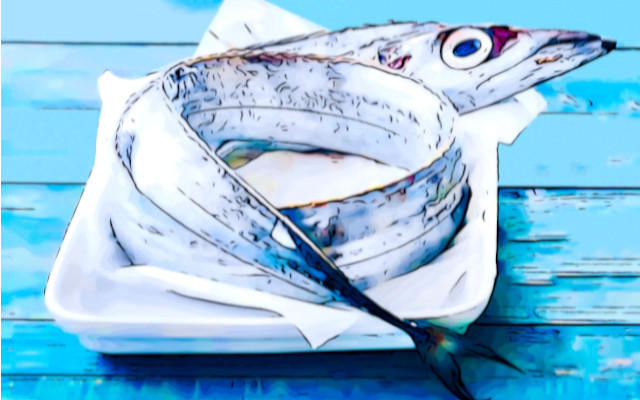
Anchovy, sardine, mackerel. But also mullet, shad, Atlantic bonito and many others. Fish considered ‘poor’ – due to low commercial value – but equally rich in flavor and health. #poorbutgood.
Blue fish includes a variety of species distinguished by the dark blue or greenish coloration of the back, which extends over the lateral and dorsal scales fading towards the silver or white belly. Sizes range from small (e.g. anchovies, sardines), medium (e.g. sea breams, comber), to large (e.g. swordfish, albacore tuna).
Blue fish and health
From a nutritional point of view fish is characterized by a significant content of high biological value proteins, as well as vitamins and essential minerals for health (especially calcium, selenium and iodine). The fatty acid profiles are also characterized by the prevalence of polyunsaturated fats (PUFA, Poly-Unsaturated Fatty Acids). The so-called good fats, including Omega 3 (EPA, DHA), are true health ingredients that our body must obtain from the diet as it cannot synthesize them autonomously.
Omega 3s – of which blue fish is particularly rich – play a crucial role in the prevention of cardiovascular and neurodegenerative diseases, among others. They are also important, as has been seen, for strengthening the immune system. Research has shown that two portions a week of this valuable food can help reduce blood triglyceride levels, effectively protecting the cardiovascular system and decreasing the risk of thrombosis. (1)
Omega 3 fatty acids also have an anti-inflammatory effect that helps prevent, among other things, certain types of cancer (particularly colorectal) and Alzheimer's. (2) In addition to providing benefits in cases of rheumatoid arthritis and lupus erythematosus. (3) Added to this is the easy digestibility of blue fish, thanks to the low connective tissue content in muscle masses. And it is therefore recommended, among others, to over-65.


Sustainable consumption choices, the ABC
Blue fish, protagonist of the Mediterranean diet, is now at risk of extinction. In the Adriatic Sea as in other seas. Due to reckless policies in the allocation of fishing quotas and more generally due to capture methods that respond to commercial logic but not to the conservation needs of stocks fishery. Consumers therefore have the burden – and the opportunity – to make responsible purchasing choices. Here's how:
A) LOCAL. It is useful to find out which types of fish inhabit our seas, giving priority to local ones. To contribute to the local economy, in a short supply chain logic. With the advantage of purchasing fresher products, which maintain their nutritional and organoleptic properties intact. And reduction of environmental impact, thanks to energy savings and CO2 emissions related to long refrigerated transports.
▶️ Fishing areas closest to us are identified by FAO codes 37.1 (Western Mediterranean, from the Balearic Islands to the Tyrrhenian Sea), 37.2 (Central Mediterranean, including Ionian and Adriatic Seas), 37.3 (Eastern Mediterranean, Aegean and Levant), 37.4 (Black Sea).
B) IN SEASON AND RIGHT SIZE. As with fruit and vegetables, fish also have an optimal harvesting (fishing) period. Seasonal fish are those that, having passed the reproductive phase, have already contributed to renewing and maintaining their species in water bodies. For the same reasons, the purchase of specimens that are too small must be avoided, whose sale is also prohibited (e.g., minimum sizes sardine 11 cm, mackerel 18, sole 20).
▶️ The neglected species – that is, those less known but equally tasty – are the cheapest. And their consumption, among other things, relieves fishing pressure on the more ‘famous’ ones.
C) WITH A SHORT LIFE CYCLE. Fish with a short life cycle (e.g. anchovies, sardines), in addition to reproducing faster, accumulate less heavy metals compared to large predators,
Aquaculture represents a great opportunity to provide valuable nutrition to the planet's populations. Provided that aquaculture practices are truly sustainable, meaning respectful of animal welfare and ecosystems. Italy is at the forefront on both fronts of eliminating antibiotics from some fish farms and developing organic aquaculture. Mollusk farming, like seaweed farming, can serve a ‘repairing’ function for the seas and is therefore favorable for the environment.
Purchases to avoid
Seafood products from intensive farms – particularly widespread in salmon production in Scotland, of gilthead sea bream and sea bass in Greece and Turkey – are instead problematic. The high concentration of fish causes high vulnerability to diseases which is countered with massive use of antibiotics, which thus enter the food chain, contributing to the development of antibiotic resistance, one of the most serious threats to human health. The concentration of waste and dispersed feed in turn alters and damages ecosystems. (4)
They should also be avoided salmon, bluefin tuna, farmed tropical shrimp, swordfish, Atlantic cod and grouper, which are in serious danger of extinction and too often come from unsustainable fishing or farming practices. Sea cucumbers and whitebait are always prohibited. Fishing, selling and buying constitute a crime.
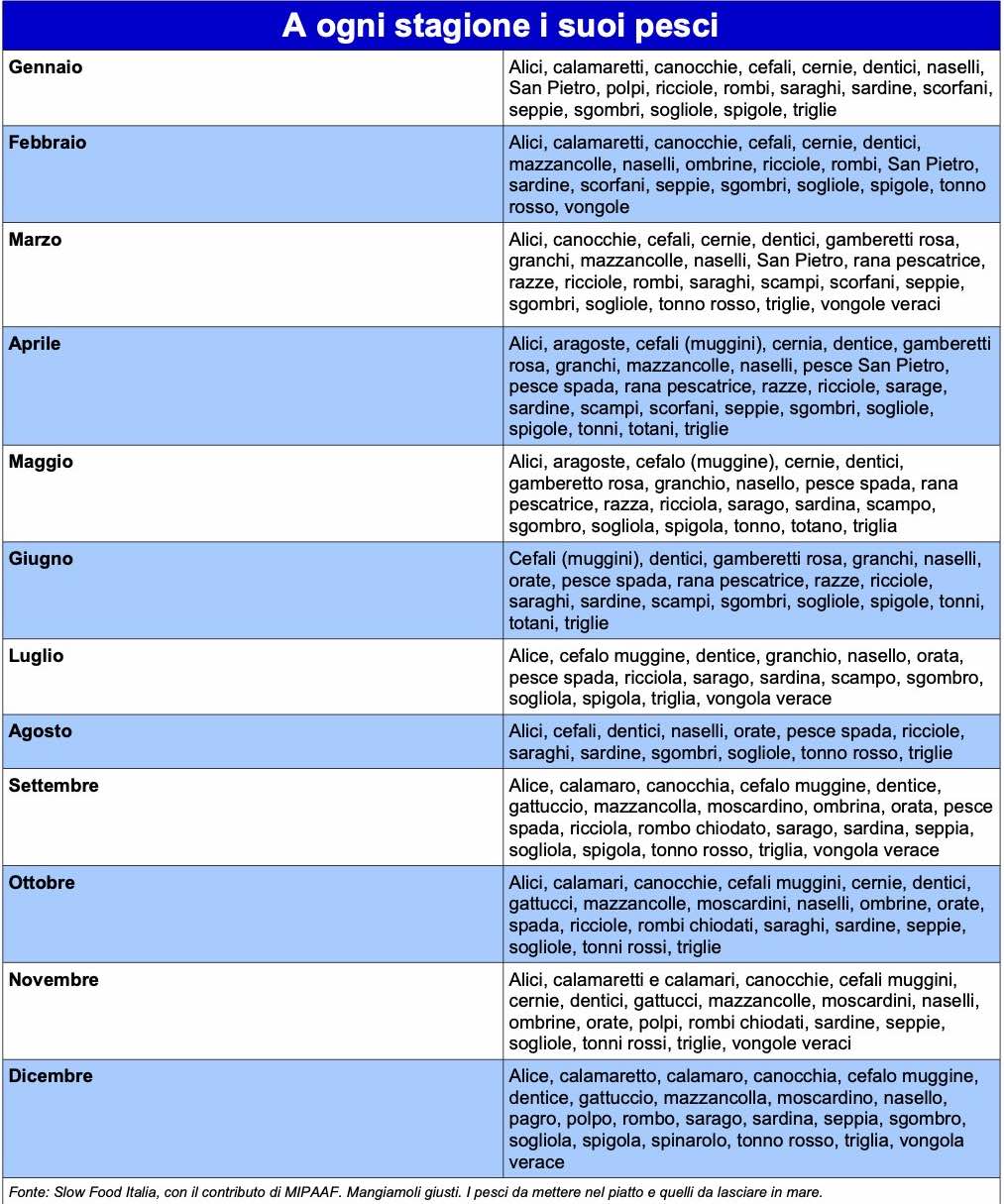
#Poorbutgood
Cooking blue fish is easy. In a pan, oven, or grill, with few simple ingredients. Recipes also abound on the web. We show images of some quick preparations by the author (Dongo). And an example recipe, sardines in salmoriglio style (Spagnardi). Gentle cooking, baked, in an emulsion of extra virgin olive oil, lemon and aromatic herbs. Savings, health and taste.
Loredana Spagnardi, Dario Dongo and Alessandra Mei
Note
(1) Mahinda Y. Abeywardena and Glen S. Patten. Role of ω3 Longchain Polyunsaturated Fatty Acids in Reducing Cardio-Metabolic Risk Factors. Endocrine, Metabolic & Immune Disorders – Drug Targets (2011) 11: 232. https://doi.org/10.2174/187153011796429817
(2) Labrousse, V. F., Nadjar, A., Joffre, C., Costes, L., Aubert, A., Grégoire, S., Bretillon, L., & Layé, S. (2012). Short-term long chain omega3 diet protects from neuroinflammatory processes and memory impairment in aged mice. PloS one, 7(5), e36861. https://doi.org/10.1371/journal.pone.0036861
(3) Li Xiaoxi, Bi Xinyun, Wang Shuai, Zhang Zongmeng, Li Fanghong, Zhao Allan Z. Therapeutic Potential of ω-3 Polyunsaturated Fatty Acids in Human Autoimmune Diseases. Frontiers in Immunology. 2019. doi: 10.3389/fimmu.2019.02241 https://www.frontiersin.org/article/10.3389/fimmu.2019.02241
(4) CIWF. Farmed fish. An industry that is crippling the environment and coastal populations. 31.7.19. https://www.ciwf.it/news/2019/07/pesce-dallevamento-unindustria-che-sta-mettendo-in-ginocchio-lambiente-e-le-popolazioni-costiere

Biologist from San Felice Circeo, passionately continuing the family business in the selection, processing, and distribution of fresh fish products

Dario Dongo, lawyer and journalist, PhD in international food law, founder of WIISE (FARE - GIFT – Food Times) and Égalité.

Graduated in Law at the University of Bologna, she attended the Master in Food Law at the same University. She participates in the WIISE srl benefit team dedicating herself to European and international research and innovation projects.


