

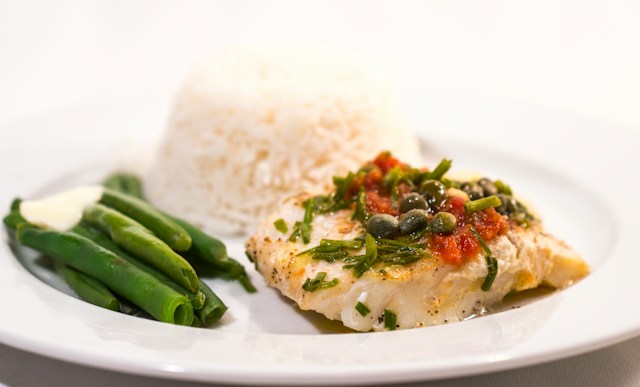
The cod crosses Italian cuisine with different identities: fresh fish with delicate meat, salted cod preserved in salt, stockfish dried in the air and brought back to softness by soaking. Behind this familiarity, different species, international trade routes and manufacturing skills rooted in the territories coexist. Today the supply chain has to deal with reduced fishing quotas, less availability in points of sale and consumption that is moving towards formats that are simpler to prepare, up to products 'ready-to-eat'.
Hake and cod
A distinction is essential. The hake European, Merluccius merluccius, belongs to the family Merlucciidae and is also present in the Mediterranean. The Atlantic cod, Gadus morhua, and that of the Pacific, Gadus macrocephalus, instead belong to Gadidae. They are not different names of the same fish: hake sold fresh in Italy is not the raw material of Norwegian stockfish (Cohen et al., 1990; Lloris et al., 2005).
| Product | Identity and processing | Use in the kitchen |
| Fresh hake | Merluccius merluccius; chilled fish, including Mediterranean fish | Short cooking, steamed, stewed or baked |
| Northern cod, fresh or frozen | Gadus morhua; species other than hake | Fillets, slices and portions |
| salted cod | Cod preserved by salting; in the salted and dried version (klippfisk) follows drying | To be desalted, or to be purchased already desalted and ready to cook |
| stockfish | Air-dried cod, without salt | To be rehydrated before preparation, or to be purchased already soaked |
Sources: Cohen et al. (1990); Fitri et al. (2022); Lloris et al. (2005).
The differences between salting, drying and desalination determine consistency and shelf life. Even the names of the recipes can be misleading: in the Vicenza area 'the people of Vicenza call stockfish by the name of Bacalà (with only one c)', and the Vicenza-style cod it is therefore prepared with stockfish, not with salted cod (Venerabile Confraternita del Baccalà alla Vicentina, 2010).
Production, market and trade
Less raw material, greater pressure on prices
For Italian processors, the availability of cod is a decisive factor. At the Norwegian Seafood Council seminar in Milan on May 12, 2026, analyst Eivind Hestvik Brækkan presented a stark forecast: ‘2026 will have lowest global code supply sincere WW2‘, with a decline of 7% over 2025, expressed in whole fish equivalent. The report for the first half of 2026 bases this estimate on fishing quotas: 'The lowest cod quotas since 1991 mean that landings of frozen cod in the first half of the year are the lowest since the turn of the millennium' (Brækkan, 2026; Norwegian Seafood Council, 2026a).
The Norwegian financial statement for 2025 documents the contraction in exported volumes, accompanied by growing values in almost all categories. It is an indicator of international supply, to be kept distinct from both catches and Italian production (Norwegian Seafood Council, 2026b).
| Exports from Norway, 2025 | Amount | Value (Norwegian kroner) | Change in volumes over 2024 |
| Fresh cod | 36,704 t | 2.8 billion | −9% |
| Frozen cod | 37,462 t | 3.2 billion | −22% |
| Salted fish (salted fish) | 22,125 t | 2.5 billion | −8% |
| Salted and dried fish (clipfish) | 74,154 t | 6.7 billion | −9% |
| stockfish | 2,893 t | 899 million | −19% |
Source: Norwegian Seafood Council (2026b). The Norwegian Council distinguishes salted fish from salted and dried (clipfish or klippfisk), which corresponds to dried cod. The categories also include species other than cod: in clipfish cod weighs 22,157 tons, saithe 41,432. For stockfish, 2025 marks the lowest volume ever, the fourth consecutive historic low.
Italy, first market for cod stockfish
In 2025 Norway exported to Italy 1,571 tons of stockfish, 14% less than in 2024, while the flow value increased by 3%. Italy, Croatia and Nigeria were the first destinations for stockfish; for salted fish the first markets were Portugal, Italy and Greece (Norwegian Seafood Council, 2026b).
In the first half of 2026, Norwegian stockfish exports fell to 1,403 tonnes, for around 40.3 million euros: −7% in volume and −1% in value compared to the same period in 2025. cod stockfish decreased by 22%, to 946 tonnes, while the volumes of dried saithe and tusk increased, mainly destined for Nigeria. 'As usual, Italy is by far our largest market for stockfish cod', noted Brækkan (Norwegian Seafood Council, 2026a).
Italian customs statistics confirm the value of imported raw material. In 2025, Italy imported 1,824 tonnes of stockfish for 54.9 million euros, with an increase of 7.0% in volume and 25.1% in value over 2024. The average price rose from 25.77 to 30.11 euros/kg. The 1,571 tonnes exported from Norway to Italy correspond to approximately 86% of that volume, even if the two surveys follow different methods. In volume the most relevant item is the salted cod undried: 4,940 tonnes for 46.1 million euros (+11.4% and +26.6%). Salted and dried products instead fell to 398 tonnes (−34.9%). The exports Italians still remain marginal: 68 tons of stockfish for 2.3 million euros (Eurostat, 2026).
| Import Italy, whole cod or in pieces | 2024 | 2025 | Variation |
| Stockfish, dry unsalted (NC 0305 51 10) | 1,705 t, €43.9 million | 1,824 t, €54.9 million | +7.0% volume; +25.1% value |
| Salted and dried (NC 0305 51 90) | 611 t, €7.2 million | 398 t, €5.4 million | −34.9% volume; −25.4% value |
| Salted or in brine, not dried (CN 0305 62 00) | 4,434 t, €36.4 million | 4,940 t, €46.1 million | +11.4% volume; +26.6% value |
Source: Eurostat (2026), Comext. Fillets, offal and preparations are excluded.
The Italian market rewards service
At the same Milanese seminar Andrea Succi (NielsenIQ) presented the data of modern distribution in Italy for the year ending March 2026, i.e. the 52 weeks compared with the previous 52. Cod and stockfish together are worth 26.5 million euros (−0.6%). The salted cod it is worth 20.7 million (−1.6%), with an average price of 18.49 euros/kg (+3.3%); the stockfish 5.8 million (+3.4%), at 32.24 euros/kg (+3.9%). These are data from the commercial perimeter recorded, not from the entire Italian consumption (Succi, 2026).
| Product and segment | Share on the value of the category | Change in sales value |
| Cod ready to cook | 58,9% | −3.9% |
| Frozen cod | 37,5% | +2,9% |
| Cod to soak | 2,4% | −18.5% |
| Ready-to-eat cod | 1,2% | +19,0% |
| Ready-to-eat stockfish | 71,0% | +10,9% |
| Stockfish ready to cook | 25,7% | −1.2% |
| Frozen stockfish | 3,4% | +17,5% |
Source: Succi (2026), pp. 19-22. The cover of the presentation is dated June 12, 2026, but the seminar was held on May 12.
In cod, the product to be soaked at home is now marginal (2.4% of the value) and loses almost a fifth of sales; The ready for consumption grows by 19%, but in a niche. In stockfish, on the contrary, ready-to-eat products are worth over two thirds of the category and are still growing, while ready-to-cook products are decreasing. The service therefore advances in different ways in the two products.
History and territories of processing
From the Querini shipwreck to regional cuisines
The voyage of the Venetian captain Pietro Querini it is an emblematic episode of the relationship between Italy and stockfish. In the 1432 his expedition was shipwrecked and the survivors reached Røst, one of the most remote islands in Lofoten; the return with dried fish is at the center of Vicenza's gastronomic memory (Venerabile Confraternita del Baccalà alla Vicentina, 2010). The story testifies to the encounter with a Nordic conservation method, without demonstrating that all subsequent trades derive from a single introduction. Lofoten stockfish is now protected in the European Union as a protected geographical indication Tørrfisk between Lofoten (EU executive reg. 425/2014).
Salt and drying made the fish transportable and usable even far from the coasts. The trades of Genoese and Venetian merchants with Lofoten they have fueled regional cuisines in which Nordic raw materials meet Mediterranean ingredients (Lingua, 2025).
The recipe for Vicenza-style cod codified by the Confraternity it includes soaked dry stockfish, onions, extra virgin olive oil, salted sardines, fresh milk, a little flour, grated parmesan and parsley (Venerable Confraternita del Baccalà alla Vicentina, 2023). It is a preparation distinct from natural fish also from a nutritional point of view: the CREA data sheet for Vicenza-style cod, calculated on a recipe based on soaked stockfish, extra virgin olive oil and milk, reports 520 kcal and 47.9 g of fat per 100 g (CREA, 2019a).
Somma Vesuviana, a knowledge of transformation
The processing of stockfish and cod a Somma Vesuviana it is registered in the Inventory of the intangible heritage of Campania (Campania Region, 2023). The history collected in the area traces its roots back to 16th century, when i 'monks of the great convent of the Madonna dell'Arco' 'they placed large tanks to soak the stockfish at the foot of Monte Somma', to meet the demand for fish on lean days (Alaimo, 2026).
The savoir-faire Italian it therefore also concerns the work on the imported product: selecting, cutting, desalting or rehydrating requires skills that precede the recipe. Water and soaking management are central elements of local knowledge, whose effects on quality must however be evaluated on the actual product.
Fishing and processing places in Italy
For European hake, present in Italian seas, primary production coincides with fishing. For Atlantic cod and its preserves, the Italian value is instead concentrated in transformation of raw material coming from other seas. The origin of the fish and the place where it is processed must remain distinguishable information (Cohen et al., 1990; Lloris et al., 2005).
| Territory | Documented activities |
| Somma Vesuviana, Campania | Processing and soaking of stockfish and cod, knowledge recorded in the Inventory of the intangible heritage of Campania (Campania Region, 2023; Alaimo, 2026) |
| Mammola, Calabria | Laboratories that clean and rehydrate cod caught in Northern Europe, with 'soaked for several days in running water' (Mammola Stocco Valente, s.d.) |
| Vicenza and Veneto | Vicenza-style codfish; in San Martino di Lupari (Padua) a packaged version ready to taste is produced (Venerabile Confraternita del Baccalà alla Vicentina, 2023; Simens Alimentare, s.d.) |
| Liguria | Historical trade of stockfish by Genoese merchants (Lingua, 2025) |
| Vinci, Tuscany | Soaked cod treated with high pressure, ready to cook (Ghezzi Alimentari, s.d.) |
These examples describe some of the most established activities, without constituting a ranking of the major producers. In Calabria, artisanal knowledge concerns the transformation of stockfish soaked, while the drying of the raw material takes place in the countries of origin (Mammola Stocco Valente, s.d.).
Ingredients and production processes
Fresh and frozen, know the species before the format
The hake fresh it has a delicate profile, suitable for preparations that respect its structure. In fillets and portions, however, the appearance is not enough to identify the species: scientific name and provenance are crucial information. The Atlantic cod fresh or frozen it follows a different supply chain from Mediterranean hake (Cohen et al., 1990; Lloris et al., 2005). Regarding the obligations relating to scientific names on the label, see FARE 'Scientific names of fish on labels?'.
Cod, salting and desalination
The processing of salted cod combines fish preparation and salting, to which in the savory product and dried follows thedrying. Salt lowers water activity, and with it microbial activity, and modifies muscle proteins (Fitri et al., 2022). Before cooking the desalination it passes the salt into the water while the muscle rehydrates. Temperature and thickness of the pieces govern the speed of the process, where equilibrium is reached first with higher temperatures and thin pieces (Oliveira et al., 2016). In industrial practice, desalination still takes place in chilled water: in the Italian plant described by Ferri et al. (2023) the cod fillets remain five-six days in steel tanks with water at +2 °C, and the ready-to-cook packaged stockfish studied by Hansen et al is rehydrated at the same temperature. (2025).
The basic recipe may be essential, but commercial products are not equivalent. Already desalted fish must be evaluated for residual salt, water content, ingredients and cooking behavior. Rehydrated salted cod typically has a limited commercial shelf life (Rode & Rotabakk, 2021): the shelf life of salted fish does not automatically transfer to the ready-to-cook fillet.
Stockfish, drying and rehydration
The stockfish Norwegian remains hanging from racks, outdoors and by the sea, in Northern Norway from February to May; the dry product is then available all year round (Norwegian Seafood Council, s.d.). Gutted fish are exposed to sun, wind and humidity at temperatures between approximately 0 and 10 °C (Hansen et al., 2025), without the addition of salt (Fitri et al., 2022).
THE'soaking it returns water to the tissues and precedes cleaning, the removal of unusable parts and culinary preparation. Traditional stockfish can require seven to nine days of rehydration (Hansen et al., 2025); in the Mammola laboratories the processing involves several days in running water (Mammola Stocco Valente, s.d.). Buying stock already soaked means delegating a demanding phase and receiving a food that only requires a cold chain and adequate use times.
Innovations and ready-made products
Ready to cook and ready to eat
The 'fourth range of the sea', already explored in GIFT, expresses a demand for service: reducing the operations between purchase and meal, preserving the identity and quality of the raw material (Dongo, 2026). In cod this evolution includes very different products.
| Category | Operations already carried out | What the buyer must do |
| Ready to cook (ready to cook) | Desalination or rehydration, possible portioning and removal of bones | Cook according to instructions |
| Ready to eat (ready to eat) | Preparation intended for consumption without further processing | Follow storage and service instructions; possible heating if provided |
| Frozen or quick-frozen | Storage in the frost chain | Check intended use and preparation method |
The high hydrostatic pressures (High Pressure Processing, HPP) are one of the innovations applicable to soaked fish. A study on 360 samples of Gadus macrocephalus, salted in Norway, desalted and treated by an Italian cod industry, compared two levels of salt, treatment at 600 MPa for five minutes and vacuum packing with two films with different oxygen permeability. The bacterial load exceeded 6 log cfu/g 35 days after treatment, with a limit around the thirtieth day that varied according to the film. The authors indicate the combination of hygiene, HPP and new films as a valid alternative to prolong conservation, without setting a universal shelf life (Ferri et al., 2023). On desalted Norwegian cod, HPP, alone or with modified atmosphere or carbon dioxide emitters, increased the duration beyond 49 days (Rode & Rotabakk, 2021). Even a product treated with HPP can be used for cooking.
The commercial offer confirms the distinction. Ghezzi offers soaked cod fillets in the 'Soaked HPP' range, with cod ingredients, water and salt, 'ready to cook'. Simens Alimentare offers a Vicenza-style cod presented as 'stockfish ready to taste', with rehydrated stockfish (Gadus morhua) at 55%, olive oil at 22%, skimmed milk powder, soft wheat flour, rice starch and other ingredients. They are different services, not interchangeable products (Ghezzi Alimentari, n.d.; Simens Alimentare, n.d.).
Nutritional properties, CREA data
Before the numbers, the identity of the cards
The Food Composition Tables of CREATE contain the entries 'Cod or hake', 'Cod or hake, cod, dry' and 'Cod or hake, cod, soaked', all associated with Merluccius merluccius. The entries 'Blue whiting or dock fish, stockfish' are instead associated with Gadus poutassou, historical name of the blue whiting (Micromesistius poutassou. CREA, 2019b, 2019c, 2019d, 2019e, 2019f; Cohen et al., 1990).
The food composition tables indicated by CREA - Food and Nutrition Research Center (2019) refer to 100 g of edible portion, in the state indicated on each sheet and before any condiments, the nutritional values listed below.
| Per 100 g of edible part | Hake, raw | Cod, dry | Cod, soaked | Stockfish, dry | Stockfish, soaked |
| Energy | 296 kJ / 71 kcal | 549 kJ / 131 kcal | 399 kJ / 95 kcal | 1490 kJ / 356 kcal | 385 kJ / 92 kcal |
| Fat (g) | 0,3 | 1,7 | 1,0 | 3,5 | 0,9 |
| of which saturated fatty acids (g) | n.d. | n.d. | n.d. | n.d. | n.d. |
| Carbohydrates (g) | 0 | 0 | 0 | 1,1 | 0,3 |
| of which sugars (g) | 0 | 0 | 0 | 1,1 | 0,3 |
| Fibers (g) | 0 | 0 | 0 | 0 | 0 |
| Protein (g) | 17,0 | 29,0 | 21,6 | 80,1 | 20,7 |
| Salt (g) | 0,19 | n.d. | n.d. | 1,25 | 0,13 |
| Potassium (mg, % NRV) | 320 (16%) | n.d. | n.d. | 1500 (75%) | 340 (17%) |
| Phosphorus (mg, % NRV) | 194 (28%) | 562 (80%) | 224 (32%) | 450 (64%) | 163 (23%) |
| Iron (mg, % NRV) | n.d. | 2.3 (16%) | 3.3 (24%) | ||
| Zinc (mg, % NRV) | 2 (20%) | n.d. | n.d. | n.d. | n.d. |
| Copper (mg, % NRV) | 0.3 (30%) | n.d. | n.d. | n.d. | n.d. |
| Selenium (µg, % NRV) | 16.5 (30%) | n.d. | n.d. | n.d. | n.d. |
| Riboflavin (mg, % NRV) | n.d. | 0.28 (20%) | 0.50 (36%) | ||
| Niacin (mg, % NRV) | n.d. | n.d. | 3.50 (22%) |
Source: CREA, Food composition tables, 2019 update. Hake: code 121410 (CREA, 2019d); dried cod: 121440 (CREA, 2019f); soaked cod: 121450 (CREA, 2019e); dry stockfish: 121320 (CREA, 2019c); soaked stockfish: 121330 (CREA, 2019b). Salt calculated as sodium × 2.5. Percentages calculated on the nutritional reference values referred to in Annex XIII to Regulation (EU) no. 1169/2011; vitamins and minerals that reach at least 15% in at least one of the five foods are reported. N.d. = data not reported in the sheet.
How to read the comparison
The raw hake from the CREA sheet is a food thin: 17 g of protein and 0.3 g of fat per 100 g, and the reference serving of 150 g provides 25.5 g of protein. The profile meets the conditions of the indications 'low fat' And 'high in protein', as well as 'high in' selenium and copper (EC reg. 1924/2006, Annex). EPA and DHA represent 12.05% and 32.13% of fatty acids, but on just 0.3 g of fat the absolute intake of omega-3 remains modest, not comparable to that of fatty species (CREA, 2019d).
There protein concentration of the dry product reflects the subtraction of water: in the CREA item of stockfish the figure goes from 80.1 g of protein per 100 g of dry to 20.7 g per 100 g of soaked (CREA, 2019b, 2019c).
The Salt in turn it goes from 1.25 g in dry stockfish to 0.13 g in soaked stockfish (CREA, 2019b, 2019c, 2019e, 2019f). In cod the residual salt also varies depending on the processing.
Advice for buyers
For gourmets, choose the product for the recipe
The choice starts from the species and condition of the product. For a delicate preparation, hake may be suitable; for a ricotta made from stockfish you need the correct raw material, even if the name of the dish contains the word baccalà. Processing and ingredients deserve the same attention given to price (Cohen et al., 1990; Venerabile Confraternita del Baccalà alla Vicentina, 2010).
For fishery products sold to the consumer, it is useful to check the commercial name and scientific name, production method, capture area and category of fishing gear (EU regulation 1379/2013, art. 35.1), in addition to the indication 'thawed' when due (EU regulation 1169/2011, Annex VI, part A). The country of origin of the processed product, as is obvious, may not coincide with the FAO capture area.
Anyone who buys salted cod must plan thesoaking. Professional processes desalinate in chilled water (Ferri et al., 2023; Hansen et al., 2025): a refrigerator is therefore convenient at home, with drinking water, clean containers and spare parts according to the supplier's instructions. A fixed number of hours cannot apply to each thickness (Oliveira et al., 2016). The already soaked product must be stored and consumed following the instructions received.
In ready meals, the percentage of fish and the salt content must be considered.
For professionals, a specification that measures performance
Catering, gastronomy and distribution can translate these distinctions into a purchase specifications. The comparison should include species, origin, state of the raw material, treatment, ingredients, residual salt, size range, presence of skin and bones, storage method and remaining shelf life at delivery. For soaked products, humidity, loss of liquid and yield after cooking are also useful.
A sample should therefore be tested with the recipe and cooking method actually used. The price per kilogram is of little significance without knowing the usable quantity: waste, lost water, processing time and regularity of portions can change the fundamentals for professional buyers. In ready-made products, the supporting documentation must also be verified shelf life.
Conclusions
Hake, cod and stockfish express different supply chains that Italian cuisine has been able to bring together. The first also links the table to Mediterranean fishing; the others show how an imported raw material can fuel local skills, gastronomic identities and value in transformation Made in Italy.
With Nordic cod at its lowest availability, the prospect for the sector is to maintain recognizable species, origin and processing, making the product accessible even to those with little time. Controlled soaking, regular portions and ready-made recipes can renew the cuisine of cod and stockfish.
Dario Dongo
References
Peer-reviewed scientific studies
Ferri, G., Lauteri, C., Scattolini, M., & Vergara, A. (2023). Shelf life and safety of vacuum packed HPP-treated soaked cod fillets: Effects of salt content and multilayer plastic film. Foods, 12(1), 179. https://doi.org/10.3390/foods12010179
Fitri, N., Chan, S. A comprehensive review on the processing of dried fish and the associated chemical and nutritional changes. Foods, 11(19), 2938. https://doi.org/10.3390/foods11192938
Hansen, A. Å., Langsrud, S., Haugen, J.-E., Carlehög, M., Joensen, S., & Moen, B. (2025). Microbiota, volatile compounds and odor during production and storage of rehydrated, packaged, ready-to-cook stockfish of Atlantic cod (Gadus morhua THE.). Heliyon, 11(17), e44198. https://doi.org/10.1016/j.heliyon.2025.e44198
Oliveira, H., Gonçalves, A., Nunes, M. L., Vaz-Pires, P., & Costa, R. (2016). Influence of temperature and fish thickness on the mass transfer kinetics during the cod (Gadus morhua) desalting process. Journal of the Science of Food and Agriculture, 96(13), 4457-4464. https://doi.org/10.1002/jsfa.7657
Rode, T. M., & Rotabakk, B. T. (2021). Extending shelf life of desalted cod by high pressure processing. Innovative Food Science & Emerging Technologies, 69, 102476. https://doi.org/10.1016/j.ifset.2020.102476
European Union regulatory sources
Commission Implementing Regulation (EU) No 425/2014 of 22 April 2014 entering a name in the register of protected designations of origin and protected geographical indications (Tørrfisk fra Lofoten (PGI)). Official Journal of the European Union, 26.4.2014. http://data.europa.eu/eli/reg_impl/2014/425/oj
Regulation (EC) No 1924/2006 of the European Parliament and of the Council of 20 December 2006 on nutrition and health claims made on foods. Consolidated text: 12/13/2014. http://data.europa.eu/eli/reg/2006/1924/2014-12-13
Regulation (EU) No 1169/2011 of the European Parliament and of the Council of 25 October 2011 on the provision of food information to consumers. Consolidated text: 04/01/2025. http://data.europa.eu/eli/reg/2011/1169/2025-04-01
Regulation (EU) No 1379/2013 of the European Parliament and of the Council of 11 December 2013 on the common organization of the markets in fishery and aquaculture products. Consolidated text: 11/27/2024. http://data.europa.eu/eli/reg/2013/1379/2024-11-27
Institutional publications
Cohen, D. M., Inada, T., Iwamoto, T., & Scialabba, N. (1990). FAO species catalogue. Vol. 10. Gadiform fishes of the world (Order Gadiformes). An annotated and illustrated catalog of cods, hakes, grenadiers and other gadiform fishes known to date (FAO Fisheries Synopsis No. 125, Vol. 10). FAO. https://www.fao.org/4/t0243e/t0243e00.htm
CREA, Food and Nutrition Research Center. (2019a). Vicenza-style cod (code PC0004). In Food composition tables. Accessed 5 October 2026. https://www.alimentinutrizione.it/tabelle-nutrizionali/PC0004
CREA, Food and Nutrition Research Center. (2019b). Blue whiting or dock fish, stockfish, soaked (code 121330). In Food composition tables. Accessed 5 October 2026. https://www.alimentinutrizione.it/tabelle-nutrizionali/121330
CREA, Food and Nutrition Research Center. (2019c). Blue whiting or dock fish, stockfish, dry (code 121320). In Food composition tables. Accessed 5 October 2026. https://www.alimentinutrizione.it/tabelle-nutrizionali/121320
CREA, Food and Nutrition Research Center. (2019d). Cod or hake (code 121410). In Food composition tables. Accessed 5 October 2026. https://www.alimentinutrizione.it/tabelle-nutrizionali/121410
CREA, Food and Nutrition Research Center. (2019e). Cod or hake, cod, soaked (code 121450). In Food composition tables. Accessed 5 October 2026. https://www.alimentinutrizione.it/tabelle-nutrizionali/121450
CREA, Food and Nutrition Research Center. (2019f). Cod or hake, cod, dried (code 121440). In Food composition tables. Accessed 5 October 2026. https://www.alimentinutrizione.it/tabelle-nutrizionali/121440
Eurostat. (2026, September 15). Comext, dataset DS-045409: Italy, imports and exports, NC entries 0305 51 10, 0305 51 90 and 0305 62 00, 2024-2025 [Database]. Accessed 5 October 2026. https://ec.europa.eu/eurostat/api/comext/dissemination/statistics/1.0/data/DS-045409
Lloris, D., Matallanas, J., & Oliver, P. (2005). Hakes of the world (Family Merlucciidae). An annotated and illustrated catalog of hake species known to date (FAO Species Catalog for Fishery Purposes No. 2). FAO. https://www.fao.org/4/y4876e/y4876e00.htm
Norwegian Seafood Council. (2026a, July 3). Geopolitical unrest, currency effects and quota cuts led to a decline in the value of Norwegian seafood exports in the first half of the year. https://en.seafood.no/news-and-media/news-archive/geopolitical-unrest-currency-effects-and-quota-cuts-led-to-a-decline-in-the-value-of-norwegian-seafood-exports-in-the-first-half-of-the-year/
Norwegian Seafood Council. (2026b, January 6). Price growth for wild fish and increased salmon volume resulted in record value for Norwegian seafood exports in 2025. https://en.seafood.no/news-and-media/news-archive/price-growth-for-wild-fish-and-increased-salmon-volume-resulted-in-record-value-for-norwegian-seafood-exports-in-2025-/
Norwegian Seafood Council. (2026c, June 2). These are the new trends in the Italian seafood market. https://en.seafood.no/news-and-media/news-archive/these-are-the-new-trends-in-the-Italian-seafood-market/
Norwegian Seafood Council. (s.d.). Norwegian stockfish. Seafood from Norway. Accessed 5 October 2026. https://www.fromnorway.com/seafood-from-norway/stockfish/
Campania region. (2023). Somma Vesuviana. The ancient processing of stockfish and cod. In Inventory of the intangible heritage of Campania - IPIC (2023 update, p. 214). https://cultura.regione.campania.it/documents/20124/0/Catalogo%2BIPIC%2B-%2Beditore%2B2023.pdf/50d9b8b3-6e87-f561-1ccb-39146ceeaf04?t=1713172588560
Press, gray literature, cultural sources and company documentation
Alaimo, M. (2026, May 23). The Campania town where they have been eating cod from Norway for 500 years. Red Shrimp. https://www.gamberorosso.it/notizie/ristoranti/somma-vesuviana-paese-baccala-stoccafisso/
Brækkan, E. H. (2026, May 12). Seafood market: long-term drivers and outlook [Presentation at the Norwegian Seafood Seminar, Milan]. Norwegian Seafood Council. https://en.seafood.no/globalassets/aktuelt/opplastinger-vedlegg/seafood-seminar-ita-26/1-nsc-eivind-braekkan—seafood-market.pdf
Dongo, D. (2026, June 30). Fourth range of the sea: the turning point of ready fish. GIFT – Great Italian Food Trade. https://www.greatitalianfoodtrade.it/prodotti-ittici-italiani/quarta-gamma-mare-pesce-pronto-mercato-ittico/
Ghezzi Alimentari. (s.d.). Soaked cod fillet 1000/UP [Product sheet, Ammollati HPP range]. Accessed 5 October 2026. https://ghezziitalia.com/product/filetto-di-baccala-ammollato-1000-up-1250g-pv/
Language, P. (2025, January). Stock: the long cod route. Civilization of the Table, 377, 26 ff. Italian Academy of Cuisine. https://accademiaitalianadellacucina.it/sites/default/files/allegati/CDT_377_gen_2025_ITA.pdf
Stocco Valente violet. (s.d.). Stocco Valente violet [Presentation of the company's work]. Accessed 5 October 2026. https://www.mammolastoccovalente.com/
Simens Food. (s.d.). Vicenza-style cod 290gr [Product sheet]. Accessed 5 October 2026. https://simensalimentare.it/prodotti/baccala-alla-vicentina-290gr/
Succi, A. (2026). Grocery and fish category trends and opportunities [Presentation at the Norwegian Seafood Seminar, Milan; NielsenIQ data, rolling years ending March, pp. 19-22]. NielsenIQ. https://en.seafood.no/globalassets/aktuelt/opplastinger-vedlegg/seafood-seminar-ita-26/7-nielsen-iq_seafood-event-12.05.pdf
Venerable Brotherhood of Vicentina Cod. (2010, May 8). History and tradition. https://baccalaallavicentina.it/storia-e-tradizione/
Venerable Brotherhood of Vicentina Cod. (2023, October 27). The recipe. https://baccalaallavicentina.it/la-ricetta/

Dario Dongo, lawyer and journalist, PhD in international food law, founder of WIISE (FARE - GIFT – Food Times) and Égalité.


