

The National Quality System for Animal Welfare (SQNBA) represents the voluntary certification scheme established in Italy by the Ministry of Agriculture, Food Sovereignty and Forests (MASAF) e by the Ministry of Health to qualify the breeding phase of animals intended for food production. The system is framed within the context of the European strategy Farm to Fork, of the CAP 2023-2027 and the PNRR, with the aim of promoting more environmentally, economically and socially sustainable livestock production models.
The main objective of SQNBA is to recognize and enhance farms that ensure standards of animal health and welfare significantly higher than the current European and national regulations, reducing the use of antibiotics and ensuring greater sustainability of the overall farming system. Thus offering producers, large-scale distribution and HoReCa a market differentiation tool that consumers can appreciate as it is based on objective requirements, subject to certified verification.
The legal framework of certification
The MASAF decree August 2, 2022 no. 341750 formally establishes the SQNBA system and regulates its operation. The provision incorporates the provisions of Article 224-bis of decree-law May 19, 2020 no. 34 (so-called 'relaunch decree'), as converted with amendments by law July 17, 2020, no. 77.
The decree is accompanied by a technical annex which provides the general rules for the organization and operation of the system, defining the requirements for certification bodies and for food sector operators.
The regulatory framework is completed with the technical specifications approved by subsequent interministerial decrees containing specific requirements for different animal species and types of farming, as well as with control plans defining the operational methods of inspections.
The scientific criteria for access to the system
Access to the SQNBA system is subject to compliance with production specifications approved by MASAF in agreement with the Ministry of Health. These specifications, developed by the Technical Scientific Committee for Animal Welfare (CTSBA), must ensure:
- health and animal welfare requirements exceeding those of the relevant European and national standards;
- reduction of antibiotic use, with monitoring through official systems such as VETINFO;
- sustainable management of farms, including the assessment of environmental emissions;
- parameters established on a scientific basis, representing a unique reference provision in voluntary certification related to animal welfare.
The system provides for thevoluntary participation of subjects who commit to ensuring these superior requirements and submitting them to independent verification by accredited certification bodies.
The approved technical specifications
I approved technical specifications with interministerial decrees represent the operational core of the SQNBA system. They are distinguished into a cross-sectional part — containing the general provisions applicable to the entire system — and in specific regulations by species and breeding method, aimed directly at breeders.
Each regulation is accompanied by a control plan which defines the operational methods of checks, the frequency of controls, non-compliance and related sanctions. Certification is maintained through annual checks at the company. The official regulations containing specific certification requirements currently in force are five.
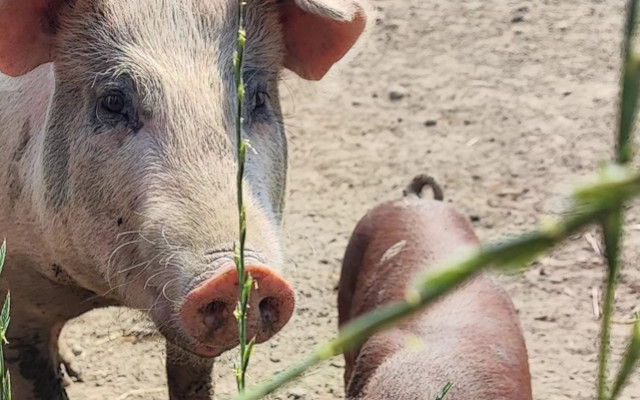
Outdoor reared fattening pigs
This regulation applies to farms of adult pigs weighing over 50 kg raised outdoors. The requirements focus on:
- space available for animals significantly greater than the legal minimums;
- environmental enrichments (mud, straw, manipulable materials) that stimulate natural behavior;
- health management with protocols of biosecurity advanced;
- monitoring the use of antibiotics through the VETINFO system;
- management of waste and assessment of theenvironmental impact.
Dairy cattle in barn
The regulation for Dairy cattle in barn introduces strict criteria on:
- minimum space per adult bovine greater than current regulations;
- access to quality bedding adequate for resting;
- management of heat and of thermal comfort;
- practices of milking that respect animal welfare;
- feeding with quality forage and reduced use of concentrates;
- welfare indicators measurable through the system ClassyFarm.
Beef cattle, stall breeding
This regulation governs the farming of beef cattle in intensive systems (stall farming), with particular attention to:
- stocking density reduced compared to legal minimums;
- environmental enrichments (brushes, mineral blocks, space for movement);
- management of hooves and locomotion;
- health protocols that prioritize prevention of drug use;
- documentation of use of antibiotics and reduction plans.
Cattle in family farming
The regulations forfamily farming enhances traditional and small-scale models, introducing requirements on:
- breeder-animal relationship that guarantees individualized management;
- grazing as a preferred practice;
- feeding based on local and farm forage;
- social well-being of animals (stable groups, absence of isolation);
- traceability individual and documentation of practices.
Cattle raised with partial or full grazing
This regulation, of particular relevance for the mountainous and marginal areas, focuses on:
- minimum grazing time (percentage of the year or daily hours);
- quality of the pasture and of the biodiversity of the meadows;
- movement and physical activity of the animals;
- feeding based on grass and hay, with limitation of concentrates;
- environmental impact positive (pasture management as a tool for landscape conservation).
The certification process
The SQNBA certification path is structured in the following phases:
- verification of legal requirements: the company must comply with current regulations, assessed through official controls and the completion of the ClassyFarm checklist by the company veterinarian. If the requirements are met, the company obtains the 'green light' and can access the SQNBA system; otherwise, the red light blocks access until compliance is restored;
- submission of the application: if the requirements are met, the farmer submits a request to a Certification Body (CB) accredited UNI CEI EN ISO/IEC 17065 and listed in the MASAF register;
- document review: the CB checks that the submitted documentation is complete and compliant;
- on-site inspection: field visit by technicians to verify compliance with the requirements of the chosen standard;
- decision and issuance: the Certification Committee evaluates the results of the checks. In case of a positive outcome, the Certificate of Conformity is issued and the company is included in the official list of certified entities;
- periodic controls: certification is maintained through annual checks.
SQNBA and incentives in the CAP
The most significant new development in the 2025-2026 biennium concerns the link between SQNBA and the Common Agricultural Policy (CAP). Starting from 2025, SQNBA certification has become a mandatory condition to access Level 2 of Ecoscheme 1, the premium tool of the new CAP that rewards farmers who adopt more sustainable practices attentive to animal welfare.
Exemptions for organic and mountain barns
The regulation provides two important exemptions, in favor of:
- organic and converting farms: they are exempt from the obligation to adhere to SQNBA, as the organic standard is equated to SQNBA standards due to overlap of commitments;
- small cattle farms (up to 20 AU, Adult Livestock Units): the threshold was raised from 10 to 20 AU in 2025 to facilitate access to aid for mountain and marginal farms. To obtain the exemption, grazing must be practiced, the competent Region must authorize the exemption, and it must organize substitute controls for the CBs. The Veneto Region has confirmed this exemption also for 2026.
The current response of Italian breeders
Despite the mandatory requirement for access to Level 2 of Ecoscheme 1, the AGEA data updated to August 21, 2025 show a level of adherence equal to 0.9% of Italian farms that operate in the indicated sectors. This data, although related to an early phase of the system, highlights a structural difficulty in spreading certification among operators. The causes are multiple:
- the complexity of requirements;
- the costs of certification;
- the fragmentation of the livestock sector in Italy;
- the low visibility of the brand among stakeholders.
Product traceability and brand use
Compliance with the SQNBA system can be enhanced inlabelling and advertising of products that come from certified supply chains. Primary sector operators and those in the supply chain, once certified, will be able to use the information provided by SQNBA to distinguish and enhance both animals and products coming from farms compliant with the system.
These requirements respond to the need to provide the consumer with clear and verifiable elements on the origin and qualitative characteristics of the product, strengthening transparency and traceability throughout the entire supply chain. Some certification bodies also offer the possibility to integrate traceability with technologies such as blockchain.
Animal welfare, ISO standards and SQNBA compared
International Organization for Standardization (ISO) has not so far developed a certifiable standard — with minimum performance thresholds to be verified — specifically dedicated toanimal welfare in the agri-food supply chain. The only targeted ISO reference is a technical specification of a voluntary and non-certifiable nature (ISO/TS 34700). In some other standards, animal welfare is considered only marginally or indirectly, depending on the case:
- ISO 22000:2018 (Food safety management systems): animal welfare is relevant only indirectly through the hygienic-sanitary prerequisite programs and good veterinary practices (GVP), related to animal health, called up for controlling food safety hazards;
- ISO 26000:2010 (Social responsibility): animal welfare is mentioned among the expectations related to the environmental issue, specifically in the matter ‘environmental protection, biodiversity and restoration of natural habitats’ (§ 6.5.6), as well as upstream, in the principle of ethical behavior, with only a guiding nature and not certifiable;
- ISO/TS 34700:2016 (Animal welfare management): the technical specification provides requirements and guidelines for the implementation of animal welfare principles defined by World Organisation for Animal Health (WOAH), based on chapter 7.1 of the Terrestrial Animal Health Code, without however establishing a third-party certification system with minimum access thresholds.
Compared to the aforementioned ISO standards, the scheme SQNBA differs in three crucial aspects:
- public framework: establishment by ministerial decree;
- third-party certification with minimum compliance thresholds higher than current regulations, instead of generic guidelines;
- integration with CAP benefits: link to ecoscheme 1 level 2, to assign a direct premium to animal welfare.
SQNBA, SQNZ and ‘Made Green in Italy’
SQNBA complements the National Zootechnical Quality System (SQNZ) and the scheme ‘Made Green in Italy’ as a tool for certifying the sustainability of productions (agri-food and others) and Made in Italy services:
- SQNZ, as has been seen, is dedicated to the certification of ‘sustainable farms’ in terms of zootechnical practices, environment and animal welfare;
- The SQNBA it is focused solely on animal welfare, with a premium linked to the Common Agricultural Policy;
- The ‘Made Green in Italy’ evaluates the environmental footprint of products and services according to the PEF method (Product Environmental Footprint).
The three systems — albeit with different scopes — share the public framework, third-party certification, and the goal of providing consumers with transparent and verifiable information. With the application of Legislative Decree 30/2026 which transposes the Directive (EU) 2024/825 on environmental claims, adherence to these systems offers the possibility to promote sustainability of companies and their products, in relation to the certified aspects, without incurring the risks of greenwashing and million-euro fines.
System evolution and future challenges
The SQNBA system is part of a broader strategy aimed at supporting the transition process of the livestock sector towards a more sustainable farming model, improving animal welfare, and contributing to the reduction of antimicrobial resistance (AMR).
The implementation of the system clearly depends on the political will to encourage adherence by a greater number of livestock farms, with particular attention to those smaller, through specific funding and support measures.
Thesystem evolution SQNBA will have to address issues such as:
- Theextension to sectors not yet considered. Poultry and aquaculture in the first place, in addition to the sheep/goat and rabbit sectors;
- the development of systems of blockchain for digital notarization of data;
- the promotion of system awareness among stakeholders, through coordinated institutional campaigns.
The evolution of the SQNBA model will require coordinated commitment among institutions, certification bodies, producer organizations, and distribution operators, in order to build credible and competitive certified supply chains on the national and international market. The real challenge is to transform animal welfare from a cost into a value, from regulatory requirement to competitive advantage.
Our team of DO (Food and Agriculture Requirements) is available to associations, consortia and companies wishing to explore these and other opportunities to better enhance food sustainability under the banner of compliance with current rules and transparency, without the risk of greenwashing.
Dario Dongo
Credit cover AL CONFIN, educational social organic farm
Bibliography
Italian legislation
Legislative Decree 20 February 2026, no. 30. Implementation of Directive (EU) 2024/825. https://www.normattiva.it/eli/id/2026/03/09/26G00047/ORIGINAL
MASAF. (n.d.). National Quality System for Animal Welfare. Ministry of Agriculture, Food Sovereignty and Forestry. https://www.masaf.gov.it/flex/cm/pages/ServeBLOB.php/L/IT/IDPagina/18448
Ministry of Health. (2023). ClassyFarm: System for the risk categorization of farms in the field of veterinary public health. https://www.classyfarm.it/
Relevant European legislation
Directive (EU) 2024/825 of the European Parliament and of the Council of 28 February 2024 amending Directives 2005/29/EC and 2011/83/EU as regards empowering consumers for the green transition. http://data.europa.eu/eli/dir/2024/825/oj
Dongo, D; Della Penna, A.A. (2026, May 15). Environmental claims and unfair commercial practices. FT (Food Times). https://www.foodtimes.eu/it/consumatori-e-salute/direttiva-asserzioni-ambientali-pratiche-sleali/
Regulation (EU) 2021/2115 of the European Parliament and of the Council of 2 December 2021 establishing rules on support for strategic plans to be drawn up by Member States under the common agricultural policy (CAP Strategic Plans) and financed by the European Agricultural Guarantee Fund (EAGF) and by the European Agricultural Fund for Rural Development (EAFRD). Consolidated text: 18/03/2026. http://data.europa.eu/eli/reg/2021/2115/2026-03-18
ISO standards
ISO 22000:2018. Food safety management systems — Requirements for any organization in the food chain. International Organization for Standardization. https://www.iso.org/standard/65464.html
ISO 26000:2010. Guidance on social responsibility. International Organization for Standardization. https://www.iso.org/standard/42546.html
ISO/TS 34700:2016 (reviewed and confirmed in 2025). Animal welfare management — General requirements and guidance for organizations in the food supply chain. International Organization for Standardization. https://www.iso.org/standard/64749.html
World Organisation for Animal Health (WOAH)
World Organisation for Animal Health (WOAH). (n.d.) – animal welfare. https://www.woah.org/en/what-we-do/animal-health-and-welfare/animal-welfare/
World Organization for Animal Health (WOAH). (n.d.). Terrestrial Animal Health and Aquaculture Codes and Manuals. https://www.woah.org/en/what-we-do/standards/codes-and-manuals/terrestrial-code-online-access/

Dario Dongo, lawyer and journalist, PhD in international food law, founder of WIISE (FARE - GIFT – Food Times) and Égalité.


