
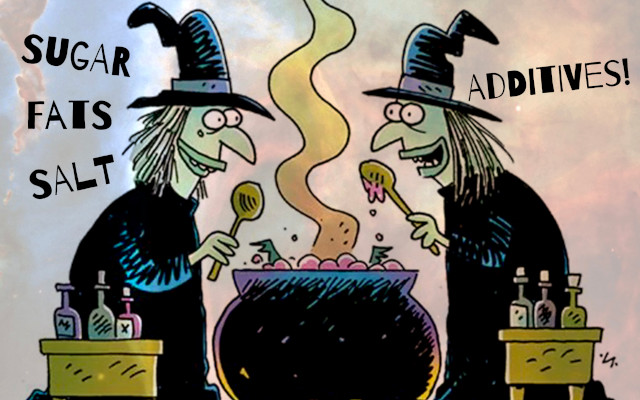
For children (and not only) every occasion is good to dress up and get sweets, and Halloween is no exception. Adults must pay some attention to the quality of candies, chocolates, and snacks shaped like pumpkins, ghosts, and more. Such products may indeed contain horror ingredients and additives, as shown by our market survey on 13 offerings for the party on October 31.
Beat the monster on the packaging
Halloween sweets almost always characterized only by the packaging, decorated with skeletons, ghosts, and other horror characters. In other cases, the shape contextualizes the food.
The recipes are poorly suited, as often happens, to children's nutrition:
– sugar dominates, despite EFSA's recommendations to minimize consumption
– problematic food additives and synthetic aromas also occur in various Halloween sweets and snacks.
Tiger, look but don't eat
The Dutch chain Tiger is not very attentive to food quality, as already revealed in a previous investigation.
Two out of three, among the Halloween products examined, are particularly unsuitable for children:
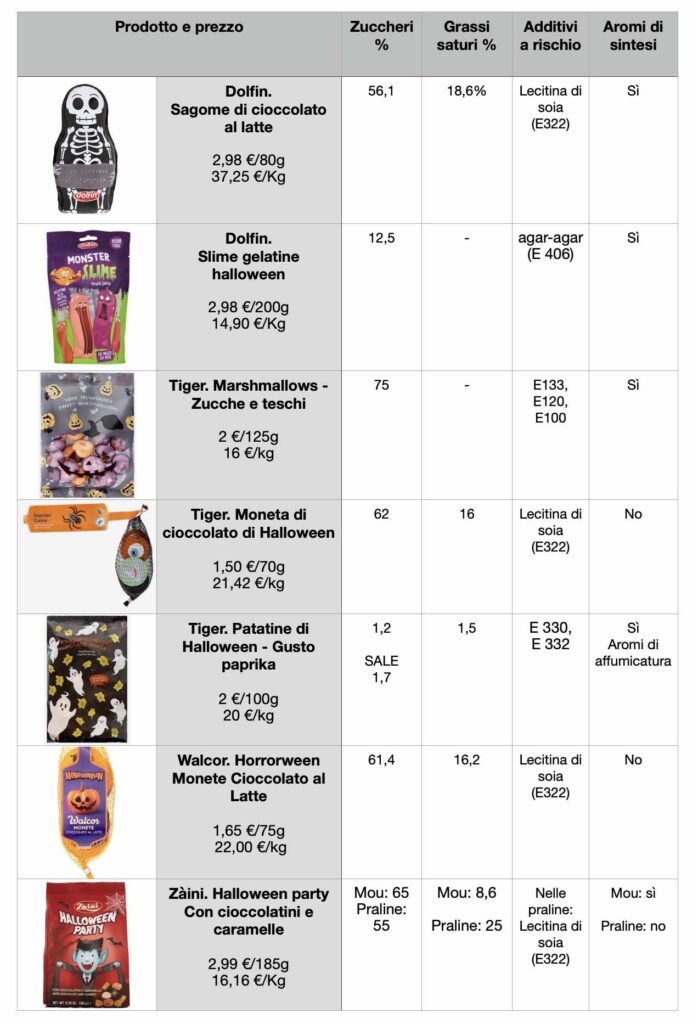
– the marshmallows shaped like pumpkins and skulls (with pork and beef gelatin), are made up of 75% sugars (favored by the addition of glucose-fructose syrup) and contain colorings to avoid.
The E120, carmine red, obtained from the grinding of cochineal insects, can cause allergies and promote hyperactivity. It is also present in various other foods intended for children, as seen, such as drinks with orange juice and milk snacks (like Frùttolo). It is banned in organic products and subject to an acceptable daily intake of 2.5 mg/kg of body weight;
L’E133, Brilliant Blue FCF, if consumed in excess has been found to have cytotoxic and genotoxic potential on human blood lymphocytes;
– the french fries Halloween-flavored paprika chips are truly horrible. Not so much because of the ghost shape but due to the presence of smoky flavors (in addition to other synthetic flavors) which, as seen, are genotoxic. That is, capable of damaging DNA and promoting the onset of cancer and hereditary diseases. For this reason, their authorization for use in food has not been renewed, with a shameful exemption allowing their use to continue for another five years, until 2029. As if that were not enough, the salt content of the chipsTiger stands out at 1.7%. Therefore, one bag accounts for a third of the WHO's maximum daily salt threshold.
Tiger, milk chocolate ‘coins’
The chocolate coins milk chocolate coins are the third Tiger product examined. Cocoa butter and cocoa mass are Rainforest Alliance certified and the flavor is natural vanilla.
The sugar once again abounds excessively, 62%, in first place in the ingredient list. And saturated fats represent 16%.
The emulsifier is indispensable soy lecithin, not recommended for people allergic to it as contamination by protein fractions of this allergen cannot be excluded.
Recipe and nutritional values similarly qualify the Walcor Horrorween chocolate coins. The price is similar too (€22/kg), but with uncertified cocoa.
Less sugar (56.1%), more saturated fats (18.6%) and synthetic flavors are found instead in the much more expensive Dolfin milk chocolate shape.
Dolfin, fruit juice jellies
Fruit juice (7%), vegetable colorings and a moderate amount of sugars (12.5%) favorably distinguish Dolfin's Slime jellies, with the flaw of synthetic aromas.
The thickener – necessary in jellies (where often pig collagen is used) – is agar-agar (E 406), a mixture of polysaccharides extracted from red algae. A non-problematic additive, except for excesses that can cause intestinal disorders (bloating, flatulence, laxative effect).
Agar-agar is prohibited in some confectionery products due to choking risk, especially for children and elderly. The label indeed warns that ‘adult supervision is recommended for children under 5 years consuming jellies due to their limited chewing ability’.
Zàini, soft but to be dosed carefully
The bag for Zàini's Halloween contains two types of sweets, soft candies (caramel) and pralines.
The sugar is the first ingredient in both sweets, which have high levels of it.
The caramel candies add glucose syrup to the sugar, in a mix that makes the sugar percentage reach 65%. In addition to synthetic flavors.
Cocoa butter and coconut oil bring the saturated fats of the chocolate pralines to 25%, the highest level of all 13 products examined. With added soy lecithin and natural flavors.
Ferrero, the bat
A bat-shaped bag is Ferrero's Halloween proposal. The package contains 8 pieces, including six milk chocolate snacks (two of which are doubles) and two Tic Tacs, with various synthetic flavors.
The entire bag costs about 11 euros (50 euros/kg, like high pastry products).

Kinder Ferrero, palm oil for all
From Nutella even vegan ones of Kinder sweets, Ferrero keeps palm oil in the recipe. A tropical fat that GIFT (Great Italian Food Trade) stubbornly criticizes, both for the socio-environmental impact in the places of origin and for the nutritional one.
Two of the four sweets milk chocolate present in the Ferrero bag are identical (Kinder and Kinder Maxi bars), two others are instead made on the same basic recipe with added cereals or hazelnut cream.
The bars Kinder and Kinder Maxi are characterized by sugar as the primary ingredient (53.3%). And saturated fats reach 22.6%, the highest peak of the entire sample after Zàini pralines. Emulsifiers (soy lecithin) and vanillin (synthetic) complete the recipe.
On this basis, the other two chocolate snacks are developed:
– Kinder Cereali, with a little less chocolate and a minimum of cereals, compared to the standard recipe. Sugars thus drop to just under half of the snack (49.1%) and saturated fats to 21.9%
– Kinder Bueno, filled with hazelnut cream, with sugars at 43.6% and saturated fats at 16.8%.
Emulsifiers and vanillin (synthetic vanilla) always present.
Tic Tac, sugar and synthetic flavors
The two candies Tic Tac are almost identical in recipe and nutritional values:
– sugar in first place, representing 91-93% of the candy
– filling of maltodextrins (carbohydrates) and rice starch
– thickener gum arabic (E414), which can cause gastrointestinal discomfort (bloating, flatulence, laxative effect) in case of heavy consumption or combination with other gums.
The flavors, in the references on the company's website, are quite ‘suggestive’:
– an ‘unmatched fruity heart of orange’ in Tic Tac Orange, whose ingredients include only synthetic flavors
– ‘the taste of strawberry blends with vanilla and mint’ in the strawberry mix, where ‘strawberry powder and lemon juice powder’ are preceded by synthetic flavors, without any trace of mint or vanilla.
The taste for horror, after all, rhymes with Halloween.
Marta Strinati

Professional journalist since January 1995, she has worked for newspapers (Il Messaggero, Paese Sera, La Stampa) and magazines (NumeroUno, Il Salvagente). Author of journalistic investigations on food, she published the book 'Reading labels to know what we eat'.


