
Colussi finances 10 reforestation projects in Italy. The historic Italian brand founded in 1911 thus continues to invest in sustainability. brand Misura – third player of the national health market – is the flag bearer of the group along the virtuous path.
A measure of reforestation and packaging compostable
The packaging of pasta and snack Since April 2020, Misura has been 100% compostable, made of corn and cellulose. The operation eliminates 2.5 million plastic packages. The use of FSC certified paper in packaging other lines further reduces plastic use: 30.5 million fewer packages, equal to 52% of total production.
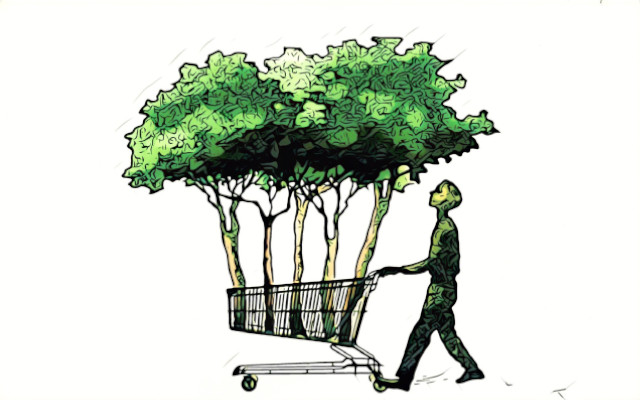
The turning point green of Colussi now continues with support for 10 reforestation projects in equally vulnerable areas of the country. From autumn, 14 thousand trees will be planted.
Reforestation in 10 at-risk areas
Reforestation focuses on 10 areas, based on projects already defined by local administrations, environmentalists, universities. Implementation is carried out together with organizations expert in forestry and research, such as AzzeroCO2, PlanBee, Botanical Garden of the University of Rome La Sapienza, Vesuvius National Park.
The various projects are important pieces in combating climate change. In each area, the objectives are targeted according to local needs and emergencies. Soil retention, land reclamation, research of the most suitable species to counter urban heat islands and air pollution.
Greener in 9 regions
The 10 projects are described and documented with images in the Misura website. They involve 9 different regions, from North to South.
The Living Chapel is the only project that involves the entire national territory. Misura is a sponsor of this innovative international awareness project. It consists of a construction made of trees, plants, and music that celebrates the Laudato Si' Encyclical and the harmony of nature. The structure recalls the Porziuncola of Saint Francis, in Assisi. The trees raised in the Living Chapel are distributed throughout Italy for the recovery of degraded areas and the creation of new Laudato Si' Gardens.
The projects in the North
Vettabbia Park, Milan. 500 new fruit and forest trees are arriving in the 10 hectares managed by the Cascine network between the Corvetto, Vigentino, and Chiaravalle districts.
Urban gardens, Turin. In the cultural-educational center managed by the Santourin association, a greenhouse garden is being built alongside outdoor raised bed cultivations.
Pordenone. Along the busiest roads of the city, an anti-smog barrier is created thanks to the planting of 2500 trees along road edges and traffic islands.
Santarcangelo di Romagna, industrial area. 1000 new trees are intended to improve air quality, landscape, and usability of the areas surrounding the production hub.
Reforestation in the Center-South
Palo Laziale. The planting of 4000 young shrubs recreates the ancient broadleaf forest destroyed by a parasite.
Aniene Valley Nature Reserve, Rome. 100 new plants help restore a natural filter in a densely populated and trafficked area between Ponte Mammolo and Ponte Nomentano.
Gargano Park, Municipality of Cagnano Varano. The planting of 3000 trees is aimed at fire prevention and reforestation in the area adjacent to the largest lake in Southern Italy.
Vesuvius National Park. 1300 new trees have the task of mitigating erosion phenomena and accelerating the natural vegetation recovery processes after the devastating fire in the protected area in summer 2017 (about 3000 hectares affected by fire, of which 500 with irreversible damage.
Pisticci, Matera. The planting of 1000 trees aims to prevent landslides and consolidate the soil, characterized by the presence of gullies, deep grooves in the ground that cause erosion problems.

Professional journalist since January 1995, has worked for newspapers (Il Messaggero, Paese Sera, La Stampa) and magazines (NumeroUno, Il Salvagente). Author of investigative journalism on food, has published the book 'Reading labels to know what we eat'.


