

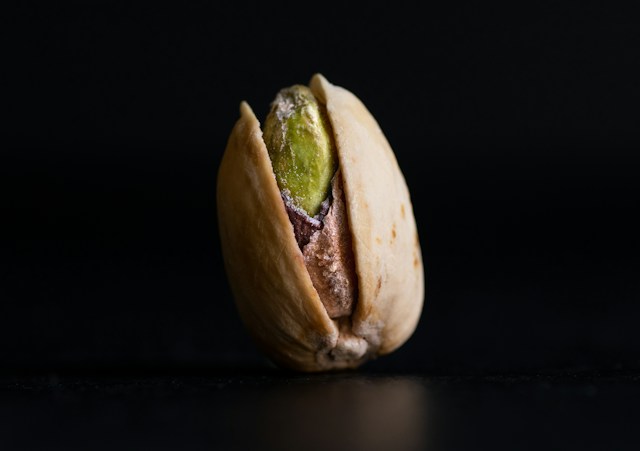
I pistachios they are the seeds of Pistacia vera L., a tree native to Central Asia, cultivated in Italy almost exclusively in Sicily. Two protected designations of origin, the Pistachio Verde di Bronte DOP on the slopes of Etna and the Pistachio di Raffadali DOP in the Agrigento area, express the highest quality of national production.
However, the Italian confectionery, ice cream and delicatessen industry requires volumes much higher than those available. In 2025, Italy imported over 45,000 tonnes of pistachios, in shell or shelled.
Following is a guide on the two Sicilian PDOs, on updated production and market data, on the characteristics of the main foreign origins, on the nutritional profile, on the European mycotoxin limits as well as on import controls, with a paragraph dedicated to professional buyers.
The pistachio, a long-lived and alternate-bearing plant
Real pistachio belongs to the Anacardiaceae family. It is a dioecious species: the female plants produce the fruits, the male ones provide the pollen, transported by the wind. In Sicily the trees are grafted onto the terebinth (Pistacia terebinthus), spontaneous species of the Mediterranean scrub, suitable for poor and dry soils. Under the husk is the woody shell, inside which the green seed is surrounded by a purple film.
The name comes from Persian through Greek pistakion. The spread of the crop in Sicily can be traced back to Arab domination, as the dialect term recalls racket, close to the Arabic fustuq.
Pistachio has a marked production alternation: a year of loading is followed by a year of unloading, with highly variable harvests from one year to the next. In Bronte this characteristic is accentuated in a deliberate way, so as to concentrate the harvest in alternate years.
Green Pistachio di Bronte DOP, the green gold of Etna
The Pistachio Verde di Bronte PDO it has been registered in the European register of designations of origin since 2010 (EU regulation 21/2010). The current regulations, amended in 2017 (EU executive regulation 2017/332), delimit the production area to the municipal territories of Bronte, Adrano and Biancavilla, in the province of Catania, from 400 to 900 meters above sea level (disciplinary, article 3). The varietal platform is the cultivar 'Napoletana', also called 'Bianca' or 'Nostrale', grafted onto terebinth, with a maximum tolerance of 5% of other varieties or rootstocks (regulation, article 2).
The most original feature concerns the management of alternation. In the non-production year the budding removal is mandatory, to accentuate the two-year cycle. There maximum yield is set at 1.7 tonnes of shell product per hectare on a biennial basis, with harvesting from the second ten days of August to the first ten days of October, by beating on nets or browsing with baskets (disciplinary, article 5).
The processing follows strict deadlines. Shaping takes place within 24 hours of harvesting, then drying keeps the product below 50°C until a humidity level of no more than 6%. The storage can last up to 24 months, at a temperature not exceeding 15 °C between March and October, with an absolute ban on chemical preservatives (regulation, article 5).
The regulation also sets analytical identity parameters: ratio between chlorophyll a and chlorophyll b equal to or greater than 1.3, index of the characteristic intense green, oleic acid not greater than 72%, palmitic acid not less than 10%, linoleic acid not less than 15% (disciplinary, article 6). THE'label it shows the logo with the profile of Etna, the name of the packager as well as the year of production, while the collection week is optional (disciplinary, article 8).
The research confirms the specificity of the product. Mannino et al. (2019) compared pistachios from six different commercial origins (Bronte, Kern, Kerman, Larnaka, Mateur, Mawardi): Bronte pistachio showed the highest content of total polyphenols as well as the highest share of oleic acid.
According to the Institute of Services for the Agricultural Food Market (ISMEA), in 2024 certified production reached 341 tonnes, for a value of €5.8 million. The Etna PDO represents 40% in value and 13% of the volumes of certified tree nuts in Italy (ISMEA, 2026). At the end of October 2026, the Ministry of Agriculture confirmed the role of the Protection Consortium for a three-year period, on the basis of the representativeness certified by the control structure (MASAF, 2026).
Pistachio di Raffadali DOP, the green of the Agrigento area
The Pistachio di Raffadali PDO is registered in the European register since 2021 (Exec. Reg. EU 2021/474). The production area comprises twenty-eight municipalities in the province of Agrigento, starting with Raffadali, as well as Montedoro and Serradifalco in the province of Caltanissetta, on calcareous soils with subalkaline reaction (product specification, articles 3, 5, 6).
The cultivar it is the same as Bronte, the 'Napoletana', here also called 'Bianca' or 'Nostrana', grafted onto terebinth, locally called scornabeccu. The specification requires a green seed, with a ratio between chlorophyll a and chlorophyll b of no less than 1.3, an elongated shape, a sweet, pronounced flavour. There yield overall in oil must exceed 30%, palmitoleic acid must reach at least 0.7%, humidity cannot exceed 7% (disciplinary, article 2).
Unlike Bronte, the Raffadali product specification allows for annual production, up to 2.5 tonnes of shelled product per hectare in specialized plants, with a ceiling of 4 tonnes in the sum of two consecutive years. The harvest takes place between mid-August and early October, without the fruits touching the ground, with shelling and drying below 50 °C within 24 hours (product specification, article 5). The packages for the consumer must be transparent or have a window showing the product (product specification, article 8).
The value of certified production, although still marginal, grew by 13% in 2024 (ISMEA, 2026).
Italian pistachio production, the numbers
ISMEA estimates the Italian production for 2024 at approximately 4,000 tonnes of shelled product, obtained on 2% of the national cultivated area tree nuts. With imports equal to 32 kt and exports of 2 kt in shell equivalent, apparent consumption reached 33 kt. The supply ratio, i.e. the share of demand covered by national production, stands at 12% (ISMEA, 2026).
THE'alternate bearing is reflected in the estimates per campaign of the International Nut and Dried Fruit Council (INC): 4,100 tonnes in shell in 2023/24, 2,800 in 2024/25, 4,700 in 2025/26 (INC, 2025, 2026). For the 2026/27 campaign the INC expects approximately 1,000 tonnes, in line with the discharge cycle (INC, 2026).
The cultivation organic of pistachio marks a strong growth trend, thanks to the expansion of demand for organic products. The area of 'pistachios and other nuts' cultivated organically increased from 954 hectares in 2020 to 2,332 in 2024, with a rate of growth average annual 31,2% (ISMEA, 2026). Both PDO regulations of Sicily allow cultivation with certified organic method.
Imports and exports, 2025 data
Eurostat data on Italian foreign trade describe a strongly growing demand. In 2025 imports of shelled-in-shell pistachios reached 23,393 tonnes, 38% more than in 2024, worth €198.7 million. Those of shelled pistachios rose to 21,619 tonnes (+46%), worth €345.5 million (Eurostat, 2026). The two figures should not be added by weight, since the shelled kernel weighs about half of the in-shell product, but the total value exceeds €544 million.
The United States are by far the leading supplier, with 59% of pistachios in shell and 45% of shelled ones. Following at a long distance, for the shelled product, are Türkiye, the United Arab Emirates, Jordan as well as Iran and Syria with smaller volumes. Arrivals from Belgium, Germany, Spain, the Netherlands include Spanish production as well as goods of other origins already released for free circulation in those countries (Eurostat, 2026).
| Origin | In shell (t) | Shelled (t)
|
| United States | 13.809 | 9.726 |
| Turkey | 330 | 2.922 |
| United Arab Emirates | 176 | 2.278 |
| Jordan | – | 1.379 |
| Germany | 1.721 | 1.360 |
| Netherlands | 396 | 835 |
| Spain | 2.162 | 708 |
| Iran | 547 | 497 |
| Syria | – | 478 |
| Greece | 231 | 411 |
| Belgium | 3.294 | 6 |
| Total imports | 23.393 | 21.619 |
| of which from non-EU countries | 14.927 | 17.384 |
Italian pistachio imports by origin or provenance, year 2025, CN codes 0802 51 and 0802 52. Processing based on Eurostat data (2026).
The exports concern mainly the shelled product: 2,900 tonnes in 2025, worth €61.3 million. The average value on export, equal to 21.1 euros per kilogram, exceeds by 31,9% that of shelled imports (€16.0), in line with the premium positioning of Italian supplies (Eurostat, 2026).
The main foreign origins and their characteristics
In the 2025/26 season, the global production reached 1,101,740 tonnes in shell. The United States supplied about two-thirds (722,670 tonnes), ahead of Iran (225,000) and Turkey (114,600), then Syria, Spain, Greece, Italy. For 2026/27 the INC estimates a decline to 641,300 tonnes (−41.8%), mainly due to the year of unloading in California as well as in Iran, while Turkey, Spain and Greece are expected to grow (INC, 2026).
The United States cultivates pistachio mainly in California, with the Kerman cultivar, with large seeds and a high percentage of open shell fruits. Much of the offering is intended for consumption as a snack, in toasted and salted shells. Mechanized harvesting, with rapid shrinkage and drying, promotes good sanitary quality. Consignments shipped directly from the United States are not subject to enhanced controls upon entry into the Union.
THE'Iran – historical cradle of the species – offers varieties with round or elongated seeds, appreciated for their intense aroma as well as for use in pastry making. There Turkey concentrates cultivation in the Gaziantep area, where the Antep pistachio has small, elongated and intense green seeds, often harvested early for confectionery uses. A sweet pistachio paste from Gaziantep is registered in the Union as a protected geographical indication, 'Antep Fıstık Ezmesi / Antepfıstığı Ezmesi / Gaziantep Fıstık Ezmesi' PGI (EU exec. reg. 2025/1245). Iranian and Turkish supplies require the checks described in the paragraph dedicated to buyers.
The Spain is the most expanding European origin, with plants concentrated in Castile-La Mancha, while the Greece completes the community offer. For Italian companies, European supplies, not subject to border controls, offer the advantages of short supply chains and immediate traceability.
Nutritional profile of pistachios
The food composition tables indicated by CREA — Research Centre for Food and Nutrition (2019) report the following nutritional values for pistachios (code 008600), per 100 grams of edible portion.
| Average values | Per 100 g | % NRV
|
| Energy | 2,631 kJ / 629 kcal | |
| Fat | 56.1 g | |
| of which saturated fatty acids | 5.7 g* | |
| Carbohydrates | 8.1 g | |
| of which sugars | 4.5 g | |
| fibre | 10.6 g | |
| Protein | 18.1 g | |
| Salt | 0 g | |
| Potassium | 972 mg | 48,6% |
| Calcium | 131 mg | 16,4% |
| Phosphorus | 500 mg | 71,4% |
| Magnesium | 158 mg | 42,1% |
| Iron | 7.3 mg | 52,1% |
| Zinc | 2.37 mg | 23,7% |
| Copper | 0.75 mg | 75,0% |
| Thiamine | 0.67 mg | 60,9% |
| Vitamin E | 4 mg | 33,3% |
Pistachios, CREA code 008600 (CREA, 2019). Vitamins and minerals indicated if above 15% of the reference nutritional values in Annex XIII to Regulation (EU) No 1169/2011. *Value calculated from the percentage distribution of fatty acids reported by CREA (saturated 10.6%), applying to total lipids the conversion factor for tree nuts.
The fats are predominantly unsaturated: 69.2% of fatty acids are monounsaturated, 20.2% polyunsaturated (CREA, 2019). Natural pistachios can therefore carry the following voluntary nutritional claims:
- 'to high unsaturated fat content;
- 'high in monounsaturated fats';
- 'high in fibre' (EC regulation 1924/2006, Annex).
Operators carrying out analysis on representative product samples, confirming compliance with the minimum thresholds required for the indication of nutrition claim relating to micronutrients, may also claim:
- 'to high in‘ potassium, phosphorus, magnesium, iron, copper, thiamine (vitamin B1), vitamin E, where they exceed 30% of reference nutritional values;
- ‘source of calcium and zinc , where higher than 15% of the respective NRV (Regulation (EC) 1924/2006, Annex).
| Nutrition claim | Condition of use (EC regulation 1924/2006, Annex) | Average value in pistachios (CREA, 2019) |
| 'high in unsaturated fats' | at least 70% of fatty acids derive from unsaturated fats, which provide over 20% of energy | 89.4% of fatty acids; 68.6% of the energy |
| 'high in monounsaturated fats' | at least 45% of fatty acids derive from monounsaturated fats, which provide over 20% of energy | 69.2% of fatty acids; 53.1% of the energy |
| 'high in fibre' | at least 6 g per 100 g | 10.6 g |
| 'high in potassium' | at least 30% of NRV per 100 g | 972 mg (48.6% NRV) |
| 'high in phosphorus' | at least 30% of NRV per 100 g | 500 mg (71.4% NRV) |
| 'high in magnesium' | at least 30% of NRV per 100 g | 158 mg (42.1% NRV) |
| 'high iron content' | at least 30% of NRV per 100 g | 7.3 mg (52.1% NRV) |
| 'high copper content' | at least 30% of NRV per 100 g | 0.75 mg (75.0% NRV) |
| 'high in thiamine (vitamin B1)' | at least 30% of NRV per 100 g | 0.67 mg (60.9% NRV) |
| 'high in vitamin E' | at least 30% of NRV per 100 g | 4 mg (33.3% NRV) |
| 'source of calcium' | at least 15% of NRV per 100 g | 131 mg (16.4% NRV) |
| 'source of zinc' | at least 15% of NRV per 100 g | 2.37 mg (23.7% NRV) |
Permitted nutrition claims for natural pistachios, subject to analytical verification on representative product samples (Regulation (EC) 1924/2006, Annex). Average values per 100 g from CREA (2019); NRV as listed in Annex XIII to Regulation (EU) No 1169/2011.
Possible health benefits
The review by Mandalari et al. (2021) summarises pistachio composition in bioactive compounds, including polyphenols, carotenoids, phytosterols, as well as emerging evidence on their effects. Subsequent reviews and clinical studies published in first and second quartile scientific journals (Q1, Q2) also suggest potential benefits associated with consumption of tree nuts and pistachios - with moderate portions and as part of a balanced diet - but their relevance has not yet been assessed by EFSA (European Food Safety Authority) for the purposes of authorizing specific health claims, in the absence of the relevant questions:
- the association between regular consumption of dried fruit and a lower risk of cardiovascular diseases as well as premature mortality is reported in the umbrella review by Balakrishna et al. (2022);
- for pistachios, the meta-analysis by Hadi et al. (2023) on randomised clinical studies found a reduction in cholesterol total (−7.48 mg/dL), LDL cholesterol (−3.82 mg/dL) e in triglycerides (−11.19 mg/dL).
Pistachio stands out among tree nuts for the presence of lutein, a carotenoid that accumulates in the macula of the retina. In the randomised study by Scott et al. (2025), 57 grams of pistachios per day for 12 weeks increased macular pigment optical density in healthy adults, with effects already measurable after six weeks.
Pistachios in the kitchen and in the food industry
In Sicily, pistachio is used in pesto for pasta, in arancini, in the cannoli, in the cassata, in the granita, as well as in the Gelato, where it is the protagonist of one of the most requested flavors in Italy and in the world. Green pistachios can also garnish slices of green Mortadella Bologna PGI, while the grain enriches many versions of the torrone.
THE'Italian food industry uses shelled, blanched or roasted pistachios, in granules, in flour, in pure paste or in spreadable creams. For gelato shops and pastry shops, pistachio paste is a strategic semi-finished product, whose color depends on the raw material as well as on the roasting. Sicilian PDOs find here a natural outlet in the premium segment.
Guide for buyers
Aflatoxins, produced by molds of the Aspergillus genus, as well as ochratoxin A are natural contaminants of tree nuts, the presence of which is prevented with good practices collection, drying, storage. European Union law establishes maximum limits distinguished below, for pistachios intended for sorting and for those ready for use (EU regulation 2023/915, Annex I, points 1.1, 1.2).
| Contaminant | Pistachios intended for sorting or other physical treatment | Pistachios intended for the final consumer or for use as an ingredient* |
| Aflatoxin B1 | 12.0 µg/kg | 8.0 µg/kg |
| Sum of aflatoxins B1, B2, G1, G2 | 15.0 µg/kg | 10.0 µg/kg |
| Ochratoxin A | 10.0 µg/kg | 5.0 µg/kg |
Maximum limits of mycotoxins in pistachios (EU regulation 2023/915, Annex I, points 1.1, 1.2). *For aflatoxins, the limits also apply to processed products made up of at least 80% pistachios. In the shell product the limits refer to the edible part.
The Union also provides reinforced controls to import for some origins, reviewed every six months. According to the annexes in force from 30 June 2026:
- pistachios coming from Iran e Turkey, in shell or unshelled, together with mixtures, pastes, flours, pistachio-based preparations, are subjected to identity and physical checks on 50% of the lots;
- the same criteria apply to pistachios from United States origin shipped from Turkey (Implementing Regulation (EU) 2019/1793, Annex II, as amended by Implementing Regulation (EU) 2026/1206);
- each batch must be accompanied by a official certificate of the exporting country as well as by sampling and analysis results (EU executive reg. 2019/1793, articles 10 and 11). However, no entry relating to pistachios appears in Annex I, neither for the United States nor for other origins.
For professional buyers some considerations simplify supply management:
- i contracts they should specify the destination of the lot, for sorting or direct use, as well as request certificates of analysis issued by accredited laboratories for each batch;
- it is necessary to verify the actual origin of the product, which may differ from the country of shipment when goods transit through commercial or processing platforms;
- humidity controlled, storage cool and dry, stock rotation preserve quality, as shown by the parameters adopted in Bronte.
The consumer recognizes the Origin from the label, since European marketing standards require the indication of the country of origin of pistachios, in shell or shelled (EU del. reg. 2023/2429, art. 5; Dongo, 2023). With a smaller global harvest expected for 2026/27, advance planning of purchases as well as diversification of origins, including European ones, help ensure continuity of production.
The value of Italian pistachio
With around 4,000 tonnes in an average year, Italian production covers a small fraction (12%) of national needs, whereas imports support the Italian confectionery, ice cream and delicatessen industries. The two Sicilian DOPs occupy the top of the market, thanks to the link with volcanic and calcareous soils, to regulations that protect color, lipid profile as well as processing, and to the growing diffusion of organic products.
FARE (Food and Agriculture Requirements) supports agri-food companies and distribution in strategic planning of compliance on food safety and commercial information, also through support in the development of systems of governance corporate and appropriate operational procedures.
Dario Dongo
Frequently asked questions
How many pistachios does Italy produce? Approximately 4,000 tonnes in shell in 2024, equal to 12% of the national requirement according to ISMEA. Production is concentrated in Sicily.
What are the Italian pistachio PDOs? The Green Pistachio of Bronte PDO, in the province of Catania, as well as the Pistachio of Raffadali PDO, in the provinces of Agrigento and Caltanissetta.
How much protein do pistachios contain? 18.1 grams per 100 grams, according to CREA tables, along with 10.6 grams of fiber.
What nutritional properties do pistachios have? They provide predominantly unsaturated fats as well as 10.6 grams of fiber per 100 grams, with potassium, phosphorus, magnesium, iron, copper, thiamine and vitamin E above 30% of reference nutritional values (CREA, 2019).
From which countries does Italy import pistachios? Mainly from the United States, which in 2025 supplied 59% of in-shell pistachios and 45% of shelled ones, followed by Turkey, United Arab Emirates, Jordan, Spain, Iran.
Are Iranian and Turkish pistachios subject to enhanced controls? Yes. According to the rules in force from 30 June 2026, 50% of consignments are subjected to identity and physical checks upon entry into the Union, with an official certificate as well as analysis from the exporting country.
What are the EU limits for aflatoxins in pistachios? For pistachios ready for consumption or use as an ingredient, 8.0 μg/kg of aflatoxin B1 and 10.0 μg/kg for the sum of aflatoxins. For those intended for sorting, 12.0 and 15.0 μg/kg.
References
Scientific studies on pistachio
Hadi, A., Asbaghi, O., Kazemi, M., Khadem Haghighian, H., Pantovic, A., Ghaedi, E., & Abolhasani Zadeh, F. (2023). Consumption of pistachio nuts positively affects lipid profiles: A systematic review and meta-analysis of randomized controlled trials. Critical Reviews in Food Science and Nutrition, 63(21), 5358–5371. https://doi.org/10.1080/10408398.2021.2018569
Mandalari, G., Barreca, D., Gervasi, T., Roussell, M. A., Klein, B., Feeney, M. J., & Carughi, A. (2021). Pistachio nuts (Pistacia vera L.): Production, nutrients, bioactives and novel health effects. Plants, 11(1), 18. https://doi.org/10.3390/plants11010018
Mannino, G., Gentile, C., & Maffei, M. E. (2019). Chemical partitioning and DNA fingerprinting of some pistachio (Pistacia vera L.) varieties of different geographical origin. Phytochemistry, 160, 40–47. https://doi.org/10.1016/j.phytochem.2019.01.010
Scott, T. M., Ogunbodede, O., McKay, D. L., & Johnson, E. J. (2025). Pistachio consumption increases macular pigment optical density in healthy adults: A randomized controlled trial. The Journal of Nutrition, 155(1), 168–174. https://doi.org/10.1016/j.tjnut.2024.10.022
Scientific studies on tree nuts
Balakrishna, R., Bjørnerud, T., Bemanian, M., Aune, D., & Fadnes, L. T. (2022). Consumption of nuts and seeds and health outcomes including cardiovascular disease, diabetes and metabolic disease, cancer, and mortality: An umbrella review. Advances in Nutrition, 13(6), 2136–2148. https://doi.org/10.1093/advances/nmac077
Nutritional composition
CREA. (2019). Food composition tables. Pistachios, code 008600. CREA — Food Research and Nutrition Centre. https://www.alimentinutrizione.it/tabelle-nutrizionali/008600
Production and market data
Eurostat. (2026). EU trade since 2002 by CN8 (DS-045409). Italy, CN 0802 51 and 0802 52, imports and exports, 2024–2025 [Data set]. Accessed 17 November 2026. https://ec.europa.eu/eurostat/databrowser/view/ds-045409/default/table
INC. (2025). Global pistachio production, in-shell basis, 2023/24–2024/25 (March 2025). International Nut and Dried Fruit Council.
INC. (2026). Global pistachio production, in-shell basis, 2025/26–2026/27. Nutfruit Magazine, July 2026. International Nut and Dried Fruit Council.
ISMEA. (2026). From the supply chain to the art of confectionery: numbers, trends and perspectives of an excellence of Italian cuisine, a UNESCO World Heritage Site [Presentation]. SIGEP 2026, Rimini, 16 January 2026.
Pistachio Verde di Bronte PDO
Commission Regulation (EU) No 21/2010 of 12 January 2010 entering a name in the register of protected designations of origin and protected geographical indications [Pistacchio Verde di Bronte (PDO)]. OJ L 8, 13.1.2010, p. 3. http://data.europa.eu/eli/reg/2010/21/oj
Commission Implementing Regulation (EU) 2017/332 of 14 February 2017 approving a non-minor amendment to the specification for a name entered in the register of protected designations of origin and protected geographical indications [Pistacchio Verde di Bronte (PDO)]. http://data.europa.eu/eli/reg_impl/2017/332/oj
MIPAAF. Measure 1 March 2017. Amendment to the production specification of the designation «Pistacchio Verde di Bronte» registered as a protected designation of origin (17A01986). Official Journal, General Series no. 65 of 18.3.2017. https://www.gazzettaufficiale.it/eli/id/2017/03/18/17A01986/sg
MASAF. Decree of 28 October 2026, confirming the assignment of the Consortium for the protection of the Green Pistachio of Bronte D.O.P. (26A05761). Official Journal, General series n. 258 of 5.11.2026. https://www.gazzettaufficiale.it/eli/id/2026/11/05/26A05761/sg
Pistachio di Raffadali PDO
Commission Implementing Regulation (EU) 2021/474 of 15 March 2021 entering a name in the register of protected designations of origin and protected geographical indications ('Pistachio di Raffadali' (PDO)). OJ L 99, 22.3.2021, p. 34. http://data.europa.eu/eli/reg_impl/2021/474/oj
MIPAAFT. Press Release. Proposal for recognition of the protected designation of origin 'Raffadali Pistachio' (18A07167). Official Gazette, General Series No. 261 of 9.11.2018. https://www.gazzettaufficiale.it/eli/id/2018/11/09/18A07167/sg
Foreign geographical indications
Commission Implementing Regulation (EU) 2025/1245 of 18 June 2025 on the registration of the geographical indication 'Antep Fıstık Ezmesi / Antepfıstığı Ezmesi / Gaziantep Fıstık Ezmesi' (PGI) in the Union register of geographical indications pursuant to Regulation (EU) 2024/1143 of the European Parliament and of the Council. http://data.europa.eu/eli/reg_impl/2025/1245/oj
Mycotoxins and import controls
Commission Regulation (EU) 2023/915 of 25 April 2023 on maximum levels for certain contaminants in food and repealing Regulation (EC) No 1881/2006. Consolidated text: 19/08/2026. http://data.europa.eu/eli/reg/2023/915/2026-08-19
Commission Implementing Regulation (EU) 2019/1793 of 22 October 2019 on the temporary increase of official controls and emergency measures governing the entry into the Union of certain goods from certain third countries implementing Regulations (EU) 2017/625 and (EC) No 178/2002 of the European Parliament and of the Council and repealing Commission Regulations (EC) No 669/2009, (EU) No 884/2014, (EU) 2015/175, (EU) 2017/186 and (EU) 2018/1660. Consolidated text: 26/02/2026. http://data.europa.eu/eli/reg_impl/2019/1793/2026-02-26
Commission Implementing Regulation (EU) 2026/1206 of 9 June 2026 amending Implementing Regulation (EU) 2019/1793 as regards the temporary increase of official controls and emergency measures governing the entry into the Union of certain goods from certain third countries. OJ L, 2026/1206, 10.6.2026. http://data.europa.eu/eli/reg_impl/2026/1206/oj
Insights into the origin on the label
Dongo, D. (2023, November 22). Fruit and vegetables, dried fruit and tree nuts, mandatory origin in EU. Food Times. https://www.foodtimes.eu/it/consumatori-e-salute/ortofrutta-frutta-secca-e-a-guscio-origine-obbligatoria-in-ue/
Labeling and nutritional information
Commission Delegated Regulation (EU) 2023/2429 of 17 August 2023 supplementing Regulation (EU) No 1308/2013 of the European Parliament and of the Council as regards marketing standards for the fruit and vegetables sector, certain processed fruit and vegetable products and the bananas sector. OJ L, 2023/2429, 3.11.2023. http://data.europa.eu/eli/reg_del/2023/2429/oj
Regulation (EC) No 1924/2006 of the European Parliament and of the Council of 20 December 2006 on nutrition and health claims made on foods. Consolidated text: 13/12/2014. http://data.europa.eu/eli/reg/2006/1924/2014-12-13
Regulation (EU) No 1169/2011 of the European Parliament and of the Council of 25 October 2011 on the provision of food information to consumers. Consolidated text: 01/04/2025. http://data.europa.eu/eli/reg/2011/1169/2025-04-01

Dario Dongo, lawyer and journalist, PhD in international food law, founder of WIISE (FARE - GIFT – Food Times) and Égalité.


