

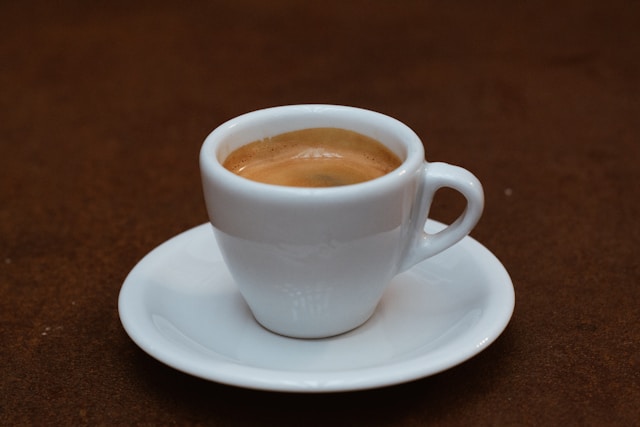
The correlation between regular coffee consumption e reduction of overall mortality finds a first molecular level explanation. A study conducted at Texas A&M University published in Nutrients (Hailemariam et al., 2026) identifies the specific interaction between phenolic compounds of the beverage and the nuclear receptor NR4A1, a key regulator of the cellular response to stress and inflammation. The analysis documents how the bioactivity of the extract mainly resides in the polyphenolic fraction and in the diterpenes, regardless of the presence of caffeine and confirming the nutritional value of decaffeinated coffee.
Epidemiological evidence on coffee consumption and survival
the habitual coffee consumption is consistently associated, in epidemiological studies, with a reduction of mortality for all causes, cardiovascular and oncological. Evidence is documented on large cohorts in the United States (Di Maso et al., 2021), the United Kingdom (Liu et al., 2022), and in the Mediterranean area, where the Spanish cohort of Valencia (Torres-Collado et al., 2021) and the Italian study Moli-sani — 20,487 participants followed for a median of 8.3 years, with standardized consumption per 30 mL cup — detected a reduction in cardiovascular mortality risk with consumption around 3-4 cups per day (Ruggiero et al., 2021).
Protective and dual functions of the nuclear receptor NR4A1
NR4A1, also known as Nur77, belongs to the family of early response genes induced by cellular stress and inflammation. In healthy tissues it performs a protective function: in receptor-deficient murine models organ damage is more severe and survival is lower. In solid tumor cells, on the contrary, the receptor is overexpressed and supports proliferation.
It results in a dual behavior of molecules capable of binding it: agonists in normal tissues, inverse agonists in the tumor context, where they suppress its pro-proliferative activity. It is defined 'orphan' because its physiological ligands were unknown for a long time.
Resveratrol, quercetin e kaempferol had already been identified as such: hence the authors' hypothesis on coffee compounds.
The methodology of experimental analysis on extracts
The extracts were prepared for coffee infusion in boiling water — 50 g of ground coffee in 250 mL, shaken for 8-10 minutes, filtered — from batches from Honduras, Mexico, Guatemala, El Salvador, and Colombia, in versions for moka/filter, for espresso e decaffeinated. Alongside the extracts, the individual constituents were tested: caffeic, ferulic, chlorogenic, and p-coumaric acids, derivatives of cinnamic acid, caffeine, quinic acid and the diterpenes cafestol e kahweol.
The experimental setup is based on three converging levels:
- the physical binding to the receptor domain was measured with two independent techniques — fluorescence quenching and surface plasmon resonance — integrated with molecular docking simulations on crystallographic structures;
- the cellular effects were evaluated on a human rhabdomyosarcoma cell line known to be NR4A1-responsive;
- The verification of receptor dependency was obtained by genetically silencing it and observing if the effects of coffee disappeared. A decisive step, because it discriminates between a receptor-mediated effect and a generic one. All data derive from biological triplicates, with analysis of variance and statistical analysis of comparisons between each dose and the control.
Binding affinity and effects on cell lines
Extracts and polyphenols bind to NR4A1 with dissociation constants ranging between 1.23 and 9.59 µmol/L, values indicative of a specific interaction. The highest affinity belongs tocaffeic acid and tochlorogenic acid, the latter particularly represented in the beverage. Also cafestol and kahweol, the characteristic diterpenes of the bean, bind to the receptor. It should be remembered that these latter compounds, liposoluble, are retained by paper filters and are therefore mainly present in unfiltered coffee — espresso and moka, Italian style, firstly (Ren et al., 2019).
On the functional level, extracts and individual compounds reduce cell proliferation, and the effect diminishes in cells with silenced receptor, being partially reversible with its overexpression. The same compounds reduce activity in the transactivation assay — typical behavior of inverse agonists — and lower the expression of two pro-oncogenic gene products.
In a second cell model, on macrophages stimulated with lipopolysaccharide, coffee polyphenols inhibited the inflammatory pathway NF-kB, replicating the effect of a reference ligand.
The secondary role of caffeine compared to phenolic compounds
caffeine e quinic acid they bind to the receptor but do not modify its transactivation, with variable and overall weak functional effects. The authors qualify them as selective and functionally marginal ligands. The described activity is therefore characteristic of polyphenols and of diterpenes.
The finding is consistent with the experimental data relating to decaffeinated coffee Colombian, which reduced cell growth similar to the other samples.
The decaffeination selectively removes the alkaloid and largely leaves unchanged the content of chlorogenic acids and phenolic compounds. It remains to be clarified to what extent the different industrial processes — water-based, with organic solvents or with supercritical carbon dioxide — preserve this profile, an aspect deserving dedicated checks.
Biological implications for the anti-inflammatory response
The study offers a biologically plausible explanation — not yet demonstrated in humans — of the association between habitual consumption and lower mortality. The authors' hypothesis is that NR4A1 acts as nutritional sensor of protective dietary compounds, a hypothesis strengthened by the observation that receptor expression decreases with age.
Those who limit caffeine intake due to individual sensitivity, sleep quality, or medical indication do not necessarily give up the phenolic component of the beverage. Experimental data directly suggest that decaffeinated can fulfill the same functions, albeit from a single origin and with reservations about the different decaffeination processes.
European regulatory process for the validation of health claims
In the European Union, health claims may appear on labels or in advertising only after authorization, based on an evaluation by theEFSA that verifies the cause-effect relationship between the consumption of the food and the claimed physiological effect (reg. EC 1924/2006). The implementing regulation requires that the scientific dossier supporting the authorization application primarily consists of human studies, ordered according to a hierarchy that reflects the probative strength of the different experimental designs (reg. EC 353/2008, art. 5). At the top are the randomized and controlled intervention studies; the evidence in vitro and on animals can only provide support for the plausibility of the mechanism.
The limitations declared by the authors themselves are explicit. The work is conducted in vitro on a transformed cell line; the active concentrations exceed those achievable in plasma after consuming a cup; coffee contains over a thousand compounds acting via multiple pathways, and the interaction with NR4A1 is probably a concurrent and not exclusive factor. From the perspective of a dossier, it will also be necessary to provide for product characterization — variable matrix by botanical origin, roasting, grinding and extraction — and to bioavailability verification of phenolic compounds.
The characterization of the binding between coffee polyphenols and the NR4A1 receptor marks a fundamental step in understanding metabolic pathways related to longevity. To translate this evidence in vitro into health claims authorized under Regulation (EC) 1924/2006, however, the pathway requires conducting controlled clinical trials in humans and precise standardization of extracted matrices. The team of FARE (Food and Agriculture Requirements) stands alongside companies and supply chain consortia to plan research strategies and build the scientific dossiers necessary for product valorization.
Dario Dongo
Credit cover Gabi Miranda on Unsplash
Bibliography
Study under review
Hailemariam, A., Upadhyay, S., Oany, A. R., Tsui, W. N. T., Srivastava, V., Sivaram, G., Churion, K., Chapkin, R. S., Davidson, L. A., Eitan, S., Cai, J. J., Norton, R., & Safe, S. (2026). Brewed coffee and its components act through orphan nuclear receptor 4A1 (NR4A1). Nutrients, 18(6), Article 877. https://doi.org/10.3390/nu18060877
Epidemiological studies
Di Maso, M., Boffetta, P., Negri, E., La Vecchia, C., & Bravi, F. (2021). Caffeinated coffee consumption and health outcomes in the US population: A dose-response meta-analysis and estimation of disease cases and deaths avoided. Advances in Nutrition, 12(4), 1160-1176. https://doi.org/10.1093/advances/nmaa177
Liu, D., Li, Z.-H., Shen, D., Zhang, P.-D., Song, W.-Q., Zhang, W.-T., Huang, Q.-M., Chen, P.-L., Zhang, X.-R., & Mao, C. (2022). Association of sugar-sweetened, artificially sweetened, and unsweetened coffee consumption with all-cause and cause-specific mortality: A large prospective cohort study. Annals of Internal Medicine, 175(7), 909-917. https://doi.org/10.7326/M21-2977
Ruggiero, E., Di Castelnuovo, A., Costanzo, S., Persichillo, M., De Curtis, A., Cerletti, C., Donati, M. B., de Gaetano, G., Iacoviello, L., & Bonaccio, M. (2021). Daily coffee drinking is associated with lower risks of cardiovascular and total mortality in a general Italian population: Results from the Moli-sani study. The Journal of Nutrition, 151(2), 395-404. https://doi.org/10.1093/jn/nxaa365
Torres-Collado, L., Compañ-Gabucio, L. M., González-Palacios, S., Notario-Barandiaran, L., Oncina-Cánovas, A., Vioque, J., & García-de la Hera, M. (2021). Coffee consumption and all-cause, cardiovascular, and cancer mortality in an adult Mediterranean population. Nutrients, 13(4), Article 1241. https://doi.org/10.3390/nu13041241
Other studies
Ren, Y., Wang, C., Xu, J., & Wang, S. (2019). Cafestol and kahweol: A review on their bioactivities and pharmacological properties. International Journal of Molecular Sciences, 20(17), Article 4238. https://doi.org/10.3390/ijms20174238
Regulatory references
Regulation (EC) No 1924/2006 of the European Parliament and of the Council of 20 December 2006 on nutrition and health claims made on foods. Consolidated text: 13/12/2014. http://data.europa.eu/eli/reg/2006/1924/2014-12-13
Commission Regulation (EC) No 353/2008 of 18 April 2008 establishing implementing rules for applications for authorisation of health claims as provided for in Article 15 of Regulation (EC) No 1924/2006 of the European Parliament and of the Council. Consolidated text: 21/12/2009. http://data.europa.eu/eli/reg/2008/353/2009-12-21

Dario Dongo, lawyer and journalist, PhD in international food law, founder of WIISE (FARE - GIFT – Food Times) and Égalité.


