

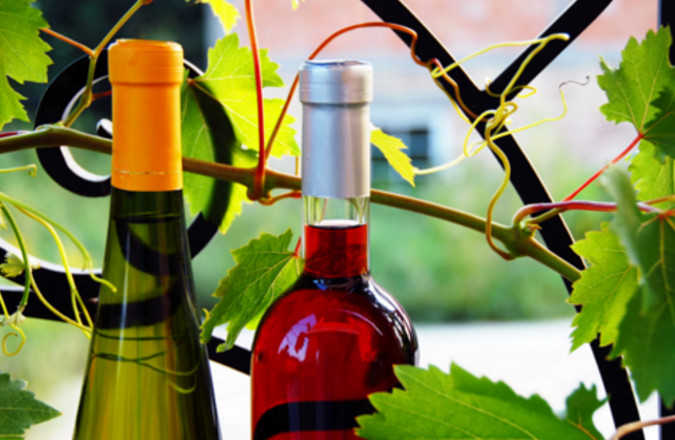
Extraordinary growth for organic wine, which in 2016 definitively emerged from the niche establishing itself on shelves with a sales increase of 25.7%. Sparkling wine also performed well, while interest decreased for wine packaged differently from the classic 750ml glass bottle. Except for the bag in box.
These are very positive data, contained in the IRI report on wine sales trend in the GDO (Large Organized Distribution), the primary wine sales channel, with 505 million liters in 2016, valued at 1.5 billion euros. The research will be presented at Vinitaly, in Verona from April 9 to 12, 2017. But the previews deserve a toast.
Organic wine awarded
The report highlights the recovery of the domestic market, driven by the search for the best products. Organic wine grows extraordinarily, confirming Italian consumers' inclination towards organic products, from fruit and vegetables, to cereals and processed goods. Organic wine sold through the GDO alone reached 2.5 million liters in 2016, equal to a sales volume increase of 25.7%.
Bubbles galore
Sparkling wine also marks a very positive result. Not only in terms of sales. In 2016, volumes purchased in supermarkets grew to 54 million liters, with an increase of over 7%, double compared to the previous year. Its trend is also characterized by the destationalization of bubbles. A sign that sparkling wine is chosen even outside occasions, as an aperitif or table wine.
First the bottle, then the bag in box
The superiority of the classic 750ml glass bottle is indisputable. Moreover, even in terms of wine preservation, it has recently been confirmed as the ideal solution, in a study conducted by the University of Eastern Piedmont.
Among alternative packaging to glass, the bag in box continues to assert itself, convenient and lightweight. In 2016 it transported 12 million liters of wine, with a growth of 11.7%.
The exception of the bag in box is confirmed by the poor performance of other packaging. The brick still falls (-2.5%) and all other formats collapse: -8.6% for wine packaged from 0.76 to 2 liters and 9.7% for formats different from these (all data in volume).
Good for wines with designation of origin
Sales and prices of wines with designation of origin are increasing, in the 0.75 liter glass bottle. Sales rose by 2.7% in volume (224 million liters), and 4.4% in value. Better than 2015 (+1.9%).
The most purchased wines
The trio of the most purchased wines in Italy remains unshakable. The Lambrusco marks a +2.5% (13.1 million liters). Next is the Chianti: +4.9 and 12 million liters. In the DOCG version, Chianti grows by 8.2%. The top of the denominations, with sales close to 10 million liters for a value of over 45 million euros.
The “emerging” wines
Without undermining the trio's primacy, 4 wines grow at a rate higher than 4%. They are Nero d’Avola (Sicily), Vermentino (Sardinia), Muller Thurgau and Gutturnio (Lombardy).
Among the “emerging” stand out Ribolla Gialla (Friuli Venezia Giulia), Passerina (Marche), Valpolicella Ripasso (Veneto). Also good are Pignoletto (Emilia), Pecorino (Marche/Abruzzo) and Passerina (Marche).
Drinking well costs
Good drinking has its price. The pursuit of quality and the choice of glass bottle also affect price trends. Despite the leverage of promotions, which however remains steady at 50% for two years, says the IRI report, the prices of sold wine continue to rise: 75cl designation bottles have an average price just under 5 euros (4.81 euros per liter).
The decline of alternative packaging to glass, instead, affects the overall packaged data, which is -1% by volume and +1.1 by value.


