

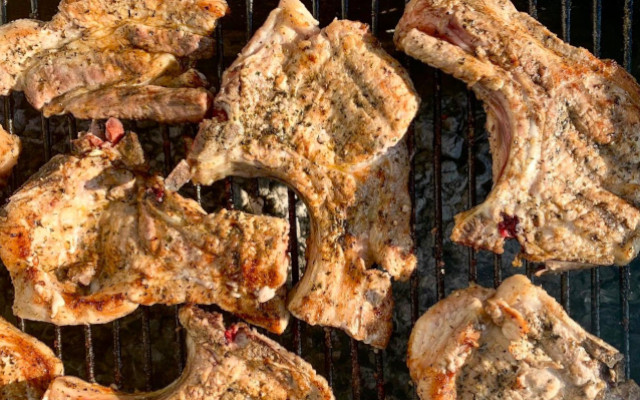
The evolution of Italian gastronomy is rooted in over two thousand years of consumption of fresh pork. If already Ovid in the Metamorphoses recalled the use of these meats as an ancestral trait, the Italian cuisine has been able to apply every single anatomical part of the animal into quick preparations, roasts and slow cooking. And it is essential to understand the characteristics of different cuts, their texture and the response of intramuscular fat to heat. This awareness allows to enhance the raw material at the butcher's counter, reduce waste in the kitchen and apply the correct traditional cooking methods.
Neck chops and the value of marbling
The neck chops come from the cervical part of the pig. The neck is located just behind the animal's head: it is a very meaty and flavorful part, with intramuscular fat infiltrations that make it particularly versatile. This marbling It is the key to its gastronomic success: the fat melts during cooking, keeping the meat tender and aromatic.
The neck chops are suitable for quick high-temperature cooking — grill, griddle, pan — and acquire particular fragrance with marinades based on aromatic herbs, white wine and garlic. It is advisable to avoid prolonged cooking, so as not to dry out the lean component and compromise the natural succulence of the cut.

Neck slices for quick pan cooking
The neck slices retain all the qualities of the original cut: , tenderness, marbling and aromatic intensity. The reduced thickness makes them ideal for quick cooking in pan or on the griddle, where the intramuscular fat melts quickly enhancing the sensory profile without the need for elaborate marinades. Compared to loin slices, they tolerate high temperatures better, making cooking errors less likely.
Pork chops: the classic with bone
With the term 'pork chops' generally refer to slices cut from the loin or from the , often with bone. The animal's back is called 'lombata', and from it excellent slices or cuts suitable for whole cooking, such as roasts and braises, are obtained; pork chops come from the 'carré', also taking the bone, usually a vertebra or rib., often with bone. The back of the animal is called loin, and from it excellent slices or cuts are obtained, suitable for cooking whole, such as roasts and braised meats; Chops are made from the loin, also taking the bone, generally a vertebra or rib.
The presence of thebone has a precise technical role: it protects the meat during cooking and helps preserve its succulence and flavor. Chops are suitable for grill, oven, pan and barbecue. The main risk is overcooking: pork fibers tend to dry out quickly beyond the optimal temperature.

Pork ribs for slow cooking
The ribs come from the rib cage of the pig and are among the most popular cuts for convivial preparations and barbecue. The combination of bone, connective tissue and fat makes them particularly tasty, but requires time: only a slow and prolonged cooking melts the collagen and brings the meat to the soft and tender consistency that characterizes them.
The most common preparations of pork ribs include:
- the barbecue ‘low & slow‘, that is, keeping the grill about 30 centimeters from the embers, also after marinating with garlic and spices;
- in the oven, even at low temperature (90-110 °C for 3-4 hours), after marinating with lemon and/or white wine, aromatic herbs, and garlic;
- stewed with legumes (beans, lentils, chickpeas), common in Italian regional cuisines, with slow cooking over moderate heat.
Rosticciana: Tuscan ribs on the embers
The rosticciana — or rostinciana, and in the Arezzo area also costoliccio — it is the Tuscan version of pork ribs: the same cut of the ribs, but presented and cooked in such a characteristic way as to give the name to the meat itself, even before the preparation. in block, not separated from each other, cooked on charcoal embers and seasoned with extra virgin olive oil, garlic, rosemary, coarse salt, pepper. The dry marinade, applied a few hours before, allows the meat to absorb the flavors without losing its juices during cooking.
The dish has peasant and winter originsIt was the cut that was consumed immediately after the slaughtering of the pig, when the embers were already lit and there was no reason to complicate what the quality of the meat already knew how to express on its own. The 'stewed' version — rosticciane slowly cooked in tomato until the meat falls off the bone — is equally rooted in Florentine cuisine, where the resulting sauce traditionally becomes the seasoning for the rigatoni of the next day. The dish is also known in Alto Lazio and Umbria, where it shares the samelogic of the embers and essential aromas.
The secret of rosticciana is cooking at moderate and constant heat, turning frequently, never piercing the meat to avoid losing the juices. The internal temperature must reach at least 70 °C, also to ensure the inactivation of pathogenic bacteria.
Roman ribs for Sunday sauces
The ribs They are, from an anatomical point of view, the same cut as ribs. That is to say, bone portions of the ribcage with the surrounding intercostal meat, taken from the entire ribcage of the pig. The term is common in Lazio and in some areas of southern Italy, where ribs, small ribs, riblets, and spare ribs refer to the same piece with different dialectal nuances. The practical distinction, when it exists, concerns the portioning: the spare ribs are often cut shorter by the butcher, into pieces of two or three ribs, compared to thelong strips of Tuscan rosticciana.
In the Roman cuisineribs are the main ingredient of one of the most appreciated leftover dishes: slowly cooked stewed with a soffritto of celery, carrot and onion, deglazed with white wine and then left to simmer for two to three hours in tomato puréeuntil the meat falls off the bone and the collagen has turned the base into a thick and flavorful sauce. This sauce is the traditional condiment of the rigatoni with DOP Pecorino Romanoa first course that belongs to the 'fifth quarter' cuisine and to the gastronomic memory of the popular districts of the capital. The ribs are also used in polenta with sauce, paired with beans, and in baked dishes with potatoes.
Loin slices: lightness and everyday versatility
The pork loin is one of the leanest cuts of the whole pig. The pork loin is obtained by separating the meat from the spine; in Northern Italy it indicates the upper part of the ribs, also known as carré or arista, while in Central Italy it is obtained from the hind quarter. This regional terminological variability reflects an Italy in which each territory has developed its own pork butchery culture.
The pork loin slices are very common in everyday cooking due to their quick preparation, delicate taste and versatility: they are suitable for scallopini, roulades, light breading or pan cooking with sauces. Precisely because of their leanness, they require attention to cooking times: a few extra minutes make them tough.
Very thin loin slices for instant preparations
The very thin pork loin slices are very thin slices from the same anatomical section of the loin. Their reduced thickness — often less than a centimeter — makes them ideal for instant preparationssautéed in a pan, wrapped around delicate fillings, paired with light sauces. The speed of cooking is here an advantage and not a compromise: it preserves the tenderness of the compact fibers without the risk of drying them out.
Fresh pork loin and the tradition of oven-roasted loin
Thearista identifies the pork back — from the end of the neck to the lumbar area — cooked whole as roast baked or spit-roasted. In Tuscany the term indicates both the cut and the preparation: by extension, an arista è a roast pork loin, flavored with garlic, rosemary, and pepper, often tied with kitchen twine before cooking. The nutritional profile is similar to that of the loin — relatively lean meat, rich in protein — but the presence of ribs and a layer of fat ensures greater juiciness during cooking.
The history of the term is documented and partly legendary. A document from the 1287 already mentions an ‘arista’, and the storyteller Franco Sacchetti, in the 14th century, quotes ‘an arista in the oven’. The most famous legend dates it back to 1439, during the Council of Florence convened by Cosimo il Vecchio: the Greek cardinal Basilios Bessarion, after tasting a roast pork loin, allegedly exclaimed ‘Aristos!' — 'the best!' in Greek — and the Florentines present, believing he referred to the cut of meat, adopted the word. Pellegrino Artusi in his cookbook specifies: 'in Tuscany the pork back cooked roasted or in the oven is called arista... that piece of loin that retains the ribs, and that can weigh 3 or 4 kilograms' (Artusi, 1891).
In cooking, arista is suited to oven cooking at moderate temperature — 160 °C for about an hour for a 1 kg piece — with the addition of white wine and broth. The optimal internal temperature is 65–68 °C for a pink and juicy meat; not above 72 °C if a well-done cook is preferred. It is good also cold, sliced thinly: a gastronomic practice already appreciated in Tuscan families of the 15th century, when it was prepared in large pieces for the following days.
Pork tenderloin, the most prized cut
The pork tenderloin è the most tender cut and prized of the entire animal. Anatomically it corresponds to the muscle psoas major, located in the sublumbar region, along the spine in the posterior quarter. Its tenderness has a precise functional explanation:
- unlike locomotor muscles, the great psoas is mainly used for maintaining posture. It is therefore rarely stressed and consequently lacks connective tissue, the main source of toughness in meat;
- It must be clearly distinguished from the loin and the arista: the latter correspond to the muscle multifidus lumbothoracic, located above the tenderloin, separated from it and with different technological characteristics. The loin is above the tenderloin, the tenderloin is under the spine: two adjacent muscles but not interchangeable.
In cooking, pork tenderloin lends itself to quick pan cooking with clarified butter — browning on all sides, then deglazing with white wine — or in the oven at moderate temperature, whole or wrapped in bacon to compensate for the lack of fat and maintain succulence. It is also cut into medallions for quick grilling, or cubes for skewers. Preventive marination — with oil, garlic, herbs, and citrus — significantly improves the final result on a naturally lean cut with a delicate flavor.
Comparison of pork and beef tenderloin
Pork and beef tenderloins derive from the same muscle, have the same anatomical logic and the same basic tenderness, but the differences are substantial:
- size. The beef tenderloin is a large muscle, weighing 2–4 kg, and is suitable for iconic preparations such as roast beef, chateaubriand, and tournedos Rossini in French cuisine. The whole pork tenderloin weighs only 300–400 g on average: a size that requires a smaller-scale kitchen;
- organoleptic properties. Beef tenderloin is very tender but has a more neutral taste, less sweet and less persistent; pork tenderloin retains good tenderness but has a sweeter, more aromatic, and slightly stronger flavor profile;
- characteristics. Beef tenderloin can be served rare or almost raw (carpaccio, tartare) without particular risks for the general population. Pork tenderloin, however, should never be eaten raw or undercooked because it is subject to possible risks of parasite contamination (e.g. Trichinella spiralis, Toxoplasma gondii) and bacteria (Salmonella, Yersinia) whose inactivation requires reaching a core temperature of at least 70 °C.
Fresh sliced pancetta, from belly to grill
The pancetta derives from ventral part of the pig and is characterized by alternating layers of fat and muscle that make it immediately recognizable. When before being rolled it is overlapped with properly treated pork neck, it is called ‘pancetta coppata‘; if instead it is left flat, cut into strips, salted and smoked, it becomes what in English is called bacon.
In the fresh sliced version, it is used on the grill, barbecue, for crispy preparations in the pan, for rolls and roasts. The lipid component is decisive: during cooking the fat melts slowly, enriching the flavors and texture of the dish. It is a cut that does not forgive undercooking — the lean part must reach the safe temperature — but when properly cooked offers extraordinary succulence.
Pork hamburger: a contemporary format
The pork hamburgers represent a preparation in constant growth in modern distribution and informal catering. They are made from blends of lean meat and fat, necessary to ensure cohesion, tenderness and palatability. Compared to beef hamburgers, pork ones often have a sweeter taste, a texture more tender and greater juiciness. They can be flavored with spices, herbs or regional ingredients — fennel, chili, rosemary. Cooking must ensure reaching the internal temperature suitable for safe consumption (at least 72 °C at the core).
Pork skewers: one preparation, many cuts
The pork skewers do not identify a specific anatomical cut, but a transversal preparation: pork meat — and often other ingredients — cut into cubes and threaded onto wooden or metal sticks for grilling, barbecue, pan-frying or oven cooking. The format is as old as fire itself, and in Italy it has well-documented regional variations.
The most frequently used cut is the pork loin, for its leanness and compactness that allows regular cubing and quick cooking without crumbling. The neck and the rack — fattier and marbled — guarantee more juiciness but require attention to cooking times to avoid excess fat dripping onto the grill. In many butcher shops in Northern Italy, the mixed skewer involves alternating neck, loin, bacon and sausage — sometimes interspersed with sage leaves, onions or peppers — according to a logic of balance between lean and fatty parts that enhances both flavor and texture.
The marination is a key step for any pork skewer: extra virgin olive oil, garlic, rosemary, thyme and an acidic element — white wine, lemon, vinegar — soften the fibers and allow the flavors to penetrate. Grilling times vary from 12 to 20 minutes depending on the thickness of the pieces, with frequent turning for even browning. The internal temperature must reach at least 70 °C, as with all fresh pork cuts.
Ground pork: the universal base
The ground pork constitutes an extremely versatile base: ragù, meatballs, fillings, sauces, hamburgers and fresh sausages all start from this format. The final quality decisively depends on the ratio between lean and fat components: a moderate fat content — around 20–30% — improves structure, tenderness and cooking yield. Ground meat can be used alone or mixed with beef, lamb, or veal, according to different regional culinary traditions.
Tuscan sausage: the butcher’s ‘curing’
The Tuscan sausage belongs to the very long history of the Italian butchery art. In the 1st century BC, Marcus Terentius Varro in On the Latin Language (V, 111) documented the ‘lucanica’, a sausage that Roman legionaries had learned from the peoples of Lucania, thus attesting to the antiquity and peninsular diffusion of this preparation. From this southern root, the art of sausage making spread throughout the peninsula, acquiring specific traits in each territory.
Tuscan sausage is generally prepared with ground pork, fat, salt, pepper, garlic and fennel seeds — the distinctive element of Tuscan butchery. The 'concia', the mix of salt and spices, varies from butcher to butcher and is often jealously passed down from generation to generation. The ideal proportion is about two thirds lean meat and one third fat.
The most common preparation methods include grilling, pan-frying, oven cooking, and use in sauces and fillings. In Tuscany, it is also frequently consumed in sandwiches or accompanied by cannellini beans and onions, rustic and ancient pairings.
Luganega sausage: from Lucania to Northern Italy
The luganega is a fresh sausage typical of Northern Italy, with an extraordinarily well-documented history. The name derives from Lucania Roman — today’s Basilicata — where Roman legionaries learned from the local inhabitants the technique of stuffing minced meat into casings. Varro in On the Latin Language established its origin: 'they call it lucanica because the soldiers learned it from the Lucani' (they call it lucanica because the soldiers learned it from the Lucani'). The same preparation is described by Apicius in the On the Subject of Cooking.
The history of luganega starts from Magna Graecia, reaches the Republic of Venice and then spreads to Lombardy and Trentino. Today there are at least three types officially recognized:
- The Venetian, made with pork jowl and neck;
- The Trentino, with spices and minced meat stuffed into veal casing;
- The Lombard, finer grain with a characteristic length of about 20 cm.
The richest recipe is that of the luganega from Monza, which includes cheese in the mixture Grana Padano PDO, meat broth and wine — fundamental ingredient of the classic Monza-style risotto. The softer texture compared to other sausages makes it particularly suitable for risottos, stewing, oven and pan preparations.
The value of organic and origin
In the choice of pork meat, attention to breeding methods and origin represents the main tool of protection for the consumer and the entire supply chain. At the top of the quality pyramid is placed the organic pork meat, which offers the highest guarantee currently available on the market: organic certification indeed ensures higher standards and strictly verified of animal welfare, with ample freedom spaces, outdoor access, drastic reduction in the use of antibiotics and feed free of GMOs and pesticides.
It is also useful to consider the origin of the meat: regulation (EU) No. 1337/2013 requires thelabel indication of the country of breeding and slaughter of the animal. Choosing meat from pigs born, raised and processed in Italy – 'Italy origin' – means supporting national livestock farming and enhancing authentic Made in Italy, but also benefiting from one of the strictest veterinary and biosafety control systems in the world.
Enhancing every cut: the principle of integral pork butchery
Knowledge of pork cuts is a fundamental element for a food supply chain more aware and sustainable one. In pigs, knowledge of cuts is essential to understand how the great Italian cured meats are born, from the thigh for raw ham to pancetta and guanciale: knowing the cuts is a knowledge that unites gastronomy and the culture of cured meats.
The historic principle of Italian pork butchery culture — enhancing the whole animal, from snout to tail — remains today a virtuous model of integral use of food resources, in full respect of gastronomic quality and sustainability.
Dario Dongo
Credit cover Timmy Barg
Bibliography
- Apicius, M. G. (1st century AD). On the Subject of Cooking. Modern edition: Grocock, C., & Grainger, S. (2006). Apicius: A critical edition with an introduction and an English translation. Prospect Books.
- Artusi, P. (1891). The Science of Cooking and the Art of Eating Well. Tipografia di Salvadore Landi. Reference edition: Einaudi (1970), edited by P. Camporesi.
- Capatti, A., & Montanari, M. (1999). Italian Cuisine: History of a Culture. Laterza.
- Commission Implementing Regulation (EU) No 1337/2013 of 13 December 2013 laying down rules for the application of Regulation (EU) No 1169/2011 of the European Parliament and of the Council as regards the indication of the country of origin or place of provenance for fresh, chilled and frozen meat of swine, sheep, goats and poultry. http://data.europa.eu/eli/reg_impl/2013/1337/oj
- Gosetti della Salda, A. (1967). Italian Regional Recipes. La Cucina Italiana / Solares.
- Montanari, M. (2004). Food as culture. Laterza. ISBN 9788842074243.
- Varro, M. T. (1st century BC). On the Latin Language, V, 111. Modern edition: Kent, R. G. (1938). Varro: On the Latin Language, Books V–VII. Harvard University Press.

Dario Dongo, lawyer and journalist, PhD in international food law, founder of WIISE (FARE - GIFT – Food Times) and Égalité.


