

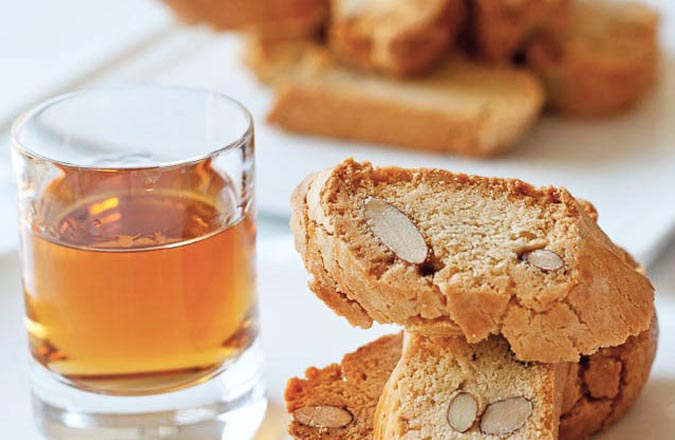
The Vin Santo is one of the most emblematic sweet wines of Italian oenology, a symbol of hospitality and conviviality in every Tuscan farmhouse. Mainly produced in Tuscany, but also found in Umbria, Marche, Trentino-Alto Adige and Veneto with its own denominations, it is distinguished by its oxidative aromatic profile, extraordinary aging capacity and strong connection to its territory of origin. Appreciated on international markets for its cultural identity, limited availability and high added value, Vin Santo occupies a niche segment that today offers concrete opportunities in the era of global ‘premiumization’.
The exports By Italian wine reached a historic record in 2024 of €8.136 billion, with a 5.5% growth compared to 2023, on a volume of 2.18 billion liters (+3.2%), according to ISTAT data (2025). The United States confirms itself as the primary destination market with €1.93 billion (+10.2%), followed by Germany (€1.18 billion) and the United Kingdom (€851 million). Estimates for the harvest campaign 2025/2026 are very favorable, with an expected production of around 47 million hectoliters (+8%), confirming Italy's global leadership in volumes (Ismea, 2026).
Theexport By DOP and IGP wines recorded a slight decline in 2024 – 7.19 billion euros, -5.2% compared to 2023, yet representing 88% of the exported value, according to the latest Ismea-Qualivita report on the DOP Economy (2025). In this positive context, the Italian dessert and passito wines however show a more complex dynamic:
- in the domestic market, according to Wine-Intelligence (2025), sales of sweet and fortified wines recorded a contraction in 2024 of 6.1% in volume and 4.4% in value, dropping to 3.2 million bottles and €28.1 million: a sign of progressive marginalization in the daily consumption of Italians, which however does not translate into a weakening of international premium channels;
- on the global front, the global dessert wine market was valued at about 6.66 billion dollars in 2024, with growth projections at CAGR of 3,55% up to 2035, driven by premiumization, interest in artisanal products and haute cuisine pairings (Market Research Future, 2025). In segments above 50 dollars, demand remains inelastic and resilient (OhBev, 2026).
The Vin Santo DOC/DOCG remains structurally limited in production due to low yields, prolonged drying and the artisanal nature of the process. This intrinsic scarcity paradoxically constitutes its main commercial strength in high-end HoReCa channels and specialized international retail, with the highest potential in the USA, Germany, Switzerland and Japan (ISMEA, 2024; OIV, 2024).
History and legends: from the Council of Florence to rural roots
The origins of Vin Santo are placed between Middle Ages and Renaissance, in a territory where the practice of vinifying dried grapes was already known to the ancient Romans with the term passum. The oldest historical references to Tuscan production of sweet wines intended for liturgical consumption and city elites multiply between the 13th and 15th century.
One of the most cited legends — and still debated by historiography — links the name ‘Vin Santo’ to Council of Florence of 1439, when the Greek cardinal Bessarion, tasting a sweet Tuscan wine, allegedly exclaimed ‘Xantos!’ — from the Greek ‘golden’ — then Italianized to ‘Santo’ by those present (Bacci, 1596). An alternative, equally documented hypothesis suggests that the name derives from the use of grapes harvested and pressed around Holy Week, a period during which processing traditionally took place on Tuscan farms.
Over the centuries Vin Santo has become an integral part of Tuscan rural culture, produced in small quantities on farms and kept for decades as a family asset, intended for ritual and celebratory moments, from weddings to births and the end of the harvest.
Grape varieties and terroir: the excellence of organic in Tuscany and Trentino
The main production area is Tuscany, with denominations such as Vin Santo del Chianti DOC and Vin Santo del Chianti Classico DOC, but production traditions extend to Umbria, Marche, and Trentino. The historically codified grape varieties include Tuscan Trebbiano e Long White Malvasia for the white and amber versions; the Sangiovese – together with Malvasia Nera – is used for ‘Vin Santo Occhio di Pernice’, a rosé type with warm color and a more intense and persistent aromatic profile (MASAF, 2026).
Agronomic practices favor low yields per hectare, selective manual harvesting and careful selection of the healthiest grape clusters. In higher quality productions, especially organic, sustainable vineyard management techniques are adopted, minimizing chemical inputs and enhancing soil biodiversity (IFOAM, 2026). It should be noted that Tuscany today has over 40% of its vineyards certified or converting to organic – the highest percentage among Italian wine regions – and this directly reflects on the quality of the premium Vin Santo offering (Vinaty, 2025).
The caratello method: science of drying and oxidation
The production process of Vin Santo is among the most complex and slow in world winemaking. After harvest, selected between September and October, the grape clusters are laid out on drying racks in ventilated environments, the so-called appassitoi, for a period that can vary from a few weeks to several months. During this phase, the evaporation of water concentrates sugars, organic acids, and aromatic compounds, profoundly modifying the phenolic composition of the berries (Jackson, 2014).
Peer-reviewed scientific studies have documented how thepost-harvest drying induces a metabolic response in the grape clusters to osmotic and oxidative stress, leading to a significant increase in stilbenes – including trans-resveratrol, piceatannol and viniferins – and antioxidant phenolic compounds such as quercetin, syringetin and tamarixetin (De Rosso et al., 2016; Brillante et al., 2018). This natural defense mechanism of the vine results in an enriched nutraceutical profile compared to wines made from fresh grapes.
After pressing, the must ferments slowly in small wooden barrels – oak, chestnut, cherry or acacia, typically from 50 to 225 liters – often not completely filled, with controlled exposure to oxygen. The aging oxidative typically lasts from 3 to 6 years, with longer periods for reserve selections. Fermentation can be spontaneous, conducted by indigenous yeasts or from a ‘mother’ — starter culture derived from previous productions, capable of passing on organoleptic characteristics year after year — contributing to the aromatic complexity and territorial typicality of the product (Jackson, 2014; OIV, 2024).
The result is a wine with amber-golden color, with notes of dried fruit (fig, apricot, date), honey, toasted hazelnut, caramel and hints of vanilla, with a sugar residue ranging from 50 to over 150 g/L depending on the style and denomination.
Focus: the ‘Mother’, guardian of the microbiological heritage
Inside the casks, the secret of organoleptic continuity lies in the ‘mother’: a solid deposit of indigenous yeasts (Saccharomyces and non-Saccharomyces) and bacteria selected over decades, if not centuries, within the same cellar. This natural starter culture not only initiates fermentation in a hostile environment (high sugar and alcohol content), but also imparts Vin Santo with that oxidative tone and ‘house’ aromatic complexity that makes it unique and unrepeatable elsewhere, acting as a true liquid DNA of the farm.
Regulations and DOP: protection of territorial identity
Vin Santo is protected by several Protected Designations of Origin (PDO) that regulate permitted grape varieties, drying methods, minimum aging times and analytical parameters, ensuring traceability and quality (MASAF, 2026):
- Vin Santo of Chianti DOC;
- Vin Santo of Chianti Classico DOC;
- Vin Santo of Montepulciano DOC;
- Vin Santo of Carmignano DOC;
- Vin Santo Trentino DOC.
Vin Santo of Chianti Classico DOC, for example, requires a minimum aging of three years in cask, with ‘Riserva’ versions requiring at least four, and strictly regulates the minimum percentages of Trebbiano Toscano and Malvasia. Each denomination thus expresses its own identity, with organoleptic profiles that are distinguishable and closely linked to the microclimate and soil of production (Consorzio Vino Chianti Classico, 2026).
The nuances of Vin Santo
| Type / denomination | Prevalent grape varieties | Drying and aging | Organoleptic profile | Ideal pairing |
|---|---|---|---|---|
| Vin Santo del Chianti (Classico) DOC | Trebbiano Toscano, Malvasia Bianca Lunga | Min. 3-4 years in small barrels (oak/chestnut) | Amber; notes of dried apricot, honey and toasted almond. | Cantucci, blue cheeses, dry pastries. |
| Vin Santo Occhio di Pernice (DOC/DOCG) | Sangiovese (min. 50-80%) | Long aging in small barrels | Intense copper; scents of plum, sour cherry, cocoa and sweet spices. | Dark chocolate, aged cheeses, meditation. |
| Vin Santo of Carmignano DOC | Trebbiano, Malvasia, San Colombano | Centuries-old tradition, aging min. 3 years | Great balance between acidity and sweetness; floral notes and dried figs. | Typical pastries from Prato, chicken livers (dry styles). |
| Vin Santo Trentino DOC | Nosiola (100%) | Extreme drying until Holy Week | Bright golden; fresh, notes of white hazelnut and candied citrus. | Apple strudel, fruit tarts, alpine cheeses. |
Territorial note: the exception of Vin Santo from Vigolo Vago (Trentino)
Although Tuscany is the beating heart of production, the Vin Santo Trentino DOC deserves mention for its extreme specificity. Produced exclusively from the native grape variety Nosiola, boasts the longest drying in the world: the clusters remain on the racks (arèle) until Holy Week (hence the name). The result is a nectar which, unlike the caloric power of Tuscany, focuses entirely on a citrus freshness vibrant and notes of white hazelnut, representing the highest expression of alpine elegance in the landscape of Italian dessert wines.
Pairings: much more than cantucci
The classic pairing with almond cantucci - to be dipped or 'pucciare' in the glass according to Tuscan ritual - is the starting point of a much more versatile gastronomy. The sweeter and amber versions pair elegantly with dry pastries, dried fruit-based desserts, dark chocolate e blue cheeses as the Gorgonzola PDOThe drier types or those with prolonged aging prove valuable alongside long-aged cheeses like Parmigiano Reggiano PDOThe oxidative profile and aromatic complexity ultimately make it an excellent vino da meditazioneto be savored slowly as a gastronomic curtain.
Buying guide: how to navigate the market
For the foodies, it is advisable to favor Vin Santo organic from small producers, with clear indication of vintage, grape varieties and barrel aging times. Versions with at least five years of aging tend to express greater aromatic complexity and better longevity in the bottle.
For the buyers and professional purchasers, Vin Santo represents a niche product with high added value and low competitive pressure, ideal for the mid-high segment HoReCa channel and specialized retail. The limited availability on international markets, combined with the narrative strength of the denomination of origin, makes it particularly suitable for wine lists of starred restaurants, research wine bars and premium wine shops.
The team of GIFT (Great Italian Food Trade) supports international buyers in selecting reliable suppliers, verifying quality certifications and building lasting business relationships with Italian producers oriented towards export.
Conclusions
Vin Santo expresses the balance between craftsmanship, historical depth and cultural value, standing out as an identity sweet wine with a strong territorial vocation. In a context of global premiumization, growing interest in authentic and organic productions and spreading of territorial storytelling, Vin Santo offers concrete opportunities for niche international markets, strengthening the premium positioning of Made in Italy wine sector.
Dario Dongo
- Bacci, A. (1596). De naturali vinorum historia de vinis Italiae et de conuiuijs antiquorum libri septem. Rome: ex officina Nicolai Mutij. Digital Library of the University of Bari Aldo Moro. https://bibliotecadigitale.uniba.it/handle/20.500.14442/243
- Brillante, L., De Rosso, M., Dalla Vedova, A., Maoz, I., Flamini, R., & Tomasi, D. (2018). Insights on the stilbenes in Raboso Piave grape (Vitis vinifera L.) as a consequence of postharvest vs on-vine dehydration. Journal of the Science of Food and Agriculture, 98(5), 1961–1967. https://doi.org/10.1002/jsfa.8679
- Consortium Chianti Classico Wine. (2026). https://www.chianticlassico.com
- Corradini, E., & Nicoletti, I. (2021). Effect of withering process on the evolution of phenolic acids in winegrapes: A systematic review. Food Science and Technology International, 28(4), 275–290. https://doi.org/10.1177/1082013221989049
- De Rosso, M., Panighel, A., Dalla Vedova, A., & Flamini, R. (2016). Changes in grape polyphenols (Vitis vinifera L.) as a consequence of post-harvest withering by high-resolution mass spectrometry: Raboso Piave vs Corvina. Journal of the Science of Food and Agriculture, 96(14), 4707–4717. https://doi.org/10.1002/jsfa.7877
- FiBL, IFOAM – Organics International. (2023). The world of organic agriculture: Statistics and emerging trends 2026. https://orgprints.org/id/eprint/56638/
- Ismea & Qualivita Foundation. (2025). ISMEA-Qualivita 2025 Report on Italian agri-food and wine productions PDO, PGI and STG (23rd ed.). Qualivita Editions. https://www.ismea.it/flex/cm/pages/ServeAttachment.php/L/IT/D/1%252Fe%252F8%252FD.fefdd2e7c08546544955/P/BLOB%3AID%3D13512/E/pdf?mode=download
- ISMEA. (2026, January 22). Report – AgriMarkets. Third quarter 2025. https://www.ismeamercati.it/flex/cm/pages/ServeAttachment.php/L/IT/D/1%252F4%252Fb%252FD.8bca0e598a8ac204cdf1/P/BLOB%3AID%3D13754/E/pdf?mode=download
- ISTAT – National Institute of Statistics. (2025, January 16). Foreign trade and import prices – November 2024. Rome: ISTAT. https://www.istat.it/comunicato-stampa/commercio-con-lestero-e-prezzi-allimport-novembre-2024/
- Jackson, R. S. (2014). Wine science: Principles and applications (4th ed.). Academic Press. https://doi.org/10.1016/C2010-0-64701-5
- Market Research Future. (2025). Dessert wine market size, share, growth analysis 2035. MRFR. https://www.marketresearchfuture.com/reports/dessert-wine-market-34626
- MASAF – Ministry of Agriculture, Food Sovereignty and Forests. (2026). Vin Santo of Chianti Classico PDO (DOC) – Consolidated specification attached to Ministerial Decree 22/03/2022 approving ordinary modifications. https://www.masaf.gov.it/flex/cm/pages/ServeBLOB.php/L/IT/IDPagina/18197
- OIV – International Organisation of Vine and Wine. (2024). State of the world vitivinicultural sector in 2024. OIV. https://www.oiv.int
- OhBev. (2026, January 8). US wine market 2026 forecasts and trends. https://www.ohbev.com/blog/us-wine-market-2024—trends-and-opportunities-and-beyond
- Vinaty. (2025). Italy wine exports and production 2024. Vinaty Market Digest. https://vinaty.com/italy-wine-exports-production-2024/
- Wine-Intelligence. (2025, January 28). Italian wine market in 2024: Challenges and insights. https://wine-intelligence.com/blogs/wine-news-insights-wine-intelligence-trends-data-reports/italian-wine-market-in-2024-challenges-and-insights

Dario Dongo, lawyer and journalist, PhD in international food law, founder of WIISE (FARE - GIFT – Food Times) and Égalité.


